Top

Bitstamp awarded MPI license in Singapore

Web3 & Enterprise·July 07, 2025, 1:21 AM

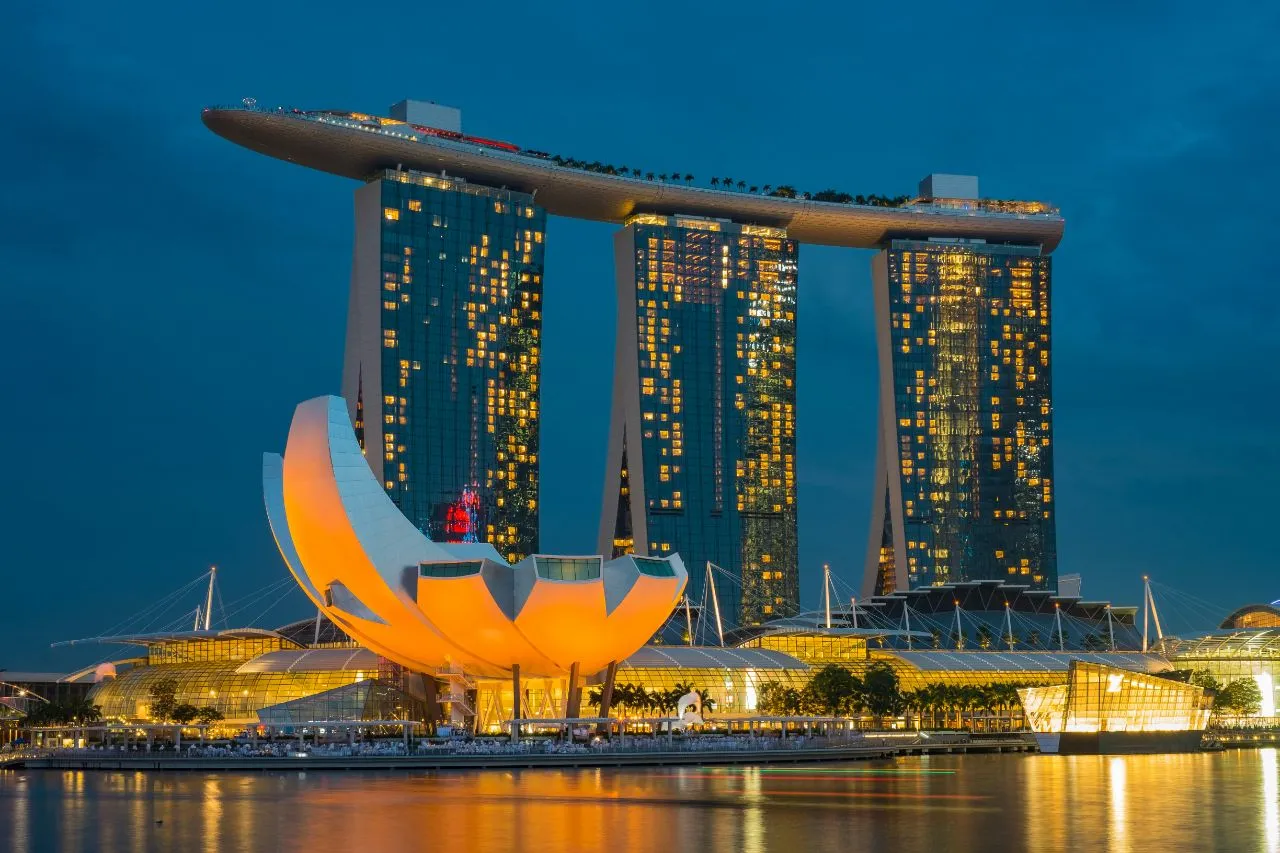
Singaporean regulator, the Monetary Authority of Singapore (MAS), has awarded cryptocurrency exchange Bitstamp a Major Payment Institution (MPI) trading license.
https://asset.coinness.com/en/news/8b98ee2f4cff871e9cd10703b8e0c006.webp
Photo by Julien de Salaberry on Unsplash

Expanding into APAC

In a blog post published on July 3, Bitstamp proclaimed that it is “globally trusted & now licensed in Singapore.” The company described the acquisition of the license as a milestone that “marks the start of [its] expansion into the APAC region.”


It emerged in June 2024 that Bitstamp had been acquired by American trading platform Robinhood. The $200 million acquisition was finally completed last month. Bitstamp signaled last September that it planned to expand its institutional business across Australia and Asia. Earlier this year, parent company Robinhood outlined that it would use Bitstamp to crypto offerings in Singapore in 2025.

Acquiring licenses

At that time, Johann Kerbrat, vice-president and general manager of Robinhood Crypto, said that “part of the reason why Bitstamp was attractive was because of their licenses with Singapore, in addition to its institutional business.” This latest license award strengthens the company’s efforts in gaining more traction in Asia.


Licensing is all the more relevant given the recent actions of the Singaporean regulator. Last month, MAS set a June 30 deadline for unlicensed crypto firms operating out of the city-state and serving overseas customers to cease offering such services.


Over recent years, Singapore has been striving towards establishing itself as a global hub for crypto startups. It has been successful in that endeavor insofar as a whole host of international crypto businesses have established a presence there. 


However, its recent move to curb unlicensed firms working out of Singapore in providing services internationally has been interpreted as a much more cautious approach being taken by the Singaporean authorities. The regulator clarified its concerns recently:

”MAS has set the bar high for licensing and will generally not issue a licence. The money laundering risks are higher in such business models and if their substantive regulated activity is outside of Singapore, MAS is unable to effectively supervise such persons. Without a licence, such DTSPs [Digital Token Service Providers] will have to cease their regulated activities.”

Caution in Singapore to benefit Hong Kong

Singapore has been competing with cities like Hong Kong to develop and maintain that crypto hub status. Some commentators have expressed the view that Hong Kong will benefit from this latest move in Singapore. 


Joshua Chu, a lawyer who co-chairs the Hong Kong Web3 Association, told the South China Morning Post (SCMP) recently that “this is likely to attract quality projects [to Hong Kong] looking for a compliant, liquid, and globally connected base.”


In addition to licensing achieved in Asia, Bitstamp has acquired licensing in a number of European countries such as Italy, Spain, France and the Netherlands. Last month, Robinhood launched the trading of tokenized stocks and exchange-traded funds (ETFs) for users resident within the European Union (EU). It also revealed that it is in the process of building out a layer-2 network on top of the Arbitrum blockchain with a view towards using it to host tokenized real-world assets (RWAs).

More to Read
View All
Policy & Regulation·

Jul 13, 2023

Kaspersky Says Crypto Phishing on the Rise in the Philippines

Kaspersky Says Crypto Phishing on the Rise in the PhilippinesThe Philippines witnessed a significant increase in detected cryptocurrency-related attacks last year while Vietnam recorded the highest level in Southeast Asia, according to cybersecurity firm Kaspersky.Photo by Markus Spiske on UnsplashEase of crypto accessVietnam topped the list with over 64,000 detections. Meanwhile, the Philippines recorded 24,737 cases of crypto-phishing attacks in 2022, up from 9,164 cases in 2021, making it the second-highest number in Southeast Asia.Adrian Hia, Managing Director for Asia Pacific at Kaspersky, attributed the rise to the ease of accessing cryptocurrency in the Philippines. He explained that as users increasingly turn to mobile devices, they are inadvertently exposing themselves to potential breaches, as malware can be installed through various touch points.Research published by Malaysian crypto data aggregator, CoinGecko, earlier this month, also points to the Philippines as having the second highest level of interest in crypto in Southeast Asia, after Singapore.Targeting popular platformsCybercriminals commonly target accounts of popular online gaming platforms and crypto wallets using advanced stealers or “stalkerware” that allow them to spy on individuals through their mobile devices, Kaspersky stated. The firm’s monitoring data revealed that malware is spreading through legitimate channels such as official marketplaces and advertisements in popular apps.Across Southeast Asia, the total number of crypto-phishing detections decreased to 147,649 in 2022 from 164,330 in 2021, according to Kaspersky. However, only Singapore (down 74%), Thailand (down 51%), and Vietnam (down 15%) observed declines in detections. Besides the Philippines, crypto-related attacks also increased in Indonesia (from 19,584 in 2021 to 24,642 in 2022) and Malaysia (from 16,071 to 16,767).Kaspersky discovered an average of 400,003 new malicious files per day in 2022, representing an increase of 20,000 files per day compared to the previous year. Hia emphasized that scammers are relentless in their efforts to steal cryptocurrency due to its increasing popularity and adoption, particularly in Southeast Asia. He urged cryptocurrency adopters in the region to stay informed about the latest tricks used by crypto phishers to protect their digital assets.Email-based attacksRoman Dedenok, a spam analysis expert at Kaspersky, revealed that crypto phishers often employ email-based attacks to target crypto users. He explained that scammers entice victims with the prospect of participating in a cryptocurrency giveaway, offering popular digital assets such as Bitcoin, Ethereum, Litecoin, Tron, or Ripple.The scammers provide a three-point guide to claim the free cryptocurrency along with a link to the “promotion” website. Clicking on the link leads users to a phishing site where they are prompted to specify the wallet to which they want the funds transferred.In response to the growing cybersecurity concerns, Kaspersky is engaging in discussions with government institutions worldwide. In the Philippines, while the central bank does not directly regulate cryptocurrency, it has established guidelines for virtual asset service providers. The Chairman of the Securities and Exchange Commission (SEC) in the Philippines, Emilio Aquino, recently delayed publication of a regulatory framework for crypto, on the basis of having “to make sure people don’t get burned.”Entities involved with virtual assets are required to obtain a license from the Bangko Sentral ng Pilipinas, the central bank of the Philippines, to comply with regulations.

news
Web3 & Enterprise·

Oct 12, 2023

CarrieVerse Token CVTX Listed on BingX

CarrieVerse Token CVTX Listed on BingXBlockchain-based Web3 metaverse platform CarrieVerse has recently listed its native token CVTX on the cryptocurrency exchange BingX.Photo by m. on UnsplashMultipurpose tokenBuilt on Polygon, CVTX is integrated into the tokenomics ecosystem of CarrieVerse and its card strategy role-playing game (RPG) SuperKola Tactics. It is also the governance token for the CarrieVerse blockchain gaming platform Cling. It is currently tradable on other international exchanges in addition to BingX, such as Gate.io, MEXC Global, BitMart, and ProBit Global, as well as the Korean exchange GOPAX. CVTX can be traded for USDT on all of the above exchanges except for GOPAX, which offers a CVTX/KRW pair. KRW stands for Korean won.“CVTX has expanded its global presence one step further. We will continue to strive for market expansion through listings on leading exchanges, building on the excitement inspired by gaming and staking,” said David Yoon, CEO of CarrieVerse.About BingXFounded in 2018, BingX is a Singapore-based digital asset exchange that offers spot derivatives, copy trading, and grid trading services to over five million users across 100 countries worldwide. Its spot trading volume over the past 24 hours at the time of publication, according to recent data from CoinMarketCap, stands at $602 million. Notably, it allows for easy transfer of assets between Korean exchanges Bithumb and Coinone, having passed their Travel Rules requirements last year.

news
Web3 & Enterprise·

Feb 20, 2025

Standard Chartered joins with local partners in Hong Kong to launch stablecoin

Standard Chartered Bank Hong Kong, a licensed bank and subsidiary of British multinational banking group Standard Chartered, has partnered with local companies to launch a Hong Kong dollar-based stablecoin in the Chinese autonomous territory.Photo by Chapman Chow on UnsplashJoint venture formed In a press release published by Animoca Brands, a blockchain-based gaming and Web3 venture capital firm based in Hong Kong, the company outlined details of the partnership between it and Standard Chartered, alongside Hong Kong Telecom (HKT), Hong Kong’s dominant fixed-line, mobile and broadband telecommunications firm. The partnership has been structured as a joint venture between the three companies, with the objective of launching the Hong Kong dollar-backed stablecoin. Local regulator and central bank, the Hong Kong Monetary Authority (HKMA) has been working towards implementing a regulatory framework specifically dedicated to stablecoins.  Legislative framework incoming As of the end of 2024, proposed legislation that would enable such a framework had advanced to Hong Kong’s Legislative Council. Before the bill can be enacted into law, the legislative process requires three readings of the bill accompanied by a series of debates and the scrutiny of lawmakers.  Once the legislation has been signed into law, it will require stablecoin issuers to obtain a license from the HKMA. In the case of this particular joint venture, the promoters plan to apply for a license in due course. Standard Chartered is already deeply embedded in Hong Kong’s financial system, making this latest development all the more significant. Alongside HSBC and Bank of China (Hong Kong), Standard Chartered issues the local currency, the Hong Kong dollar. That activity is carried out under the oversight of the HKMA.  The HKMA launched a sandbox environment relative to stablecoins in order to provoke an exchange of views between the regulator and market participants. The three parties to this latest joint venture have been sandbox participants since July of last year, alongside JINGDONG Coinlink Technology and RD InnoTech. JINGDONG declared its intention to launch a Hong Kong dollar-backed stablecoin last year. RD InnoTech plans to launch the HKDR stablecoin in conjunction with HashKey Exchange. Stablecoins ‘starting to eat the world’Earlier this month, Rene Michau, Standard Chartered’s global head of digital assets, set out the bank’s thoughts on stablecoins in an article published on the company’s website and co-authored by Circle Chief Financial Officer (CFO) Jeremy Fox-Green. Within it, Standard Chartered recognized the potential of stablecoins, suggesting that they are key to unlocking a future where blockchain acts as a new “internet of money.” The article went on to state that it is critical for stablecoin issuers “to maintain deep connections with strong banks and for those banks to be building digital asset capability.” The company recognizes that stablecoins are “starting to eat the world,” referring to a global stablecoin circulation that has already surpassed $100 billion.  Evan Auyang, President of Animoca Brands, pointed out that “we are still in the early stages for mass adoption of stablecoins across retail, enterprises and institutions.” He added that Hong Kong has a bright future as a global Web3 hub. Susanna Hui, Managing Director at HKT, believes that “issuing an HKD-linked stablecoin will enhance payment efficiency, streamline transactions, and provide greater security and transparency through advanced Web3 innovations.”

news
Loading