Top

Binance launches Sharia-compliant staking product

Web3 & Enterprise·July 17, 2025, 8:50 AM

Global crypto exchange platform Binance has launched “Sharia Earn,” a crypto staking product that has been certified as being Sharia-compliant.


Sharia-compliant financial products adhere to Islamic law, with sharia law being Islamic canonical law based upon the teachings of the Koran. The product incorporates multi-token staking featuring BNB, Ether (ETH) and Solana (SOL).


The product has been built on top of existing infrastructure which Binance had already used to offer “Simple Earn Locked Products” relative to BNB and liquid staking in the case of ETH and SOL. Users of the product can earn staking rewards on crypto assets, while secure in the knowledge that they are investing in compliance with Islamic finance principles.
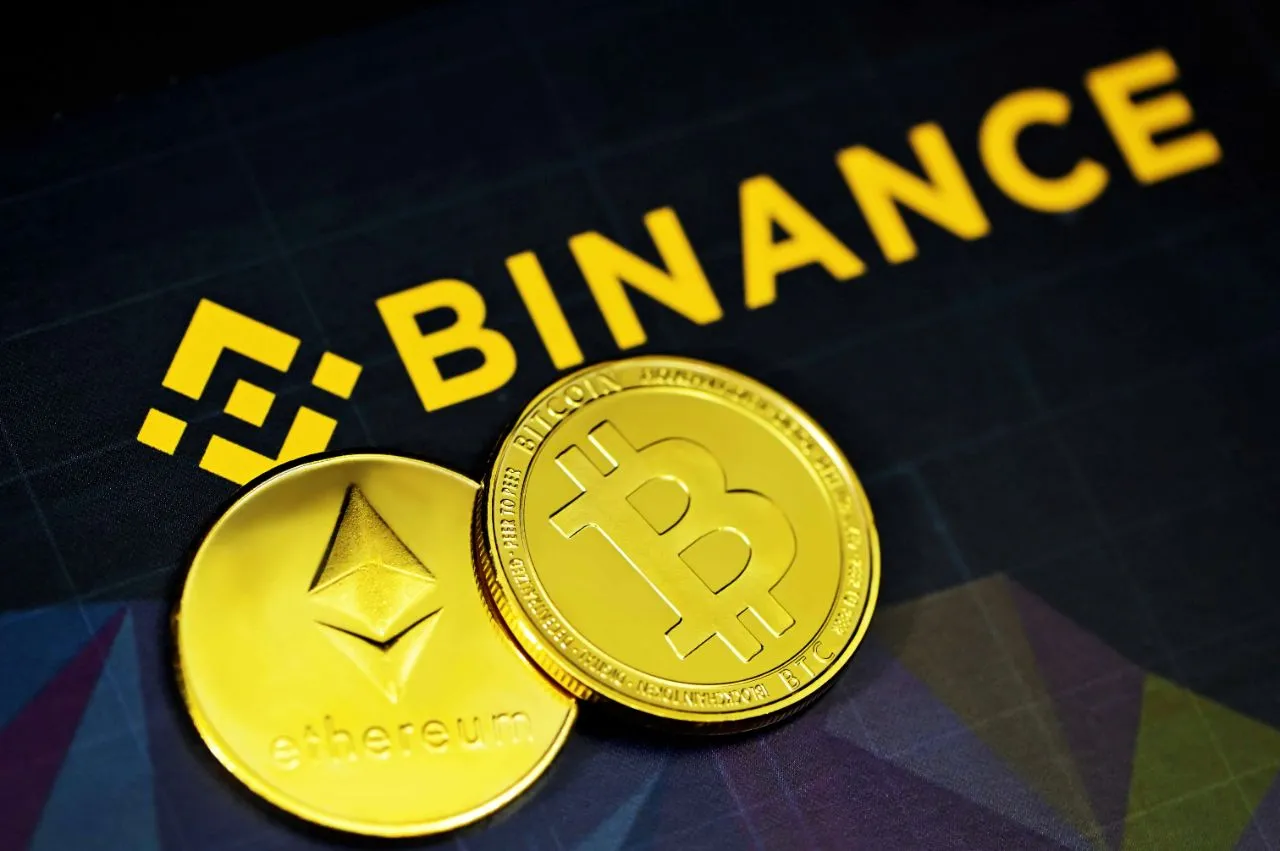
https://asset.coinness.com/en/news/ca6b7e2188c8974bb6ceafd550dfa0f2.webp
Photo by Kanchanara on Unsplash

‘Most meaningful product yet’

The new product was announced by the company during a Binance Square Webinar. Binance CEO Richard Teng described it as the firm’s “most meaningful product yet.” He referred to the launch of the product as a defining moment both for Binance and the broader crypto sector.


Teng said that “a truly inclusive financial system must respect the values and needs of every community, and that’s the vision behind Sharia Earn.” He added that “Islamic finance’s core tenets—transparency and shared prosperity—are universal,” asserting that these same values are at play in driving Binance.


The platform contracted Amanie Advisors, a Dubai-based global Islamic finance advisory service, in order to obtain Sharia-compliant certification for its latest product.


Bader Al Kalooti, Binance’s Head of Operations, Marketing & Growth for the Middle East & North Africa (MENA) region, said that “crypto adoption has surged in many Muslim-majority countries, but yield-generating products have remained largely inaccessible due to compliance concerns.” He claimed that the arrival of “Sharia Earn” addresses this issue.


While this is Binance’s first Sharia-compliant product, it’s not the first major exchange to enter this market. Last year, Bybit, a Dubai-headquartered global crypto exchange, engaged with ZICO Shariah Advisory Services in order to obtain certification for the trading of Sharia-compliant digital assets. At the time, Bybit claimed to have launched the world’s first crypto Islamic account.


Growing Islamic finance sector

Islamic law prohibits interest-based transactions. Crypto staking can be structured in such a way as to avoid interest. Staking is considered to be acceptable as rewards are not fixed. Staking rewards are seen as profit-sharing, with the staker retaining ownership of the asset and being open to the risk of potential losses.


Some forecasts suggest that the overarching Islamic finance sector could reach $4 trillion in the years ahead. That represents a market opportunity for crypto platforms to cater to this market by taking the time to acquire Sharia-compliant certification for their crypto products.


Binance and Bitget are not the only entities to spot this market opportunity. A new crypto trading platform called BurjX, founded by Canadian entrepreneurs Adam Ferris and Omar Abbas, has been established in the United Arab Emirates (UAE) with a vision of developing Sharia-compliant and regulatory-compliant crypto products. 


While no definitive timeline has been established, Abbas told the UAE English language daily newspaper, the Khaleej Times, that his company “will partner with the appropriate Sharia boards, and when we do launch, it’s going to be approved by the appropriate regulators.”

More to Read
View All
Policy & Regulation·

Feb 13, 2024

South Korea intensifies scrutiny on cryptocurrency exchanges

South Korea is ramping up its scrutiny on cryptocurrency exchanges, with the Financial Intelligence Unit (FIU) of the Financial Services Commission (FSC) announcing its intention yesterday to remove platforms that lack the necessary qualifications, according to the Korea Economic Daily.Unqualified exchangesIn its announcement yesterday, the FIU revealed its aim to block unqualified virtual asset service providers (VASPs) from facilitating trades in Korean won, the currency of the country. Those currently providing Korean won trading services will be eliminated from the market unless they can demonstrate they meet the required standards. With many exchanges set to renew their registrations in the latter half of this year, the FIU is gearing up for thorough evaluations through June to identify and remove unqualified VASPs. The FIU's assessments will focus on determining whether VASPs have adequate measures in place for user protection and are safeguarded against risks of money laundering. To bolster its efforts in preventing money laundering risks, the FIU intends to establish a framework where lawyers and accountants participate in crypto oversight activities.Photo by Andrea Piacquadio on PexelsExamining majority shareholder of VASPThe financial watchdog is also looking to propose amendments to the Financial Transaction Reports Act, aiming to raise the standards for VASP registration by introducing more stringent requirements. Beyond the current assessments of a VASP operator and its executives, the new regulations will involve close examination of its majority shareholder. This additional layer of scrutiny will evaluate the credibility of the major parties related to the VASP, taking into account factors such as their history of loan defaults. The FIU is set to create a system for analyzing cryptocurrency transactions and will strengthen its communication channels, not just with financial institutions but also with prosecutors and police forces. Furthermore, the agency is reviewing the Financial Action Task Force's (FATF) recommendation for freezing transactions in cases of suspicious activities. Once implemented, this will enable the FIU to temporarily halt suspicious transactions before bringing the issue to prosecutors.

news
Web3 & Enterprise·

Oct 12, 2023

Streami Appoints New CEO, Boosting Hopes for Regulatory Crypto Approval in Korea

Streami Appoints New CEO, Boosting Hopes for Regulatory Crypto Approval in KoreaStreami, the operator of South Korean cryptocurrency trading platform Gopax, has been struggling for months to obtain approval for the change of its chief executive officer from the financial regulator. This challenge emerged following the significant investment by the global exchange Binance, which became the company’s largest shareholder in February. At that time, Leon Sing Foong, who was the Asia-Pacific head of Binance, was appointed as CEO.Photo by Andriyko Podilnyk on UnsplashCityLabs’ emergenceHowever, the recent appointment of a CEO from a Korean company could potentially represent a turning point for Streami. This development is particularly noteworthy because this local firm has acquired shares in Streami and is expected to further increase its stake in the company.In a report from local news outlet Bizwatch, it was revealed that Cho Young-joong, who currently serves as CEO of CityLabs, has been officially designated as the new CEO of Streami. This appointment now places him in a leadership position overseeing both the smart city infrastructure company and the cryptocurrency exchange operator.Before Cho’s appointment, CityLabs had made investment in Streami, contributing KRW 5.4 billion, which is approximately $4 million. This investment secured CityLabs an 8.55% stake in Streami, equivalent to a total of 76,308 shares of the company.Thanks to this development, Streami has finally filled the CEO position, ending a two-month vacancy that began after the resignation of former CEO Lee Joong-hoon in August. While it has been confirmed by a company official that Cho has been selected as the new CEO, he has not yet assumed his role.Frequent leadership changesIn the course of this year, Streami has already undergone three leadership changes. The stagnant administrative process at the Financial Intelligence Unit (FIU) compelled Leon Foong to step down from his position, which was subsequently assumed by Lee Joong-hoon, Streami’s former Vice President. However, despite Lee’s appointment, little progress was made during his tenure. Additionally, It’s also worth noting that there were reports indicating Leon Foong’s complete departure from Binance in late August.Several industry sources have suggested that Binance is likely to relinquish its status as Streami’s largest shareholder but could later participate in managing the company. The hope is that this strategic maneuver will assist Streami in securing approval from the FIU.

news
Policy & Regulation·

Aug 11, 2023

Binance Initiates Registration Process for AML Compliance in Taiwan

Binance Initiates Registration Process for AML Compliance in TaiwanGlobal crypto exchange Binance has set in motion the process of registering under Taiwan’s Money Laundering Control Act, the sole crypto-related regulatory framework currently established in Taiwan.In a confidential gathering on Tuesday, Taiwan’s Financial Supervisory Commission (FSC) conveyed to numerous domestic crypto service providers that Binance is in the process of applying for registration to ensure compliance with anti-money laundering (AML) regulations, according to a local media report.Photo by Thomas Tucker on UnsplashImportance of AML complianceTaiwan has mandated that virtual asset service providers (VASPs) adhere to its anti-money laundering statutes since the FSC introduced AML rules in July 2021. Outside of these measures, the cryptocurrency industry in the country remains largely unregulated.Speaking to The Block on Friday, an FSC official refrained from confirming whether Binance had already submitted the necessary documentation to register with the regulatory body. However, the official did emphasize the importance of offshore crypto platforms operating in Taiwan abiding by the local AML regulations.While Binance is not yet regulated in Taiwan, it has established a local entity named “Binance International Limited Taiwan Branch (Seychelles),” as per records from the Department of Commerce’s database. The registration particulars indicate that the Taiwanese government endorsed Binance’s company registration on May 12, 2023, with a registered capital of NT$30 million ($944,000) within Taiwan.Cooperation with law enforcementBinance has taken steps to cooperate with local law enforcement agencies to combat cybercrime in Taiwan. In June, the exchange revealed its collaboration with Taiwan’s Criminal Investigation Bureau, leveraging its expertise to assist over 200 Taiwanese law enforcement officers in addressing digital asset-related criminal activities.Damien Ho, Head of Global Partnerships at Binance, remarked in a blog post at the time:“As an increasing number of individuals in Taiwan show interest in cryptocurrency, ensuring a secure and comfortable crypto ecosystem for users becomes crucial.”Growing Asian influenceBinance’s influence is growing across Asia. This month, it officially launched operations in Japan after its acquisition of the local exchange Sakura Exchange BitCoin in November 2022, paving the way for regulatory oversight by the Japan Financial Services Agency (JFSA). Earlier this month, an investigative report carried out by the Wall Street Journal revealed that Binance is thriving in China in spite of the fact that crypto trading is a banned activity there.Regulatory guidelines anticipatedTaiwan’s FSC, which assumed the role of the primary regulator overseeing the crypto industry in March, is currently formulating comprehensive guidelines for trading and payments involving cryptocurrencies for VASPs.The FSC has disclosed plans to release the VASP guidelines by the end of September. Kevin Cheng, a Director at the Taiwan Fintech Association, revealed that the FSC intends to implement a stringent regulatory approach for crypto platforms in Taiwan, similar to its oversight of traditional financial institutions.Cheng noted: “The FSC plans to require VASPs to keep their own crypto assets separate from the clients’ crypto assets and to have accounting firms audit such assets every year.” However, Cheng highlighted the potential difficulty of this requirement, as many accounting firms might hesitate to serve crypto clients due to the specialized nature of crypto-related information.

news
Loading