Top

CFX surges as Conflux teases yuan-pegged stablecoin & 3.0 launch

Markets·July 22, 2025, 12:16 AM

Conflux Network, a layer-1, regulatory-compliant Chinese blockchain focused on borderless transactions, has announced the upcoming launch of the Conflux 3.0 mainnet together with an offshore yuan-pegged stablecoin, resulting in its native CFX token surging.
https://asset.coinness.com/en/news/06040104449a2d7706a51662c1fc5865.webp
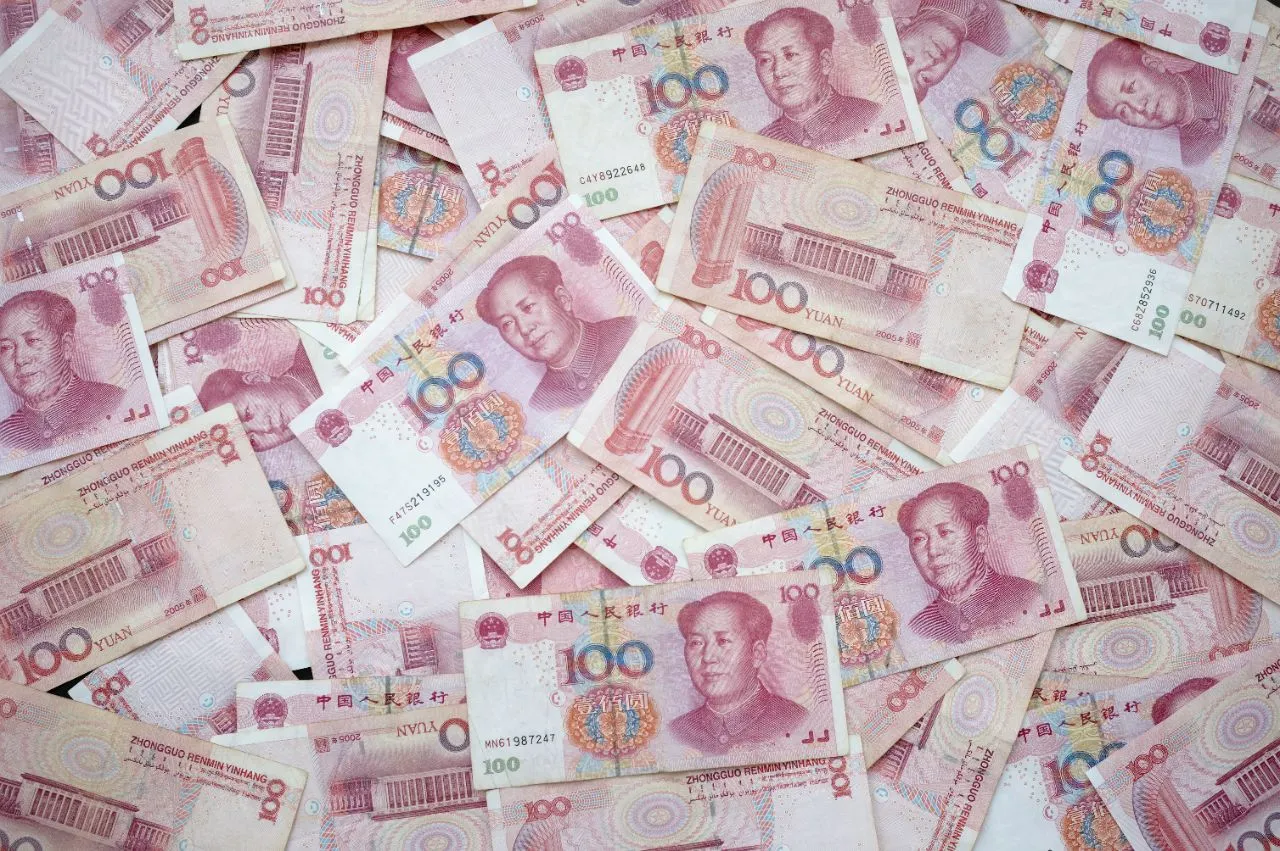
Photo by Eric Prouzet on Unsplash

Partnership

notice published on the website of the Shanghai Municipal People’s Government on July 20 reported on the Conflux Tree Graph Technology and Ecological Development Conference, which was held in Shanghai over three days from July 18 to July 20. Over the course of the three-day event, the project announced a partnership with AnchorX, a Hong Kong-based fintech firm specializing in stablecoins, and Shenzhen-based Eastcompeace Technology. 


The purpose of the initiative is to develop a stablecoin pegged to the offshore yuan (CNH), the version of China’s currency that circulates outside the mainland. The report outlined that in recent years, stablecoins and tokenized real-world assets (RWAs) have come to global attention. 


Belt & Road Initiative

Given this backdrop, it was outlined that “creating an independent and controllable high-performance public chain system” could be of great benefit to China and its Belt and Road Initiative (BRI), which sets out to develop infrastructure across 150 countries to facilitate trade with China.


This is not the first point at which AnchorX has collaborated with Conflux. Back in February, the company received in-principle approval from the Astana Financial Services Authority (AFSA) in Kazakhstan to issue CNH-pegged stablecoins. Growing bilateral trade between Kazakhstan and China was cited as the rationale behind the license, given the need for cross-border payments.


At the time, it was outlined that the AxCNH yuan-pegged stablecoin would be issued on the Conflux blockchain. It’s unclear if this same stablecoin is the focus of this latest development or whether an entirely new yuan-pegged stablecoin will be issued.

AnchorX collaborated with Conflux in 2024 to bring about the issuance of AxHKD, a Hong Kong dollar-pegged stablecoin. The stablecoin runs on the Conflux blockchain, with the stablecoin issuer using OKLink Trust as its custodian.


TokenPocket, a multi-chain crypto wallet project, also outlined on X on July 21 that it too is involved in the partnership with Conflux and AnchorX. The project outlined that it will support the growth of stablecoin adoption, the development of cross-border payment solutions and the promotion of tokenized RWAs in international markets through the collaboration. 


Pilot projects

TokenPocket went on to explain that the companies plan to launch pilot projects in Central Asia, Southeast Asia and other regions, building “a compliant, secure, and innovative fintech framework to boost the role of the Conflux ecosystem as critical infrastructure for cross-border trade.”


It was revealed at the conference that the mainnet release of Conflux 3.0 will occur in August. With the implementation of further optimized execution modules, the project expects 3.0 to result in a network throughput of 15,000 transactions per second (TPS). 


These developments over the course of the weekend have had an impact on the unit price of Conflux’s native token, CFX. On July 19, the token was trading at around $0.1043. According to CoinMarketCap data, at the time of writing, it’s trading at $0.2232, a 2.58% increase over the past day.

 

More to Read
View All
Policy & Regulation·

Oct 30, 2024

Bhutan moves $66M in Bitcoin to Binance

The Royal Government of Bhutan has moved $66 million in Bitcoin (BTC) to global crypto exchange Binance. That’s according to blockchain data analytics firm Arkham Intelligence, outlining that the assets were moved to Binance over two separate transactions. The firm took to the X social media platform on Oct. 29 to highlight the digital asset transfer. In its X post, the firm wrote:”Crypto wallets belonging to the Royal Government of Bhutan moved $66.55M BTC to Binance this morning. The last time they deposited to exchanges was 4 months ago, at the start of July.”Photo by Moose Photos on PexelsSell-off concernsSome crypto community commentators have expressed concern of a sell-off given that the nation nestled in the Himalayas still has a holding of 12,456 Bitcoin, worth in the region of $900 million. The transfer was made on a day in which Bitcoin reached a unit price in excess of $73,000.  Arkham outlined that geographical data suggests that Bhutan’s Bitcoin mines remain active. On Oct. 29, they had accumulated $600,000 worth of Bitcoin mining rewards on-chain.  In this latest market activity, the Bhutanese began selling when the Bitcoin unit price had exceeded $70,000. As Bitcoin reaches towards new all-time-high pricing, Bitcoin whales often take profits. Mining Bitcoin since $5KIt emerged in 2023 that Bhutan had been quietly mining Bitcoin over the course of a number of years, since the leading digital asset had a unit price of around $5,000. The commercial activity has been enabled via Druk Holding and Investments (DHI), the commercial arm of the Royal Government of Bhutan. The Asian nation has ample hydroelectricity resources, being the only carbon-negative country in the world. Consequently, all its Bitcoin mining is carried out using hydro. While mining activity had been ongoing for a number of years and had largely gone unnoticed by the industry, an entanglement between DHI and failed crypto lenders BlockFi and Celsius brought more attention onto the Bhutanese holding company’s activities relative to crypto.  LawsuitsDHI was sued by BlockFi with the action subsequently voluntarily dismissed. In the case of Celsius it withdrew around $65 million from the platform prior to Celsius declaring bankruptcy. As a consequence, Celsius is currently suing DHI to claw back the funds that were removed from the platform. In 2023 Singaporean Bitcoin mining firm Bitdeer entered into a partnership with DHI with a view towards jointly developing green digital asset mining operation within the Kingdom of Bhutan. At the time, DHI CEO Ujjwal Deep Dahal said that the partnership formed part of an overall strategy to ensure that Bhutan took its place at the forefront of global innovation. Arkham Intelligence outlined on X that in H2 2023, Bhutan’s Bitcoin mining operations were producing in the region of 26 Bitcoin per day, or 780 Bitcoin per month. However, over the past three months, that mining rate has decreased to 8.6 BTC per day or 260 BTC per month. Arkham suggests that the Bitcoin halving, together with the increase in the Bitcoin hashrate, explains the reduced output, although it speculated that some unknown issue with Bitcoin mining rigs may also be a contributing factor. 

news
Web3 & Enterprise·

Jul 29, 2023

Japan’s HashPort Group Raises $8.5M in Funding Round

Japan’s HashPort Group Raises $8.5M in Funding RoundHashPort, a leading blockchain developer based in Japan, has successfully raised 1.2 billion Japanese yen (approximately $8.5 million) in a Series C funding round.The funding was secured through key investors, including Sumitomo Mitsui Banking Corporation (SMBC), The University of Tokyo, Edge Capital Partners, and Japanese billionaire entrepreneur Yusaku Maezawa. With this latest infusion of capital, HashPort’s total funding has now reached an impressive 2 billion yen (about $14.2 million).Global expansion plansThe announcement, which was made on Friday, revealed that these fresh funds will be instrumental in driving HashPort’s global expansion plans, particularly in the face of complex regulatory environments. The company aims to fortify its business operations and establish a robust compliance management system, essential for navigating the intricate web of global regulations.At the core of HashPort’s ecosystem are two significant components. The first is its namesake blockchain-related consulting and system solution, which has gained substantial recognition in Japan. The second is HashPalette, a public chain specially designed for non-fungible tokens (NFTs), tapping into the booming NFT market. Additionally, HashPort is set to unveil an exciting metaverse game called The Land Elf Crossing in the upcoming fourth quarter.Coincheck collaborationHashPort’s previous collaboration with Japanese cryptocurrency exchange Coincheck garnered considerable attention. Together, they launched Japan’s first initial exchange offering (IEO), which raised an impressive 22.45 billion yen (approximately $160 million) in commitments for the Palette (PLT) token. As a testament to the success of this venture, PLT Place, the official NFT marketplace of Palette Chain, now boasts over 370,000 users.President Seihaku Yoshida expressed HashPort’s future ambitions, revealing plans to cooperate with Expo 2025, a highly anticipated event scheduled to take place in Osaka. HashPort aims to develop digital wallets and digital passports linked to soulbound tokens (SBTs) for Expo 2025. With an estimated 28 million visitors expected to attend the expo, the company sees this as a historic opportunity to introduce Web3 technology to a broader audience.Soulbound tokensIn December 2022, one of HashPort’s current investors, SMBC, joined forces with the company to explore the potential applications of SBTs. Proposed by Ethereum Co-Founder Vitalik Buterin, SBTs represent the characteristics or reputation of individuals or entities, much like the concept of soulbound items in the popular massively multiplayer online role-playing game (MMORPG), World of Warcraft.As part of that collaboration, SMBC and HashPort were discussing the possibility of creating a “safe and secure Web3 economic zone.” No further details were given beyond that, but the idea may have been along the lines of creating something like Cyberport, an innovative digital community which has been created in Hong Kong, featuring over 1,900 start-ups and technology companies.The successful funding round marks a significant milestone for HashPort, providing the necessary financial resources to accelerate its expansion plans and drive innovation in the Web3 space. As the company continues to pioneer advancements in the blockchain and NFT sectors, its collaboration with Expo 2025 and ongoing exploration of SBTs showcase the company’s efforts in attempting to contribute towards shaping the future of decentralized technologies.

news
Web3 & Enterprise·

Dec 01, 2023

Hong Kong securities group proposes ICOs as growth opportunity

Hong Kong securities group proposes ICOs as growth opportunityKey stakeholders in Hong Kong’s financial world are contemplating a transformative shift in the Chinese autonomous territory’s digital asset strategy that concerns furthering initial coin offerings (ICOs).Photo by Qinyi Lian on UnsplashRoom for improvementIn a recent letter signed by Chen Zhihua, President of the Hong Kong Securities and Futures Professionals Association (HKSFPA) and published to the HKSFPA website on Wednesday, the introduction of an ICO mechanism as a potential catalyst for the city’s economic revival has been proposed.The letter, which provided the HKSFPA’s “opinions on the 2024–2025 budget,” included the ICO suggestion as recommendation №10 on a list of various proposals. The suggestion comes amid ongoing efforts to navigate the economic challenges posed by the pandemic. Zhihua acknowledges the developmental approach taken by Hong Kong Chief Executive John Lee where financial sector strategy is concerned, but emphasizes the industry group’s belief in the room for improvement that exists to stimulate Hong Kong’s financial sector further.Formalizing ICOsFormalizing ICOs in Hong Kong could establish a supportive environment for crypto startups and investors seeking regulated and secure opportunities. The proposal aligns with a broader call for government engagement in economic recovery and policy-making, emphasizing a collaborative approach toward the crypto sector. This inclusive stance signals a forward-thinking perspective that could lead to more supportive policies and frameworks, fostering a conducive environment for crypto innovation and growth.Reflecting on the history of ICOs, the letter acknowledges the fundraising method’s evolution since the attention garnered by the Mastercoin ICO in 2013 and Ethereum’s significant milestone in 2014. The ICO boom of 2017 saw projects like EOS and Tezos raising substantial funds, accompanied by both enthusiasm for fundraising ease and concerns about investor protection due to minimal regulation.Fraud concernsWhile the ICO boom faced regulatory scrutiny and witnessed instances of fraud and scams, a progressive approach by financial regions such as Hong Kong could reshape the global perception of ICOs. The letter suggests that, under favorable terms, ICOs could play a pivotal role in revitalizing the digital asset landscape.Zhihua underscores the importance of addressing potential challenges by urgently reviewing and enhancing anti-money laundering (AML) and counter-terrorist financing legislation. This cautious approach aims to ensure that ICOs in Hong Kong adhere to established frameworks, avoiding the pitfalls associated with unregulated fundraising.While that’s the HKSFPA’s position, the initial flurry of ICOs a number of years ago involved many projects proposed by scammers and fraudsters. At the time, the Hong Kong Securities and Futures Commission (SFC) recognized the development as “downright fraud” and put pressure on exchanges to delist many tokens.One other related element that the letter proposes is in integrating environmental, social and governance (ESG) and Islamic finance elements into investment immigration policies. This forward-thinking approach reflects a growing awareness of ethical and sustainable investment practices that could potentially position Hong Kong to set new standards for responsible investment.

news
Loading