Top

Hong Kong securities group proposes ICOs as growth opportunity

Web3 & Enterprise·December 01, 2023, 2:23 AM

Key stakeholders in Hong Kong’s financial world are contemplating a transformative shift in the Chinese autonomous territory’s digital asset strategy that concerns furthering initial coin offerings (ICOs).
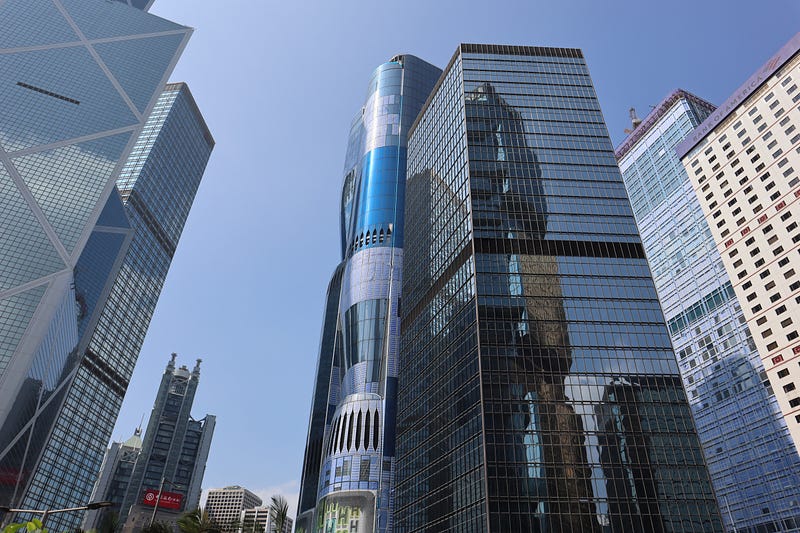
Photo by Qinyi Lian on Unsplash


Room for improvement

In a recent letter signed by Chen Zhihua, President of the Hong Kong Securities and Futures Professionals Association (HKSFPA) and published to the HKSFPA website on Wednesday, the introduction of an ICO mechanism as a potential catalyst for the city’s economic revival has been proposed.

The letter, which provided the HKSFPA’s “opinions on the 2024–2025 budget,” included the ICO suggestion as recommendation №10 on a list of various proposals. The suggestion comes amid ongoing efforts to navigate the economic challenges posed by the pandemic. Zhihua acknowledges the developmental approach taken by Hong Kong Chief Executive John Lee where financial sector strategy is concerned, but emphasizes the industry group’s belief in the room for improvement that exists to stimulate Hong Kong’s financial sector further.


Formalizing ICOs

Formalizing ICOs in Hong Kong could establish a supportive environment for crypto startups and investors seeking regulated and secure opportunities. The proposal aligns with a broader call for government engagement in economic recovery and policy-making, emphasizing a collaborative approach toward the crypto sector. This inclusive stance signals a forward-thinking perspective that could lead to more supportive policies and frameworks, fostering a conducive environment for crypto innovation and growth.

Reflecting on the history of ICOs, the letter acknowledges the fundraising method’s evolution since the attention garnered by the Mastercoin ICO in 2013 and Ethereum’s significant milestone in 2014. The ICO boom of 2017 saw projects like EOS and Tezos raising substantial funds, accompanied by both enthusiasm for fundraising ease and concerns about investor protection due to minimal regulation.


Fraud concerns

While the ICO boom faced regulatory scrutiny and witnessed instances of fraud and scams, a progressive approach by financial regions such as Hong Kong could reshape the global perception of ICOs. The letter suggests that, under favorable terms, ICOs could play a pivotal role in revitalizing the digital asset landscape.

Zhihua underscores the importance of addressing potential challenges by urgently reviewing and enhancing anti-money laundering (AML) and counter-terrorist financing legislation. This cautious approach aims to ensure that ICOs in Hong Kong adhere to established frameworks, avoiding the pitfalls associated with unregulated fundraising.

While that’s the HKSFPA’s position, the initial flurry of ICOs a number of years ago involved many projects proposed by scammers and fraudsters. At the time, the Hong Kong Securities and Futures Commission (SFC) recognized the development as “downright fraud” and put pressure on exchanges to delist many tokens.

One other related element that the letter proposes is in integrating environmental, social and governance (ESG) and Islamic finance elements into investment immigration policies. This forward-thinking approach reflects a growing awareness of ethical and sustainable investment practices that could potentially position Hong Kong to set new standards for responsible investment.


More to Read
View All
Policy & Regulation·

May 29, 2024

Korean regulators pressured to approve crypto ETFs following ETH ETF approval in the U.S.

The recent 19b-4 approval of spot Ethereum exchange-traded funds (ETFs) by the U.S. Securities and Exchange Commission (SEC) is putting pressure on South Korean financial regulators to revisit their policies on digital assets. The SEC's decision to allow ETFs for Ethereum, the world's second-largest cryptocurrency, on May 24, 2024, follows its earlier endorsement of Bitcoin ETFs in January 2024. This move is seen as a significant step in merging traditional finance with the digital asset sector.Photo by DrawKit Illustrations on UnsplashKorean regulatory cautionIn contrast to the progressive stance in the U.S., the Korean Financial Services Commission (FSC) and the Financial Supervisory Service (FSS) have maintained a cautious approach regarding the integration of crypto assets into traditional securities markets. According to current regulations under the Capital Markets Act, ETFs in Korea are limited to traditional underlying assets such as financial instruments, securities, international currencies and commodities. These foundations are crucial for the creation of financial derivatives, leaving little room for digital assets under current laws. Calls for regulatory reforms and market implicationsThe decision by the SEC is expected to influence the Korean regulators to update their views on digital assets, according to local media and industry experts. Jung Eui-jung, the head of the Korean Stockholders’ Alliance, has advocated for Korea to emulate the U.S. by approving Bitcoin and Ethereum ETFs. He expressed concerns that continued regulatory hesitance could lead to investor funds migrating to more progressive markets like the U.S., potentially positioning the U.S. to broaden its crypto market further. Xangle, a digital currency data provider in Seoul, has also criticized the current regulations as outdated, emphasizing the need for revisions to accommodate the increasing relevance of digital assets in global finance. 

news
Web3 & Enterprise·

Jul 25, 2023

Top Korean Crypto Exchanges Witness Surge in Listings and Delistings During H1

Top Korean Crypto Exchanges Witness Surge in Listings and Delistings During H1In the first half of this year, South Korea’s top five cryptocurrency exchanges experienced notable growth in the number of newly added cryptocurrencies to their platforms. However, they also observed a significant surge in the number of cryptocurrencies being delisted.Photo by Shubham Dhage on UnsplashDelisting and listingAccording to a report by local news outlet Etoday, the nation’s five leading exchanges Upbit, Bithumb, Coinone, Korbit, and Gopax ceased trading for a total of 51 cryptocurrencies during the first six months of this year. This marked an 88% increase compared to the 27 cryptocurrencies delisted in the previous six-month period. During the first half of last year, the number of delisted tokens was 48.Among the five exchanges, Coinone took the lead by delisting the highest number of cryptocurrencies, totaling 24. Bithumb followed with 14 delisted tokens, Gopax with six, Upbit with five, and Korbit with two. Notably, Coinone continued its delisting spree this month, removing an additional five cryptocurrencies from its platform. Most cryptos were delisted because their projects and services were not operating normally.The significant number of delisted tokens at Coinone appears to be linked to the involvement of its former employees in the unlawful listing of certain tokens. These individuals reportedly received bribes in exchange for listing a total of 46 cryptocurrencies on the trading platform. Among these tokens were PICA and PURE, which are no longer traded on the exchange.Only five cryptocurrencies were delisted according to the decision made by the Digital Asset eXchange Alliance (DAXA), a self-regulatory group consisting of the aforementioned five crypto exchanges. The delisted tokens were REP, BASIC, OMG, SRM, and PCI. This indicates that most of the affected cryptocurrencies were exclusively traded on one of the DAXA member exchanges, indicating that DAXA’s listing and delisting guidelines were largely ineffective.Meanwhile, there has been a notable surge in the number of newly added cryptocurrencies. Bithumb, for instance, took the lead by listing an impressive 63 new tokens, nearly three times the number listed by Upbit (22). In the same vein, Coinone added 14 tokens, while Korbit and Gopax followed with six and three new listings, respectively.Profit squeezeLast year, crypto trading platforms adopted a conservative approach when it came to listing and delisting procedures, prioritizing investor protection. However, their stance shifted as the global crypto market encountered a significant decline in trading volume amid crypto winter. This decrease in trading activity subsequently led to reduced operating profits, compelling the platforms to list more cryptocurrencies.With the exception of Upbit, which maintains a dominant market share in the nation, the outlook on crypto exchanges appears more or less grim. In particular, Coinone, Korbit, and Gopax are in the red. Bithumb, while still in profit, saw its operating profit last year falling 80% year-over-year to 163.5 billion KRW ($127.9 million). This trend continued this year, with Bithumb’s operating profit In the first quarter of this year recording 16.2 billion KRW, an 80% decrease compared to the same period last year.In light of this development, an industry insider, who wished to stay anonymous, told Etoday that while the market’s total trading volume is witnessing a considerable decline, Upbit’s dominance is still growing. This individual also noted that the decrease in trading volume and the resulting deficit are exerting pressure on exchanges to expand their cryptocurrency listings.

news
Web3 & Enterprise·

Sep 09, 2023

Founders Exit Following Overhaul of NFT Startup Rario

Founders Exit Following Overhaul of NFT Startup RarioPolygon-based NFT platform Rario, specializing in cricket-related non-fungible tokens (NFTs), is experiencing a major transformation, with its founders, CEO Ankit Wadhwa and CTO Sunny Bhanot, departing the company after a two-year tenure.Investors in the startup are taking on a more prominent role in steering the direction of the Indian startup, according to a report from TechCrunch on Friday.Photo by Alessandro Bogliari on UnsplashDream11Dream11, a prominent Mumbai-based fantasy sports platform and one of Rario’s primary backers, alongside other investors, is said to be exerting pressure to gain greater control, resulting in the ousting of the firm’s founders. The development comes amid other significant shifts in Dream11’s leadership.Additionally, Rario is undergoing a broader restructuring effort that includes the elimination of various roles, according to sources who were cited by TechCrunch as being familiar with the matter.This recent upheaval coincides with reports of Dream11’s parent company, Dream Sports, taking measures to reduce operational costs. TechCrunch noted that Dream Sports is actively renegotiating several licensing agreements previously inked by Rario as part of cost-cutting measures.High profile investorsRario boasts a roster of high-profile investors, including global investment company Alpha Wave Global and cricket icon Sachin Tendulkar. In April 2022, the cricket NFT platform made waves by securing $120 million in a Series A funding round, asserting its dominance in the cricket NFT rights arena with over 900 cricketers on board at that time. It’s not clear what valuation the firm had at the time of the Series A funding round but in a prior round, Rario had been valued at $250 million.Founded in 2021, Rario set out with a mission to create digital cricket collectibles and foster an online community for passionate fans. By April 2021, the company had successfully sold 50,000 NFTs to sports enthusiasts spanning 20 countries.Cricket world partnershipsCricket is the second largest sport in the world with in excess of 1.5 billion fans worldwide. That leaves a lot of scope for Rario to harness NFTs to bring about new forms of engagement.Among Rario’s notable partnerships are agreements with cricket leagues such as Cricket Australia, the Australian Cricketers’ Association, the Caribbean Premier League, the Lanka Premier League, and the Abu Dhabi T10 League Legends League Cricket.Polygon changesPolygon Labs, the developer of the Ethereum-centric layer two scaling network upon which the Rario platform runs, also features India in its origin story. It too has seen upheaval at a managerial level recently. In July, the firm announced a number of senior positional changes. Its former Chief Legal Officer (CLO) was elevated to the position of CEO. Those changes saw Polygon Labs’ Indian Co-Founder Sandeep Naiwal transition to the role of Executive Chairman.Rario’s ongoing evolution reflects the dynamic nature of the NFT space, where startups must adapt to changing investor interests and market conditions. With its investors taking the reins, Rario faces a pivotal juncture in its journey to redefine how cricket fans engage with the sport through the exciting world of NFTs.

news
Loading
