Top

Cango ramps up crypto production

Web3 & Enterprise·August 07, 2025, 8:56 AM

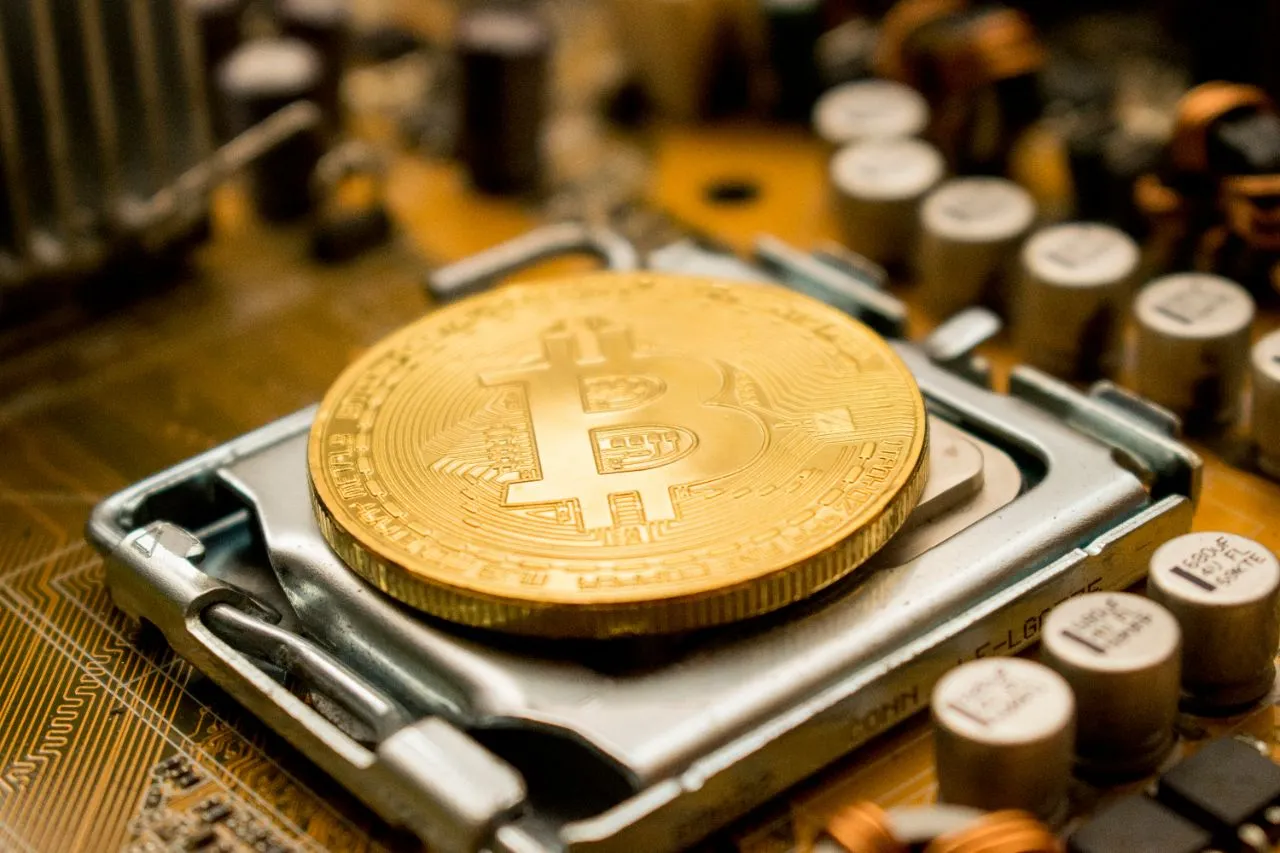
Cango, Inc., a Shanghai-headquartered Bitcoin mining business which is publicly listed on the New York Stock Exchange (NYSE: CANG), provided a mining operations update on Aug. 5, disclosing a significant increase in its crypto production.
https://asset.coinness.com/en/news/62c6101df9c53245324d8fca0d61d869.webp
Photo by Dmytro Demidko on Unsplash

45% increase in output

The update outlined that in June, the firm mined 450 BTC, while holding 3,879.2 BTC, with a deployed hashrate of 32 EH/s. The figures for July show a considerable uptick, with 650.5 BTC having been mined. That Bitcoin was retained, bringing the firm’s overall Bitcoin treasury holding to 4,529.7 BTC, with a deployed hashrate of 50 EH/s.


Cango CEO Paul Yu outlined that the firm had added 18 EH/s in hashpower towards the end of June. This additional capacity accounted for the increased output experienced for the month of July, representing a 45% increase month-on-month. Yu stated:


“This strong performance not only demonstrates our commitment to execution but also fuels our ambition to accelerate future production.”


The Cango CEO added that a new and experienced management team is now in place, and with that, Cango is focusing on working towards transitioning to “a more diversified and resilient portfolio of mining sites and energy infrastructure."


Cango isn’t the only company in the Bitcoin mining sector to up its production. Cipher Mining, an American miner with facilities in Texas, also published an update, indicating that it produced 214 BTC in July with a hashrate of around 20.4 EH/s, up 21.43% month-on-month. Cipher outlined that Black Pearl Phase I, the initial 150 MW tranche of its Black Pearl facility, came on stream last month, accounting for the increased output.


Unlike Cango, Cipher sold 52 BTC as part of what it described as “its regular treasury management process.” In this respect, Cango bucked a trend in comparison with its industry peers. CryptoQuant reported that miners became significant sellers of Bitcoin in July, depositing 16,000 BTC to exchanges as of July 18.

Ranked by BitcoinTreasuries.net in order of Bitcoin held, Cango now holds 18th place among corporations holding BTC.

Originally an automotive transaction service platform operating within the Chinese market, Cango announced a new departure last November, with the signing of agreements to buy $400 million in crypto mining equipment from a number of vendors, including Bitmain. With crypto mining a banned activity in China, the company has deployed its mining operations at various locations across North America, South America, the Middle East and East Africa.


By January, the company was being referred to as a “Bitcoin mining powerhouse.” At that time, the company’s Communications Director, Juliet Ye, told CoinDesk that the firm’s entry into the Bitcoin mining sector had surprised people, given that “nobody has ever heard of Cango before.”


By April, Cango had sold its legacy auto-financing business for $352 million to a firm linked to Bitmain affiliate, Antalpha, allowing it to focus exclusively on mining. The company’s stock has surged 180% over the course of the last 12 months. Ye said that the Chinese firm’s pivot to Bitcoin mining has created a buzz around the company that had been absent previously.

More to Read
View All
Web3 & Enterprise·

Sep 18, 2023

SK C&C Issues Voluntary Carbon Offsets on Blockchain-Based Credit Platform

SK C&C Issues Voluntary Carbon Offsets on Blockchain-Based Credit PlatformSK C&C, the information communications technology arm of South Korean conglomerate SK Group, said last Thursday that it has issued a total of 186,595 carbon offset credits through 19 projects on the blockchain-based carbon reduction certification and credit trading platform Centero.Amidst the ever-growing challenge of climate change, industries and companies around the world are attempting to reduce their carbon output and reach net zero emissions through involvement in carbon finance — specifically, carbon credit markets.Photo by Jas Min on UnsplashUnderstanding carbon marketsThere are two types of carbon markets — the compliance market, which uses a cap-and-trade system, consists of governments and companies that are legally mandated to offset their carbon emissions. On the other hand, the voluntary carbon market (VCM) operates outside of mandatory frameworks and uses a project-based system to allow companies, organizations, and individuals to trade carbon offset credits voluntarily. Each of these carbon offset credits represents the reduction of one metric tonne of carbon dioxide or greenhouse gas (GHG) emissions. Participants in the voluntary market are mainly driven by their corporate social responsibilities, shareholder pressure, or PR motives.Revolutionizing voluntary carbon reductionCentero — short for Center of Net Zero — provides a one-stop registry service that enables monitoring, reporting, and verification of greenhouse gas reduction projects in the VCM, and issues certified carbon reduction credits to support credit transactions with companies that are pursuing net zero goals. It was developed by SK C&C and is currently operated by the KCCI Center for Carbon Reduction Certification according to the KCCI Carbon Standard, which evaluates and certifies carbon reduction efforts.Centero takes care of the entire process of voluntary carbon reduction projects, from preparation to registration and execution, credit certification, and credit distribution. Its advantage also lies in its transparent management of carbon reduction projects and resources that reflect global regulations and standards, from organizing project information to keeping records of carbon reduction credits. Companies can also buy and sell credits on Centero’s intermediary carbon credit marketplace.Voluntary carbon reduction projects span a vast range of industries, from manufacturing and chemicals to information technology (IT) and construction. Current ongoing projects include carbon capture and waste management initiatives.Notably, Centero manages all credit information and transactions using blockchain technology. It makes all relevant information accessible to companies — including information about certifiers, verification, and quantity of issued credits — thereby increasing security and transparency in transactions. Credit-related events, such as the transfer of ownership, are also managed through blockchain processes.Through its most recent achievement, Centero has demonstrated a total carbon reduction effect of 186,595 tonnes.“The mandatory market has limited corporate participation, resulting in insufficient trading volume and difficulties in handling the demand for carbon emission rights due to the strengthening of global GHG emission regulations. Through Centero, we will encourage participation from local companies and organizations in voluntary carbon reduction projects and help accelerate a privately-led voluntary carbon market,” said Bang Soo-in, Head of SK C&C’s Digital ESG Group.

news
Markets·

Dec 01, 2023

Coinone’s recent addition of USDT/KRW trading pair expected to reduce Kimchi premium

Coinone’s recent addition of USDT/KRW trading pair expected to reduce Kimchi premiumCoinone, a major South Korean cryptocurrency exchange, listed USDT, a stablecoin pegged to the US dollar on the platform’s Korean won-denominated market on Thursday (local time). Its listing price was KRW 1,289.Tether Limited, the company behind USDT, asserts that their stablecoin is “backed 100% by Tether’s reserves.” These reserves comprise a variety of real-world assets such as U.S. Treasuries, overnight reverse repurchase agreements, corporate bonds and precious metals. According to CoinMarketCap, USDT’s market capitalization stands at $89 billion, ranking it third in the cryptocurrency market, just behind Bitcoin and Ethereum.Photo by DrawKit Illustrations on UnsplashFirst to list USDT/KRW trading pairDespite the significance of USDT in the cryptocurrency market, Korean exchange users have faced the limitation of not being able to purchase the stablecoin using Korean won, although these exchanges did offer markets denominated in USDT. This limitation has prompted Koreans to turn to foreign cryptocurrency services for acquiring USDT. With Coinone’s latest move, the platform has become the first to facilitate USDT/KRW trading among the nation’s five fiat-to-crypto Korean exchanges — Upbit, Bithumb, Coinone, Korbit and Gopax.Regarding this development, Kwon O-hoon, Managing Partner at the law firm Cha and Kwon, told local news outlet Decenter that there seem to be no particular legal concerns with the crypto exchange’s engagement in USDT transactions. This perspective stems from the absence of stablecoin regulations in the country.Reducing the Kimchi premiumAccording to Decenter, crypto experts anticipate that the introduction of USDT/KRW trading will help in reducing the Kimchi premium, a term referring to the discrepancy in cryptocurrency prices on South Korean exchanges compared to those in foreign exchanges.For instance, according to data from CoinNess, the average price of BTC on Korean exchanges is around KRW 51,177,250. This is about 2.34% higher than its average price on foreign exchanges, which stands at KRW 50,005,909. This difference means that users on Korean exchanges need to pay an additional KRW 1,171,340 to buy one BTC, compared to what they would pay on international platforms.However, the newly added trading pair will streamline transactions between exchanges, making it simpler for investors to engage in arbitrage. This ease of transfer is expected to lead to more balanced pricing across different markets, reducing the Kimchi premium.In light of this development, Jo Dong-hyeon, CEO of blockchain company Undefined Labs, said various institutions and blockchain projects will likely find USDT increasingly useful as a store of value, given USDT facilitates easy transfers between different exchanges.

news
Policy & Regulation·

Mar 05, 2024

Korean crypto exchanges to face new crypto accounting standards

As the Virtual Asset User Protection Act is set to take effect in July, South Korean virtual asset services providers (VASPs) are preparing themselves for new crypto accounting standards. This development is pushing crypto businesses to take consultation services from accounting firms, local media outlet Yonhap Infomax today reported.  Pronounced last year, the new crypto accounting guideline is scheduled to be applied to VASPs starting this July. Rather than providing clear and explicit standards, the guideline requires crypto businesses to interpret it on their own based on “reasonable grounds.” One accountant in the crypto industry said that individual crypto exchanges are wrapping their heads around the new crypto accounting standards, pondering over numerous issues such as whether to manage customer assets in a single record-keeping system. Photo by Volkan Olmez on UnsplashThe most significant concern among VASPs is that the new standard will highly likely recognize crypto assets entrusted by customers as either assets or liabilities. So far, local crypto exchanges haven’t recognized custodial tokens as assets; instead, they have been including these tokens in the footnotes. Only the money users deposited in Korean won has been acknowledged as “customer deposit liabilities.” Dunamu, the operator of crypto exchange Upbit, stated in the footnotes of its previous quarterly report that virtual assets entrusted by customers do not meet the accounting definition of an asset, leading the exchange to exclude its users’ custodial tokens from the asset category.  Varying interpretation of ‘control over custodial assets’ A lot is at stake depending on how individual crypto exchanges interpret the new guideline. If crypto exchanges are deemed to have control over custodial assets, they must meticulously document the details of the assets in custody on their financial statements, including the total amount of custodial assets and how they are managed under what policies.  These details would serve as decisive factors in determining who bears the liabilities in the event of future incidents.  Crypto businesses’ accounting dilemmaThe Korean financial regulators have explained that the new guideline is not the ultimate golden rule, implying that there could be a leeway for crypto businesses if they have reasonable grounds for not following the new accounting standard. However, regulators said they will conduct thorough examinations on the financial statements following their publishment, to ensure that custodial assets are not left out in the documents. This is where VASPs face a difficult choice between two different options; they can either classify custodial tokens as something other than an asset and undergo thorough examinations, or they can recognize them as an asset and risk being included in the “mutual investment-restricted group.” This is a group consisting of large local firms with over nearly KRW 10 trillion ($7.5 billion) in total assets. The companies listed in the group are subject to strict government regulations.  Previous recognition of Dunamu as ‘big firm’ raises concerns among VASPsThe local regulatory authority previously classified Dunamu as part of the mutual investment-restricted group in 2022.  At the time, Korean won deposits made by Upbit users, categorized under the customer deposit liabilities, were recognized as part of its assets by the Korea Fair Trade Commission (KFTC). The KFTC determined that Dunamu had controlling power over the customers’ deposits. This judgment by the KFTC led the company to fall under the mutual investment-restricted group. Once the new accounting standard takes effect in July, the likelihood is that the exchange’s custodial tokens, currently valued at KRW 20.2 trillion, will also be recognized as assets. Meanwhile, another prominent crypto exchange Bithumb is reported to have KRW 4.5 trillion in total assets.   Another accountant in the crypto industry expressed concerns, saying that VASPs will have to deal with more regulations if incorporated into the mutual investment-restricted group. The person added that recognizing custodial tokens as assets could further heighten the management risks for crypto businesses. 

news
Loading