Top

Coinone’s recent addition of USDT/KRW trading pair expected to reduce Kimchi premium

Markets·December 01, 2023, 9:01 AM

Coinone, a major South Korean cryptocurrency exchange, listed USDT, a stablecoin pegged to the US dollar on the platform’s Korean won-denominated market on Thursday (local time). Its listing price was KRW 1,289.

Tether Limited, the company behind USDT, asserts that their stablecoin is “backed 100% by Tether’s reserves.” These reserves comprise a variety of real-world assets such as U.S. Treasuries, overnight reverse repurchase agreements, corporate bonds and precious metals. According to CoinMarketCap, USDT’s market capitalization stands at $89 billion, ranking it third in the cryptocurrency market, just behind Bitcoin and Ethereum.
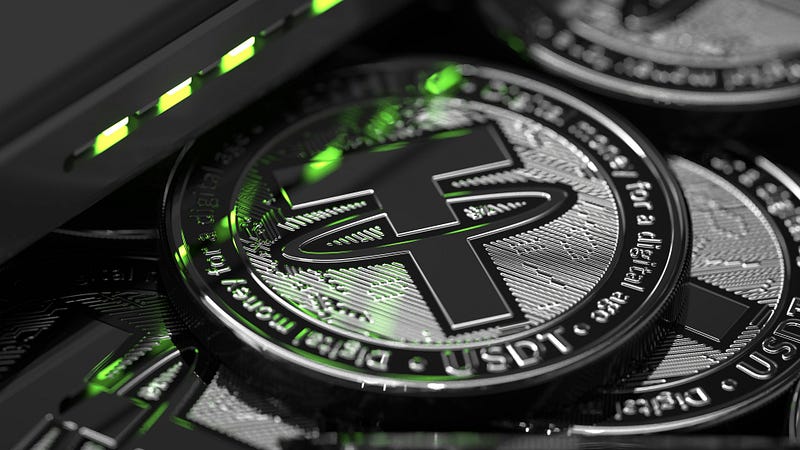
Photo by DrawKit Illustrations on Unsplash


First to list USDT/KRW trading pair

Despite the significance of USDT in the cryptocurrency market, Korean exchange users have faced the limitation of not being able to purchase the stablecoin using Korean won, although these exchanges did offer markets denominated in USDT. This limitation has prompted Koreans to turn to foreign cryptocurrency services for acquiring USDT. With Coinone’s latest move, the platform has become the first to facilitate USDT/KRW trading among the nation’s five fiat-to-crypto Korean exchanges — Upbit, Bithumb, Coinone, Korbit and Gopax.

Regarding this development, Kwon O-hoon, Managing Partner at the law firm Cha and Kwon, told local news outlet Decenter that there seem to be no particular legal concerns with the crypto exchange’s engagement in USDT transactions. This perspective stems from the absence of stablecoin regulations in the country.


Reducing the Kimchi premium

According to Decenter, crypto experts anticipate that the introduction of USDT/KRW trading will help in reducing the Kimchi premium, a term referring to the discrepancy in cryptocurrency prices on South Korean exchanges compared to those in foreign exchanges.

For instance, according to data from CoinNess, the average price of BTC on Korean exchanges is around KRW 51,177,250. This is about 2.34% higher than its average price on foreign exchanges, which stands at KRW 50,005,909. This difference means that users on Korean exchanges need to pay an additional KRW 1,171,340 to buy one BTC, compared to what they would pay on international platforms.

However, the newly added trading pair will streamline transactions between exchanges, making it simpler for investors to engage in arbitrage. This ease of transfer is expected to lead to more balanced pricing across different markets, reducing the Kimchi premium.

In light of this development, Jo Dong-hyeon, CEO of blockchain company Undefined Labs, said various institutions and blockchain projects will likely find USDT increasingly useful as a store of value, given USDT facilitates easy transfers between different exchanges.

More to Read
View All
Web3 & Enterprise·

Jul 25, 2023

Top Korean Crypto Exchanges Witness Surge in Listings and Delistings During H1

Top Korean Crypto Exchanges Witness Surge in Listings and Delistings During H1In the first half of this year, South Korea’s top five cryptocurrency exchanges experienced notable growth in the number of newly added cryptocurrencies to their platforms. However, they also observed a significant surge in the number of cryptocurrencies being delisted.Photo by Shubham Dhage on UnsplashDelisting and listingAccording to a report by local news outlet Etoday, the nation’s five leading exchanges Upbit, Bithumb, Coinone, Korbit, and Gopax ceased trading for a total of 51 cryptocurrencies during the first six months of this year. This marked an 88% increase compared to the 27 cryptocurrencies delisted in the previous six-month period. During the first half of last year, the number of delisted tokens was 48.Among the five exchanges, Coinone took the lead by delisting the highest number of cryptocurrencies, totaling 24. Bithumb followed with 14 delisted tokens, Gopax with six, Upbit with five, and Korbit with two. Notably, Coinone continued its delisting spree this month, removing an additional five cryptocurrencies from its platform. Most cryptos were delisted because their projects and services were not operating normally.The significant number of delisted tokens at Coinone appears to be linked to the involvement of its former employees in the unlawful listing of certain tokens. These individuals reportedly received bribes in exchange for listing a total of 46 cryptocurrencies on the trading platform. Among these tokens were PICA and PURE, which are no longer traded on the exchange.Only five cryptocurrencies were delisted according to the decision made by the Digital Asset eXchange Alliance (DAXA), a self-regulatory group consisting of the aforementioned five crypto exchanges. The delisted tokens were REP, BASIC, OMG, SRM, and PCI. This indicates that most of the affected cryptocurrencies were exclusively traded on one of the DAXA member exchanges, indicating that DAXA’s listing and delisting guidelines were largely ineffective.Meanwhile, there has been a notable surge in the number of newly added cryptocurrencies. Bithumb, for instance, took the lead by listing an impressive 63 new tokens, nearly three times the number listed by Upbit (22). In the same vein, Coinone added 14 tokens, while Korbit and Gopax followed with six and three new listings, respectively.Profit squeezeLast year, crypto trading platforms adopted a conservative approach when it came to listing and delisting procedures, prioritizing investor protection. However, their stance shifted as the global crypto market encountered a significant decline in trading volume amid crypto winter. This decrease in trading activity subsequently led to reduced operating profits, compelling the platforms to list more cryptocurrencies.With the exception of Upbit, which maintains a dominant market share in the nation, the outlook on crypto exchanges appears more or less grim. In particular, Coinone, Korbit, and Gopax are in the red. Bithumb, while still in profit, saw its operating profit last year falling 80% year-over-year to 163.5 billion KRW ($127.9 million). This trend continued this year, with Bithumb’s operating profit In the first quarter of this year recording 16.2 billion KRW, an 80% decrease compared to the same period last year.In light of this development, an industry insider, who wished to stay anonymous, told Etoday that while the market’s total trading volume is witnessing a considerable decline, Upbit’s dominance is still growing. This individual also noted that the decrease in trading volume and the resulting deficit are exerting pressure on exchanges to expand their cryptocurrency listings.

news
Web3 & Enterprise·

Aug 17, 2023

Monthly Active Users of Binance in South Korea Surpasses 230,000

Monthly Active Users of Binance in South Korea Surpasses 230,000The monthly active user (MAU) count for the virtual asset exchange app Binance has surpassed 230,000 in South Korea, according to a recent analysis reported by local news outlet Etoday. This places Binance as the fourth-largest exchange in terms of user base, following more prominent local won-denominated exchanges Upbit, Bithumb, and Coinone.Photo by Vadim Artyukhin on UnsplashSoaring numbersAccording to data from the insights platform Mobile Index, the MAU for the Binance app in Korea averaged 230,965 users from February to July this year. Starting from 238,487 users in February, the number peaked at 240,000 in April, followed by a slight decrease to 219,010 in June and 215,743 in July. These figures significantly outpace the 131,799 average for Korbit and 36,123 for Gopax, recorded over the past six months.The abundance of users is also reflected in the app’s high trading volume in Korea. In May this year, Binance reportedly accounted for around $58.3 billion in trading volume from Korean users, representing approximately 13% of the total trading volume, according to the Wall Street Journal. This makes Korea the app’s second-largest market after China in terms of trading volume.These statistics are notable considering the fact that Binance does not support won-denominated trading nor has a Virtual Asset Service Provider (VASP) license for Korean operations. They can thus be attributed to the availability of futures trading, which is not offered by local exchanges. According to the Journal, futures trading accounts for 98% of the transactions conducted by Korean users.Regulatory validationMoreover, Binance is registered on the travel rule whitelists of three of the country’s largest exchanges: Upbit, Bithumb, and Coinone. This travel rule regulation was put into effect last year, requiring financial institutions to share data on cryptocurrency transactions.Being whitelisted means that users of the aforementioned exchanges can easily make trades on Binance after completing Know Your Customer (KYC) identification procedures.Each exchange follows its own criteria to add virtual asset service providers to its whitelist, allowing only whitelisted entities to send and receive transactions.Industry experts claim that this is yet another depiction of just how lucrative Korea’s crypto market is, as is the case with the significant trading volumes recorded by domestic exchanges. This is likely driving the active efforts of foreign exchanges, including Binance, to penetrate the market.Binance’s ongoing regulatory challengesEarlier this year, Binance acquired a majority stake in Streami, the operator of Korea’s KRW-to-crypto exchange Gopax, aiming to solidify its presence in the Korean market. Following this acquisition, Streami underwent leadership transitions that saw Lee Joon-haeng step down, making way for Binance’s APAC head Leon Sing Foong. Subsequently, the leadership baton was passed to Lee Joong-hoon, the former Vice President of Gopax.For these shifts in leadership, Streami submitted reports to the Financial Intelligence Unit (FIU) under the Korean Financial Services Commission (FSC) to inform the regulatory body about changes in company representatives. However, despite these notifications, the financial regulator has not yet granted its approval, likely influenced by the ongoing legal challenges Binance is facing in multiple jurisdictions, including that of the United States.In a seeming effort to address this regulatory impasse, Streami has recently decided to undergo yet another change in its CEO position. This marks the third leadership alteration within a span of six months. Meanwhile, the identity of the incoming CEO is yet to be disclosed.Oscillating trends of growth and declineIn related news, Mobile Index also reported that Upbit had the highest MAU among virtual asset exchange apps in Korea. From February to July, Upbit averaged an MAU count of 3,280,746, surpassing the 1,005,432 average for Bithumb, marking a threefold difference. Coinone’s average MAU during this period was calculated at 316,277.However, over the same six-month period, all won-denominated exchanges except for Korbit experienced a decline in MAU. Gopax witnessed a 22.3% drop from 42,556 users in February to 33,059 users in July. This was followed by 20%, 14.8%, and 6.8% declines for Coinone, Bithumb, and Upbit, respectively. Binance also experienced a 9.5% dip.In contrast, Korbit saw a 16.5% increase, rising from 118,816 MAU in February to 131,799 in July.

news
Web3 & Enterprise·

Oct 25, 2023

Web3 Security Startup Blockaid Raises $33M in Funding

Web3 Security Startup Blockaid Raises $33M in FundingIsraeli enterprise Blockaid, a Web3 security startup founded by two former Israeli military cyber intelligence personnel, has secured a total of $33 million in funding.The recent Series A round of $27 million was led by Ribbit Capital and Variant and saw participation from Cyberstarts, Sequoia Capital, and Greylock Partners. This funding totals $33 million when consolidated with an initial $6 million seed round.Photo by Shubham’s Web3 on UnsplashSecuring Web3 against threatsBlockaid offers comprehensive Web3 security solutions designed to combat crypto fraud, phishing, and hacks. Its approach involves the examination of both on-chain and off-chain transactions. In this way, the firm is seeking to set itself apart from competitors like CertiK and Cyvers.The company’s decentralized application (dApp) Scanning Engine simulates and validates blockchain transactions before they are executed. This process takes place within Blockaid’s dApp Scanning Sandbox, which also assesses the potential maliciousness of interactions and dApps.Since its inception in September 2022, Blockaid claims to have successfully scanned over 450 million transactions, preventing over 1.3 million attacks and safeguarding more than $7.1 billion in assets. Furthermore, the Israeli startup’s efforts have averted losses of over $500 million in the Web3 ecosystem.Recent success storiesOne notable success story involves the prevention of a phishing attack targeting Ethereum co-founder Vitalik Buterin’s X (formerly Twitter) account. Due to Blockaid’s security measures, users’ wallets remained protected, though unsecured wallets with approximately $700,000 in assets, including valuable NFTs, suffered losses in the attack. Blockaid has been involved in enhancing security for prominent platforms, including MetaMask, OpenSea, Zerion Wallet, and Rainbow Wallet.With the newly acquired funds, Blockaid aims to expand its client base and meet an increasing demand for its security solutions. Ido Ben-Natan, co-founder and CEO of Blockaid, expressed confidence in their ability to support both existing and new customers during these market conditions. Blockaid operates from New York and Tel Aviv and plans to bolster its workforce by hiring additional personnel across various functions.Addressing the Web3 security challengeThe significance of Blockaid’s work becomes even more apparent when considering the current challenges in the Web3 space. In recent years, the Web3 sector has faced a rising tide of fraud, phishing attempts, and hacks. As noted by Ben-Natan, Web3 has experienced staggering losses, with $14 billion stolen in just one year, surpassing losses in all non-crypto cyber-crime combined. Additionally, one in ten decentralized applications (dApps) has been identified as malicious, making even crypto-savvy users susceptible to malicious actors.Furthermore, there is a growing concern about nation-state actors actively targeting and stealing user funds for their economic gain. In this adversarial and uncertain environment, the usability and security of Web3 must be enhanced to unlock its full potential. Blockaid’s innovative security tools aim to provide the necessary protection for Web3 builders and users.There’s no doubt that Web3 has to become more seamless and far more secure if it is to appeal to the mass market. In its blog post announcing the funding round, the project stated:”We believe that users shouldn’t have to know they’re interacting with crypto. We believe that web3 should just work, and work securely.”

news
Loading