Top

Korea Joins OECD’s CARF initiative to enhance crypto tax compliance

Policy & Regulation·November 10, 2023, 6:39 AM

The South Korean Ministry of Economy and Finance issued a press release to declare the country’s involvement in the Crypto-Asset Reporting Framework (CARF). This program, developed by the Organization for Economic Co-operation and Development (OECD), is designed to promote tax compliance and combat tax evasion in the realm of cryptocurrency. The initiative brings together 48 countries and jurisdictions, such as France, Germany, Japan, the United Kingdom and the United States.
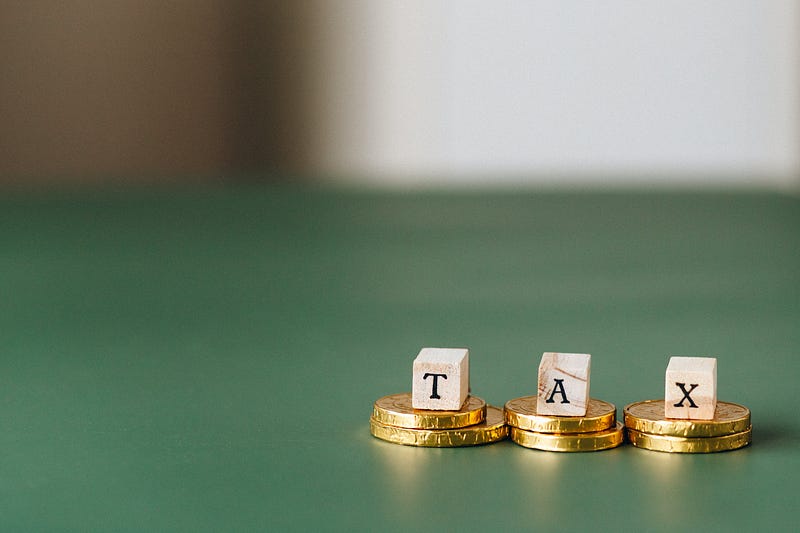
Photo by Nataliya Vaitkevich on Pexels


Target year of 2027

In the joint statement released on Nov. 10, the participants of the CARF expressed their commitment to its widespread and timely implementation, aiming to enhance the effectiveness of the regime. They plan to align their domestic laws and enforce agreements by 2027, the year targeted by the OECD for exchanging relevant information. The statement also encouraged other jurisdictions to participate in this global effort.


Updating laws and activating agreements

Korea’s commitment to international cooperation, as indicated in the joint statement, shows its intention to update domestic laws and activate exchange agreements. This preparation will pave the way for the exchange of crypto-asset transaction information to commence in 2027, adhering to the OECD’s proposed timeline. Such a step is anticipated to significantly contribute to the broad implementation of the CARF. The Economy Ministry stated that Korea is committed to ongoing participation in international efforts aimed at preventing tax evasion and enhancing tax transparency.

In September, during a tax administration forum in Seoul, experts suggested that Korea’s potential participation in the OECD’s CARF would require more than just legislative amendments. They highlighted the necessity for Korea to develop a cooperative system involving both virtual asset service providers (VASPs) and regulatory authorities, explaining that this approach would ensure a smooth and effective implementation of the CARF in Korea.

More to Read
View All
Web3 & Enterprise·

Oct 05, 2023

UBS Pioneers Tokenized Money Market Fund on Ethereum

UBS Pioneers Tokenized Money Market Fund on EthereumUnderscoring what is very much an ever-evolving financial sector, large-scale investment manager UBS Asset Management has taken a pioneering step by launching a pilot project for a tokenized money market fund on the Ethereum blockchain.Photo by Bastian Riccardi on UnsplashBlurring the lines of TradFiThe initiative, announced by UBS in Singapore on Monday, promises to streamline the traditionally cumbersome processes of fund subscriptions and redemptions. Additionally it highlights the increasing integration of blockchain technology into traditional finance, effectively blurring the boundaries between the two worlds.The UBS project aligns with Singapore’s Variable Capital Company (VCC) fund structure and falls within the scope of Project Guardian, championed by the Monetary Authority of Singapore (MAS).Structured in this way, UBS believes that the project design lends itself to the ability to bring various forms of real-world assets (RWAs) to the blockchain. Furthermore, it establishes a favorable rapport with regulatory authorities in Singapore, a jurisdiction known for its forward-thinking, crypto-friendly financial regulatory environment.Public blockchain useThis new offering relies upon a smart contract that’s run on the Ethereum public blockchain, encapsulating the money market fund. Through this smart contract use, the subscription and redemption processes can be simplified. That will represent a major change, given that those processes have traditionally been laden with paperwork and delays.In the first iteration, large TradFi firms like UBS considered the use of private blockchains but as Matt Hougan, the CIO of crypto asset manager Bitwise, pointed out, this particular initiative is indicative of a shift towards public blockchains. Hougan stated:“Remember when TradFi projects were built on private blockchains? They are all being built on Ethereum today. Progress.”RWA tokenization potentialThe tokenization of real-world assets has the potential to revolutionize digital asset investments by offering transparency, security, and trust. It not only paves the way for a better understanding of digital assets but also accelerates their adoption. UBS’s pilot project represents another significant move in this direction.With increasing support from regulatory bodies like MAS, the fusion of digital assets with traditional financial structures is likely to witness a myriad of large-scale implementations in the not too distant future.UBS TokenizeUBS harnessed the power of its in-house tokenization service, UBS Tokenize, to seamlessly conduct the controlled pilot of the tokenized money market fund. The initiative falls squarely within the purview of UBS’s global distributed ledger technology strategy, which aims to elevate fund distribution and issuance to greater levels of efficiency by leveraging the capabilities of both private and public blockchains.UBS Tokenize also featured in a separate initiative earlier this year in Hong Kong, facilitating the issuance of digital structured notes on the Ethereum blockchain via the Bank of China Investment (BOCI).The momentum behind the tokenization of real-world assets has been building in recent years, with various protocols focusing on real-world assets consistently outperforming other sub-sectors of decentralized finance.

news
Web3 & Enterprise·

Jan 31, 2024

OKX adds token support for atomicals, runes, doginals and stamps

Leading crypto exchange platform OKX has recently unveiled its plans to enhance its marketplace by incorporating Atomicals (ARC-20), Runes, Stamps (SRC-20) and Dogecoin’s Doginals (DRC-20) into its Web3 wallet. ‘First-to-market’ initiativeTaking to social media on Monday, the firm provided further details regarding the additions, outlining that it is part of a "first-to-market" initiative, solidifying OKX's commitment to the expanding realm of Bitcoin NFTs. The integration of these token standards is aimed at positioning OKX as a leading one-stop NFT ecosystem within Web3. Starting with the integration of Stamps on Feb. 5, OKX Wallet users will gain the ability to view and transfer Bitcoin token standards. Subsequently, in late February, OKX Wallet will extend its support to Atomicals, Doginals and Runes, enabling millions of users to engage in buying and selling these NFTs without incurring any trading fees. OKX Marketplace will also follow suit, integrating DRC-20, ARC-20 and Runes standards in late February, thus broadening the scope for users to participate in zero-fee trading.Photo by Shubham's Web3 on UnsplashDriving mainstream adoption of Web3Jason Lau, chief innovation officer at OKX, underscored the platform's dedication to driving mainstream adoption of Web3 technologies, making the exploration and realization of NFT potential more accessible for users. Despite concerns about potential blockchain congestion due to NFTs, Lau characterized these challenges as "growing pains," expressing confidence that they will be addressed over time. Lau told CoinDesk that “these things will last forever, as long as the chain lasts.” Emphasizing the surge in activity and user growth since the launch of their product, Lau positioned OKX as an evolving platform at the forefront of developing tools for users to access all of Web3. OKX Wallet's inscriptions tool presently supports minting on 23 networks, including Bitcoin, Dogecoin, Ethereum, Polygon, BNB Chain, Avalanche-C and Arbitrum One, among others. Boosting OKX MarketplaceThe move aims to establish OKX Marketplace as the largest NFT marketplace in the industry, boasting zero-fee trading across an expanding range of token standards. The platform's advanced NFT offering includes features such as hex error checking, liquidity across multiple standards, bulk minting capabilities and automatic error detection. Despite OKX's open embrace of Ordinals and other Bitcoin protocols, some members of the Bitcoin ecosystem express discontent, labeling Ordinals as digital spam. Jason Lau vehemently disagrees, asserting that in open and permissionless networks like Bitcoin, "there is no such thing as spam." He contends that as long as fees are paid and transactions adhere to consensus rules, they are valid. Lau emphasizes OKX's historical support for the Bitcoin ecosystem, including upgrades like SegWit, Taproot and Lightning. As debates surrounding the role of Ordinals and NFTs within the Bitcoin ecosystem persist, OKX's proactive stance signals a belief in the potential of Bitcoin-based NFTs to introduce innovative use cases and design possibilities. The disruptions experienced by various blockchains in December, attributed to increased transaction activity related to inscriptions, underscore the growing impact of these developments within the Bitcoin ecosystem and the broader crypto landscape. 

news
Markets·

Sep 21, 2024

Hong Kong leads East Asia in crypto transaction growth

An analysis of data recently published as part of Chainalysis’ Global Cryptocurrency Adoption Index demonstrates that Hong Kong has recorded a year-on-year crypto transaction value growth rate of 85.6%.  On that basis, the territory accounts for the sixth-largest crypto economy in the world. Furthermore, Hong Kong ranks 30th in terms of global crypto adoption. That’s an improvement of 17 places, as it was ranked 47th in 2023. Regulatory framework aiding crypto adoptionAn excerpt from the 2024 Geography of Cryptocurrency Report by Chainalysis was published on September 18. It found that the steps taken in the Chinese autonomous territory in terms of laying down a regulatory framework for digital assets has led to this uptick in transactional activity, due to the increased adoption of digital assets by institutions.  Over the course of the past eighteen months, Hong Kong has launched crypto trading licensing. Earlier this year, exchange-traded funds (ETFs) were given the green light, with the subsequent launch of Bitcoin and Ethereum ETF products.  On the topic of ETF’s, Kevin Cui, CEO of digital asset trading platform OSL said that “as market conditions improve, we are seeing indications of a growing institutional interest that could lead to increased capital inflows in the near future.” Meanwhile, the Chinese autonomous territory is working towards the establishment of regulations that cover the issuance and trading of stablecoins.lil artsy on PexelsHong Kong key to Chinese crypto resurgenceIn terms of crypto adoption, mainland China ranked 11th this year, dropping down one place by comparison with last year. The report notes the complicated history China has had with cryptocurrency in recent years, given that a crypto trading ban remains in place. However, last year’s report pointed to the strong usage of centralized crypto exchanges by mainland China residents, which suggests that the ban has either been ineffective or poorly enforced.  The Chainalysis report speculates that “Hong Kong may finally influence China to re-open its doors to crypto.” This is not the first time that Chainalysis has made such an assertion. In last year’s report, it made a similar claim, suggesting that the development of Hong Kong as a crypto industry hub would lead to a softening in the stance of mainland China towards crypto. This year’s report suggests that mainland China residents have turned to over-the-counter (OTC) platforms in order to access crypto as a means towards preserving their wealth. The report quoted Ben Charoenwang, associate professor of finance at the INSEAD Asia Campus as stating: “Nowadays, if you want to move money out of China through traditional unofficial means like using mules, fees can be as high as 25 to 30 percent. The increasing use of OTC crypto in China suggests that people are looking for faster options to move money.” The report finds that five of the top 50 grassroots adopters of crypto, South Korea, China, Japan, Hong Kong and Taiwan, are located in East Asia. South Korea leads the region in terms of the most crypto value transacted metric. Chainalysis suggests that South Korea’s strong interest in altcoins signals that it will remain a leader in the region from a cryptocurrency innovation perspective.

news
Loading