Top

UBS Pioneers Tokenized Money Market Fund on Ethereum

Web3 & Enterprise·October 05, 2023, 12:18 AM

Underscoring what is very much an ever-evolving financial sector, large-scale investment manager UBS Asset Management has taken a pioneering step by launching a pilot project for a tokenized money market fund on the Ethereum blockchain.
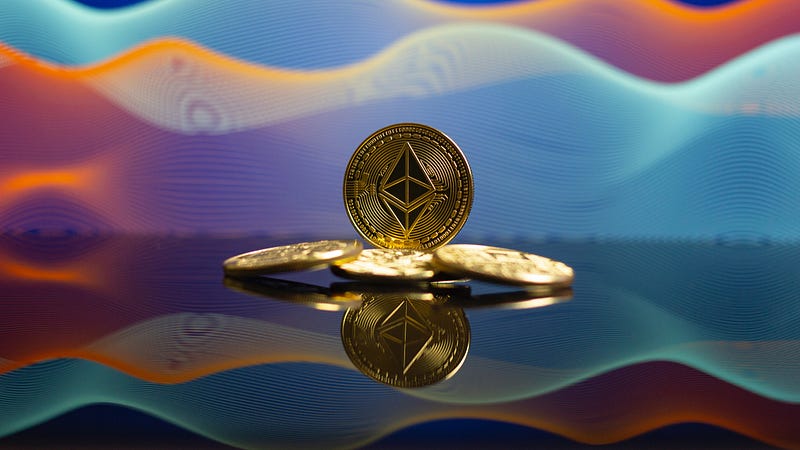
Photo by Bastian Riccardi on Unsplash


Blurring the lines of TradFi

The initiative, announced by UBS in Singapore on Monday, promises to streamline the traditionally cumbersome processes of fund subscriptions and redemptions. Additionally it highlights the increasing integration of blockchain technology into traditional finance, effectively blurring the boundaries between the two worlds.

The UBS project aligns with Singapore’s Variable Capital Company (VCC) fund structure and falls within the scope of Project Guardian, championed by the Monetary Authority of Singapore (MAS).

Structured in this way, UBS believes that the project design lends itself to the ability to bring various forms of real-world assets (RWAs) to the blockchain. Furthermore, it establishes a favorable rapport with regulatory authorities in Singapore, a jurisdiction known for its forward-thinking, crypto-friendly financial regulatory environment.


Public blockchain use

This new offering relies upon a smart contract that’s run on the Ethereum public blockchain, encapsulating the money market fund. Through this smart contract use, the subscription and redemption processes can be simplified. That will represent a major change, given that those processes have traditionally been laden with paperwork and delays.

In the first iteration, large TradFi firms like UBS considered the use of private blockchains but as Matt Hougan, the CIO of crypto asset manager Bitwise, pointed out, this particular initiative is indicative of a shift towards public blockchains. Hougan stated:

“Remember when TradFi projects were built on private blockchains? They are all being built on Ethereum today. Progress.”


RWA tokenization potential

The tokenization of real-world assets has the potential to revolutionize digital asset investments by offering transparency, security, and trust. It not only paves the way for a better understanding of digital assets but also accelerates their adoption. UBS’s pilot project represents another significant move in this direction.

With increasing support from regulatory bodies like MAS, the fusion of digital assets with traditional financial structures is likely to witness a myriad of large-scale implementations in the not too distant future.


UBS Tokenize

UBS harnessed the power of its in-house tokenization service, UBS Tokenize, to seamlessly conduct the controlled pilot of the tokenized money market fund. The initiative falls squarely within the purview of UBS’s global distributed ledger technology strategy, which aims to elevate fund distribution and issuance to greater levels of efficiency by leveraging the capabilities of both private and public blockchains.

UBS Tokenize also featured in a separate initiative earlier this year in Hong Kong, facilitating the issuance of digital structured notes on the Ethereum blockchain via the Bank of China Investment (BOCI).

The momentum behind the tokenization of real-world assets has been building in recent years, with various protocols focusing on real-world assets consistently outperforming other sub-sectors of decentralized finance.
More to Read
View All
Web3 & Enterprise·

Sep 05, 2023

Real-World Assets Emerge as a Beacon of Hope for the Blockchain Industry Amid Crypto Winter

Real-World Assets Emerge as a Beacon of Hope for the Blockchain Industry Amid Crypto WinterIn the midst of a crypto winter that has cast a shadow over the blockchain industry, a new opportunity has come to light — the tokenization of real-world assets (RWAs), or tangible assets such as gold and real estate, on blockchain networks.Photo by Tierra Mallorca on UnsplashMajor blockchain companies and industry experts gathered at Klaytn Square Lounge 2023, a blockchain and Web3 event in Gangnam, southern Seoul on Monday to discuss how RWAs could overcome the limitations of the current blockchain market.The rise of RWAsRecently, platforms like RWA tokenization project Elysia and Klaytn Foundation have started to shift their attention to RWAs as a promising avenue in the blockchain market. According to a report by global consulting firm Boston Consulting Group, the total value of the global RWA market, which reached $310 billion last year, is projected to surge to a staggering $16 trillion by 2030.“During the ongoing crypto winter, we are witnessing not only new funds pouring into blockchain projects but also existing funds leaving the market. We see RWAs as a potential solution to this,” said Seo Sang-min, Representative Director at Klaytn Foundation.Seo went on to explain that currently, virtual assets dominate most of the assets on blockchain mainnets like Klaytn, but compared to RWAs such as gold, cash, and real estate, their scale is very small. “We need to expand the utility of RWAs by placing them on the blockchain. Once they are, transaction costs will significantly decrease, and anyone will be able to trade 24/7 worldwide,” he said.Other blockchain experts at the conference also shared this sentiment. “Tokenizing RWAs is crucial because it provides investment opportunities that do not require large sums of money or lengthy waiting periods,” Luc Falempin, CEO of Tokeny Solutions emphasized. Beyond tokenizing the assets themselves, legal contracts and information about the various stakeholders involved, such as asset issuers and investors, can be recorded and shared on the blockchain, which can prove to be very convenient for investors.Revolutionizing investmentAccording to Falempin, most derivative investments involve seeking investment opportunities, creating portfolios, and enduring complicated processes for recovering investment capital that can take over ten years to complete. Additionally, ordinary investors often struggle to raise the substantial funds required for investment, creating high entry barriers. Also, investment contracts were traditionally executed on paper, which is outdated and inconvenient. However, as blockchain technology enables the tokenization of assets, these processes become much simpler.“Through RWA-backed virtual assets, even dozens of individuals can easily participate in investment, eliminating the hassle of dealing with paperwork. Introducing blockchain as a new infrastructure allows all stakeholders to easily view relevant records within the blockchain network,” he stated.The role of DAOsSo, how can investment products like RWA tokens be effectively managed within the decentralized realm of blockchain? Yoon Kim, Chief Marketing Officer of Elysia, mentioned decentralized autonomous organizations (DAOs) as a fit solution.“DAOs are a realistic method that is crucial for implementing the RWA model effectively. All stakeholders within a DAO can make modifications and creations, providing an avenue for managing tokenized assets effectively without government intervention,” Kim said.Technical hurdlesHowever, RWA tokens face several technical challenges. RWA products, which integrate the real world with the blockchain realm, could suffer from the so-called oracle problem, which refers to the inherent inability of blockchains to access external data, leading to a lack of information transparency. Even if the assets are stable, their prices on the blockchain network may differ from those in the real market. Currently, there are no established technical solutions to address these issues.“Rather than getting directly involved, we aim to move in accordance with market prices, but also seek ways to minimize risks with the help of external entities in certain cases,” said James Lim, CEO of Creder.As the crypto winter persists, the blockchain industry is looking towards RWAs as a beacon of hope, offering the potential to bridge the gap between traditional assets and the decentralized world of blockchain, despite the challenges that lie ahead.

news
Policy & Regulation·

Dec 09, 2023

Taiwan weighs up CBDC following feasibility study completion

Taiwan weighs up CBDC following feasibility study completionTaiwan’s central bank, the Central Bank of the Republic of China (Taiwan), recently concluded an in-depth feasibility and technology study on the potential implementation of a wholesale central bank digital currency (CBDC).Photo by Timo Volz on UnsplashGathering feedback and refining designAccording to statements made by Deputy Governor Chu Mei-lie while speaking at an annual event organized for the banking sector by the Financial Information Service Co., an entity that oversees Taiwan’s banking, payment and settlement systems, Chu disclosed that the central bank is now in the process of gathering feedback and refining the design of the CBDC platform.In her keynote speech, Chu underscored the significance of CBDCs in the evolving landscape of digital currencies. She concurred with the Bank for International Settlements’ (BIS) assertion that conventional payment tools and platforms may not always meet the demands of all-day transactions, smart contracts and automatic settlements facilitating simultaneous and irreversible transfers of assets or funds.Supporting asset tokenizationChu emphasized that a nation’s monetary system should be poised to support tokenized assets. CBDCs, she suggested, could potentially offer comprehensive payment and settlement services, integrating tokenization and a unified ledger that harmonizes CBDCs with traditional currencies.The concept of a unified ledger, as explained by Chu, doesn’t imply a single ledger but rather that tokenized ledgers of each economy could coexist and connect through an application interface.This approach aims to ensure interoperability, minimizing the risk of errors in message transmission. Interoperability is also being worked on by financial messaging service SWIFT. It recently collaborated with central banks in Hong Kong and Kazakhstan with a view towards testing a connector that would enable the integration of SWIFT with CBDCs.Additionally, a unified ledger is anticipated to expedite the clearing process, foster a secure trading environment and ensure the safe, reliable and effective execution of currency and asset transactions.International integration of e-CNYChu acknowledged that foreign central banks are actively exploring the feasibility of issuing CBDCs to establish a unified value for all forms of currency. Of the many early-stage CBDC projects that are out there, China’s e-CNY has gathered the greatest momentum.British bank Standard Chartered has been the most recent entity to join the Chinese CBDC international pilot project. Taiwan’s Fubon Bank has enabled its customers to top up e-CNY via mobile banking. The leading CBDC currency has similar collaborations in place with Hong Kong banks, HSBC and Hang Seng Bank.Fubon has also gotten involved alongside Ripple in a pilot program run by the Hong Kong Monetary Authority. Through that collaboration, it is supporting an asset tokenization trial that revolves around Hong Kong’s CBDC, the e-HKD.Chu outlined that in the case of Taiwan, the matter of a CBDC is being pursued cautiously, without a predefined timetable for reaching a conclusion. The monetary policymaker plans to engage in discussions with academic and business sectors to inform its stance on CBDCs.Meanwhile, the central bank is committed to enhancing overall planning related to the CBDC platform, focusing on transaction ease, capacity and innovative functionalities. Chu also highlighted the consideration of offline transaction scenarios in this ongoing process.

news
Web3 & Enterprise·

May 25, 2023

Japanese Crypto Firm Pafin to Introduce DeFi Asset Management Platform

Japanese Crypto Firm Pafin to Introduce DeFi Asset Management PlatformA Japanese company specializing in cryptocurrency services is preparing to launch a DeFi asset management platform.Photo by Shubham Dhage on UnsplashDeFi asset managementPafin, the company behind Cryptact, a service that automates cryptocurrency profit and loss (P&L) calculations, is set to introduce Defitact on June 5. Defitact is a platform designed to consolidate transactions involving decentralized finance (DeFi) assets and NFTs, complemented by illustrative charts. Pafin claims that it is the first provider of crypto P&L calculations to offer blockchain asset management in the Japanese language.The company envisions a broad array of services through Cryptact, from asset management to P&L calculations, to support all Web3 activities in today’s digital landscape.Beta test for subscribersStarting from May 29, Pafin will roll out a beta test for Defitact, exclusive to Cryptact newsletter subscribers. Subscribers will be able to access the service by entering their wallet addresses in the URL provided with the newsletter, which will be sent on the beta test launch date. The newsletter will be sent to those who sign up by May 28, and registration for a Cryptact account is free.This service emerges amidst the growing prominence of Web3, with DeFi — a financial service leveraging blockchain technology — standing out as one of its most rapidly evolving sectors. As of the close of 2021, the DeFi market had a near $100 billion valuation, according to a report by the Japan Research Institute.The nature of DeFi, lacking a centralized administrator, places the onus of crypto wallet management on individuals. The Defitact service seeks to resolve the inconvenience of monitoring and managing real-time transactions on DeFi platforms, typically operating outside crypto exchanges.Available in Japanese and EnglishAs a free, bilingual (Japanese and English) service, Defitact provides a transaction history and displays crypto market capitalization in three fiat currencies: the Japanese yen, the US dollar, and the euro.Pafin’s future plans include integrating Defitact with Cryptact, adding an NFT management service, and enabling the aggregation of multiple wallets for efficient digital asset portfolio management.

news
Loading