Top

Exhibition in Goyang City presents blockchain’s use in digital media

Policy & Regulation·November 02, 2023, 5:32 AM

Digital Media Tech Show 2023 (DMTS 2023) is underway from today, Nov. 2, through Nov. 4 in Hall 4 at the Korea International Exhibition Center, commonly known as KINTEX, in Goyang City. The event gives audiences a chance to explore the present and future of digital content and cutting-edge technologies of the Fourth Industrial Revolution.

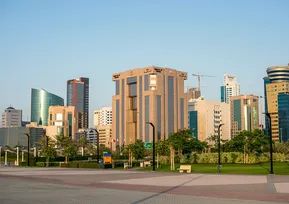
Photo by Julius Drost on Unsplash


From smart tech to NFTs

The exhibition explores cutting-edge realms, including smart technology, media and content innovations, extended reality and the metaverse as well as the ever-evolving world of NFTs and blockchain. These technologies not only enhance content creation and distribution but also amplify its value and reach.

DMTS is hosted by Gyeonggi Province and Goyang City. It’s organized by KINTEX, the Goyang Industry Promotion Agency and the Korean Commission for Corporate Partnership, with sponsorship from the Ministry of Science and ICT.

Last year, the show saw 153 companies display 419 booths and welcomed buyers from 24 countries. The event generated KRW 20.7 billion ($15.4 million) from consultations and KRW 12.1 billion from contracts.


Two more simultaneous exhibitions

Concurrently, two other major exhibitions at KINTEX captivate visitors. The Digital Future Show in Hall 5 presents glimpses of future lifestyles, highlighting virtual reality and the metaverse. Meanwhile, Contents Korea in Hall 3 focuses on a wide range of content assets, including movies, games, and music. It also explores their ties to intellectual property, the technologies behind their creation, and marketing strategies. Hosting these shows simultaneously at KINTEX is anticipated to produce a synergistic impact, drawing domestic and international buyers.

Lee Dong-hwan, Mayor of Goyang City, underlined the city’s strategic focus on nurturing emerging sectors like video production, content, and drones. He also conveyed his hope that the exhibition would enhance collaboration among top-tier companies and spotlight Goyang as a central gathering place for high-tech businesses.

More to Read
View All
Policy & Regulation·

Nov 21, 2024

Russia looks to implement crypto taxation and mining policy changes  

A number of reports published by local Russian media in recent days suggest that the Russian authorities are implementing taxation and regional controls on cryptocurrency mining.Photo by Michael Parulava on UnsplashRegional mining banA report published by the Moscow Times on Nov. 19 suggests that Russia’s Deputy Prime Minister, Alexander Novak, has led a government commission that plans to implement a ban on cryptocurrency mining in specific Russian regions.  The authorities have been motivated in enacting such a ban in order to combat power shortages. With that, a ban is being implemented on a temporary basis during the heating season. The restrictions will apply to miners located within six regions within the North Caucasus, as well as the Zabaikalsky region in Siberia and territories now controlled by Russia in Ukraine. The ban will apply from December through to mid-March 2025, with this seasonal restriction to be applied subsequently each winter until 2031. Back in August, Russian President Vladimir Putin signed into law legislation which legitimized cryptocurrency mining within the Russian Federation. That law recognized mining activities and the concepts of mining pools and mining infrastructure operators. The legislation requires mining operators to register with the government. Individual miners can mine without registering so long as they stay within specified energy-use limits. Earlier this month, the authorities set a power consumption limit of 6,000 kWh per month for those unregistered miners.  The legislation also recognized the ability of stakeholders to trade in foreign digital assets on Russian blockchain platforms, with Russia’s central bank, the Bank of Russia, retaining the ability to ban specific digital assets from being traded if such trading is deemed to be a threat to Russia’s financial stability. 15% tax proposalEarlier this week Russia’s Interfax news agency reported that the Russian government had approved draft amendments to a bill concerned with the purchase and sale of digital currencies relative to crypto mining activity.  According to those proposed legislative amendments, digital assets will be classified as property from a taxation perspective. Income derived from mining activities will be assessed in terms of taxation based on market value at the time of receipt of the asset. The legislative amendments propose a 15% tax rate for cryptocurrencies. Furthermore, crypto transactions will not be subjected to value-added tax (VAT). However, income derived from such transactions will be taxable in the same way as income from transactions involving securities. Crypto mining operators will be permitted to deduct operating expenses from their taxable income. Russia’s Finance Ministry is understood to have clarified that the taxation approach would strike a balance between Russian government interests and those of commercial operators. With the introduction of legislation to recognize cryptocurrency mining activity earlier this year, Ki Young Ju, CEO of on-chain and market data analytics firm CryptoQuant, noted the country’s growing involvement and national-level engagement with digital assets. The coming months will determine if these latest crypto mining restrictions will dampen the level of involvement of Russia-based crypto miners.

news
Policy & Regulation·

Jun 05, 2023

South Korea to Revive Tech Exports with Metaverse, Blockchain

South Korea to Revive Tech Exports with Metaverse, BlockchainThe South Korean Ministry of Science and ICT revealed today a strategy to enhance the country’s tech exports. The plan includes leveraging the potential of the metaverse and blockchain as promising export items.Photo by Pixabay on PexelsEmphasis on the digital sectorIn response to the recent decline in exports, the strategy seeks to establish new sources of growth by prioritizing the digital sector, which has historically been a key driver of Korea’s exports. Recognizing the complex challenge posed by the global economic slowdown and other factors, all government ministries are collaborating to counteract the export slowdown.The plan leverages South Korea’s digital capabilities and implements proactive measures to adapt to evolving export trends, including the recent advancement of generative artificial intelligence (AI) tools and the acceleration of digital transformation. By tapping into emerging markets and nurturing innovative companies, the government strives to diversify its export portfolio and strengthen its position in the global market.Despite achieving a record high of $248.8 billion in tech exports in 2022, Korea has faced year-on-year declines since July 2022 due to the global economic downturn. The semiconductor sector, which accounts for more than half of the nation’s tech exports, has been particularly sluggish. Nevertheless, the rise of new tech markets driven by significant technological advancements, such as ChatGPT, and the global push for digital transformation offer opportunities to overcome the current export slump.Emerging marketsAgainst this backdrop, the government is committed to backing the development of products that resonate with the evolving export landscape. It is eyeing emerging markets, notably the Middle East, Southeast Asia, and Latin America, recognizing their fertile grounds for the swift adoption of evolving tech trends, fueled by their substantial youth populations. Furthermore, the government plans to provide policy-level support to tech companies.Government supportUnder this plan, the government will identify promising companies and offer assistance, including consultation and guidance on product commercialization. It will also support metaverse companies participating in overseas projects by covering localization development costs.In the blockchain field, comprehensive support, including technology verification, consulting, and marketing, will be provided to those working towards international standardization for NFTs and their overseas commercialization.As part of this initiative, exhibition rooms will be established on metaverse platforms like ZEPETO and IFLAND in September. These platforms will provide opportunities for innovative firms to showcase their products. At the same time, the plan will facilitate interaction between Korean companies and overseas buyers through online and offline events to boost exports.

news
Web3 & Enterprise·

Aug 08, 2023

RaonSecure Partners with Korean Savings Banks to Build Mobile ID Verification System

RaonSecure Partners with Korean Savings Banks to Build Mobile ID Verification SystemRaonSecure, a South Korean tech security firm and blockchain solutions developer, announced yesterday its partnership with the Korea Federation of Savings Banks (KFSB) to build a system that verifies customers’ identities through mobile identification cards, according to local news outlet Financial News.Photo by Brett Jordan on UnsplashImproving customer convenienceThe KFSB has undertaken the establishment of a mobile ID verification system with the goal of improving customer convenience. This system enables mobile ID cardholders to easily verify their identities during the know-your-customer (KYC) procedures of savings banks, whether they are conducted remotely or in-person. In pursuit of this objective, RaonSecure was chosen through a selection process that sought out a company with experience in constructing mobile IDs.Blockchain-powered DID solutionRaonSecure CEO Lee Soon-hyung said the company has demonstrated its technological prowess by providing cutting-edge services based on its blockchain-powered decentralized identity (DID) platform, OmniOne. These offerings include an application tailored for civil servant IDs, along with an app specially crafted to support citizens who entered or completed military service.Under this agreement, RaonSecure will develop a system designed to ensure both convenience and security in verifying mobile IDs across the integrated computer network of KFSB’s member banks. The company has future plans to extend its services to individual banks, aiming for wider implementation and utilization.During the initial phase of the service rollout, verification will be limited to driver’s licenses. However, RaonSecure’s overarching objective is to establish a dynamic and adaptable system capable of accommodating a broader array of identification documents, such as resident registration cards, in the future.Most Korean commercial banks have already accepted mobile IDs for their identification processes. Other financial institutions, including insurance companies and card companies, are also embracing this trend and introducing similar services. This collective shift is anticipated to expedite the growth and expansion of the industry.

news
Loading