Top

Report by Xangle and Tiger Research Explores Indonesia’s Web3 Potential

Web3 & Enterprise·October 11, 2023, 3:54 AM

In partnership with South Korean crypto data platform Xangle, Web3 consulting firm Tiger Research has released a report focusing on the Web3 market in Indonesia. This collaborative project also featured contributions from Jakarta-based blockchain game provider Avarik Saga and Hong Kong-headquartered metaverse company Animoca Brands.

In the process of crafting this paper, teams from Tiger Research, Xangle, Avarik Saga, and Animoca Brands spent a week in Indonesia, conducting interviews with local experts.
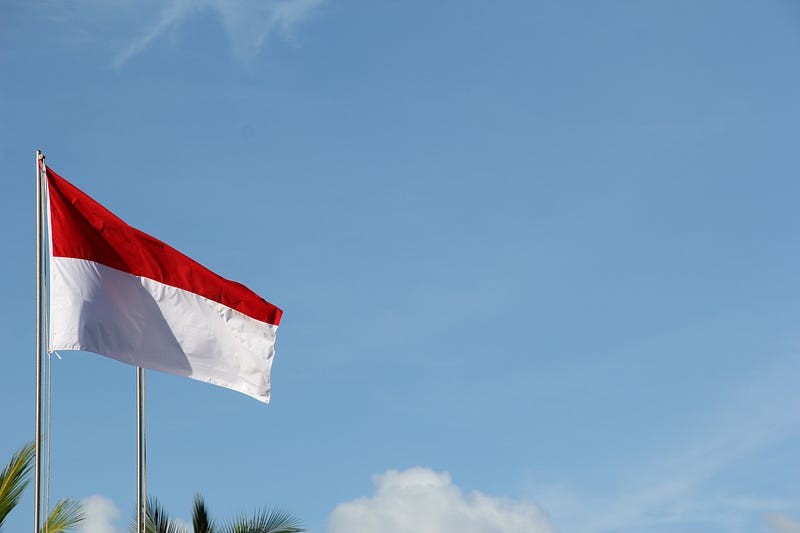
Photo by Nick Agus Arya on Unsplash


Positive factors

The report assesses Indonesia’s Web3 market as having significant potential. It highlights factors such as the country’s status as the world’s fourth-largest population, a youthful demographic with a median age of 30, political stability, and favorable policies towards Web3 technologies. The Indonesian government has adopted a favorable approach to the Web3 industry, providing a range of incentives to boost the growth of the Web3 gaming sector. Additionally, they have taken the initiative to establish a dedicated committee for the blockchain sector within the Indonesia Financial Services Authority (OJK).


Crypto exchanges driving growth

As per the report, the Indonesian market is primarily propelled by cryptocurrency exchanges, with over 30 exchanges currently in operation. These exchanges serve a customer base of approximately 10 million individuals, which accounts for around 4% of the country’s population. This is comparable to the number of investors on the Indonesia stock exchange.


Several challenges

Meanwhile, the paper also highlighted several areas where the world’s largest archipelagic state faces challenges. One of these challenges is its non-fungible token (NFT) market, which has seen a consistent decline in recent months, hitting an all-time low. It was found that most individuals prefer global NFT marketplaces over local ones. Furthermore, concerning the development of the Web3 ecosystem, the shortage of blockchain developers has prompted startups to seek development services overseas.

More to Read
View All
Web3 & Enterprise·

Jun 04, 2025

OSL set to acquire Indonesia’s Evergreen Crest

OSL Group, a publicly-listed digital asset and blockchain platform company headquartered in Hong Kong, is set to acquire Indonesia’s Evergreen Crest Holdings.Photo by Kelly Sikkema on UnsplashAs the proposed acquisition of Evergreen Crest, a business that includes a virtual assets exchange platform, will involve a share transaction, OSL filed details of the acquisition with the Hong Kong Stock Exchange on June 2. OSL will take a 90% stake in Evergreen Crest in return for $15 million worth of consideration shares, which will be issued by OSL to the seller. This share issuance will account for 1.48% of the total issued shares in the company. Once the acquisition goes through, Evergreen Crest will become a subsidiary of OSL Group, with Evergreen’s financial results consolidated into the overall financial statements of OSL going forward.  ‘Strategic benefits’The filing suggests that OSL management believe that the acquisition “will bring substantial strategic benefits to the Group,” as it opens up access for the company to the Indonesian digital asset market. The company is optimistic about the outlook for the Indonesian crypto market. It stated: “Indonesia possesses key attributes conducive to growth in this sector, including a substantial and youthful demographic, robust economic growth fundamentals, and a rapidly increasing rate of cryptocurrency adoption.” Acquiring licensesOne interesting aspect of the acquisition is that Evergreen Crest has acquired the requisite licensing to operate within the Indonesian market. Those cryptocurrency and futures trading licenses are likely to be of significant value to OSL as it means that through the acquisition, OSL can now enter the Indonesian market in a fully compliant manner. Using the existing compliant platform, OSL intends to expand the range of services offered within the Indonesian market. It indicated that it would do so in respect of payment finance (PayFi) and tokenized real-world asset (RWA)-related products and services, subject to acquiring the necessary licensing. OSL is encouraged by the opportunity that exists within Indonesia as far as tokenized RWAs are concerned. It claimed that the country has already demonstrated significant tokenized RWA-related activity. PT Multikripto Exchange Indonesia (also known as Koinsayang), the exchange business owned by Evergreen Crest, was awarded a virtual asset trading license by the Indonesian regulator, the Financial Services Authority (OJK), in March. At the time, the exchange outlined that it intended to expand its service reach, while creating a better trading experience for users located within Indonesia and overseas. In September 2024, the exchange was awarded a license to offer crypto asset perpetual futures contracts by Indonesia’s Commodity Futures Trading Supervisory Agency (Bappebti).  OSL expanding its reachOSL appears to be making a concerted effort to expand beyond its Hong Kong base. In February it acquired CoinBest, a Japanese crypto exchange, rebranding the business as OSL Japan. At the time it was reported that the company was also looking at opportunities to expand in European markets. OSL was amongst the first digital asset exchange platforms to be licensed in Hong Kong, receiving Type 1 and Type 7 licenses from the Securities and Futures Commission (SFC) in December 2020.

news
Web3 & Enterprise·

Sep 19, 2023

KSOC to Implement Blockchain-based Athlete Management Platform

KSOC to Implement Blockchain-based Athlete Management PlatformThe Korea Sport and Olympic Committee (KSOC) held an initiation briefing on Monday to develop a blockchain-based career and performance management platform for athletes in collaboration with the Ministry of Science and ICT. This project aims to promote environmental, social, and governance (ESG) management by promoting eco-friendly approaches to sports management.Photo by Sandro Schuh on UnsplashThe KSOC was selected by the Ministry of Science and ICT and the Korea Internet & Security Agency (KISA) in May to participate in a contest focusing on the implementation of blockchain technology in the public sector through the development of new platforms and services. This granted them the opportunity to undertake a blockchain project worth KRW 1.3 billion (approximately $978,000).Representatives from various entities such as the KSOC and KISA and schools like Korea National Sport University and Yongin University attended the briefing on Monday, as well as sporting organizations like the Korea Basketball Association, the Korea Baseball Association, and the Korean University Sports Federation (KUSF).Revolutionizing athlete certificationThe primary focus of the project is to digitize certification for athlete performance, which is one of the documents submitted during the admissions process for special athletes under the KUSF. This document is issued by the respective sports associations and verifies the validity of the performance records of athletes in major competitions. The KSOC currently manages the performance records of nationwide competitions for more than 60 member sports associations, including the Korea Basketball Association, the Korea Baseball Association, and the Korea Taekwondo Association.Embracing digital transformationThe project will thus facilitate a transition from printing and manually submitting paper certificates to a digital format that allows for online submission to involved institutions. This change is expected to reduce paper usage and postal costs as well as save time and simplify processes, thereby contributing to environmental protection and improved ESG management.Additionally, the KSOC said that it would work on providing digital badges for athlete identification through a decentralized identifier (DID) system.These various elements of the project will ensure a more transparent and secure management of performance records and history free from tampering or leaks. The new system is expected to be fully implemented starting at the end of this year.Furthermore, the KSOC plans to continuously strive for the digitization and expansion of the sports sector through the implementation of emerging technologies.

news
Policy & Regulation·

Apr 26, 2023

Ripple Exec: Clear Regs Helped Japanese Market Withstand Crypto Winter

Ripple Exec: Clear Regs Helped Japanese Market Withstand Crypto WinterEmi Yoshikawa, the Vice President of Strategy & Operations at business-focused crypto solutions provider Ripple, has attributed the Japanese cryptocurrency market’s ability to withstand the recent crypto winter to well-defined regulations.©Pexels/WorldspectrumSecurity breach at Mt.GoxIn a recent interview with Korean blockchain media outlet Digital Asset, Yoshikawa noted that Japan implemented regulations on cryptocurrencies earlier than other countries, in part due to the 2014 security breach at the Tokyo-based Bitcoin exchange Mt.Gox that resulted in investor losses.The Mt.Gox exploit prompted revisions to the Payment Services Act, which now recognizes cryptocurrencies as a means of payment. Furthermore, the Financial Instruments and Exchange Act was revised in 2020 to give security tokens the same status as stocks. The Japanese government is also exploring the possibility of allowing the domestic circulation of foreign stablecoins.Although it took several years for companies to enter the market after the regulatory framework was established, the security token market has since expanded, with more businesses now participating.Yoshikawa credited the Japanese crypto market’s resilience during the recent global crypto winter to clear regulatory guidelines. The recognition of cryptocurrencies as financial instruments enabled the regulation of not only spot trading but also derivatives trading. Japanese exchanges are also required to hold customer funds separately in trust firms, ensuring investor protection. This regulatory environment allowed companies and investors to confidently enter the crypto industry last year.FTX JapanFTX Japan’s return of customer assets and resumption of withdrawals in February showcased the effectiveness of these clear regulatory guidelines. Among subsidiaries of the now-defunct crypto exchange FTX, FTX Japan is the only one to have returned customer assets thus far, Yoshikawa emphasized.While crypto regulations in some areas, such as taxation, remain insufficient, both the Japanese government and entrepreneurs agree that the Web3 industry should develop in a way that benefits the nation’s economy.Ripple’s projects in JapanYoshikawa said that Ripple views the Japanese market as one of its key markets. In 2016, the company formed a joint venture, SBI Ripple Asia, with Japanese financial group SBI Holdings. Through this partnership, Ripple collaborated with several Japanese financial institutions to launch RippleNet and provide liquidity to the payment service.Japan’s largest remittance technology firm, SBI Remit, has adopted RippleNet and Ripple’s own remittance system On-Demand Liquidity (ODL) to facilitate real-time payments between Japan and Southeast Asian nations. Yoshikawa underlined that Ripple is committed to supporting Southeast Asian workers in Japan who need swift and cost-effective international payments.

news
Loading