Top

BIS Collaborates with Singapore’s MAS, Bringing CBDC Pilot to a Close

Web3 & Enterprise·September 30, 2023, 12:08 AM

The Bank for International Settlements (BIS) has recently signified the culmination of Project Mariana, a pilot initiative centered on exploring the cross-border trading and settlement of wholesale central bank digital currencies (CBDCs).

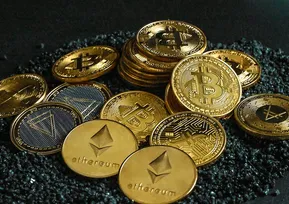
Photo by Pixabay on Pexels


Updating financial market infrastructure

The bank of central banks published the findings of the project on Thursday. Conceived in partnership with the Monetary Authority of Singapore (MAS) alongside the central banks of France and Switzerland, the endeavor could have profound implications for the future landscape of financial market infrastructure.

Project Mariana, conducted under the patronage of the BIS, harnessed principles gathered from the emerging world of DeFi to probe the viability of employing automated market makers (AMMs) for CBDC trading and settlement.

The project involved three key facets:

DeFi Ingenuity: Project Mariana took inspiration and cues from the DeFi universe, particularly AAMs, to streamline foreign exchange trading and settlement. This approach was designed to bolster market efficiency while curtailing settlement risks.

Cross-Border CBDC Transactions: Hypothetical wholesale versions of the Swiss franc, euro, and Singapore dollar in CBDC form were tested for cross-border trading and settlement. The central banks of France, Singapore, and Switzerland orchestrated simulated transactions via AAMs to gauge feasibility.

Interoperability and Token Standards: The project showcased the practical application of a standardized technical token format offered by a public blockchain, enabling seamless interoperability across various currencies. This interoperability element played a pivotal role in facilitating cross-border CBDC transactions.

While the project represents a significant move forward for the BIS in its consideration of decentralized technology, the organization is still mindful that these decentralized tools are in their infancy and in need of further scrutiny and experimentation.

With that, the BIS Innovation Hub has outlined its intent to further explore the prospective advantages and obstacles associated with DeFi-infused solutions within pertinent use cases going forward.


Proof of concept

While the BIS and participating central banks were happy with the outcome of the project, the exercise was still a proof of concept and doesn’t mean there will be any immediate adoption of CBDCs by the participating nations.

Rather, it spotlights the potentials of CBDCs and DeFi in streamlining financial transactions and enhancing efficiency. Central banks can oversee wholesale CBDCs without necessarily exerting control over the underlying infrastructure, thereby furnishing commercial banks with a potent tool for instantaneous FX trading and settlement while simultaneously mitigating credit and settlement risks.

The project also shone a spotlight on certain challenges, including the logistical intricacies arising from the 24/7 availability of wholesale CBDCs. Nevertheless, the manifold advantages of instant foreign exchange trading and settlement appear to outweigh these hurdles.

Central bankers are likely to want a different outcome from the use of this technology by comparison with those who are currently knee-deep in building out DeFi. One commentator on X had a cynical take on the project, stating: “Intermediaries attempting to justify their existence in an age with bitcoin.”

Notwithstanding that, FX is the largest financial market in the world, where $7.5 trillion in value is traded every day. To utilize DeFi technology in that context would likely be profound, regardless of the nature of the application of the technology.

More to Read
View All
Web3 & Enterprise·

Aug 03, 2023

SK C&C to Spearhead Establishment of Korea’s First Alternative Trading System

SK C&C to Spearhead Establishment of Korea’s First Alternative Trading SystemSK C&C, the information communications technology arm of South Korean conglomerate SK Group, is set to launch the country’s first Alternative Trading System (ATS) — a securities trading venue that is more loosely regulated than an exchange — in the second half of next year.The firm announced on Wednesday that it will commence the multilateral trading system construction project for Nextrade, a corporation dedicated to preparing the ATS.Photo by Kanchanara on UnsplashCollaborative effort of securities institutionsNextrade was initiated by seven securities firms, including the Korea Financial Investment Association, and was jointly established by 34 participating institutions, including 19 securities companies, three securities-related institutions, and four tech companies in November of last year.SK C&C in particular has been working with Nextrade since 2019. When the corporation was still a consultative body of securities firms, the SK subsidiary was in charge of consulting on various matters regarding the establishment of the ATS and functional system requirements.Establishing a solid foundationThe aforementioned construction project aims to establish a multilateral trading system and an operation and management system to support the trading, brokerage, and agency functions of listed securities and depositary receipts on the ATS, which Nextrade will proceed with upon its official approval in the second half of next year. SK C&C will take on a major role in leading this task.“Based on our digital IT service capabilities that we have accumulated within the financial sphere, we will establish an efficient and reliable multilateral trading system that is on par with regular exchanges,” said Kim Nam-sik, head of the SK C&C Financial Digital2 Group.Besides facilitating multilateral trading, SK C&C will develop an information distribution system that processes investment information in connection with the Korea Exchange and the Korea Securities Depository, as well as a trading support system responsible for product information management, trading statistics, and administration.Trading after hoursThe ATS will allow trading past normal trading hours, which are usually from 9 AM to 3:30 PM — an especially attractive selling point for buyers and sellers. This will be made possible by compiling product information based on closing prices after the market closes, which will create an environment that allows for trading after hours.This service will not only be convenient for office workers but also help them refer to official announcements and the status of overseas markets to make more informed decisions, SK C&C said.Securities that can be traded after hours will be limited to listed stocks and depository receipts on the Korea Exchange for the time being, but SK C&C is reportedly looking into allowing trading of security tokens, non-security virtual assets, and NFTs.Ensuring uninterrupted operationsNotably, there will also be a Disaster Recovery Center, which will serve to protect the ATS’ major systems and data assets and ensure business continuity. A data backup system will be set up to reduce backup time and swiftly recover from any failures in case of potential security threats.Furthermore, the ATS plans to introduce new types of orders to enhance investor benefits in the domestic capital market, setting it apart from the Korea Exchange.

news
Web3 & Enterprise·

Jan 23, 2024

Ondo Finance announces APAC expansion

U.S.-based crypto startup Ondo Finance, a financial infrastructure firm that concerns itself with the tokenization of real-world assets (RWAs), has officially revealed its intention to expand into the Asia Pacific (APAC) area, with the inauguration of its first office in the region. In a press release published by the company on Sunday, Ondo clarified that the expansion is a direct response to the escalating interest in digital assets throughout Asia. That interest the company attributes to factors such as a flourishing crypto community, shifting regulatory environments and a growing appetite for exposure to U.S. assets.Photo by Florian Wehde on Unsplash40% market shareAt present, Ondo Finance holds a 40% share of the global market where tokenized RWAs are concerned. That market share has been driven by its three main tokenized product offerings: OUSG, designed for exposure to U.S. Treasuries; OMMF, facilitating exposure to U.S. money market funds; and USDY, positioned as a yield-bearing alternative to traditional stablecoins. These products serve as a conduit for global investors to access U.S.-based asset classes in tokenized form, aligning with the rising trend of digital asset adoption. To spearhead its APAC expansion initiative, Ondo Finance has appointed Ashwin Khosa as the vice president of business development in the region. Khosa brings nearly a decade of experience in Hong Kong-based institutional business development, having worked with multinational financial services company Citi, alongside key crypto firms such as Tether and its sister company, Bitfinex. His expertise encompasses both on-chain finance and a profound understanding of the APAC market. Khosa stated: “The team is top-notch and the mission of bringing real world assets onchain is extremely important. I look forward to working closely with partners in the region to help investors gain access to this next generation of high-quality assets.” Founded in 2021 with roots tied to the Goldman Sachs Digital Assets team and supported by leading venture capitalists including Founders Fund, Pantera Capital and Coinbase Ventures, Ondo Finance is looking to solidify its position as a dominant force in this newly emerging market on the back of nearly 40% of the global market share in tokenized securities. Nathan Allman, the founder and CEO of Ondo, expressed his excitement about the expansion, stating:“We’re very excited about our expansion into APAC. There is an active and rapidly growing crypto community and an appreciation for the type of high-quality exposure to US assets that our tokens provide.” Suspected token dumpIn a related development on Monday, on-chain sleuths have presented data that may indicate a sell-off of $11 million worth of ONDO tokens, the project’s native token. 20 million tokens were sold, with the suggestion that the token unit price fell in tandem with that market activity. Earlier on Monday, the token traded at $0.3062. At the time of writing, it's trading at $0.25. This expansion into the APAC region follows a string of pivotal developments for Ondo, including the revelation of its strategic roadmap and partnerships within the Ondo ecosystem. Additionally, the Ondo Foundation has introduced a points program and a proposed unlocking of its ONDO token, marking an integral part of the company's ongoing growth and development.   

news
Policy & Regulation·

Feb 15, 2024

Japan’s FSA requests crypto transaction measures with implications for P2P trading

Japan's Financial Services Agency (FSA), the nation's primary financial regulator, has recently proposed a series of measures aimed at safeguarding users against "unlawful transfers" to cryptocurrency exchanges. This move, however, may pose significant challenges to the peer-to-peer (P2P) transactions market. Bolstering user protection measuresCiting findings from the National Police Agency, which highlight that damages resulting from specialized fraud involving unlawful money transfers are predominantly facilitated through cryptocurrency, the FSA has urged financial institutions to bolster user protection measures. The agency emphasized the importance of assessing risks associated with transfers to crypto-asset exchange service providers. In a request published on Wednesday directed towards Japanese banks, the FSA underscored the persistently high incidence of fraudulent transactions in the country, facilitated through crypto. To address this concern, the FSA and the National Police Agency have proposed various initiatives. One such initiative entails directing banks to enhance monitoring of unlawful transfers to cryptocurrency exchange service providers.Photo by Jayjayli on UnsplashPeer-to-peer (P2P) market implicationsHowever, another proposal from the regulator may have a profound impact on the P2P market. The FSA suggests halting transfers to cryptocurrency exchange service providers if the sender's name differs from the account name. This recommendation, explained in the Japanese version of the press release using the term "reject," implies the suspension of such transfers from both individual and corporate accounts. For users of P2P platforms, where transactions often involve different names between the sender's and receiver's fiat and crypto accounts, this directive could significantly disrupt the market. Rejecting transactions from an individual's bank account to another individual’s crypto wallet could undermine the functionality of P2P transactions. Positive crypto developmentsDespite this potential issue needing to be clarified and resolved and the East Asian nation not having a comprehensive regulatory framework for cryptocurrencies in place, Japan is showing indications of gearing up for broader adoption. The Bank of Japan (BoJ) is preparing to pilot a Japanese central bank digital currency (CBDC) pegged to the Japanese yen.In June of last year, the country established a legal framework for stablecoins. Additionally, the FSA has proposed a legislative amendment to support the development of decentralized autonomous organizations (DAOs) in Japan. The proposed amendment aims to designate potential DAO tokens as "Limited Company Type DAO Employee Rights Tokens," granting holders legal rights akin to regular limited liability company (LLC) members. Last December the Japanese government considered and later acted on revising crypto tax policy to exempt unrealized crypto gains from being taxed. This proposal was originally put forward by the FSA earlier in 2023. In another development, authorities in the city of Kochi signed an agreement on Feb. 7 to virtualize the city on the Start Lands metaverse application, with plans to welcome online tourists later this summer. Despite these most recent recommendations from the FSA potentially signaling a less crypto-friendly stance, the Japanese authorities have otherwise demonstrated that they’re working towards creating workable conditions for the development of crypto and Web3 within the country.

news
Loading