Top

Japan’s GMO Coin Announces Special SGB Airdrop for XRP Holders

Web3 & Enterprise·September 23, 2023, 12:05 AM

GMO Coin, a prominent cryptocurrency exchange operating as part of the Japanese IT conglomerate GMO Internet Group, has unveiled a unique opportunity for XRP holders. Eligible GMO Coin clients who have previously invested in XRP will receive an exclusive airdrop of Songbird (SGB) tokens.
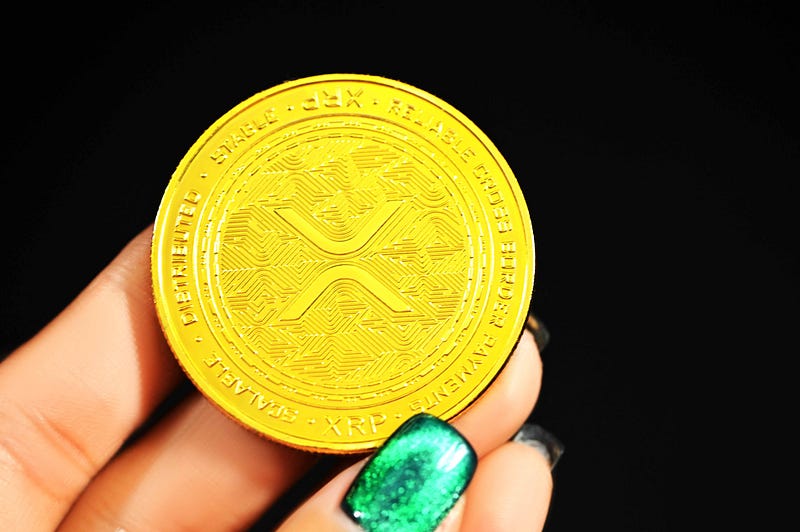
Photo by Kanchanara on Unsplash


SGB token distribution

The distribution of these SGB tokens is slated for completion by September 29, offering a promising opportunity for XRP enthusiasts. To qualify for this airdrop, customers must have held XRP in their GMO Coin accounts at 09:00 on December 12, 2020. The airdrop is also being extended to those utilizing crypto asset lending services on the platform.

To take advantage of the opportunity, eligible clients will need to provide a snapshot of their XRP holdings. While the exact pricing mechanism for the distribution remains undisclosed, it will be revealed at a later date. Presently, SGB is trading at approximately $0.0045, according to Malaysian cryptocurrency data aggregator CoinGecko.

GMO Coin has assured its clients that they are free to manage their XRP holdings as they see fit after submitting the necessary proof. The distributions will ultimately be converted into Japanese yen and made available to clients by the end of the month.


Ripple’s mixed fortunes

This development comes in the wake of a roller-coaster year for XRP holders. Ripple’s native token experienced substantial price fluctuations in response to various developments and events.

One noteworthy instance occurred in mid-July when XRP surged by more than 70%. This surge followed a favorable ruling in a legal dispute between Ripple and the United States Securities and Exchange Commission (SEC).

While regulatory pushback has featured strongly in the US, Ripple has sought to expand its business elsewhere with the Asian region featuring within that strategy. In June, the blockchain-based payments firm obtained in-principle approval from the Monetary Authority of Singapore (MAS) to offer its services within the city-state.

Earlier this month, Ripple struck a deal with SBI Remit Co., a subsidiary of Japanese financial services conglomerate SBI Group, to enable the remittance company to utilize Ripple’s XRP cryptocurrency as a bridge currency, connecting bank accounts in the Philippines, Vietnam, and Indonesia.


Songbird network

The Songbird network serves as a canary blockchain on the Flare layer one network. Essentially, the blockchain plays a crucial role in allowing the facility to enable network architecture testing on the Flare network, including the Flare Time Series Oracle, F-Asset systems, and StateConnector.

GMO Financial Holdings, the parent company behind GMO Coin, bought a 10% stake in AWR Capital, a multi-strategy crypto hedge fund, in April. Following that investment, AWR became a market maker at GMO Coin. The Japanese exchange business is ranked ninth on Forbes Digital Assets’ list of the world’s largest crypto exchanges.

As GMO Coin prepares to distribute SGB tokens to eligible XRP holders, this airdrop marks a great opportunity for relevant stakeholders. It showcases the platform’s willingness to reward its customers and foster engagement within the crypto community.

More to Read
View All
Web3 & Enterprise·

Sep 16, 2025

SBI–Zodia venture to shut down amid Japan crypto regulatory hurdles

SBI Zodia Custody is discontinuing operations two years after its launch, Bloomberg reported. The joint venture was formed by Tokyo-based SBI Holdings and Zodia Custody, an institutional digital-asset platform backed by Standard Chartered, with ownership split 51% and 49% respectively.Photo by Haotian Zheng on UnsplashStrategic realignment behind exitAccording to people at the companies involved, the decision reflected shifting priorities at both partners. Zodia Custody chief executive Julian Sawyer described the move as a mutual alignment of strategy and said the company had prepared materials to seek local registration with Japan’s Financial Services Agency but had not filed an application before opting to exit. An SBI Holdings spokesperson said the dissolution did not signal a withdrawal from crypto custody or the company’s broader Asia strategy, describing the step instead as an effort to generate greater collective impact across SBI’s digital ecosystem. Security breaches shape regulatory climateThe retreat comes as overseas crypto businesses continue to face a cautious regulatory environment in Japan, a market shaped by several high-profile security breaches. Industry analyses have repeatedly noted that three of the largest crypto hacks targeted Japanese exchanges: Mt. Gox in 2014, Coincheck in 2018, and DMM Bitcoin in 2024. Mt. Gox lost about 850,000 BTC, now worth roughly $98 billion, and began making creditor repayments in July 2024 after years of legal proceedings. The repayment deadline was later extended to Oct. 31, 2025, and initial distributions totaled about 59,000 BTC, or just over 41% of the roughly 141,686 BTC earmarked for repayment, to an estimated 127,000 creditors. Coincheck’s 2018 breach involved what was then about $534 million in NEM tokens. Despite that episode, the company secured approval from the U.S. Securities and Exchange Commission (SEC) in November 2024 for a Nasdaq debut through a merger with Thunder Bridge. The transaction generated roughly $31.6 million in gross proceeds for the combined company. Moving forward, Coincheck is entering Europe through the acquisition of Aplo, a French-licensed digital asset brokerage. The most recent breach involved DMM Bitcoin, which had suspended operations after a May 2024 theft of more than 4,502.9 BTC. Its accounts and assets were transferred in March 2025 to SBI VC Trade, a cryptocurrency exchange owned by SBI Holdings, which said it would support 14 tokens previously listed on DMM that were not available on its own platform. Policy uncertainty as leadership shiftsAt the policy level, uncertainty is growing over Japan’s stance on crypto and blockchain following Prime Minister Shigeru Ishiba’s Sept. 7 announcement that he will step down. Ishiba, who took office in October 2024, has advocated for digital assets, with his latest remarks delivered at the WebX2025 event. There, he pledged greater state support for Web3 initiatives, describing the sector as a driver of innovation that could help address demographic decline and support broader economic change. Last month, Finance Minister Katsunobu Katō, seen as a potential contender to succeed Ishiba, said cryptocurrency could play a role in a diversified investment portfolio, noting its growing user base in Japan. While recent surveys show Sanae Takaichi and Shinjiro Koizumi as the leading preferences for the next Liberal Democratic Party leader, Katō has emphasized the need to foster a stable trading environment for digital asset stakeholders, balancing investor protection with industry innovation. Within this policy climate, SBI Zodia Custody’s shutdown underscores the operational and licensing challenges facing foreign-linked crypto ventures in Japan. 

news
Web3 & Enterprise·

Mar 12, 2024

Mudrex to introduce U.S. spot Bitcoin ETFs to Indian investors

Indian cryptocurrency investment platform Mudrex has unveiled plans to provide access to U.S. spot Bitcoin exchange-traded funds (ETFs) for investors within the world’s most populous country. Serving Indian institutional investorsThis initiative, as disclosed by CEO and co-founder Edul Patel in discussion with local media, marks a particularly significant milestone for Indian institutional investors who previously lacked direct access to spot Bitcoin ETFs, which were predominantly available to retail investors through U.S. stock investing firms. In its initial phase, Mudrex intends to list the top four BTC ETFs from prominent entities including BlackRock, Fidelity and Franklin Templeton. While eleven BTC ETF products currently exist in the United States, most commentators agree that there will be a consolidation with the majority unlikely to survive in the long run. Mudrex will ensure compliance by being registered with the Financial Intelligence Unit (FIU) of India. The company already provides clients with access to a diverse selection of over 350 cryptocurrencies and crypto baskets, coupled with the provision of actionable insights to help clients reach investment decisions effectively. Patel outlined the rationale behind the product offering, stating:“Seeing the increasing demand for Bitcoin spot ETFs and user requests on our platform in the past few months, we have decided to launch it for Indian investors.”Photo by rupixen on UnsplashPurchased under Liberalized Remittance SchemeMudrex ensures actual transactions are processed through broker partners in the U.S., while its Indian subsidiary facilitates the spot Bitcoin ETF service. This development unfolds amidst a nuanced regulatory environment in India, where regulatory bodies such as the Reserve Bank of India (RBI) and the Finance Ministry's Intelligence Unit hold varying stances on cryptocurrency. While the RBI remains cautious about crypto, the Finance Ministry's Intelligence Unit has registered numerous Indian crypto service providers and imposed rigorous taxation policies. Patel expanded on the alignment of spot Bitcoin ETFs with the Liberalized Remittance Scheme (LRS), a framework that simplifies overseas investments for Indian investors. The Reserve Bank of India (RBI) prescribes a limit of $250,000 per year for overseas investments by Indians under the LRS. In line with that, Mudrex is facilitating a minimum investment of $5,000 and a maximum of $250,000. Accessing spot Bitcoin ETFs through Mudrex under the LRS framework offers a more tax-efficient avenue compared to domestic crypto exchanges in India. Among Mudrex's clientele, comprising approximately 350 institutions, Patel reveals that around 20 have initiated the process of joining the platform for spot BTC ETF investments. With an anticipated average ticket size of $110,000, this demonstrates a growing appetite among institutional investors for exposure to Bitcoin ETFs facilitated through Mudrex's platform. This move by Mudrex is interesting when contrasted with recent comments made by RBI governor Shaktikanta Das, who suggested that the central bank wasn’t in favor of the offering of such products in India despite the decision by the U.S. authorities to permit spot Bitcoin ETFs. Hong Kong is working towards the approval of such products while hoping to get out in front of the competition by being the first to launch a similar Ethereum-based product. Meanwhile, the London Stock Exchange announced on March 11 that it intends to commence accepting applications for Bitcoin and Ether exchange-traded notes (ETN).

news
Policy & Regulation·

Jul 16, 2024

Hackers utilize social engineering, move funds through Cambodian platform

A couple of recent reports have revealed how North Korean hackers have been moving funds to a Cambodian crypto payments platform while further insight has come to light with regard to how these hackers are compromising crypto companies. Huoine PayOn July 15, Reuters reported that Cambodian currency exchange and payments firm Huione Pay had received in excess of $150,000 in digital currency from a wallet associated with notorious North Korean hacking group Lazarus. Analysis of blockchain data demonstrated that the funds had been received by the Phnom Penh-headquartered payments firm in June 2023 and February 2024. Photo by allPhoto Bangkok on Unsplash‘Pig butchering’It’s understood that Lazarus stole those digital assets from three crypto firms during the months of June and July of 2023. While Huione has suggested that it was oblivious to the origin of the funds, a blog article by blockchain analytics company Elliptic, published to its website on July 10, suggested that “Huione Guarantee is an online marketplace that has become widely used by scam operators in South East Asia.”  Elliptic went on to assert that some of these scammers employ “pig butchering” techniques, where fraudsters manipulate the victim into investing into fraudulent crypto schemes. It added that “merchants on the platform offer technology, data and money laundering services, and have engaged in transactions totaling at least $11 billion.” The National Bank of Cambodia explained to Reuters that the company is not permitted to trade crypto and that it "would not hesitate to impose any corrective measures" against Huione. The platform is believed to have strong ties to Cambodia’s ruling family. One of the firm’s three directors is understood to be a cousin of the Cambodian Prime Minister, Hun Manet. The Lazarus hacking group is believed to have masterminded a $305 million hack of Japanese cryptocurrency DMM Bitcoin in May of this year. Pseudonymous on-chain investigator ZachXBT claimed on X that $35 million of the proceeds had been laundered through the Huione platform. Compromising crypto businessesIn a related development, a report by DL News published on July 15 has found that North Korean hackers are employing a new tactic in order to compromise crypto businesses. The hackers are scanning the internet for job postings advertised by the companies they’re targeting and submitting bogus applications. A report by the United Nations Security Council has revealed that in excess of 4,000 North Koreans have taken up employment with international technology firms. Part of the social engineering-based tactics employed by the hackers includes contriving to get employees within targeted companies to install malware.  Oftentimes, the resumes and LinkedIn profiles of real people are used in order to find a way in via the recruitment process. A report by DeFiLlama suggests that $664 million has been lost via instances of crypto hacking within the first half of 2024. 

news
Loading