Top

HashKey Enhances User Security with Exchange Insurance Partnership

Web3 & Enterprise·September 08, 2023, 1:22 AM

Hong Kong-based cryptocurrency exchange HashKey has taken a step towards bolstering its users’ security by signing a memorandum of understanding (MOU) with fintech firm OneDegree to provide insurance coverage for digital assets held on the platform.
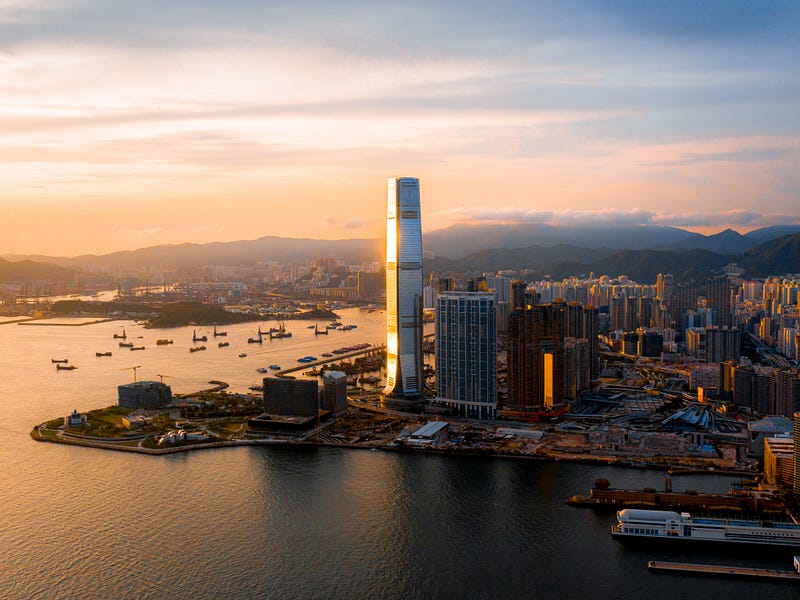
Photo by Manson Yim on Unsplash


Industry-wide significance

That’s according to a report in local news media on Wednesday. The move represents a positive development not only for HashKey users, as it extends protection to both hot wallets and cold storage addresses, but for the overall crypto space.

After the trail of destruction left by a series of high-profile crypto collapses in 2022, the overarching crypto space has been crying out for adequate solutions that reassure crypto market participants that their funds are safe when placed on centralized crypto platforms. In the traditional banking world, in most jurisdictions there are insurance-based schemes that guarantee a certain percentage or level of depositors funds. In many cases, these schemes are backed by the central government.

Asian crypto market participants have been hit harder than most due to these collapses having nothing in place in terms of deposit safeguards. In Singapore, crypto lenders Vauld and Hodlnaut failed, leaving deposit shortfalls. The city-state’s residents were particularly hard hit when it came to FTX as many Singaporeans had opted to use the exchange given that the authorities had banned Binance from trading there.

Xiaoqi Weng, the Chief Operating Officer of HashKey, emphasized the company’s commitment to fortifying its financial, technical, and service infrastructure to offer customers comprehensive protection. The goal is not only to enhance user security but also to contribute to the overall development of Hong Kong’s digital asset ecosystem.


Mitigating risk

Yanlin Guo, Co-founder of OneDegree, underscored the importance of establishing a robust framework for cryptocurrencies that includes insurance to identify and mitigate potential risks effectively. This collaboration between HashKey and OneDegree aims to provide added peace of mind to cryptocurrency investors who entrust their assets to the exchange.

HashKey achieved a significant milestone on August 3 when it became the first cryptocurrency exchange to receive regulatory licensing from the Hong Kong Securities and Futures Commission, enabling it to offer services to retail investors. Subsequently, on August 28, the exchange launched its trading services, albeit with relatively low trading volumes.

Currently, HashKey Hong Kong supports the trading of Bitcoin and Ethereum, with no options for margin trading or cryptocurrency derivatives. Nevertheless, the exchange accepts fiat deposits in both US dollars and Hong Kong dollars from authorized financial institutions worldwide.

The issue of user insurance has been a contentious topic in the cryptocurrency industry, with various exchanges offering different levels of protection. Some exchanges provide no insurance beyond a contractual claim to users’ assets in the event of bankruptcy. Others offer insurance solely for fiat deposits, while a select few, such as Binance and Bitget, extend coverage to crypto-related incidents.

HashKey has answered a market need by integrating this insurance product into its trading service. It’s likely that other platforms will follow suit in the not-too-distant future.

More to Read
View All
Web3 & Enterprise·

Dec 27, 2023

2023: A year of success for Com2uS Platform

2023 has been a year of significant growth for Com2uS Holdings subsidiary Com2uS Platform, which has gained recognition for leveraging blockchain technology to bring content-focused services to users around the world. "This year, Com2uS Platform has achieved high growth in all fields," said CEO Choi Seok-won, according to an article by Korean news outlet Kuki News. "In the coming year, we will not only serve as the technology hub of the Com2uS Group but also actively engage in other projects to become the center of the global Web3 ecosystem."Photo by Pawel Chu on UnsplashExpanding horizonsIndeed, the firm’s subsidiaries, including the blockchain-based game development service Hive and NFT marketplace X-PLANET, have been leading various business ventures. The former has signed contracts with 40 games from 27 gaming companies this year alone. In terms of newly signed game titles, this marks a 307% year-on-year growth. The latter, on the other hand, ranked first in sales among domestic competitors last month, arguably driven by its collaboration with Toei Animation and Korean publishing company Daewon Media on a special NFT drop celebrating the 35th anniversary of Choushinsei Flashman’s Korean release. Choushinsei Flashman is a popular Japanese live-action superhero series that aired in the 1980s, earning fans all over South Korea. In line with these efforts to pursue projects with trendy topics, the company also teamed up with South Korean game developer ArumGames to create a game utilizing Com2uS’ Bungopang IP, which will be launched next year.  Strategic alliancesCom2uS Platform's global expansion has also seen tangible results, such as a recent business partnership with Bangkok-based marketing and game service company SHIN-A, which will play a role in its foothold in Thailand, a key emerging market. Under the agreement, SHIN-A has committed to establishing a Hive team in Thailand and serving as an official global reseller. The platform has also been active in the public sector, signing contracts with various public organizations such as the Seoul Business Agency, Gwangju Information and Content Agency and Korea Creative Content Agency to train practitioners in a wide range of fields across IT and entertainment, such as the internet, AI, big data, fintech, metaverse and gaming. These projects are expected to lead to the discovery of young talent and facilitate more opportunities for collaboration with gaming companies. 

news
Policy & Regulation·

Nov 11, 2025

Japan to tighten crypto lending rules as regulator backs bank stablecoin pilot

Japan’s Financial Services Agency (FSA) is moving to close gaps in crypto regulation and support a new bank-led stablecoin pilot, as markets watch for a potential Bank of Japan rate hike. Tougher oversight of crypto lending and IEOsAccording to a CoinPost report, at the fifth meeting of its Digital Asset Working Group held last week, the FSA discussed introducing new requirements to bring crypto lending clearly within the regulatory framework. While firms managing or staking crypto must register as exchanges, some operators have avoided registration by structuring services as borrowing schemes, which are not legally treated as asset management.Photo by Possessed Photography on UnsplashThe FSA flagged that users face both credit and volatility risks, yet operators are not required to segregate customer assets or use cold wallets. Some services offer returns around 10% or tie up funds for several years, with weak risk management and exposure to re-lending defaults and staking slashing. Under the new policy direction, operators will need stronger risk management for re-lending and staking, tighter custody controls, and clearer risk disclosures and advertising. Institutional-only borrowing not offered to the public will remain exempt. Some members questioned whether the new requirements would be practical to implement for off-chain operators, noting that staking is fundamentally on-chain. The group also examined initial exchange offerings (IEOs) lacking financial audits, particularly those aimed at retail investors. Members discussed limits similar to equity crowdfunding: investments over 500,000 yen ($3,000) capped at 5% of annual income or net assets, up to 2 million yen ($13,000). Most past domestic IEOs were under 500,000 yen ($3,200). Some warned such caps could be bypassed through secondary trading, where tokens are immediately tradable. Major banks pilot stablecoinAlongside stricter rules, the FSA will support a stablecoin pilot led by MUFG Bank, Sumitomo Mitsui Banking Corporation, and Mizuho Bank. CoinDesk Japan noted the project, the first under the Payment Innovation Project, will include three additional participants. Mitsubishi Corporation will oversee operations, while Progmat and Mitsubishi UFJ Trust and Banking will handle issuance and custody. The pilot, launching this month with implementation targeted within the year, will test whether a joint stablecoin by major banks can navigate regulatory and operational challenges. Rate hike speculation mountsJapan’s calibrated digital asset push comes as speculation grows over a possible Bank of Japan (BOJ) rate hike next month. Minutes from the BOJ’s October meeting, cited by South Korean outlet Edaily, show one board member saying most conditions for a hike have been met and that financial conditions would stay easy even after an increase. The BOJ kept its rate at 0.5% at that meeting. A rate hike was described as likely if firms are seen committing to wage increases ahead of next spring’s labor talks and if no major global shocks emerge. Markets, however, remain cautious, citing uncertainty over U.S. tariff effects and whether newly elected Prime Minister Sanae Takaichi will endorse such a hawkish stance. 

news
Policy & Regulation·

Jan 24, 2024

3AC Co-founder offers unusual perspective on Singapore prison time

Su Zhu, the co-founder of the now-defunct Singaporean crypto hedge fund Three Arrows Capital (3AC), raised some eyebrows within the crypto community recently, having shared unconventional thoughts on his time spent in a Singaporean prison. Zhu's arrest took place in October of last year in Singapore, where he was apprehended while attempting to flee. Liquidators of 3AC had tipped off police in the city-state that Zhu was going to Changi airport, a number of days after they had secured a court order against him for failing to cooperate with their efforts to wind up the company. Alongside his business partner, Kyle Davies, Zhu was sentenced to four months in prison for contempt of court following a committal order.Photo by Christian Lue on Unsplash‘Enjoyable experience’Clips from an unreleased podcast were published on social media on Monday, in which Zhu referred to his time in prison as an "enjoyable experience overall." In the video podcast, Zhu expressed gratitude for his incarceration, even going so far as to claim that he had the "best sleep" of his life while behind bars. Zhu suggested that everyone should have the opportunity to experience prison at least once, believing it to be a beneficial and enlightening experience. He provided insights into his daily life during incarceration, emphasizing the simplicity of entertainment and drawing parallels with activities from "ancient days." The disgraced crypto boss discussed the routines and privileges within the prison facility, including access to ample reading material, opportunities for exercise and a structured diet. He highlighted the ability to read books and engage in physical activities like push-ups during his time in prison. What particularly impressed Zhu was the quality of sleep in the prison environment. He also found a sense of connection with his ancestors through the use of mats instead of beds. Crypto community responseCrypto users on various platforms responded with mixed feelings toward Zhu's philosophical insights. Some viewed his perspective with skepticism, while others found humor in the apparent contrast between his experiences and traditional notions of imprisonment. Taking to the X social media platform, pseudonymous crypto restructuring lawyer "Wassielawyer" wrote:”Singapore prison is widely regarded as one of the shittiest prisons you can find in a first world country. And the man made it sound like a 5-star mindfulness retreat everyone needs to go on in order to revitalize mind, body and soul. Man is blessed with a superpower…” The hedge fund collapsed in June 2022, resulting in over $3.5 billion in losses for investors, making it one of the largest hedge-fund trading losses ever. Zhu and fellow 3AC founder Kyle Davies have been active online over the course of the past year, despite their whereabouts largely remaining unknown during that time. The duo have launched a new crypto exchange and bankruptcy claims platform called Open Exchange (OPNX). However, their troubles continue, as liquidator Teneo seeks to recover $1.3 billion directly from the founders, alleging misuse of investor funds after 3AC became insolvent. In September, the Monetary Authority of Singapore (MAS) prohibited both from floating regulated investments for nine years. Teneo has estimated a 46% recovery rate in respect of creditor claims.  

news
Loading