Top

HashKey’s New $100M Fund to Prioritize Altcoins

Web3 & Enterprise·September 02, 2023, 11:51 AM

HashKey Capital, the investment arm of Hong Kong-based crypto firm HashKey Group, is embarking on a new investment journey with the launch of a fund that predominantly targets major altcoins.
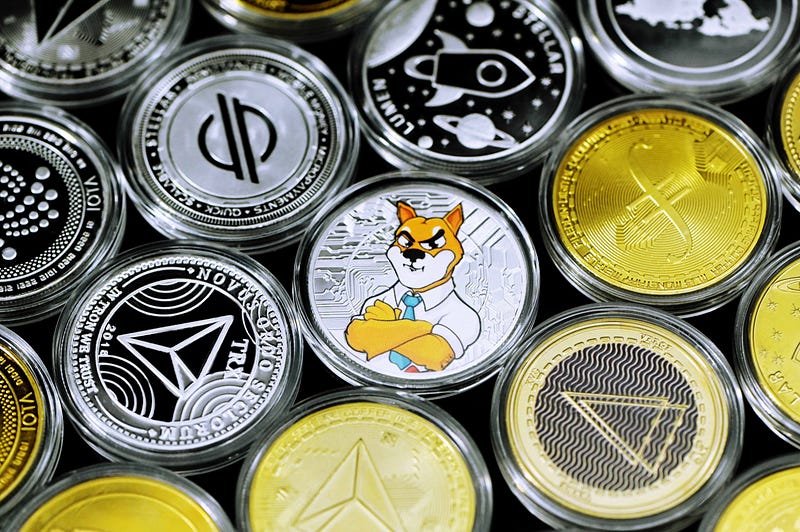
Photo by Kanchanara on Unsplash


50% altcoin allocation

In a recent interview with Reuters, Jupiter Zheng, the Portfolio Manager of the fund, revealed that less than 50% of the fund’s allocation will be directed towards Bitcoin (BTC) and Ethereum (ETH), the two largest cryptocurrencies.

The fund has already garnered attention from potential clients, primarily high-net-worth individuals and investment firms catering to affluent, high-net-worth Asian families. Zheng underscored the fund’s commitment to diversifying investment strategies, which he believes is necessary as a consequence of the Hong Kong stock market’s recent weakness.

“We see untapped demand from professional investors who wish to chase above-market returns in crypto,” Zheng noted, suggesting that the allure of crypto assets is becoming increasingly appealing to traditional investors.


$1 billion assets under management

HashKey Capital has $1 billion in assets under management, and the firm has set an ambitious target of raising $100 million for the newly launched fund within the next 12 months. This allocation strategy also includes a portion of the fund’s holdings in cash, allowing for flexibility in navigating the dynamic and volatile cryptocurrency market.

In addition to forging ahead with crypto investments, the company is actively establishing distribution channels with offshore Chinese financial institutions, expanding its reach and influence in the digital asset space.


Positive market outlook

Zheng remains optimistic about the crypto market’s future, expressing confidence that cryptocurrency prices are finding stability as industry liquidity improves. He cited several factors contributing to this stabilization, including the plateauing of US interest rates and the growing interest of large US asset managers in filing for spot Bitcoin ETFs, indicating a maturing and evolving industry sector.

Responding to news of the new fund, Ryan Selkis, CEO and Founder of crypto market intelligence firm Messari, said that he expected other funds to follow suit in 2024 given that “there’s a ton of inefficiency and mispricing in assets 50–500 by market cap.”

HashKey’s progression in the crypto investment space can be traced back to its acquisition of a Type 9 asset management license from Hong Kong’s Securities and Futures Commission last year. This license granted HashKey the ability to manage portfolios exclusively composed of virtual assets, laying the groundwork for its latest venture. It has since secured Type 1 and Type 7 licenses and recently started offering its products to retail investors in Hong Kong, being one of the first to do so.


Funding round

Earlier in the year, the company successfully closed a $500 million investment round for a fund dedicated to infrastructure, tooling, and applications that drive the widespread adoption of blockchain and crypto technologies. In April, it launched a wealth management service in response to demand from investors who were looking to gain exposure to digital assets.

Hong Kong’s welcoming stance towards cryptocurrencies and its proactive approach to addressing market demand for alternative assets have played a pivotal role in attracting digital asset firms. The city’s Securities and Futures Commission (SFC) has been granting licenses to crypto exchanges in alignment with its new licensing framework, opening up opportunities for retail investors to trade “large-cap tokens” on licensed platforms while implementing safeguards like knowledge tests, risk profiles, and reasonable exposure limits.


More to Read
View All
Policy & Regulation·

Jul 03, 2023

Seoul’s Seocho District Leverages Blockchain Coins to Catalyze Social Impact

Seoul’s Seocho District Leverages Blockchain Coins to Catalyze Social ImpactSeocho District, one of the 25 districts in the South Korean capital of Seoul, is leveraging blockchain technology to tackle environmental and welfare issues with the introduction of the “Good Seocho Coins,” as reported by local news outlet Shinailbo.Photo by TANIM MUNSHI on UnsplashContribute and earn rewardsUnder this program, residents of Seocho can earn Good Seocho Coins by engaging in socially beneficial activities. Each coin holds a value of 100 KRW ($0.076) and can be utilized for various purposes such as accessing facilities, enrolling in educational courses, and making purchases at the Seocho Community Center and the Seocho Joongang Senior Welfare Center.From recycling to in-kind donationsTo earn these coins, residents can participate in three categories of activities: recycling, identifying marginalized households, and making in-kind donations. By returning items like paper bags, clothes hangers, empty plastic bottles, and ice packs to 300 Carbon Zero-certified stores within the district — ranging from coffee shops to laundromats and butcher shops — residents can earn coins. For instance, returning ten hangers or empty plastic bottles would earn them a coin.Residents who identify marginalized households and assist them in obtaining welfare benefits will receive ten coins, while those who connect them with social services will earn five coins.Talented individuals can also contribute to the community and earn coins. For example, photographers, hairdressers, makeup artists, and performers of the non-verbal comedy show Nanta can donate their services and earn one coin per hour. Additionally, health educators and volunteers can earn coins by assisting residents aged 60 or older.Expanding horizonsOriginally conceived as an initiative to promote the health and community engagement of elderly individuals, the Good Seocho Coin project underwent revisions last month to encompass a broader community through regulatory changes.Mayor Jun Sung-soo of Seocho District stated that the aim of this initiative is to harness the potential of blockchain technology and motivate district residents to actively contribute towards tackling a wide range of social challenges. He further highlighted the district’s intention to broaden the scope of this initiative in order to cultivate a sense of pride and satisfaction among the residents, leading to a positive ripple effect throughout the community.

news
Policy & Regulation·

Feb 09, 2024

Settlement approved but sealed by judge in BlockFi-3AC case

A settlement agreement between failed crypto lender BlockFi and bankrupt Singaporean crypto hedge fund Three Arrows Capital (3AC) has received approval from a U.S. judge. However, the specifics of the settlement remain sealed, citing concerns raised by yet another failed crypto platform, FTX. Dispute resolvedDuring a hearing on Feb. 6, New Jersey Bankruptcy Court Judge Michael Kaplan resolved the dispute, which saw BlockFi claiming $129 million owed by 3AC, while the Singapore-based firm contended that BlockFi owed it $280 million. Judge Kaplan's decision to keep the settlement agreement sealed stemmed from a perspective that unsealing it would be counterintuitive. BlockFi had filed a motion to seal the settlement terms last month. The U.S. Trustee objected to the seal, asserting that the debtors hadn't provided sufficient justification for sealing the agreement.Photo by mk. s on UnsplashSensitive settlement termsBlockFi justified the need for confidentiality, citing the sensitive commercial nature of the terms, which could potentially impact ongoing litigation involving FTX. The approval of the settlement now paves the way for BlockFi to proceed with distributions from the lending estate to its 100,000 creditors, with the firm owing up to $10 billion. Central to the dispute were preferential payments, transactions made just before bankruptcy that could have given the recipient more than they would have received through court proceedings. The resolution of counterclaims between BlockFi and 3AC follows mediation ordered by Judge Kaplan in October, likely culminating from a two-day hearing starting on Jan. 5 aimed at resolving the matter conclusively. This settlement follows another agreement between 3AC and Genesis, settling $1 billion in claims by 3AC. The company filed for bankruptcy in July 2022, attributing the extreme fluctuations in cryptocurrency markets as the reason for its collapse. Projected 46% 3AC creditor recoveryAccording to a December report to creditors by Teneo, it's estimated that 3AC creditors will receive approximately 45.74% of their claims from the bankrupt estate. As of Dec. 18, 2023, 3AC's assets were valued at $1.16 billion, while recognized claims for distribution stood at $2.7 billion. In an ongoing effort to secure 3AC's assets, a British Virgin Islands (BVI) court froze $1 billion in assets belonging to 3AC's founders, amid the liquidation process. This move is part of a broader strategy to seek recoveries from the founders and Kelly Chen, wife of one of the co-founders. 154 claims totaling $3.4 billion were filed against the 3AC estate, with $200 million not admitted for distribution and $322 million rejected or expected to be rejected. Additionally, claims worth $76 million are currently under dispute. BlockFi, along with eight affiliates, filed for Chapter 11 bankruptcy in November 2022. The firm cited significant exposure, including obligations owed to BlockFi by FTX-linked hedge fund Alameda Research, assets on the FTX platform and an undrawn credit line from FTX. 3AC’s collapse in June 2022, followed by FTX's downfall, led to BlockFi's bankruptcy filing in late November 2022. In a separate development, OPNX, a crypto bankruptcy claims platform launched by 3AC co-founders Su Zhu and Kyle Davies, announced its cessation of operations, with plans to shut down by Feb. 14.  

news
Policy & Regulation·

Jan 03, 2024

Indian Web3 industry body campaigned for ‘level playing field’

An industry advocacy body for crypto and Web3 in India had urged the Indian government to take action against nine offshore exchanges, prompting the government to issue show cause notices and block URLs recently. Native industry pushbackAccording to CoinDesk, the publication has seen a copy of a letter that was sent in mid-December by the Bharat Web3 Association (BWA), addressed to the Indian Finance Ministry’s Department of Revenue Secretary, Sanjay Malhotra. The letter was penned by BWA Chairman Dilip Chenoy. Chenoy has been in the role since March of last year having a number of years of leadership experience within Indian industry bodies under his belt, with time spent previously as Secretary General of the Indian Chambers of Commerce and Industry and as Chairman of the board of Sant Longowal Institute of Engineering and Technology. According to its LinkedIn profile, the BWA seeks to “advocate for the collaboration between the regulatory bodies and the Industry for creating awareness about the new age technology and the emerging [Web3/crypto] asset class.” ‘Show cause’ noticesIt emerged last week that India’s Financial Intelligence Unit (FIU) had issued “compliance show-cause” notices to a number of overseas crypto platforms who have otherwise been active within the Indian market. The FIU is a national body tasked with liaising with and providing information to enforcement agencies where suspected illicit transactions are concerned. The offshore exchanges, including Binance, KuCoin, Huobi, Kraken, Gate.io, Bittrex, Bitstamp, MEXC Global and Bitfinex, have been given a two-week deadline to respond to the show cause notice. This notice questions why regulatory actions should not be taken against them, aiming to ensure compliance with the country's financial regulations. It’s understood that the BWA's letter requested a one-month grace period for offshore exchanges to register with the FIU. It remains unclear whether the government's actions were solely prompted by the BWA's letter or if it would have taken place independently. Notably, the BWA's letter aligns with the government's earlier mandate in March, requiring crypto businesses to register with the FIU and adhere to anti-money laundering processes under the Prevention of Money Laundering Act (PMLA). Since then, 31 domestic entities have registered with the FIU. Photo by Peter Glaser on UnsplashEnsuring a fair gameThe BWA's letter also proposes that offshore exchanges establish an Indian subsidiary, deposit the applicable tax deducted at source (TDS) from July 1, 2022 and face restrictions, including potential access blocks on mobile app stores and IP addresses, for non-compliance. While it's unclear if all these requests feature in the show cause notices, the BWA emphasizes the need for fair competition. Rajagopal Menon, Vice President of leading Indian crypto exchange WazirX, stressed that “all we are asking for is a level playing field." The BWA's letter also urges the government to grant Indian retailers a 30-day window to withdraw assets before implementing any restrictions. The fledgling BWA industry body recently celebrated its first anniversary with its founding member, CoinSwitch founder Ashish Singhal, stating that he got involved with the BWA “to help build an effective regulatory framework for Web3 and digital assets in India.” Singhal added that the BWA’s mission is “to help India realize its vision to be the leading digital economy.” 

news
Loading