Top

Indian Web3 industry body campaigned for ‘level playing field’

Policy & Regulation·January 03, 2024, 2:42 AM

An industry advocacy body for crypto and Web3 in India had urged the Indian government to take action against nine offshore exchanges, prompting the government to issue show cause notices and block URLs recently.


Native industry pushback

According to CoinDesk, the publication has seen a copy of a letter that was sent in mid-December by the Bharat Web3 Association (BWA), addressed to the Indian Finance Ministry’s Department of Revenue Secretary, Sanjay Malhotra.


The letter was penned by BWA Chairman Dilip Chenoy. Chenoy has been in the role since March of last year having a number of years of leadership experience within Indian industry bodies under his belt, with time spent previously as Secretary General of the Indian Chambers of Commerce and Industry and as Chairman of the board of Sant Longowal Institute of Engineering and Technology.


According to its LinkedIn profile, the BWA seeks to “advocate for the collaboration between the regulatory bodies and the Industry for creating awareness about the new age technology and the emerging [Web3/crypto] asset class.”


‘Show cause’ notices

It emerged last week that India’s Financial Intelligence Unit (FIU) had issued “compliance show-cause” notices to a number of overseas crypto platforms who have otherwise been active within the Indian market. The FIU is a national body tasked with liaising with and providing information to enforcement agencies where suspected illicit transactions are concerned.


The offshore exchanges, including Binance, KuCoin, Huobi, Kraken, Gate.io, Bittrex, Bitstamp, MEXC Global and Bitfinex, have been given a two-week deadline to respond to the show cause notice. This notice questions why regulatory actions should not be taken against them, aiming to ensure compliance with the country's financial regulations. It’s understood that the BWA's letter requested a one-month grace period for offshore exchanges to register with the FIU.


It remains unclear whether the government's actions were solely prompted by the BWA's letter or if it would have taken place independently. Notably, the BWA's letter aligns with the government's earlier mandate in March, requiring crypto businesses to register with the FIU and adhere to anti-money laundering processes under the Prevention of Money Laundering Act (PMLA). Since then, 31 domestic entities have registered with the FIU.

 

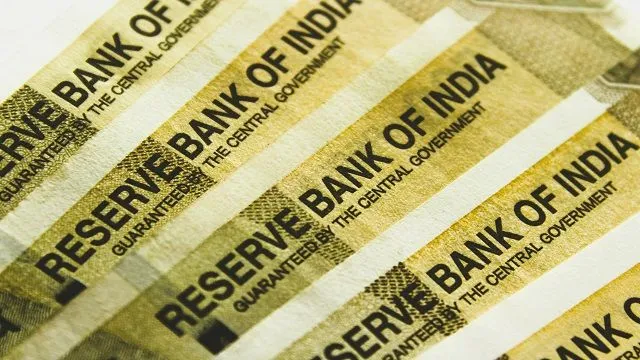
https://asset.coinness.com/en/news/c3b66d7fe28e336f0aeee7820783d08c.jpg
Photo by Peter Glaser on Unsplash

Ensuring a fair game

The BWA's letter also proposes that offshore exchanges establish an Indian subsidiary, deposit the applicable tax deducted at source (TDS) from July 1, 2022 and face restrictions, including potential access blocks on mobile app stores and IP addresses, for non-compliance. While it's unclear if all these requests feature in the show cause notices, the BWA emphasizes the need for fair competition.


Rajagopal Menon, Vice President of leading Indian crypto exchange WazirX, stressed that “all we are asking for is a level playing field." The BWA's letter also urges the government to grant Indian retailers a 30-day window to withdraw assets before implementing any restrictions.


The fledgling BWA industry body recently celebrated its first anniversary with its founding member, CoinSwitch founder Ashish Singhal, stating that he got involved with the BWA “to help build an effective regulatory framework for Web3 and digital assets in India.” Singhal added that the BWA’s mission is “to help India realize its vision to be the leading digital economy.”

 

More to Read
View All
Policy & Regulation·

Oct 14, 2023

Terraform Labs Accuses Citadel Securities of Stablecoin Sabotage

Terraform Labs Accuses Citadel Securities of Stablecoin SabotageTerraform Labs, the bankrupt Singaporean blockchain firm, is pointing fingers at American market maker Citadel Securities, alleging that it played a role in an orchestrated effort to destabilize Terraform’s TerraUSD (UST) stablecoin back in May 2022.In its pursuit of justice, Terraform Labs has now called upon the United States District Court in the Southern District of Florida to compel Citadel Securities to furnish vital documents concerning their trading activities during that critical period, when the stablecoin underwent a depegging crisis, now referred to as TerraUSD Classic (USTC).Photo by Tingey Injury Law Firm on UnsplashAllegations of intentional destabilizationThat’s according to a motion filed by Terraform in the United States District Court in the Southern District of Florida, earlier this week. As alleged by Terraform Labs, the catastrophic depegging event in May 2022, which saw UST plummet from $1 to a mere $0.02, was not solely due to inherent instability in the algorithm supporting the UST stablecoin. Instead, the firm contends that it was a result of the deliberate and collaborative actions of specific third-party market participants who engaged in “shorting” to trigger the depegging.Terraform stated in its motion:“Movant [Terraform] contends that the market destabilization that occurred did not result from instability in the algorithm underlying the UST stablecoin. Instead, Movant contends that the market was destabilized due to the concerted, intentional effort of certain third party market participants to ‘short’ and cause UST to depeg from its one dollar price.”The motion also alludes to “publicly available evidence” hinting at Citadel’s intention to short the stablecoin at the time of the depegging event. In particular, it references a Discord channel chat screenshot where a pseudonymous trader purportedly had a conversation with Citadel head Ken Griffin. Griffin allegedly remarked:“They were going to Soros the f*** out of Luna UST,” seemingly drawing a connection to George Soros’ trading strategies, which often involve highly leveraged, one-way bets.Citadel refuted allegations previouslyNotably, Citadel Securities has previously refuted allegations of trading the TerraUSD stablecoin in May 2022, according to Forbes.In its motion, Terraform refers to the importance of these documents for its defense in a lawsuit filed by the US Securities and Exchange Commission (SEC) in February. The SEC lawsuit alleges that Terraform Labs and its founder, Do Kwon, played a significant role in orchestrating a multi-billion dollar cryptocurrency securities fraud.The motion concludes with Terraform arguing that its defense would be substantially hampered if Citadel Securities were to successfully withhold the requested information. In the event that the court fails to compel Citadel, Terraform has requested that the matter be transferred to the US District Court for the Southern District of New York.The matter has been the subject of debate within the crypto community in recent months. In May a community member stated:“As I’ve been saying. People blamed Citadel et al. This was nothing but a rug pull. Wake up. Do Kwon says the dissolving of Terraform Labs in Korea days before the $LUNA and $UST crash is ‘purely coincidental.’”With the matter now being raised in the courts, it looks like the legal system will be the final adjudicator regarding the issue.

news
Policy & Regulation·

May 23, 2025

Pakistan establishes authority to regulate crypto

Pakistan’s Ministry of Finance has signed off on the establishment of the Pakistan Digital Assets Authority (PDAA), a body which will be responsible for the implementation of regulations governing blockchain and the digital assets sector. In a report published by Pakistani English-language newspaper Dawn, the media outlet outlined that the Ministry of Finance has taken this step in an effort to embrace future innovation in the finance sector.  The new agency will be responsible for monitoring the operations of digital wallet service providers, stablecoin issuers, the development firms behind decentralized finance (DeFi) protocols, crypto custodians and crypto exchange platforms. Photo by Hamid Roshaan on UnsplashFrom crypto ban to crypto regulationIn October 2022, Pakistan was removed by the Financial Action Task Force (FATF), a global money laundering and terrorist financing watchdog, from its grey list. The following year, Pakistan’s Minister of State for Finance and Revenue, Aisha Ghaus Pasha outlined that banning cryptocurrency was a condition of the country’s removal from the FATF grey list. Accordingly, the South Asian country proceeded to ban digital assets, with Ghaus Pasha declaring that crypto would “never be legalized in Pakistan.”Despite the adverse position taken previously by the authorities in Pakistan where digital assets were concerned, in 2024 a survey carried out by Chainalysis revealed that Pakistan featured strongly in terms of retail-level crypto adoption. With this latest development, Pakistan is moving forward progressively with digital assets, albeit that it is doing so while being cognizant of the current requirements demanded by FATF related to crypto. The newly-formed PDAA will act to ensure FATF-compliant innovation, while striving for economic inclusion and the adoption of digital assets in a responsible manner. Regulating to lead crypto innovation rather than catching upPakistan’s current Minister for Finance and Revenue, Muhammad Aurangzeb, said that “Pakistan must regulate not just to catch up — but to lead.” He added that through the establishment of the PDAA, a digital assets regulatory framework that protects consumers will be created. Furthermore, he claimed that such an approach would attract global investment, putting Pakistan “at the forefront of financial innovation.”Another area of focus for the PDAA will be the facilitation of the tokenization of government debt and national assets. Pakistan runs an annual average electricity surplus of 4,000 megawatts. In 2024, total electricity generation was recorded at 92,091 GWh while demand weighed in at 68,559 GWh. With that, the Pakistani authorities want the PDAA to create the correct conditions that will lead to regulated Bitcoin mining operators utilizing this energy resource. Other objectives which have been set out for the new agency include encouraging the growth of startups aimed at building blockchain-based solutions at scale, the regulation of what is estimated to be a $25 billion informal crypto market and the provision of legal clarity within the crypto sector in Pakistan for both local and international investors. This latest positive development follows the formation of the Pakistan Crypto Council (PCC) back in February. That event signaled a policy shift in Pakistan with regard to digital assets. In March PCC CEO Bilal bin Saqib said that Pakistan was done sitting on the sidelines and that the authorities now want to see Pakistan develop as a “leader in blockchain-powered finance.”

news
Policy & Regulation·

Aug 29, 2023

Illicit Crypto Activities Estimated to Have Surpassed $100 Billion in S.E. Asia

Illicit Crypto Activities Estimated to Have Surpassed $100 Billion in S.E. AsiaA recent analysis by blockchain analytics firm Bitrace has found that over $100 billion worth of digital currency has been used in illicit crypto trading activities in Southeast Asia.Photo by Bermix Studio on UnsplashThe firm provided details of its analysis via X (formerly Twitter) on Monday. The data underscores the extensive scope of unlawful activities involving cryptocurrencies across Southeast Asia. The analysis further revealed that illicit activities involve fraudulent schemes, online gambling, and money laundering.Misuse of digital asset innovationSome of the key characteristics of digital assets include the ability to maintain anonymity, decentralization, and borderless transactions, which are generally considered positive attributes. However, the very nature of decentralized cryptocurrency means that nobody dictates who uses it or the purpose for which someone decides to use it. With that, these characteristics have rendered illegal undertakings not only more covert but also facilitated expedited transfers of pilfered resources.The silver lining, however, rests in the inherent transparency of blockchain ledgers. This quality has enabled Bitrace’s team of encryption analysts to trace funds implicated in illicit ventures through intensive on-chain analysis.Key insightsThe Bitrace research points towards the following key insights:Prevalence of Tether (USDT): The use of USDT has gained prominence in both illicit activities and gambling operations throughout Southeast Asia, with a staggering sum of over 115 billion USDT recorded in 2022 alone.Shift to Top Trading Platforms: USDT is observed to migrate from unlawful platforms within Southeast Asia towards top-tier trading platforms. Particularly favored by operators and gamblers, a significant proportion hails from the Chinese demographic, consistently gravitating towards specific exchanges.Inflow into Trading Platforms: A noteworthy development emerges as over 14.6 billion USDT prepares to traverse into trading platform accounts. The mounting risk factor diffuses across an expanding spectrum of addresses and platforms.Likely consequencesIf this blockchain analysis is found to be accurate, there are likely to be ramifications for all projects operating in the digital assets, DeFi and Web3 space. It comes at a time when the focus on the regulation of crypto-related businesses is more intense than ever before.Anti-Money Laundering (AML) and Know Your Transaction (KYT) legislation are cornerstone financial services regulations that have been established on a global basis. If these regulations are being flouted, and crypto is being used as a means to circumvent them, there’s a real risk that regulation could be applied heavy-handedly to counteract that threat of widespread illicit activity.Global crypto exchange Binance has faced criticism in this context, with a suggestion in March that its Turkey-based exchange service had been used by an organization connected with militant group Hamas for money laundering and terrorist financing.In a report last week, Binance claimed that it shared information with authorities that led to the capture of senior ISIS members. More such cooperation will likely be necessary to prevent the sector being subject to overzealous regulation.

news
Loading