Top

Bitay Ventures into Expanding UAE Crypto Market

Web3 & Enterprise·September 01, 2023, 1:52 AM

Turkey’s Bitay, a cryptocurrency exchange headquartered in Istanbul, has taken the decision to enter the United Arab Emirates (UAE) market.

The company announced the development via a press release published on Thursday.

Bitay General Manager Niyazi Yilmaz expressed his satisfaction in having made the move, stating: “The UAE provides a stable regulatory environment for crypto exchanges. It will serve as more than just a market for Bitay, it will be our technology base, central to our global blockchain strategy.”
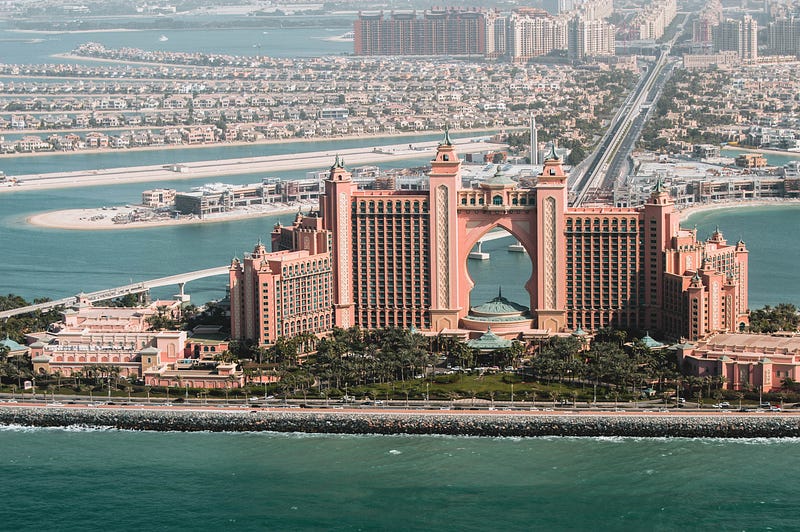
Photo by Aldo Loya on Unsplash


Government-aided kickstart

Bitay sprang to life in 2018 following the award of a research grant by the Turkish government. The business has been operational in Turkey over the course of the past five years, but took the decision to expand on a global basis in 2021. The upshot of that decision saw the company obtain a Money Services Business (MSB) license in 16 states in the United States. Beyond that, the firm has made efforts to extend its services to customers across Europe, Asia, Africa, and the Americas.

Last year, Bitay entered the Indian market, and as part of that process, it established an office in Gurgaon. At that time, the company claimed that India, the Turkic countries, Eastern Europe, the Balkans, and selected countries in the Middle East and North Africa (MENA) were its priority markets.


Stablecoin USP

The company feels that it has something additional to offer the UAE market by comparison with other platforms that will provide it with a unique selling proposition (USP). It will also offer AEDD, a stablecoin that is pegged to the UAE's local currency, the United Arab Emirates Dirham (AED). Yilmaz explained: “AEDD is not just a stable coin, but a testament to the investment and trust we place in the UAE’s digital future.”

To further bootstrap the launch of the platform within the UAE, Bitay is offering some preliminary incentives to encourage UAE residents to use the service. To that end, it’s launching an “Advantageous 2nd Sales Period” campaign. The offering will incorporate 25% discounts on its native exchange token, accompanied by a yield bonus of up to 30% on USDT-based investments.


Native token offering

The company claims that its native token achieved a 330% surge in value within its first year. That said, exchange tokens have been the subject of controversy more recently. The reliance of failed cryptocurrency exchange FTX on its native FTT token was a key factor in the downfall of the platform in 2022. Similar concerns have been raised with regard to global crypto exchange Binance relative to its native BNB token, albeit that any such assertions remain a matter of speculation.

A progressive regulatory approach to virtual assets over the course of the past 12 months in the UAE has seen proponents of digital currency heap praise on the country. It has also led to a number of sizable crypto platforms attaining licensing in Dubai and Abu Dhabi, while others have established offices or headquarters within the UAE.


More to Read
View All
Policy & Regulation·

Oct 26, 2023

Korean Financial Authorities to Provide Support for Security Token Market

Korean Financial Authorities to Provide Support for Security Token MarketAmid growing calls for accelerating the growth of the emerging security token (ST) market, the South Korean government is preparing to introduce supportive measures. The security token market is powered by blockchain technology which allows fractional investment in real world assets (RWAs) such as real estate and artwork.Security tokens are digital assets that represent securities generated through a process called security token offering (STO). These tokens, backed by RWAs, can be traded similarly to traditional securities. Investors can use these tokens to obtain shares, voting rights, interest, or profits.Photo by Philip Jang on UnsplashSupport measures for security token IndustryNext month, the Financial Services Commission (FSC) will draw up support measures and policy improvement plans to bolster the nascent security token industry. An FSC representative mentioned that the agency intends to work with the National Assembly to finalize the legislation of security token-related bills by November. Furthermore, the government official said the FSC will actively seek input from industry stakeholders to formulate strategies for enhancing policies designed to promote the growth of the security token market.To align with the national objective titled “The Establishment of Digital Asset Infrastructure and Regulatory Framework,” the FSC revealed regulatory guidelines for security token issuance and distribution in February. These new guidelines are centered around the establishment of institutions responsible for account management and entities engaged in over-the-counter (OTC) trading. Subsequently, in July, lawmaker Yun Chang-hyun, a member of the National Assembly’s National Policy Committee, proposed a bill to amend the Electronic Securities Act and the Capital Markets Act with the aim of ensuring that these Acts are consistent with the new regulatory guidelines.Security token market’s growth potentialWith growing anticipation that the security token market could rival the size of the exchange-traded fund (ETF) stock market, securities firms, banks, and blockchain companies have been eager to carve out a niche for themselves since the start of the year. However, their progress has been hindered by a potentially extended period of higher interest rates in the US and the slow advancement of security token-related legislation. While these organizations tried to explore opportunities through the financial regulatory sandbox, their endeavors proved more or less fruitless. An official from a securities firm voiced concerns over the escalating costs of setting up security token infrastructure, especially with legislative delays.On this matter, the Korea Financial Investment Association (KOFIA) has emphasized the urgent need to pass security token legislation to clear up regulatory ambiguities. They’ve also called for measures to stimulate market growth, such as relaxing regulations related to token issuance and distribution and increasing investment caps.At a seminar hosted by the Korea Capital Market Institute, Ahn Hyuk, Head of the Platform Division at Korea Investment and Securities, highlighted that the rigorous review of security registration applications by the Financial Supervisory Service (FSS) might impede the security token market’s growth. Responding to this, Jang Young-shim, Head of the Corporate Disclosure Department at FSS, said that both the FSC and FSS will carefully listen to industry feedback, addressing a range of topics from regulatory relaxation to investor protection.

news
Web3 & Enterprise·

Aug 11, 2023

Alchemic Investment and Nanuhm Angels Collaborate to Boost Web3 and Blockchain Investments

Alchemic Investment and Nanuhm Angels Collaborate to Boost Web3 and Blockchain InvestmentsKorean deep tech investment firm Alchemic Investments announced that it has entered into a partnership with venture capital firm Nanuhm Angels to enhance investments in blockchain, Web3, artificial intelligence, and deep tech.Photo by Precondo CA on UnsplashInvesting in the future of Web3 in KoreaThe two firms will work with the city of Incheon — a metropolitan city located near the nation’s capital of Seoul — to discover promising Web3 companies while strategically investing in and nurturing startups that aspire to innovate existing businesses using blockchain technology.They will also participate in Incheon’s roadmap for fostering blockchain businesses after Incheon Technopark’s blockchain company acceleration program kicks off this year. This program supplies Incheon-based startups and small companies with the resources required to grow their blockchain businesses, thereby establishing Incheon as a blockchain hub.“Just as Japan and Hong Kong are leading the Web3 market in Asia, many Korean startups are also likely to emerge as leaders of the market once a legal foundation is established in the country,” said Min Kyung-man, CEO of Alchemic Investments.“We plan to support global expansion through our network with major overseas companies and institutions that highly value Korea’s growth potential in leading the technologies of the future.”About Alchemic InvestmentsAlchemic Investments was established in March of this year and invests in areas such as Web3, fintech, and AI. Housing seasoned professionals in asset management and strategic investment in major corporations, the company is currently in the process of recruiting investors to establish its first fund, aiming for a funding scale of 30 billion KRW (approximately $22.7 million).About Nanuhm AngelsNanuhm Angels works with partners who have experience in managing funds worth 110 billion KRW, as well as acceleration experts skilled in business model validation and refinement and investor relations. Its investment portfolio consists of companies such as Rezi, Onthelook, and NS Studio.It is also an operator of the aforementioned Incheon Technopark blockchain company acceleration program along with a consortium consisting of Web3 gaming studio Ret Games and on-chain risk rating solution developer Undefined Labs.

news
Web3 & Enterprise·

Nov 01, 2023

OKX maintains robust asset reserves with 103% BTC backing

OKX maintains robust asset reserves with 103% BTC backingSeychelles-incorporated cryptocurrency exchange OKX has recently released its 12th asset reserve certificate, with its latest report revealing that the company maintains reserves of 103% for its top coins, which include Bitcoin (BTC), Ethereum (ETH), Ripple (XRP), Tether (USDT) and USD Coin (USDC). The measure is meant to reassure users that their funds are well-backed and, in fact, more than covered by the exchange’s reserves.Photo by rc.xyz NFT gallery on UnsplashBitcoin, Ether reserve surplusesOKX provided details on its latest asset reserve status via a blog post published to its website on Monday. Alongside providing the relevant asset reserve data, the exchange celebrated its first complete year of having utilized a proof-of-reserve-based system.For BTC, OKX holds a substantial reserve of 140,484 BTC, effectively exceeding the 136,227 BTC held in user accounts. Similarly, ETH reserves stand at 1.46 million ETH, providing a surplus over the 1.42 million ETH owed to OKX users.The exchange also demonstrated its considerable holdings in stablecoins, with over $5 billion in USDT reserves and over $327 million in USDC reserves. In an interview with CoinDesk recently, OKX Chief Marketing Officer (CMO) Haider Rafique, referred to the need to provide a mechanism to reassure platform users. He stated:“Customers often express concerns in person about centralized exchanges, highlighting issues with security, solvency and downtimes, even if they don’t always voice these concerns digitally.”Use of zero-knowledge technologyIn April, OKX upgraded its proof of reserve system, opting for the use of zero-knowledge scalable transparent argument of knowledge (zk-STARK) technology. This approach allows OKX platform users to independently verify exchange solvency, confirming their assets are backed by OKX reserves. A zero-knowledge proof demonstrates the truth of a statement without sharing the statement’s contents. Therefore, no account balances are made public to other service users, maintaining user privacy.Regular transparency is now crucial for exchanges like OKX, as it aims to provide users with the certainty that their funds are genuinely available for withdrawal at any given time. After the FTX insolvency incident, verifiable proof of reserves has become paramount in reassuring users about the safety of their investments.Trend towards improved standardsIn the wake of several high-profile crypto platform failures in 2022, many exchanges are making greater efforts towards reassuring users that their funds are safe and accounted for. This has given rise to the popularity of proof of reserve systems.On that basis, OKX hasn’t been alone in implementing a proof of reserves-based system. In July another Seychelles-incorporated crypto platform, Bitget, announced that it could demonstrate the debt-free status of its business through its proof of reserves system.Nic Carter, Partner at crypto venture capital and private equity firm Castle Island Ventures, has carried out some research into the various proof of reserve systems employed by a number of global crypto platforms. While accepting that the approach is not foolproof, Carter maintains that it’s still a move in the right direction. “The way PoR works is, if enough exchanges do it, the few exchanges that don’t do it end up sticking out like a sore thumb,” he states.

news
Loading