Top

OKX and Bybit Exclude Sanctioned Russian Banks from P2P Services

Policy & Regulation·August 29, 2023, 4:01 AM

In response to the mounting pressure on crypto firms to improve general compliance standards, prominent digital asset exchanges OKX and Bybit, based in the Seychelles and Dubai, have decided to delist sanctioned Russian banks from their peer-to-peer (P2P) services.
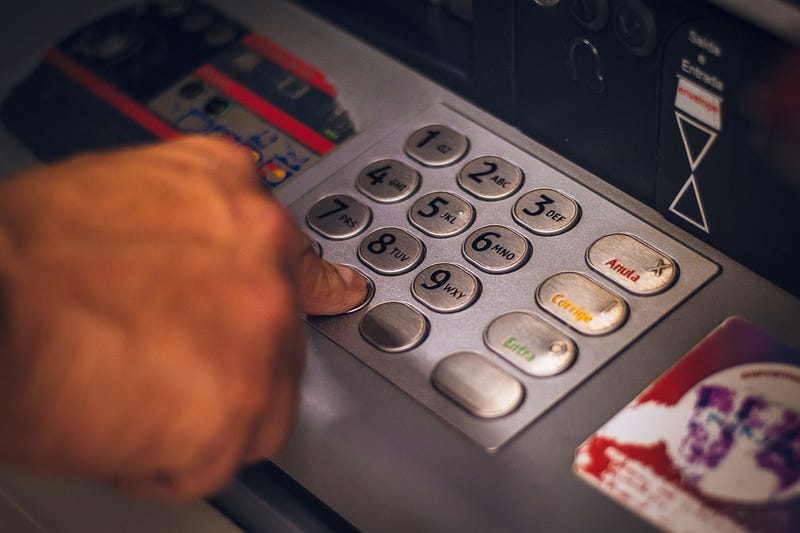
Photo by Eduardo Soares on Unsplash

The move by the two exchange platforms, brought to light by Russian media reports, comes just days after Binance had done the same.

Tinkoff Bank and Sberbank, two significant Russian financial institutions, have been expunged from the P2P platforms of OKX and Bybit. This effectively removes the option for Russian crypto users to exchange their assets for fiat through these banks. The decision sees the exchanges fall into line with Western sanctions imposed on the banks due to Russia’s actions in Ukraine.


Enforcement difficulties

While the removal of these banks from the platforms is a significant step, the nature of P2P transactions introduces complexities in enforcing such bans comprehensively. Reports indicate that certain users are still engaging in P2P transactions with these banks through private channels, showcasing the challenges in regulating this decentralized method of exchange.

In the case of OKX, at the time of publication, the platform still allows Russian users to receive fiat through accounts held with the Russian Standard Bank and the Russian branch of Raiffeisen Bank.

This action aligns OKX and Bybit with Binance, which faced a similar scenario last week. Binance came under scrutiny when it continued to list the sanctioned banks as part of its payment methods. Following a report by The Wall Street Journal, Binance eventually removed the banks from its platform.


Binance’s compliance efforts

A spokesperson from Binance conveyed that while the banks have been delisted, the company remains committed to ensuring compliance by continuously updating its systems.

“We regularly update our systems to ensure compliance with local and global regulatory standards,” they said. “When gaps are pointed out to us, we seek to address and remediate them as soon as possible.”

Despite this stance and the latest action it has taken, users on Binance’s P2P platform are still posting ads for the sale of crypto using the “green bank,” referring to the sanctioned banks, as the preferred method of payment.

Western-imposed sanctions have led to significant economic challenges in Russia, pushing individuals and institutions towards cryptocurrencies as a potential solution. In a country that has previously banned private cryptocurrencies, the attraction of decentralized digital assets has grown stronger as a means to break through the sanctions-induced financial stranglehold.


Sanctions impact

Reports from Russian financial institutions reveal dramatic declines in profits, some as high as 90%, as they find themselves cut off from the global payments network SWIFT. Tinkoff Bank, for instance, reported a substantial decline of 67% in the second quarter of 2022, attributing the drop to escalating global tensions.

In April, the Bank of Russia introduced a bill that could potentially allow cryptocurrencies to be used in international trade, a measure aimed at mitigating the impact of sanctions. While this could potentially open doors for cross-border transactions involving cryptocurrencies, the restrictions on local transactions remain intact.

More to Read
View All
Policy & Regulation·

May 28, 2025

Pakistan appoints crypto advisor to PM & allocates 2K MW to Bitcoin mining

Recent weeks have seen a positive policy shift in Pakistan with regard to digital assets and blockchain and that initiative has gathered further momentum with the appointment of a special assistant on blockchain and crypto to the Pakistani prime minister and the allocation of 2,000 MW of surplus electricity to Bitcoin mining and AI data centers.Photo by Abuzar Xheikh on UnsplashOn May 26, the Pakistan Observer, an English language daily newspaper, reported that Bilal bin Saqib has been appointed to serve as a special assistant on blockchain and crypto matters to Pakistani Prime Minister Shehbaz Sharif. Forbes ‘30 under 30’ social entrepreneurIn this role, Saqib assumes the status of a minister of state under Rule 4(6) of the Rules of Business, 1973, with the appointment effective immediately. Saqib had been featured by Forbes through its “30 under 30” list of social entrepreneurs in Asia in 2020. He is the founder of Tayaba.org, a non-governmental organization (NGO) focused on the provision of clean drinking water to vulnerable communities in Pakistan. Saqib came to prominence in the crypto sector earlier this year when he was appointed CEO of the newly formed Pakistan Crypto Council (PCC), an agency established to promote blockchain technology and digital assets within the South Asian country. In April he was added by World Liberty Financial, a crypto project connected with the family of U.S. President Donald Trump, as an advisor. Earlier this month, Pakistan’s Ministry of Finance gave the go-ahead for the establishment of the Pakistan Digital Assets Authority (PDAA), a body that will be responsible for the implementation of regulations governing the crypto and blockchain sector.  Utilizing surplus energyAt the time, one area of focus that had been highlighted in the announcement of the establishment of the PDAA was a desire to make better use of Pakistan’s surplus energy. The country runs an annual average surplus of 4,000 megawatts. A report by 24 Digital on May 25 indicated that action has already been taken in this regard. It outlined that Pakistan has allocated 2,000 megawatts of surplus electricity for the exclusive use of operators of AI data centers and Bitcoin mining facilities.  This plan is being rolled out in phases. The first phase makes surplus energy available to these operators. Phase 2 will focus on enabling crypto mining operators to avail of renewable energy to power their facilities, in an effort to develop the sector in Pakistan in an environmentally responsible manner. According to the Ministry of Finance, interest has already been expressed by international operators in the crypto mining and AI data center sectors. A number of international firms are understood to have visited the country in an effort to explore potential collaboration opportunities.  Earlier this month, Saqib claimed on social media that Pakistan “is moving at crypto speed.” He made the case that the country is a breeding ground for crypto innovation, citing the opportunity to exploit surplus electricity via crypto mining and the potential for crypto adoption given a $36 billion remittance market, millions of unbanked citizens and 64% of the population under 30.

news
Policy & Regulation·

Nov 29, 2023

Korea’s financial regulator establishes dedicated units for crypto oversight

Korea’s financial regulator establishes dedicated units for crypto oversightThe Financial Supervisory Service (FSS) of South Korea revealed in a Wednesday (local time) press release that it is introducing new units specifically focused on virtual asset matters. This move is in anticipation of the upcoming implementation of the Virtual Asset User Protection Act scheduled for next July. The establishment of these dedicated organizations is a strategic step towards bolstering the integrity of the crypto market, with the goal of enhancing consumer protection.Photo by Ethan Brooke on UnsplashSupervision and investigation bureausThe newly established units will be known as the Virtual Asset Supervision Bureau and the Virtual Asset Investigation Bureau. These units are being created in response to the burgeoning crypto market.The Supervision Bureau will be responsible for extensive oversight of cryptocurrencies. Its roles will include supervising and inspecting virtual asset service providers (VASPs), monitoring market activities and enhancing policy and regulations in the sector. Additionally, the bureau is tasked with ensuring the effective implementation of these regulations and contributing to the promotion of market stability.The Investigation Bureau, the other key component of the new structure, will concentrate on identifying and addressing market abuse activities in the cryptocurrency sector, specifically targeting unfair trading practices.Until now, the Financial Intelligence Unit (FIU) of the Financial Services Commission (FSC) has played a leading role in overseeing the crypto sector, primarily due to its responsibility in evaluating applications from VASPs.FSS’s greater role in crypto oversightThe FSS, on the other hand, has maintained a digital asset research team, which has been responsible for supporting virtual asset legislation, along with conducting market analysis and monitoring. However, the latest move is set to the FSS’s role in regulation and oversight within the crypto market.The Supervision Bureau will be under the leadership of Lee Hyun-duk, who currently serves as Head of Financial Investment Examination Department 2. Meanwhile, Moon Jung-ho, the present leader of Audit Oversight Department 1, will take charge of the Inspection Bureau. The process of appointing team members to these bureaus is scheduled to take place in early January.

news
Web3 & Enterprise·

Jul 27, 2023

Milk Partners Launches Blockchain-Powered Reward Points System in Indonesia

Milk Partners Launches Blockchain-Powered Reward Points System in IndonesiaSouth Korean tech company Milk Partners, which operates blockchain-powered reward points platform MiL.k, has announced the official launch of its services in Indonesia, according to a report by local news outlet Etoday. MiL.k simplifies the process of handling and exchanging reward points from multiple companies by offering an integrated platform for users.Photo by Dino Januarsa on UnsplashLocal readinessIn order to provide stable local service, MiL.k has registered as an electronic system organizer (ESO) in Indonesia. Moreover, the platform has implemented a passport and identification card verification system to meet know-your-customer (KYC) requirements.As of today, Indonesian users can download the MiL.k app from the App Store and Google Play. Within this month, they will be able to utilize their reward points from two local companies: GetPlus, a loyalty point integration service, and Indonesia AirAsia, a budget airline.Southeast AsiaTo expand its reach and promote the platform further, Milk Partners has plans to collaborate with local partners on a range of promotional events. Additionally, the company aims to boost its marketing efforts in Southeast Asia, encouraging more businesses and projects to join the MiL.k platform.Cho Jung-min, CEO of Milk Partners, shared his excitement about the official launch of MiL.k in Indonesia, which is a significant step in the company’s global expansion plan. He stressed the commitment to providing reasonable and tangible services and asked for customers’ interest and support in this endeavor.Recent token listingIn line with this development is last month’s listing of the trading pair of MLK/IDR on Indodax, an Indonesian cryptocurrency exchange. MLK stands for Milk Coin, a key currency that can be exchanged for reward points on the MiL.k platform.

news
Loading