Top

Binance Takes P2P Service Measures in Response to Sanctioned Russian Banks

Policy & Regulation·August 26, 2023, 1:37 AM

Global crypto exchange Binance has removed the option for users to conduct transactions via sanctioned Russian banks on its peer-to-peer (P2P) platform, a decision that comes on the heels of a Wall Street Journal exposé published earlier this week, shedding light on the platform’s involvement in facilitating the movement of funds for Russian users.

Previously, Binance’s peer-to-peer service featured five Russian banks under sanctions as a method for ruble transfers between users. However, the company swiftly acted to address potential compliance concerns. Fittingly, this latest news was also broken by the Wall Street Journal on Friday.
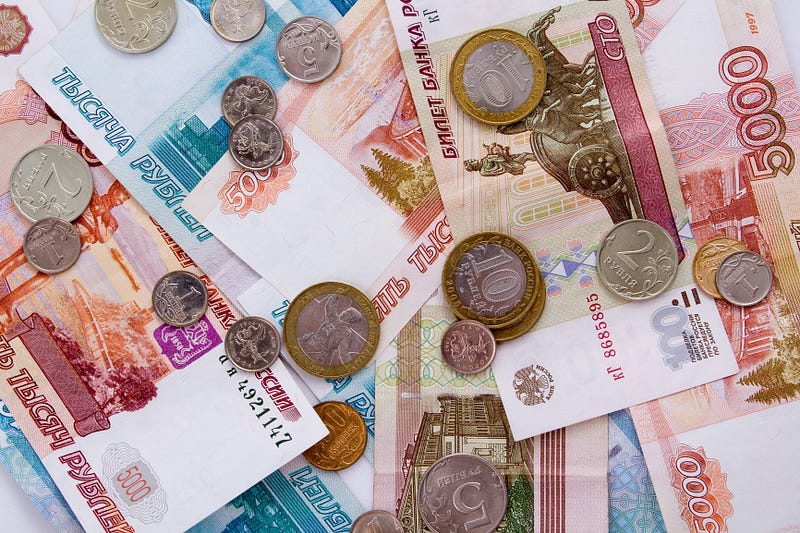
Dmitry Sidorov on Pexels


Sailing too close to the wind

When approached regarding the omission of these banks, a Binance spokesperson stated: “We regularly update our systems to ensure compliance with local and global regulatory standards. When gaps are pointed out to us, we seek to address and remediate them as soon as possible.”

The Wall Street Journal’s article outlined how Binance’s peer-to-peer platform facilitated ruble-to-crypto trades that frequently involved the sanctioned Russian banks, with Rosbank and Tinkoff Bank being prominent examples.

These trades often utilized layers of intermediaries to convert funds from these banks into Binance balances, as detailed by various company resources, user screenshots, and messages in official chat groups. Despite these revelations, Binance’s exchange had continued to handle significant volumes of ruble trading, according to data compiled by digital asset research firm CCData.


US DoJ probe

Binance’s activities in Russia could potentially contribute to its ongoing legal challenges in the United States. The US Justice Department (DoJ) has been probing the company’s actions for potential violations of American sanctions on Russia. In response to such concerns, the Binance spokesperson emphasized:

“Binance aims to diligently comply with the global sanctions rules and enforces sanctions on people, organizations, entities, and countries that have been blacklisted by the international community, denying such actors access to the Binance platform.”


Workarounds

Traders, however, had reportedly found workarounds to the bank removals, as observed in the official Telegram chat group for Russian clients. Many shared that they could still engage with sanctioned banks by selecting alternative payment methods and then manually inputting their Rosbank or Tinkoff bank details.

Earlier this year, an investigative report by CNBC alleged that employees of the company had told it that Binance staff regularly helped Chinese customers to bypass Know Your Customer (KYC) controls in order to access the platform. More recently, another report, once again by the Wall Street Journal, found that business in China was booming, which surprised many given that China banned crypto trading within the country in 2021.

It’s apparent that the company is reacting to regulatory and legal pressures in taking the decision to make these changes to its P2P service. Perennial crypto critic US Senator Elizabeth Warren took to X (formerly Twitter) on Friday, stating:

“I rang the alarm about sanctions evasion by Russia using the crypto platform Binance — and urged [the DoJ] to investigate potentially false statements it made to Congress. We need stronger crypto regulations to rein in illicit finance.“


More to Read
View All
Policy & Regulation·

Jun 02, 2025

Thailand’s SEC moves to block five exchanges to protect investors

Thailand’s Securities and Exchange Commission (SEC), an independent state agency responsible for the supervision of capital markets including the digital assets sector within the Southeast Asian nation, has moved to block five cryptocurrency exchange platforms. In a statement published by the agency to its website on Thursday, May 29, the SEC outlined that it deems the five exchanges, namely OKX, Bybit, CoinEx, XT.com and 1000X.Live, to be unauthorized crypto trading platforms.Photo by REY MELVIN CARAAN on UnsplashCountering money laundering activityIt is acting against these platforms “to protect investors” and to prevent their use for money laundering purposes. In offering services to Thai users on an unauthorized basis, the exchanges were found to be in breach of Thailand’s Digital Asset Business Act B.E. 2561 (2018). The agency has asked the Ministry of Digital Economy and Society (MDES) to take measures to block local access to these online platforms. That block will be put in place on June 28. On that basis, the SEC has advised Thai users of such platforms to proceed to remove their assets from them before that June 28 deadline.  An updated version of the Royal Decree on Measures to Prevent and Suppress Technology-related Crime, (No. 2) B.E. 2568 (2025), was introduced by the Thai government in April. It facilitated the establishment of the Committee for the Prevention and Suppression of Technological Crime.  Following practices overseasThe committee met with the MDES in April, with the parties setting out the process through which unauthorized digital asset platforms would be restricted and blocked. On that occasion, similar practices carried out in other jurisdictions within the Asian region were referred to.  In December 2023 India’s Financial Intelligence Unit (FIU) moved to block nine offshore crypto exchanges, having issued them with compliance show-cause notices.  In April 2024 the Philippines SEC requested that Google and Apple remove apps associated with global exchange Binance from the local versions of their application stores. Japan’s Financial Services Agency (FSA) similarly ordered both companies to remove apps belonging to unregistered crypto exchanges in February of this year. Back in March, the Thai SEC filed a lawsuit against Aux Cayes FinTech Co. Ltd., an OKX affiliate company. The complaint alleged that OKX had been running an unlicensed exchange in Thailand, and was filed with the Economic Crime Suppression Division of the Thai police force. The SEC outlined on March 21 that a similar criminal complaint had been filed against XT.com. It’s understood that Bybit, CoinEx and 1000X.Live have also been recipients of complaints on the same basis. Earlier this year, the Economic Crime Suppression Division considered taking action against Polymarket, a crypto-based prediction market, on the basis that the platform violated Thailand’s gambling laws, and in doing so, posing a risk to economic and social stability in Thailand. In April 2024, the SEC issued a warning to crypto exchange platforms against the use of misleading advertising, drawing their attention to the fact that advertising of that nature would potentially place those platforms in breach of regulatory guidelines. 

news
Markets·

Jan 08, 2026

Crypto’s four-year cycle may matter less amid shifting macro forces, report says

Bitcoin’s long-standing four-year market cycle tied to halving events may be losing influence, according to a new outlook from crypto exchange Bybit and research firm Block Scholes that examines market conditions through 2026. The report suggests that Bitcoin price action may be increasingly influenced by macroeconomic policy, institutional participation, and market structure rather than by new supply reductions. It says historical cycles have tended to track changes in global liquidity, often measured by global M2, and that this relationship has become more visible, while Bitcoin continues to respond to shifts in expectations for Federal Reserve rate cuts.Photo by Pawel Czerwinski on UnsplashETFs reshaping demand dynamicsThe analysis points to structural changes in demand, citing the launch of spot Bitcoin ETFs and the growth of corporate digital asset treasuries (DATs). The report says ETF flows and corporate balance-sheet allocations are playing a larger role in price formation than retail trading. That shift is disrupting the traditional capital rotation from Bitcoin into Ethereum and then into smaller altcoins and memecoins. As a result, the report suggests broad altcoin rallies may be harder to ignite, with gains depending on whether assets can be incorporated into institutional products such as ETFs. On the macro front, the report says markets are pricing in further Federal Reserve easing, with looser financial conditions potentially supporting a closer relationship between Bitcoin and major stock indexes despite recent underperformance versus U.S. equities. Based on options pricing, the report estimates a 10.3% implied probability that Bitcoin reaches $150,000 by the end of 2026. At present, Bitcoin is trading slightly above $91,000. Index criteria and Japan policy in viewThe analysis also highlights policy risks, including potential volatility tied to concerns over the possible exclusion of Strategy from major stock indexes, which could affect companies holding digital assets on their balance sheets. That risk has since eased after MSCI paused a proposal that would have excluded firms with digital asset reserves, though Benchmark analyst Mark Palmer cautioned that the issue could resurface in future rule reviews. The Bybit-Block Scholes report also cites potential policy tightening by the Bank of Japan later this year as another source of cross-asset risk, following its December rate hike of 25 basis points to a 30-year high of 0.75%. RWA and stablecoinsOne area of focus in the report for 2026 is real-world asset (RWA) tokenization, which it describes as building on the stablecoin adoption that gathered pace last year. That view is echoed in a separate outlook from Moody’s, cited by Cointelegraph, which says fiat-backed stablecoins and tokenized bank deposits are functioning as “digital cash” for settlement, liquidity management, and collateral movement. Moody’s estimates stablecoins processed about $9 trillion in on-chain settlement volume in 2025 and projects banks, asset managers, and infrastructure providers could invest more than $300 billion in digital finance by 2030. As an example, Moody’s cited JPMorgan’s U.S. dollar–denominated deposit token, JPM Coin, as a way digital-cash layers can operate on top of existing banking systems. The bank’s Kinexys unit plans to work with Digital Asset to bring JPM Coin to Digital Asset’s Canton Network in a phased rollout during 2026. This follows JPMorgan’s expansion of the project onto Coinbase’s Ethereum layer-2 network Base for institutional clients. 

news
Web3 & Enterprise·

Jul 13, 2023

Suspected Malicious Activity Drains AnySwap Tokens via Multichain Executor

Suspected Malicious Activity Drains AnySwap Tokens via Multichain ExecutorAccording to an on-chain sleuth known as Spreek, a person is using the Multichain Executor to drain tokens associated with the AnySwap bridging protocol.Multichain is a cross-chain routing network, established and maintained by a Chinese developer team. It supports in excess of 25 blockchains and more than 1,100 tokens.Photo by Marek Piwnicki on Unsplash$100 million outflowThis revelation comes after abnormal outflows of over $100 million from Multichain bridges on July 7, which were flagged by the Multichain team. Spreek’s report via Twitter on July 10 states that the Multichain Executor address has been draining anyToken addresses across multiple chains and transferring them to a new externally owned account (EOA).Evidence provided in the report includes an Ethereum transaction, 0x53ede4462d90978b992b0a88727de19afe4e96f0374aa1a221b8ff65fda5a6fe, which called the “anySwapFeeTo” method on the Multichain Router: V4 contract. This transaction resulted in approximately $15,275.90 worth of anyDAI being minted on Ethereum, sent to the Multichain Executor, burned, and exchanged for the underlying DAI backing the asset.The funds from these transactions were sent to the following address:0x1eed63efba5f81d95bfe37d82c8e736b974f477b. Similarly, on the BNB Smart Chain (BSC), the Multichain Executor used the anySwapFeeTo function to convert $208,997 worth of anyUSDC into Binance-pegged USDC and sent them to the same address. Additionally, 50.80 anyBTC, equivalent to $39,251.43 at the time, was converted into Binance-pegged Bitcoin and sent to the address.In total, approximately $263,524.33 worth of tokens were sent to this address through the anySwapFeeTo method. Spreek suggests that this behavior could be part of the protocol’s normal functioning. However, a different account engaged in similar activity the day before and ultimately sold the drained tokens, indicating malicious intent.Potential exploitSpreek theorizes that the attacker may be exploiting the anySwapFeeTo function by setting fees to an arbitrarily large amount, allowing them to drain users’ funds. The function apparently permits setting any value, enabling the address to choose the total value of the token held in that anyToken.The Multichain incident has puzzled blockchain analysts, as it remains unclear whether it resulted from an exploit or if it was simply large token-holders moving their funds between networks. The mystery began on July 7 when over $100 million worth of tokens were withdrawn from the Ethereum side of Multichain’s bridges and transferred to wallet addresses with no prior transactions. This represented the majority of funds held on each bridge.Hack or rug pullThe Multichain team labeled these withdrawals as “abnormal” and advised users to stop using the protocol. However, they have not disclosed the source or nature of the anomaly. In response to the incident, stablecoin issuers Circle and Tether froze some of the addresses involved in the suspicious transactions. Chainanalysis, a blockchain analytics firm, has commented that the incident appears more like a hack or rug pull rather than a migration.Adding to the complexity, the Multichain team has reported that their CEO is missing, and they have shut down certain bridges due to losing access to some of the network’s multi-party computation network servers. There have been various concerns relative to Multichain since May. The situation continues to evolve, with ongoing investigations and efforts to mitigate any potential damage caused by the suspected malicious activity.

news
Loading