Top

CME Group Expands Crypto Reference Rates to Asian Markets

Web3 & Enterprise·August 18, 2023, 12:57 AM

US derivatives marketplace CME Group is making strides in its efforts to cater to the Asian cryptocurrency market. In collaboration with crypto indices provider CF Benchmarks, the company is set to launch new reference rates for Bitcoin (BTC) and Ether (ETH) aimed specifically at the Asia Pacific (APAC) region.
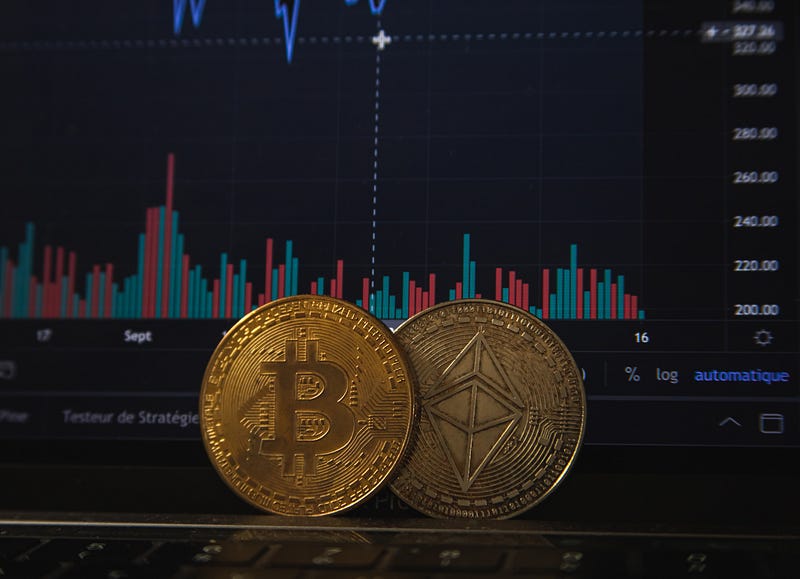
Photo by Pierre Borthiry — Peiobty on Unsplash


Going live next month

That’s according to a press release published by the company on Wednesday. These new rates, the CME CF Bitcoin Reference Rate APAC and CME CF Ether-Dollar Reference Rate APAC, are scheduled to become available on September 11, according to a joint announcement.

This move comes in response to the growing demand from Asian investors and institutions for accurate pricing data during their local trading hours. Currently, a substantial portion of CME Group’s crypto volume, about 37%, occurs outside of US trading hours, with approximately 11% of trades originating from the APAC region. The new reference rates will be published daily at 4 p.m. Hong Kong time, allowing APAC-based participants to align their crypto price risk management more closely with their portfolio strategies.


Building upon past efforts

CME Group’s efforts to provide accurate and timely reference rates have been ongoing. The company initially introduced its Bitcoin Reference Rate (BRR) in 2016, followed by the Ether Reference Rate in 2018. The BRR calculates the US dollar price of one Bitcoin as of 4 p.m. London time. It leverages the trade flow data from major Bitcoin spot exchanges within a one-hour window to provide an average of volume-weighted medians across 12 five-minute intervals during that period.

Notably, the newly announced Asia-focused reference rates will provide a variant to the existing rates tailored for London and New York. Giovanni Vicioso, CME Group’s Global Head of Cryptocurrency Products, emphasized that these APAC reference rates will facilitate more precise risk management for institutional clients utilizing Bitcoin and Ether futures products in their active portfolios or structured products like ETFs.


Focusing on Asia

CME Group’s expansion into the APAC region aligns with a broader trend of institutional interest in cryptocurrencies in Asia. The region has seen regulatory developments aimed at providing clarity to crypto businesses over the course of the past twelve months while a lack of regulatory clarity currently prevails in the United States. This move also coincides with the company’s push to further engage with the global crypto derivatives market, which accounts for around 75% of the overall crypto trading volume.

CME’s decision to launch Asia-focused reference rates is a strategic move to tap into the growing interest in cryptocurrencies from the Asia Pacific region. By offering accurate pricing information during APAC trading hours, the company aims to provide institutions and investors with better tools to manage their cryptocurrency price risks effectively. From the perspective of crypto market participants more broadly, the move is encouraging given that it comes from the world leader in derivatives markets.


More to Read
View All
Web3 & Enterprise·

Jan 10, 2025

Backpack acquires FTX EU

Backpack Exchange, a crypto exchange that joined the Japan Virtual Currency Exchange Association (JVCEA) last December, has recently acquired FTX EU, the European arm of the failed crypto exchange business FTX. According to a press release, the business comes with a European MiFID II license, with the acquisition having been approved by the Cypriot regulator, the Cyprus Securities and Exchange Commission (CySEC). Furthermore, a Delaware bankruptcy court in the United States, which is dealing with the FTX bankruptcy, has also rubber-stamped the acquisition. Backpack Exchange was co-founded by CEO Armani Ferrante, alongside other former FTX executives. According to the firm’s LinkedIn page, it has established its headquarters in Japan. The company also has links to Dubai, having acquired a Virtual Asset Service Provider (VASP) license for its Backpack Wallet product from  Dubai’s Virtual Assets Regulatory Authority (VARA) in 2023.Photo by Christian Lue on UnsplashRebuilding trust As a consequence of having acquired FTX’s European arm, Backpack Exchange will now assume responsibility for the distribution of court-approved FTX bankruptcy claims to FTX EU users. In the company’s press release, Ferrante spoke of the importance of the distribution process in rebuilding trust. He stated: "Customer restitution is a crucial step to rebuild trust and confidence in the industry, and Backpack is committed to returning FTX EU customers’ funds as fast and as safely as possible." In response to a query from FTX creditor activist Sunil Kavuri on X, Ferrante outlined that FTX EU users “will only be able to claim their euro claims funds directly from Backpack EU.” Ferrante clarified that FTX EU customers who had pending crypto withdrawals at the time of the bankruptcy will have their crypto claims dealt with via the FTX bankruptcy estate. In a Series A financing round early last year, Backpack was valued at $120 million. Through FTX EU, it now acquires a MiFID II license, further facilitating the global expansion of the company. With FTX EU now forming Backpack’s EU arm, the company will offer crypto-derivative products, including perpetual futures. This product offering is scheduled to go live in Q1 2025. Bankruptcy process controversy The bankruptcy of FTX EU has been controversial, starting off with the European entity being illegally filed into a U.S. bankruptcy process. In early 2024, the FTX Debtors suggested that the entity was worthless. It later wanted to buy out the entity itself, outbidding a third-party bidder. A short time afterwards, the FTX Debtors reached a settlement with the former FTX EU team. It’s understood that Backpack has acquired FTX EU for $32 million.  The FTX Debtors’ attempt to buy the business itself has cast a cloud over the bankruptcy process. When it first emerged that the business had been sold, there was some speculation as to if this would mean a rebooted FTX within the European market, but Backpack’s acquisition confirms that this was not to be the outcome.  Japan could have offered another opportunity to reboot the business, but instead, FTX Japan was acquired by bitFlyer and absorbed into its existing business. With regard to the main FTX business entity, the FTX Debtors told the bankruptcy court that there was no interest in the business from buyers. 

news
Web3 & Enterprise·

Jul 15, 2023

Lack of Funds Sees Multichain Cease Operations

Lack of Funds Sees Multichain Cease OperationsThe development team behind Multichain, a cross-chain protocol, has recently announced its decision to cease operations due to a lack of operational funds.This announcement follows a report by blockchain analytics firm Chainalysis, which suggested that insiders may have orchestrated a “rug pull” by withdrawing funds. The Multichain team took to Twitter on Friday to inform their community about the suspension of their business activities, citing a lack of alternative sources of information and operational funds as the primary reasons for their decision.One crucial factor contributing to the shutdown is the absence of communication with the CEO, Zhaojun, who had been missing and is now understood to be in the custody of Chinese authorities. The team explained that they had reached out to Zhaojun’s family and discovered that the police had seized his computers, phones, wallets, and mnemonic phrases.Photo by Christian Lue on UnsplashOperational controlThroughout the project’s lifespan, Zhaojun had maintained control over operational and investor funds. Consequently, the team, along with all their funds and access to servers, found themselves at Zhaojun’s mercy, as he now remains under police custody.Attempting to salvage the situation, Zhaojun’s sister initiated an asset preservation act and transferred some funds to addresses under her control. However, the team soon received news that Zhaojun’s sister, too, had been detained by the police and was now unreachable. Faced with these unfortunate circumstances, the team reluctantly announced the cessation of their operations.DeFi centralization risksThe debacle has raised concerns about the lack of decentralization demonstrated by the level of control Zhaojun had over the project. It prompted comment from Chris Blec, a DeFi Researcher & Analyst who has been highly critical of a whole host of DeFi projects on the basis that while many DeFi projects claim to be decentralized, they’re critically flawed and are centralized to a point that puts them at critical risk.Taking to Twitter, Blec stated: “Dude gets thrown in jail, admin keys to Multichain are on his computers, sister eventually uses his computer to steal money, now she’s in jail too. THIS IS WHY WE DECENTRALIZE.”The Multichain debacle traces back to May when the suspension of Multichain routes for an upgrade caused delays in fund transfers. The uncertainties surrounding the protocol prompted crypto exchange Binance to halt deposit and withdrawal support for certain Multichain bridged tokens.Adding to the platform’s woes, significant outflows from the Multichain MPC bridge platform raised concerns of an exploit. Observers analyzing the blockchain data reached a consensus on July 6 that the protocol had been hacked, as over $100 million worth of assets were withdrawn from the Fantom bridge on the Ethereum side.As Multichain now faces the unfortunate reality of halting its operations, it serves as a stark reminder of the challenges and risks inherent in the blockchain industry. The lack of operational funds, combined with the absence of communication with key figures and critical points of centralized failure have proven insurmountable for this cross-chain protocol.

news
Web3 & Enterprise·

Mar 02, 2024

OKX adds Uniswap in bid to eliminate gas fees

Leading crypto exchange OKX has announced the seamless integration of Uniswap Labs' application programming interface (API) into its decentralized exchange (DEX). The objective of the Uniswap addition is to usher in an era of gas-free trading through its innovative feature called "Snap” for OKX service users. Snap trading modeThe company made the announcement by way of a PR Newswire press release on Feb. 29. OKX asserts that Uniswap is one of the most trusted names in DeFi. As part of the integration, the Snap trading mode will be included as a feature on OKX DEX, with the objective of aggregating Uniswap’s liquidity.The feature operates directly on the OKX DEX interface by way of the UniswapX protocol. UniswapX is an immutable smart contract built with the intention to be fully permissionless. The contract cannot be modified or paused by anyone, including Uniswap Labs. Liquidity providers pay the feeIn explaining away the technology, Jason Lau, the chief innovation officer at OKX told Cointelegraph the mechanics behind the no-fee swaps. Lau unveiled a novel model wherein liquidity providers absorb transaction fees on behalf of users. He asserted that this approach not only enhances convenience but also facilitates cost savings for traders. Lau elaborated further, stating: “By agreeing to a price and signing a transaction off-chain, then settling the transaction on-chain, users end up paying no gas fees because the liquidity providers will pay the fee on the user’s behalf.”Photo by Shubham Dhage on UnsplashGoing beyond trading fee reductionAnticipating a positive response from DeFi enthusiasts, Lau highlighted additional features that go beyond transaction fee savings. These include the elimination of slippages, maximum extractable value (MEV) bot attacks and transaction failures, addressing prevalent concerns within the DeFi space.In tandem with the gas-free trading initiative, OKX announced a seamless integration for its wallet users within the Uniswap interface, courtesy of the Multi-Injected Provider Discovery upgrade on Ethereum, based on Ethereum Improvement Proposal (EIP)-6963. This enhancement extends to all browser extension wallets, enabling OKX wallet users to seamlessly connect with Uniswap, facilitating activities such as cryptocurrency swapping, NFT trading, liquidity pool participation and decentralized application (dApp) development. Positioning this integration as a pivotal addition to their ecosystem, Lau reiterated OKX's commitment to broadening user access to diverse on-chain use cases. He expressed enthusiasm for ongoing development initiatives and urged users to actively contribute feedback for further enhancements. The crypto exchange platform achieved further technical progress recently, with the addition of support for atomicals, runes, doginals and stamps to its Web3 wallet. Providing further detail on these additions last month, the company said that they were part of a "first-to-market" initiative relative to Bitcoin NFTs. Alongside technical advancements like these, earlier this week it emerged that the company was further advancing its market expansion strategy, through the launch of OKX TR, its Turkish platform. With OKX pioneering gas-free trading and bolstering user accessibility to decentralized finance, the convergence of traditional finance and blockchain technology accelerates, indicating an ongoing transformative shift in the crypto space.

news
Loading