Top

Matrixport’s Market Sentiment Index Points Towards Bullish Momentum

Markets·August 15, 2023, 1:02 AM

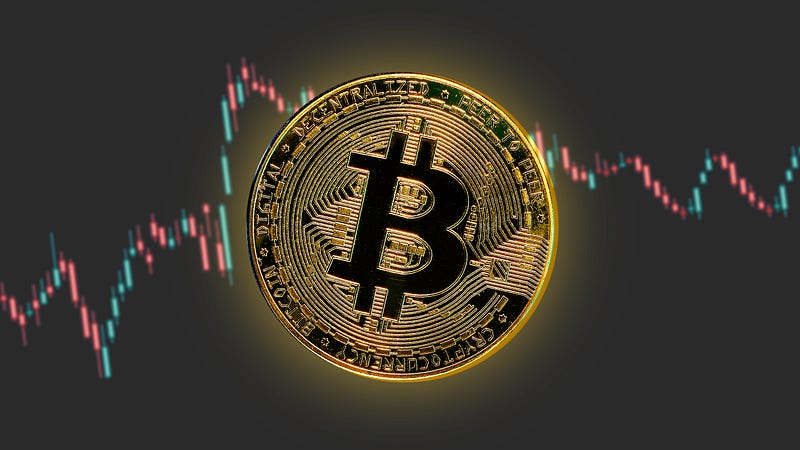
Matrixport, the Singapore-headquartered digital asset financial services provider, has once again showcased its Bitcoin Greed & Fear Index in forecasting unit price trends relative to Bitcoin. The company has repeatedly pointed to trends indicated by the proprietary index, with its current signals on this occasion pointing towards a potential resurgence of bullish sentiment for Bitcoin (BTC).
 

Potential price resurgence

Recent data from Matrixport’s index demonstrates a notable shift from 30% to 60%, a significant rebound following July’s sharp decline from above 90%. This rebound has caught the attention of Markus Thielen, who serves as the Head of Research and Strategy at Matrixport. Thielen conveyed his thoughts on the current indications provided by the Index in a recent note to clients.

Thielen noted that the index appears to have reached its bottom, as the daily signal indicates an impending upward push. This tactical bullishness, following a four-week period of consolidation, raises the possibility of Bitcoin prices resuming their upward trajectory.


Historical data comparison

Drawing upon historical patterns, the index’s peaks and troughs, along with its 21-day simple moving average (SMA), have consistently aligned with shifts between bullish and bearish trends in Bitcoin’s value. Currently, the 21-day SMA shows signs of bottoming out, which further bolsters the argument for an upcoming resurgence of positive volatility in the Bitcoin market.


Gauging sentiment

At its core, the Greed & Fear Index serves as a gauge for investor sentiment within the cryptocurrency realm. When readings exceed 90%, they signify a state of greed or unwarranted optimism, whereas readings below 10% denote extreme fear or pessimism. These metrics hold a certain significance as they often coincide with market peaks marked by excessive optimism and bottoms marked by intense fear.

For the past several weeks, Bitcoin’s price movement has been subdued, oscillating within the range of $28,000 to $30,000. This stagnation has coincided with broader market volatility and anticipations of forthcoming interest rate cuts by the Federal Reserve in the early months of the upcoming year.

Analysts are pinpointing consideration by the US Securities and Exchange Commission (SEC) regarding the approval of a spot exchange-traded fund (ETF) as a pivotal catalyst for future price fluctuations given the world’s largest asset manager, BlackRock, has gotten involved. In a recent interview with Forbes, contributor Sam Lyman stated: “A lot of bitcoin ETFs have been filed in the last couple years — but none from an asset manager as high-profile and well connected as BlackRock.”


Not an exact science

Matrixport’s Bitcoin Greed & Fear Index stands as one individual tool which can be utilized in order to arrive at a forecast relative to Bitcoin pricing. Price forecasting is far from an exact science and while it is encouraging that the Index is pointing towards a potential bullish resurgence in Bitcoin’s price movement, market participants will need to remain mindful that markets by their very nature are unpredictable, particularly so when it comes to a nascent asset such as Bitcoin.

As the market watches the SEC’s deliberations relative to a Bitcoin ETF closely, the time ahead is likely to hold significant developments that could shape the future trajectory of Bitcoin’s value.
More to Read
View All
Policy & Regulation·

May 29, 2023

Bali Governor Warns Tourists of Consequences of Crypto Use

Bali Governor Warns Tourists of Consequences of Crypto UseAuthorities in Bali have issued a stern warning to foreign tourists, cautioning against the use of cryptocurrencies as a means of payment.Bali Governor Wayan Koster delivered the message during a tourism development press conference on Sunday, stating that individuals who pay with crypto or violate other regulations could face severe consequences, including deportation, criminal penalties, or strict sanctions.Photo by Alfiano Sutianto on UnsplashCrypto use “dealt with firmly”According to reports from state-owned Indonesian news agency Antara, Governor Koster emphasized the need for firm action against foreign tourists who engage in inappropriate behavior, violate their visa permit conditions, attempt to use cryptocurrencies for transactions, or infringe upon other provisions. Koster stated that tourists that violate Indonesian law and use cryptocurrency for payment “will be dealt with firmly.”Indonesian law mandates that all transactions within the country must be conducted in the local currency, the rupiah. Individuals found using alternative currencies can face imprisonment of up to one year and fines of up to 200 million rupiah ($13,300). These regulations were initially implemented to safeguard the rupiah from the widespread use of the U.S. dollar in the country.‘Silicon Bali’In recent years, however, Bali has emerged as a popular destination for crypto enthusiasts, earning the moniker of ‘Silicon Bali.’ The island has witnessed the rise of cryptocurrencies, with the local crypto community even establishing physical spaces such as the clubhouse set up by Indonesian exchange Tokocrypto.While the use of cryptocurrencies as assets is permitted in Indonesia, their use as a form of payment is strictly prohibited. The country also imposes restrictions on individuals engaging in foreign exchange business activities, requiring them to obtain permission from Bank Indonesia.During the press conference, Governor Koster reiterated the regulations, emphasizing that violations would result in administrative sanctions, including written reprimands, fines, and prohibitions on payment transactions.This latest announcement is part of ongoing efforts to curb negative tourist behavior on the island. Bali, heavily reliant on tourism, experienced significant setbacks due to the COVID-19 pandemic and subsequent travel restrictions. With the return of international visitors, new challenges have emerged.Earlier this year, Governor Koster proposed a ban on tourists using motorbikes following numerous traffic violations and accidents. Concerns have also been raised regarding tourists disrespecting local traditions by posing nude in sacred sites or engaging in digital nomad activities without obtaining proper visas.Policy strugglesThe firm stance taken in Bali on cryptocurrency payments aligns with the local administration’s commitment to upholding local regulations and maintaining the stability of the national currency. However, the Governor’s response is further evidence of the struggles that centralized governments and administrations around the world have been having in understanding decentralized cryptocurrency. The default position of many centralized governments has naturally enough been to control it.For that reason, we have seen administrations in places like India who have changed tact several times, sometimes banning crypto while at other times, permitting it. As time goes on, central administrators are beginning to realize that they can’t control it fully. They can only slow down its rate of progress at best.Over the course of the past 26 years, the Southeast Asian country’s sovereign currency has averaged an inflation rate of 9%, peaking in 1998 at a rate of 82%. Against that background, there’s likely to be an ever-growing interest in using decentralized cryptocurrency in the country.

news
Policy & Regulation·

Nov 21, 2024

Russia looks to implement crypto taxation and mining policy changes  

A number of reports published by local Russian media in recent days suggest that the Russian authorities are implementing taxation and regional controls on cryptocurrency mining.Photo by Michael Parulava on UnsplashRegional mining banA report published by the Moscow Times on Nov. 19 suggests that Russia’s Deputy Prime Minister, Alexander Novak, has led a government commission that plans to implement a ban on cryptocurrency mining in specific Russian regions.  The authorities have been motivated in enacting such a ban in order to combat power shortages. With that, a ban is being implemented on a temporary basis during the heating season. The restrictions will apply to miners located within six regions within the North Caucasus, as well as the Zabaikalsky region in Siberia and territories now controlled by Russia in Ukraine. The ban will apply from December through to mid-March 2025, with this seasonal restriction to be applied subsequently each winter until 2031. Back in August, Russian President Vladimir Putin signed into law legislation which legitimized cryptocurrency mining within the Russian Federation. That law recognized mining activities and the concepts of mining pools and mining infrastructure operators. The legislation requires mining operators to register with the government. Individual miners can mine without registering so long as they stay within specified energy-use limits. Earlier this month, the authorities set a power consumption limit of 6,000 kWh per month for those unregistered miners.  The legislation also recognized the ability of stakeholders to trade in foreign digital assets on Russian blockchain platforms, with Russia’s central bank, the Bank of Russia, retaining the ability to ban specific digital assets from being traded if such trading is deemed to be a threat to Russia’s financial stability. 15% tax proposalEarlier this week Russia’s Interfax news agency reported that the Russian government had approved draft amendments to a bill concerned with the purchase and sale of digital currencies relative to crypto mining activity.  According to those proposed legislative amendments, digital assets will be classified as property from a taxation perspective. Income derived from mining activities will be assessed in terms of taxation based on market value at the time of receipt of the asset. The legislative amendments propose a 15% tax rate for cryptocurrencies. Furthermore, crypto transactions will not be subjected to value-added tax (VAT). However, income derived from such transactions will be taxable in the same way as income from transactions involving securities. Crypto mining operators will be permitted to deduct operating expenses from their taxable income. Russia’s Finance Ministry is understood to have clarified that the taxation approach would strike a balance between Russian government interests and those of commercial operators. With the introduction of legislation to recognize cryptocurrency mining activity earlier this year, Ki Young Ju, CEO of on-chain and market data analytics firm CryptoQuant, noted the country’s growing involvement and national-level engagement with digital assets. The coming months will determine if these latest crypto mining restrictions will dampen the level of involvement of Russia-based crypto miners.

news
Policy & Regulation·

May 16, 2024

China busts underground bank conducting illegal currency exchanges via crypto

China's authorities have dismantled an underground bank that illicitly utilized cryptocurrency for currency exchange operations between the Chinese yuan and the South Korean won, involving approximately 2.14 billion yuan ($295.8 million). China has a history of imposing strict capital control policies, prompting some individuals and entities to resort to cryptocurrency as a means of bypassing these regulations. According to a report published by local police in Northeast China’s Jilin province, six suspects were apprehended for their alleged involvement in facilitating the illegal operations spanning China and South Korea.Photo by Hyory Liu on UnsplashExploiting cryptocurrency featuresThe suspects purportedly took advantage of cryptocurrency features like transaction anonymity and decentralization to execute foreign currency exchange activities unlawfully. Investigations revealed that the criminal group utilized domestic accounts for fund receipt and transfer, alongside over-the-counter cryptocurrency transactions. Supporting illicit transactionsThe arrested individuals allegedly aided various entities, including South Korean purchasing agents, cross-border e-commerce platforms and import-export trade firms, in circumventing currency exchange regulations between the Chinese yuan and the South Korean won. 

news
Loading
