Top

South Korea's ruling party forms task force to expedite stablecoin legislation

Policy & Regulation·September 24, 2025, 6:35 AM

South Korea’s ruling Democratic Party has set up a new task force to accelerate the creation of a clear regulatory framework for stablecoins, aiming to unify competing legislative proposals ahead of government guidelines expected in October.


According to Etoday, the nine-member group, chaired by Representative Lee Jung-moon of the National Policy Committee, is composed of lawmakers from three key parliamentary committees. Its primary objective is to consolidate the party's position on digital asset policy and coordinate with the Financial Services Commission (FSC) to establish a definitive rulebook for the burgeoning sector.


Lee stated that the task force would work to harmonize multiple stablecoin bills already circulating within the party, noting that there was mounting pressure from both regulators and the private sector. He explained that government agencies had urged swift legislative action, while financial institutions and exchanges preparing to launch won-pegged stablecoins were waiting for regulatory certainty.
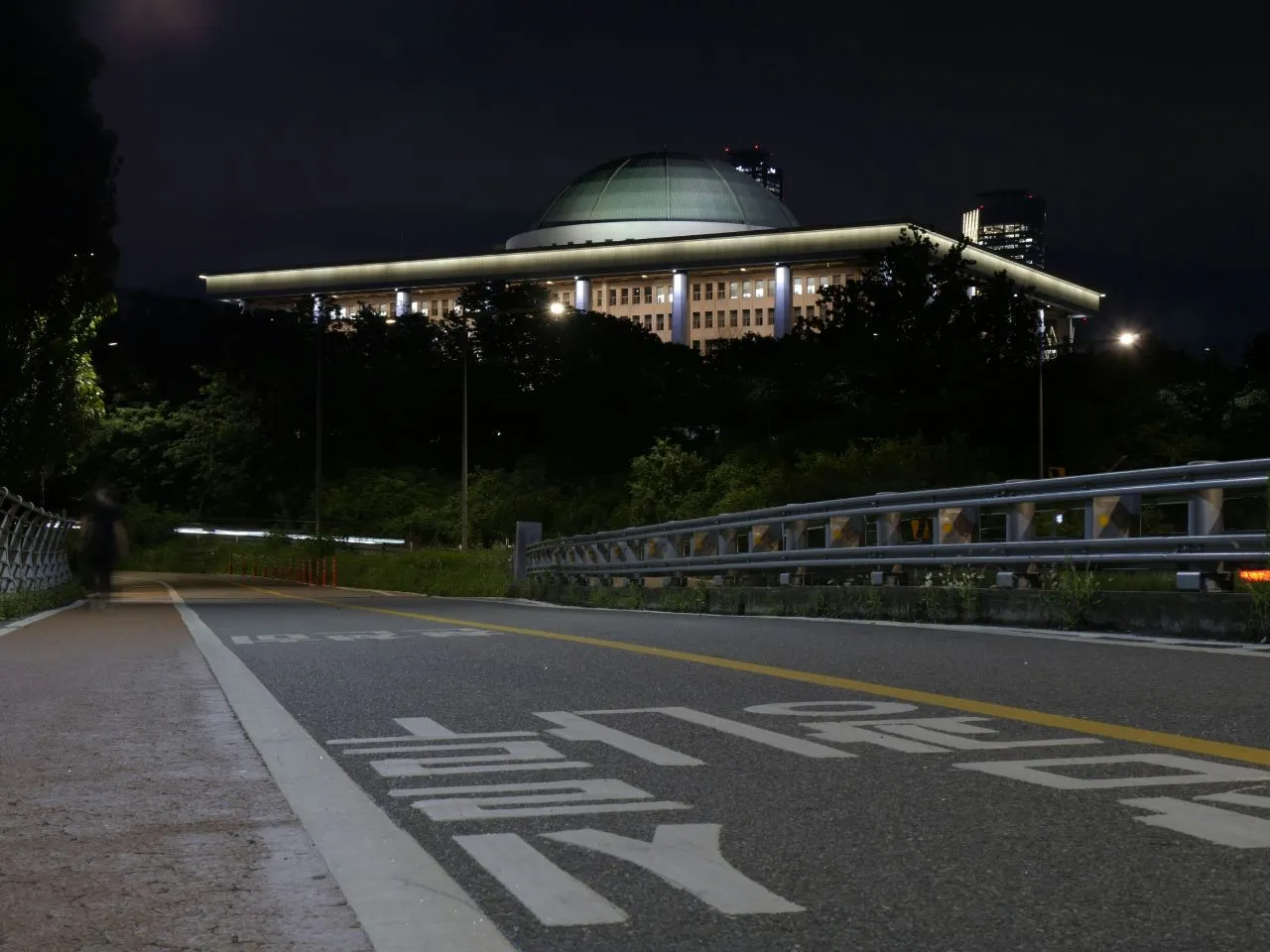
https://asset.coinness.com/en/news/4dc3f3cedadf5744b5e9327858b0aa2d.webp
Photo by SC Jang on Unsplash

Regulatory debate over capital standards

A central point of contention for the task force will be establishing appropriate capital requirements for stablecoin issuers. Current proposals vary in scope, with suggested thresholds ranging from 500 million won (approximately $358,000), a figure intended to encourage fintech innovation, to as high as 5 billion won (about $3.58 million) to prioritize investor protection. The committee is tasked with striking a balance between fostering market growth and ensuring financial stability.


Seoul's initiative reflects a broader global movement toward formal oversight of fiat-backed digital currencies. The U.S. passed its GENIUS Act for stablecoins in July, while the EU has implemented its Markets in Crypto-Assets (MiCA) regulation. Similarly, Japan amended its Payment Services Act in 2023 to restrict stablecoin issuance to licensed banks and registered financial firms.


Former White House crypto advisor’s input

The push for clear rules has drawn keen interest from industry leaders. Speaking at Korea Blockchain Week 2025 in Seoul, Bo Hines, chief executive of Tether USAT, stressed the regulatory clarity provided by the GENIUS Act in the U.S. According to ZDnet Korea, he noted that his company's new dollar-backed token, USAT, is designed for full compliance with U.S. law, featuring one-to-one reserves and audits by top-tier accounting firms to attract institutional investors.


Hines, a former digital assets adviser at the White House, clarified that USAT is intended to serve the regulated U.S. market, complementing Tether’s flagship product, USDT, which has a global user base exceeding 500 million. He also discussed Tether’s view of South Korea as a key market, pointing to the significant USDT trading volumes there. Hines encouraged the country to adopt comparable stablecoin standards and expressed optimism that it would move toward a more open and efficient global financial network.


With the FSC’s guidance approaching, the Democratic Party’s task force is working to reconcile differing legislative proposals. The resulting framework will shape the pace at which stablecoins move from pilot projects to an established part of South Korea’s financial system.
 

More to Read
View All
Web3 & Enterprise·

Oct 26, 2023

Web3 Fashion Platform doDRESS Opens Pop-up Store in Seoul

Web3 Fashion Platform doDRESS Opens Pop-up Store in SeouldoDRESS, a fashion and lifestyle platform created by the faculty at Kookmin University in Seoul, has opened a pop-up store in Seoul in line with the launch of its new website. doDRESS aims to create a decentralized Web3 fashion ecosystem centered around brands, creators, and influencers, providing a space to communicate with consumers and promote their businesses and content. In turn, consumers can get the chance to dive into a new form of Web3 technology and express themselves through their personal style.Photo by No Revisions on UnsplashInteractive space for creators and consumersThe pop-up store, which was revamped from an old auto repair shop, has invited some 40 designers and graphic artists to showcase and sell their unique street fashion-inspired clothing and graphic art to consumers. It will also present an opportunity for them to interact with influencers who can contribute to the marketing and distribution of their products, thus boosting their value.Creators and those who wish to become creators can upload the products they make on doDRESS. When a product is sold, every individual in the platform’s Web3 ecosystem who contributed to making it will receive a portion of the revenue.Visitors, on the other hand, can customize their own clothing by printing designs created by the artists themselves through doDRESS’s fashion stickering service, which is available both online and offline at the pop-up store. The platform also said that it would give out custom doDRESS products worth KRW 40,000 (approximately $30) on a first-come, first-served basis to 70 visitors on weekdays and 200 on weekends.Future plans for growthIn the future, doDRESS aims to expand on a global scale and add more clothing products to its services utilizing various production techniques like 3D printing.The pop-up store will be open until next Wednesday (local time) in Seongsu-dong.

news
Web3 & Enterprise·

Jun 09, 2023

SK Planet and Milk Partners to Propel Blockchain Ecosystem Development

SK Planet and Milk Partners to Propel Blockchain Ecosystem DevelopmentSouth Korean tech company SK Planet announced today a partnership with Milk Partners, the operator of MiL.k, a blockchain-based reward points platform, in order to foster the UPTN blockchain ecosystem. That’s according to a report by local news outlet Edaily. This alliance comes after conglomerate SK Group’s affiliate recently launched its new non-fungible token (NFT) membership program called “Road to Rich.”Photo by Karolina Grabowska on PexelsSK Planet’s NFT initiativeRoad to Rich is an initiative within OK Cashbag, SK Planet’s popular reward points system. In an effort to promote this initiative, the two companies will organize a Road to Rich event on the MiL.k app this month and enable users to exchange between OK Cashbag points and MiL.k points later this year.Milk Partners’ tech contributionMilk Partners’ parent company, Keyinside, has contributed to the development of SK Planet’s blockchain platform UPTN and has been involved in OK Cashbag’s NFT project, providing business consulting and technology development. UPTN, built on the Avalanche network’s subnet, made its debut through OK Cashbag’s NFT initiative, and a dedicated wallet based on UPTN was recently launched.Kim Kyo-soo, the head of the customer experience division at SK Planet, said that the company plans to build the UPTN ecosystem where customers can enjoy various services, including membership benefits, concert tickets, and shopping.Milk Partners CEO Cho Jung-min expressed enthusiasm about the synergies that can be achieved by participating as a major partner in the blockchain project spearheaded by Korea’s major corporate. He added that the two sides will work together to offer valuable and beneficial services to users.

news
Policy & Regulation·

Sep 25, 2023

The Need for Crypto Regulation Improvements in South Korea

The Need for Crypto Regulation Improvements in South KoreaAlthough the cryptocurrency market entered a bearish phase last year, there are prospects for growth as regulatory inclusion and market transparency begin to improve. However, the domestic market is currently hindered by deepening monopolies and inadequate support policies, limiting the development of the industry, said Kim Jin-won, Executive Director of Korean crypto exchange COREDAX, during a conference last Friday in Seoul.The conference, hosted by the Federation of Korean Industries, invited experts to discuss the oncoming era of convergence and the current status and challenges of virtual asset legislation in South Korea, as well as the necessary steps for improving regulations on virtual assets.Photo by Kanchanara on UnsplashGlobal decentralization trendsOverseas, various decentralized projects, such as the integration of blockchain technology into traditional financial markets, have led to the growth of related markets such as Bitcoin futures, decentralized finance (DeFi), over-the-counter (OTC) trading, custodial services, the metaverse, and Web3. However, in Korea, the lack of clear guidance or policy management for crypto businesses and services prevents the market from thriving.Countries like the US and Japan as well as the European Union (EU) are overhauling regulations in order to dominate the global industry and market through blockchain technology and virtual assets. Kim emphasized that Korea also needs to incorporate such flexible regulatory improvements considering the likely possibility that various industries are going to thrive on crypto-related businesses.Challenging existing regulations and calls for clarityHe started off by stating that the implicit regulation known as the “One Exchange, One Bank” principle was created for administrative convenience and is acting as a barrier to entry into the crypto industry. He argued that it is a discriminatory regulation, especially considering the fact that securities firms choose to operate stock trading accounts through multiple banks.Regarding the standards for issuing bank accounts under real names, which will be determined by the Financial Intelligence Unit (FIU), he argued that they are difficult to comply with, even for banks that already have contracts with crypto exchanges. He called for the FIU to express a clear stance on the retroactive application of these standards to avoid potential consequences such as barriers to market entry for late-movers.“The crypto market — including DeFi, non-fungible tokens (NFTs), artificial intelligence (AI), the metaverse, and Web3 — is growing at an annual average rate of 12.8%, and is expected to reach a scale of $4.9 billion by 2030,” he said. “When combined with Web3 innovation, the metaverse will evolve into a 3D platform business that incorporates the use of payment methods, NFTs, and virtual assets.”Promoting innovation in the crypto industryTo foster such industry growth, it is necessary to actively explore new types of services as well as potential challenges. Innovative financial services should also be designated or promoted through regulatory sandboxes. The regulatory sandbox is a system run by the Korean government that exempts or suspends existing regulations for a designated amount of time for companies releasing new products and services and regulates them post-mortem if there is a problem.Kim went on to propose specific measures such as negative regulations — regulations that outline what is prohibited by law while allowing everything else — to promote new industries. He also suggested that banks should be allowed to engage in custodial services for virtual assets.Furthermore, he highlighted the need for cooperation between payment companies and crypto firms. “Payment service providers like Visa and Mastercard are already collaborating with global crypto exchanges to incorporate virtual assets into their businesses,” he said. “With companies like Tesla, eBay, and more adopting or considering adopting cryptocurrency as a payment method, we must consider allowing collaborations between domestic credit card companies, payment gateway companies, and crypto firms.”He also urged for the early approval of initial exchange offerings (IEOs) to stimulate the crypto market and advocated for support policies for virtual asset service providers (VASPs). He cited examples such as brokering transactions for security tokens, allowing OTC trading, requesting security token issuance assessments through system integration with account management agencies, and permitting outsourcing for issuance operations.

news
Loading