Top

Crypto Trading Surges in South Korea While Global Trends Decline

Markets·August 04, 2023, 7:25 AM

Despite a global decrease in cryptocurrency trading on centralized exchanges, South Korea has witnessed a significant increase in trading activities. Upbit, the nation’s largest crypto exchange, climbed to the second spot in global spot trading volume for July.
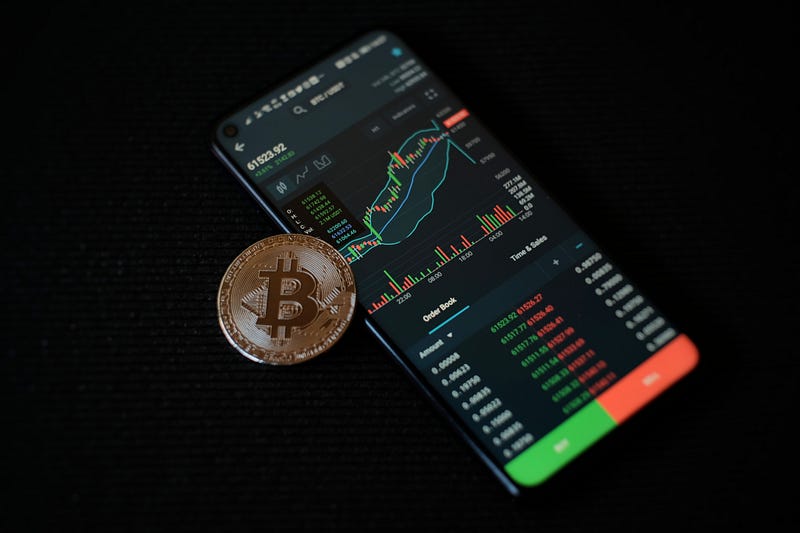
Photo by Viktor Forgacs on Unsplash


Plunges in global trading volumes

According to an Exchange Review for July 2023 by CCData, a virtual asset data provider, the total global spot trading volumes on centralized exchanges dropped to $515 billion in July, a 10.5% decrease compared to the previous month, marking the second lowest level since 2019. Additionally, derivative trading volumes fell by 12.7% to $1.85 trillion, the second-lowest since December 2020.

Experts attribute these declines to increased regulations on cryptocurrencies worldwide, such as legal crackdowns on exchanges like Binance and Coinbase by the US Securities and Exchange Commission.

Binance, the world’s largest cryptocurrency exchange, recorded a trading volume of $208 billion with a market share of 40.4% in July, marking a five-month consecutive decline, although it still maintained its title as the largest platform worldwide for crypto spot trading.

Coinbase — the largest cryptocurrency exchange in the US — and global exchange OKX also saw a decline in trading volume of 11.6% and 5.75% to $28.6 billion and $29 billion, respectively.


Crypto exchanges flourish in Korea

Contrarily, the majority of major crypto exchanges in Korea experienced significant growth in trading volume. Upbit’s trading volume skyrocketed by 42.3% to $29.8 billion in July, surpassing Coinbase and OKX for the first time to claim the second spot in global cryptocurrency exchanges behind Binance.

Other Korean exchanges also saw remarkable increases in trading volume. Bithumb recorded $6.09 billion, a surge of 27.9%, while Coinone’s volume rose by 4.72% to $1.39 billion.

These spikes in trading volume can be accredited to an increased interest in cryptocurrencies and blockchain technology among citizens throughout the country, despite global regulatory challenges impacting the market. As the cryptocurrency industry continues to evolve, Korean exchanges are showing resilience and maintaining their competitive positions on the global stage.


More to Read
View All
Policy & Regulation·

Mar 11, 2025

Thailand’s SEC expands list of approved cryptocurrencies to include stablecoins

Thailand's Securities and Exchange Commission (SEC) has approved the leading U.S. dollar stablecoins USDT and USDC, expanding its list of approved cryptocurrencies within the Southeast Asian country.Photo by Tarun Ottur on UnsplashListing on regulated exchanges The approval was announced in a statement published on the SEC website on March 6. It means that Tether’s USDT and Circle’s USDC can now be listed on regulated exchanges in Thailand. The regulator had arrived at its decision to add the two stablecoins following a public consultation process regarding regulatory changes. Those changes were finalized last month and will now proceed to go into effect on March 16. The two stablecoins join five cryptocurrencies that had previously been approved. These include Bitcoin (BTC), Ethereum (ETH), Ripple (XRP) and Stellar (XLM). Certain cryptocurrencies are also being used for the testing of payment settlement through the Bank of Thailand’s Programmable Payment Sandbox.   A regulatory sandbox is a controlled environment testing ground for products and services developed within the private sector. Back in June of last year, the Southeast Asian country’s central bank launched an enhanced regulatory sandbox focused on programmable payments.  USDT issuer Tether responded to the addition of its stablecoin within the approved cryptocurrency list, stating: “This approval enables USD₮ to be traded within the country, facilitating its listing on regulated exchanges and paving the way for USD₮ to be accepted for payments, which advances the region’s leadership in digital asset innovation.” Tether CEO Paolo Ardoino said that the company sees value in the Thai market and with that, it intends to continue to explore ways to broaden its service offering within Thailand. He added:  “We are committed to supporting the long-term success and adoption of stablecoins in Thailand and look forward to contributing to the growth of the country’s digital asset ecosystem by fostering a strong and sustainable stablecoin infrastructure.” Stablecoin market growth According to DeFi data aggregation platform DefiLlama, the stablecoin market now stands at $227 billion in terms of market capitalization. This represents a 68% increase by comparison with the size of the market in 2023. It indicates that stablecoin adoption is on an upward growth trajectory. Digital assets are being used in many instances to facilitate international payments and remittances, particularly in emerging markets. In Europe, American investment bank JPMorgan recently forecasted that the introduction of the Markets in Crypto-Assets (MiCA) regulation will drive euro-pegged stablecoin growth.  Meanwhile, in the United States, S&P Global Ratings recently identified that a current lack of stablecoin regulation is acting as a barrier to broader institutional use. The company anticipates adoption growth once regulatory clarity has been achieved. Vlad Tenev, CEO of commission-free investing platform Robinhood, stated last month on Yahoo Finance’s Opening Bid podcast that stablecoin legislation will be passed in the U.S. in 2025. Tenev believes that applying a 4% interest rate to stablecoins would lead to a greater rate of adoption.

news
Policy & Regulation·

Apr 09, 2025

DLD partners with regulator in Dubai to integrate tokenized property

The Dubai Land Department (DLD), a government agency responsible for the registration of real estate in Dubai and the promotion of real estate investments, has signed an agreement with the Virtual Assets Regulatory Authority (VARA), a local regulator, to better integrate tokenized real estate within existing systems. In a statement published on the DLD website on April 6, the government agency set out further details on the collaboration. The purpose of the agreement is to better accommodate fractional ownership of Dubai real estate through tokenization. Photo by Precondo CA on UnsplashLinking fractional ownership to DLD registryTo that end, a governance system will be put in place in order to link the DLD’s land and property registry with tokenized, fractional ownership of property. The parties believe that this approach will lead to greater operational efficiency for stakeholders such as property management firms. Furthermore, greater accommodation of tokenized ownership will lead to enhanced liquidity within the Dubai real estate market.  As a consequence of this improved liquidity and facilitating a more seamless approach in terms of operational efficiency for property management firms, it’s believed that a greater share of global investment in local real estate can be achieved. Broadening the investor baseFractional ownership via tokenized real estate opens the market up to a broader range of potential investors. On this basis, the collaboration can play a role in contributing towards the objectives of Dubai’s Real Estate Strategy 2033, which sets out to boost the local property sector’s contribution towards gross domestic product (GDP). That initiative targets a real estate market value of AED 1 trillion ($272 billion). The DLD said that the initiative also feeds into the broader objectives of the Dubai Economic Agenda (D33), a ten-year plan that has been set out to double Dubai’s economy by 2033, through focusing on innovation, achieving competitiveness at a global level and sustainable growth. Helal Almari, the director general of Dubai’s Department of Economy and Tourism, commented on the partnership, stating that it reflects the future-focused innovation, which he claims Dubai has already become associated with. He added: “Real Estate and Virtual Assets are key pillars of the D33 Economic Agenda D33 and by joining forces DLD and VARA will be creating the blueprint for RE 2.0 in a Decentralised Future Economy.” Almari expressed the belief that putting legal safeguards in place to recognize fractional ownership rights where real estate is concerned will facilitate “more inclusive economic participation” in this market sector.  The DLD recently launched a real estate tokenization pilot project in collaboration with VARA and the Dubai Future Foundation (DFF). At that time, DLD Director General Marwan Ahmed Bin Ghalita recognized the potential that tokenization can bring to the real estate sector. He stated: “By converting real estate assets into digital tokens recorded on blockchain technology, tokenization simplifies and enhances buying, selling, and investment processes.”Last month, Scott Thiel, founder and CEO of Dubai-based real-world asset (RWA) token marketplace Tokinvest, outlined that RWA asset tokenization in the United Arab Emirates (UAE) is gaining momentum. Commenting on this latest development, Thiel said that it’s a demonstration that “the future of real estate investment is onchain.”

news
Policy & Regulation·

Jul 16, 2024

Hackers utilize social engineering, move funds through Cambodian platform

A couple of recent reports have revealed how North Korean hackers have been moving funds to a Cambodian crypto payments platform while further insight has come to light with regard to how these hackers are compromising crypto companies. Huoine PayOn July 15, Reuters reported that Cambodian currency exchange and payments firm Huione Pay had received in excess of $150,000 in digital currency from a wallet associated with notorious North Korean hacking group Lazarus. Analysis of blockchain data demonstrated that the funds had been received by the Phnom Penh-headquartered payments firm in June 2023 and February 2024. Photo by allPhoto Bangkok on Unsplash‘Pig butchering’It’s understood that Lazarus stole those digital assets from three crypto firms during the months of June and July of 2023. While Huione has suggested that it was oblivious to the origin of the funds, a blog article by blockchain analytics company Elliptic, published to its website on July 10, suggested that “Huione Guarantee is an online marketplace that has become widely used by scam operators in South East Asia.”  Elliptic went on to assert that some of these scammers employ “pig butchering” techniques, where fraudsters manipulate the victim into investing into fraudulent crypto schemes. It added that “merchants on the platform offer technology, data and money laundering services, and have engaged in transactions totaling at least $11 billion.” The National Bank of Cambodia explained to Reuters that the company is not permitted to trade crypto and that it "would not hesitate to impose any corrective measures" against Huione. The platform is believed to have strong ties to Cambodia’s ruling family. One of the firm’s three directors is understood to be a cousin of the Cambodian Prime Minister, Hun Manet. The Lazarus hacking group is believed to have masterminded a $305 million hack of Japanese cryptocurrency DMM Bitcoin in May of this year. Pseudonymous on-chain investigator ZachXBT claimed on X that $35 million of the proceeds had been laundered through the Huione platform. Compromising crypto businessesIn a related development, a report by DL News published on July 15 has found that North Korean hackers are employing a new tactic in order to compromise crypto businesses. The hackers are scanning the internet for job postings advertised by the companies they’re targeting and submitting bogus applications. A report by the United Nations Security Council has revealed that in excess of 4,000 North Koreans have taken up employment with international technology firms. Part of the social engineering-based tactics employed by the hackers includes contriving to get employees within targeted companies to install malware.  Oftentimes, the resumes and LinkedIn profiles of real people are used in order to find a way in via the recruitment process. A report by DeFiLlama suggests that $664 million has been lost via instances of crypto hacking within the first half of 2024. 

news
Loading