Top

Matrixport Forecasts Bitcoin Bull Market Breather Ahead

Markets·June 23, 2023, 11:32 PM

Matrixport, the Singapore-headquartered digital asset financial services provider, has reported a significant surge in its Bitcoin Greed & Fear Index (GFI) over the past week.
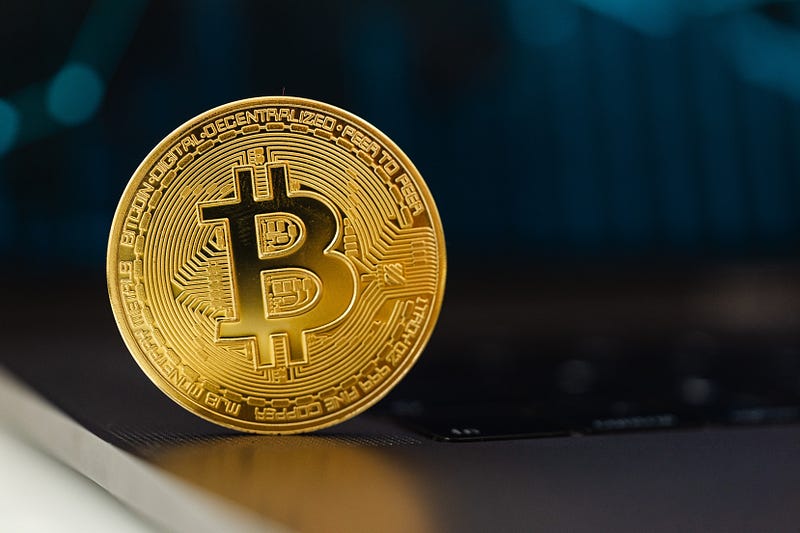
Photo by Karolina Grabowska on Pexels


Bitcoin Greed & Fear Index (GFI)

The index, which tracks market sentiments, has skyrocketed from below 10% to a staggering 93%. Such a rapid increase indicates a prevailing sense of greed and excessive optimism among Bitcoin investors. As a result, industry experts are suggesting that a breather in the ongoing Bitcoin rally may be on the cards.

Markus Thielen, the Head of Research and Strategy at Matrixport, has advised short-term traders to consider capitalizing on their gains given the exuberant levels recorded by the Bitcoin Greed & Fear Index. Historical analysis reveals that readings above 90% have often signaled interim tops in Bitcoin’s price, while readings below 10% have preceded notable price rallies.


Upward movement favorable

Despite the current high reading, the 21-day simple moving average of the index remains below the critical 90% mark. This implies that the overall trajectory for Bitcoin still favors upward movement. Thielen points out that the rising 21-day moving average indicates the potential for further upside once the current phase of exuberance subsides, allowing for consolidation in the market.

Chart analysts share an optimistic view of Bitcoin’s future, with some predicting a potential rally towards the $35,000 mark and beyond. Josh Olszewicz, Head of Research at digital asset investment firm Valkyrie, highlights a falling wedge setup in Bitcoin’s recent price action.

The successful bounce off the support level, combined with the completion of the falling wedge pattern, has heightened expectations for a move towards the mid-$30,000 range. Olszewicz does caution that significant resistance may arise in that zone, likely leading to a subsequent period of re-consolidation before any further upward progress can be made.

In recent weeks, Bitcoin experienced a pullback from its mid-April high of $31,000, eventually finding support around the $25,200 level earlier this month. This pullback, often referred to as a “throwback,” historically acts as a catalyst for price rallies, as has been evident in the past few days.


Ether gain potential

While Bitcoin’s rally has been impressive, Ether (ETH), the second-largest cryptocurrency by market capitalization, has seen a gain of 15.9% since last Thursday. However, Ether’s GFI index has yet to reach the 90% threshold, indicating potential room for further growth while Bitcoin takes a breather.

Matrixport’s Bitcoin Greed & Fear Index has surged to an astonishing 93%, signaling heightened levels of greed and optimism among Bitcoin investors. Traders are advised to consider securing their gains as the index reaches exuberant levels.

Nonetheless, the rising 21-day moving average suggests the potential for Bitcoin’s upward momentum to continue following a period of consolidation. At the time of writing, Bitcoin is trading around $31,200, based on CoinGecko data. Going into the weekend, that’s demonstrating continued growth. Meanwhile, Ether shows promising performance, with potential for further growth.


More to Read
View All
Policy & Regulation·

Dec 20, 2023

Tether fueling Cambodia’s dark economy despite ban

Tether fueling Cambodia’s dark economy despite banDespite being officially prohibited for trade in Cambodia, Tether (USDT), the leading USD stablecoin, has been found to be integrated into the Southeast Asian nation’s shadow economy.That’s according to a report published by the South China Morning Post (SCMP) on Sunday. The publication cites security experts, who it claims have highlighted the pivotal role of USDT, emphasizing its low fees and unrestricted capability to expedite the movement, concealment and laundering of money.Photo by DrawKit Illustrations on UnsplashPig butcheringThe U.S. Department of Justice’s November seizure of nearly $9 million traced to over 70 victims of online scams underscored Tether’s involvement. Collaborating with Tether Holdings and the crypto trading platform OKX, the investigation identified assets linked to “pig butchering” cyber scams in Southeast Asia, freezing an additional $225 million. While specific details regarding the origin of these assets remained undisclosed, Southeast Asia, including Cambodia, has emerged as a hub for money laundering related to online gaming and cyber scams.Cybersecurity expert Ngo Minh Hieu from the Vietnamese government’s National Cyber Security Centre warned of the susceptibility of cryptocurrencies to scams and Ponzi schemes, particularly targeting less informed investors. This heightened risk has spurred a surge in money laundering and online scams, leading to a spike in arrests.Official line versus realityIn many jurisdictions, the official line taken on cryptocurrency and digital assets doesn’t necessarily reflect the reality. China clamped down on crypto trading and mining a number of years ago. Despite that, a Wall Street Journal investigation earlier this year found that global crypto exchange Binance had a thriving China-centric business.The same seems to be true in Cambodia with respect to its official ban on crypto. Owners of both physical and online crypto exchanges in Phnom Penh openly admit to providing a parallel financial service in the developing economy. The prevalence of neon signs advertising exchange rates in Chinese yuan for USDT underscores the widespread usage of Tether in the region, particularly within Cambodia’s dark economy.Critics chime inNews of the illicit use of Tether in Cambodia has prompted a response from long-standing critics of the company. Tether’s harshest critic has been a pseudo-anonymous persona on the X platform with the username “Bitfinex’ed.” That account wrote:”Tether. The choice for organized crime & criminals. Giancarlo Devasini once said, ‘We’re going to have to learn to bank like criminals.’”Despite its role in facilitating illicit activities, the extent of Tether’s penetration into Cambodia’s economy remains challenging to ascertain. Globally, approximately 84 billion USDT is in circulation, with banks, exchanges and platforms flourishing, leveraging social media and encrypted channels to advertise seamless and reliable digital solutions for money flow challenges.One such platform, Huione Pay, operates in a bank-like setting, engaging customers in discussions about USDT exchange options. A closer look at Huione’s publicly available USDT exchange activities reveals insights into Tether’s role in enabling transactions within Cambodia.Some conversations in Chinese seek “pure white assets,” indicating funds from legitimate sources, while others do not request such provenance. These exchanges also advertise products and services crucial to scam operators, such as the sale of SIM cards from different countries.

news
Markets·

Mar 06, 2024

Crypto boom drives $17.5B surge in demand deposit at Korean banks

Among various accounts within a bank, a demand deposit account is considered a “station” where people can temporarily store their money and easily withdraw it for future investments. These accounts are highly liquid, since users can deposit or withdraw funds at any time without having to pay a penalty to a bank.  Following the recent cryptocurrency boom, the five major banks in Korea – KB Kookmin Bank, Shinhan Bank, Hana Bank, Woori Bank and NH Nonghyup Bank – are seeing a significant influx of funds into their demand deposit accounts, according to local media outlet Money Today. This is partly attributed to an increasing number of youths who are seeking to invest in crypto assets, parking their money in these banks’ demand deposit accounts. Shinhan Bank and Nonghyup Bank have seen the highest increase in their deposits, owing to their affiliation with local crypto exchanges that have access to real-name accounts from these banks. Photo by André François McKenzie on UnsplashBTC’s surge attracting young investors to cryptoExperts say that these deposits could be potentially transferred to the crypto market by owners as Bitcoin’s value continues to climb. An insider from a crypto exchange noted that the bullish crypto market, spurred by the U.S. approval of spot bitcoin ETFs, is driving a number of young investors to turn to crypto investments, encouraging them to channel their deposits into buying crypto tokens.  Data from these five major banks shows their total demand deposits by the end of February exceeded KRW 614 trillion ($460 billion), seeing a month-over-month increase of about KRW 23.5 trillion. During the same period, the banks’ combined regular savings grew by KRW 23.6 trillion, while their combined installment savings saw a decrease of KRW 13.3 trillion. This came after the government-led savings product “Youth Hope Installment Savings” reached its maturity, which returns users their principal with relatively large interest gains.  Banks scrambling to attract crypto investors with new savings productsIn response to the potential decline in interest rates in the second half of this year, an increasing number of customers are seeking to put their money into savings products with an interest rate of as low as 3%, according to a banker. In a bid to attract more users, local banks are busy introducing new savings products.  KB Kookmin Bank launched a savings product offering a relatively high annual interest rate of up to 4%, and Shinhan Bank rolled out a savings product targeting youths with an annual interest rate of up to 3.85%.  Meanwhile, Kbank, an online-only bank, is deemed among the largest beneficiaries of the crypto boom, as the bank saw its average daily new customers triple compared to last year. Since 2020, Kbank has served as the provider of real-name accounts to Upbit, the leading crypto exchange in Korea.  Ha Joon-kyung, a professor at the Department of Economics at Hanyang University, said the sudden surge in demand deposits means that a significant portion of these funds will be invested in high-yielding but risky assets, including cryptocurrencies, stocks and real estate.  

news
Policy & Regulation·

Sep 26, 2023

Many Countries Are Welcoming Traditional Financial Institutions Into Crypto — When Will Korea…

Many Countries Are Welcoming Traditional Financial Institutions Into Crypto — When Will Korea Catch Up?Although overseas traditional financial institutions are gradually expanding their reach into the crypto market by launching related services and products, this remains challenging for institutions in South Korea, where it is difficult for them to even invest in virtual assets.Photo by NASA on UnsplashMajor developments in other countriesAccording to industry sources, traditional financial companies such as Japan’s largest investment bank and brokerage group Nomura Group, and New York-based investment banking company Citigroup are starting to bring new crypto-related services and products to the market.Laser Digital, the asset management unit of Nomura Group, launched a Bitcoin adoption fund targeting institutional investors, according to an official press release from last Tuesday (local time), which will provide institutional investors with direct and secure access to investments in Bitcoin.Similarly, Citigroup’s Treasury and Trade Solutions (TTS) is piloting its new crypto-based cash management and trade finance service dubbed Citi Token Services, which caters to institutional clients by utilizing blockchain and smart contract technology to provide digital asset solutions. “Digital asset technologies have the potential to upgrade the regulated financial system by applying new technologies to existing legal instruments and well-established regulatory frameworks. The development of Citi Token Services is part of our journey to deliver real-time, always-on, next-generation transaction banking services to our institutional clients,” said Shahmir Khaliq, Global Head of Services at Citi.Earlier this summer, several asset managers in the US, including BlackRock, applied for a spot-traded Bitcoin exchange-traded fund (ETF) with the US Securities and Exchange Commission (SEC), drawing the interest of the industry as a whole. The SEC has been delaying its decision regarding approval for the ETF and will likely do so until its allotted 240-day review period is over, but industry experts predict that the approval will go through for several reasons including BlackRock’s implicit influence as the world’s biggest asset manager and the SEC’s former court loss against Grayscale for its review of the firm’s spot Bitcoin ETF.These developments are made possible through the commonly held opinion that the involvement of traditional financial institutions in the crypto sphere is beneficial for the industry due to their ability to increase liquidity by moving much larger amounts of capital than the crypto market alone.Moreover, many countries around the world already allow institutions to invest in virtual assets. For instance, the US Nasdaq Stock Market has already listed crypto futures-based ETFs such as Bitcoin and Ether, and there are trust products on the market like Grayscale’s Bitcoin Trust that target qualified investors. Countries like Hong Kong have also gradually begun to allow individual investments in virtual assets again, while institutional investment has always been permitted.Roadblocks in KoreaIn contrast, it remains impossible for institutional or corporate investors in Korea to invest in virtual assets, let alone offer virtual asset fund products. Although local asset managers like Mirae Asset Global Investments and Samsung Asset Management have listed Bitcoin-related ETFs in the US and Hong Kong, such products do not exist in South Korea.Korean authorities also banned financial institutions from holding, purchasing, or investing in virtual assets back in 2017 on the grounds that their investment in cryptocurrencies could stimulate investor sentiment. Also, shadow regulation after the enactment of the Act on Reporting and Using Specified Financial Transaction Information in 2021 practically bars local corporations and institutions from using crypto exchanges, though there is no provision that explicitly prohibits opening corporate bank accounts on crypto exchanges.In response to this situation, an anonymous industry insider highlighted the need for a nationwide drive to support virtual assets and Web3 technology. “This is the time to push emerging industries, and we should not overlook industry trends. The current situation is somewhat frustrating,” they said. “Japan was the most conservative country in this regard, but it has recently opened up and subsequently gained momentum. Korea should also take a more progressive approach.”

news
Loading