Top

3AC Co-Founder Disputes US Jurisdiction Citing Singaporean Citizenship

Policy & Regulation·August 02, 2023, 1:14 AM

Kyle Davies, the Co-Founder of the failed Singaporean crypto hedge fund Three Arrows Capital (3AC), has asserted that he is solely a citizen of Singapore and not of the United States.
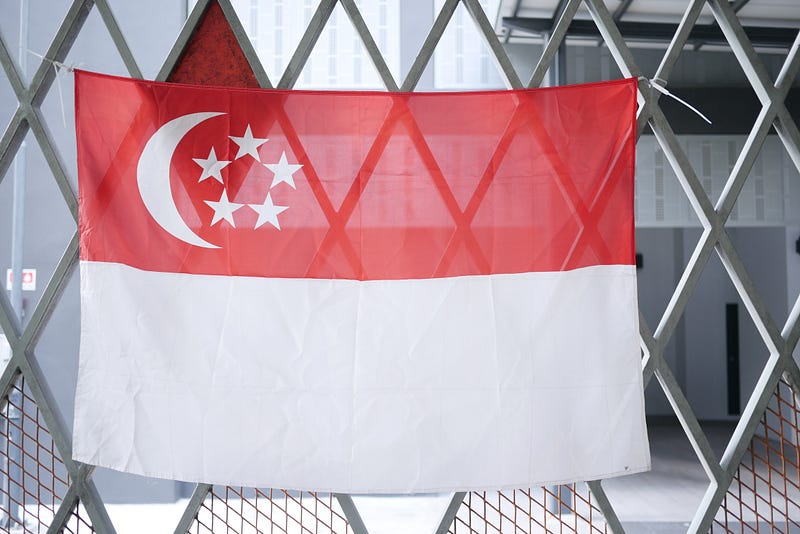
Photo by Towfiqu barbhuiya on Pexels


Evading pursuit of damages

The assertion may have relevance as it may mean that Davies can evade actions taken against him in a US court on the basis of a lack of jurisdiction. In a recent filing with the US Bankruptcy Court for the Southern District of New York (SDNY), Davies presented documents demonstrating that he had renounced his US citizenship in December 2020. He emphasized that he obtained citizenship in Singapore after being issued a passport in early 2021 and that he does not subject himself to the jurisdiction of US courts.


$3.5 billion owed

In June it emerged that liquidators appointed for 3AC were seeking to recover $1.3 billion from the fund’s co-founders, Davies and Su Zhu. The firm reportedly owes creditors a staggering $3.5 billion.

In the midst of public criticism surrounding the events leading to 3AC’s collapse, Zhu and Davies launched a platform called Open Exchange (OPNX), allowing trading claims against bankrupt crypto firms. Despite a deficit of goodwill for the duo in the crypto sector, they have been putting all their energies into the new venture.

Last month, they outlined that they would donate future earnings from OPNX to 3AC creditors. It’s difficult to reconcile that claim when with this action, Davies is trying to evade contributing to creditors via the 3AC bankruptcy process and this legal action taken by the liquidator.


Renounced citizenship

According to court documents, Davies officially renounced his US citizenship at the US Embassy in Singapore, citing his decision to reside in the country on a long-term basis. He revealed that he got married to a Singaporean national in 2017 and subsequently gained permanent residency in Singapore. Because Singapore does not permit dual nationality, Davies chose to renounce his US citizenship to establish himself fully as a Singaporean citizen.

The submission of these documents came after 3AC’s liquidators requested a subpoena to gather information on the crypto hedge fund’s collapse. Both Kyle Davies and Zhu, were subpoenaed on Twitter, as their whereabouts were unknown. However, while Zhu, being a Singaporean national, might not be subject to the subpoena while residing outside the United States, Davies’ refusal to comply with the order led to discussions about holding him in contempt of court.

In response to the subpoena controversy, Davies’ legal representatives claimed that he cannot be validly served with process as a non-party in the case, as he has not been a US citizen or resident since well before the case was initiated. They stated that the court lacks personal jurisdiction over him due to his renunciation of US citizenship. Accordingly, they requested that the Service Order and Compel Order, which were based on the assumption that Davies was a US citizen, be vacated.


More to Read
View All
Web3 & Enterprise·

Jan 27, 2024

Sygnum plans Asian expansion following $40M fund raise

Switzerland and Singapore-based crypto bank Sygnum has successfully closed a funding round, securing over $40 million in capital, with plans to expand its service offering in Asia. On the brink of unicorn statusThe funding round was achieved based upon a post-money valuation of $900 million, with Sygnum edging closer to unicorn status. Led by global asset management group Azimut Holdings, the funding surpassed the initial target of $35 million, reinforcing Sygnum's position in the rapidly evolving digital assets space. In a press release, Mathias Imbach, Sygnum's co-founder and CEO, expressed excitement about the successful funding round, highlighting the company's commitment to building trust through regulation and good governance. Imbach stated:”Our core thesis has always been that Future has Heritage, and our strategy to build trust via regulation and good governance has guided us throughout all market cycles. ” Gerald Goh, Sygnum's co-founder and CEO of its Singapore operations, emphasized the importance of staying ahead as clients' needs and activities grow more sophisticated. The fresh funds will enable Sygnum to continuously upgrade and enhance its product and service offerings in response to evolving market demands.Photo by Towfiqu barbhuiya on UnsplashAsian focusThe funds raised in this round will be instrumental in expanding Sygnum's geographical reach into new markets in 2024, within the Asia-Pacific (APAC) region as well as within the European Union. Sygnum has already made in-roads in Asia. Having started out in Switzerland, in 2019 the company set up a base in Singapore, establishing Sygnum Singapore and obtained a capital markets license from the Monetary Authority of Singapore (MAS). Last June, the firm achieved in-principle approval for a Major Payment Institution (MPI) license from MAS. It fulfilled the regulator’s requirements to bring about full approval in October. Goh told Bloomberg that the company envisages achieving growth in Asia and Europe through acquisition.  Developing fully regulated productsThis latest capital injection has also been earmarked to accelerate the development of fully regulated products, including the bank-to-bank platform that currently powers crypto offerings for more than 15 banks and financial institutions worldwide. Sygnum's assets under management have surged to $4 billion, with a client base exceeding 1,700 from over 60 countries. At the end of 2023, the firm reported an annualized revenue run rate (ARRR) exceeding $100 million, marking a significant milestone for the company's financial health and positive cash flow. Sygnum's expansion efforts include collaborations with key players in the industry. In November, the bank furthered its partnership with the Singapore arm of 174-year-old private bank Bordier & Cie, strengthening their initial collaboration that started in Geneva in 2021. Giorgio Medda, CEO of Azimut Holding, highlighted the strategic partnership between Azimut and Sygnum since 2021, emphasizing their joint development of the first tokenization of a private credit portfolio in Europe. Despite the recent challenges in the crypto industry, Sygnum remains optimistic about the future. The broader industry is witnessing a resurgence, with investors and market participants seeking partnerships with trusted and well-managed financial institutions. This sentiment aligns with Sygnum's vision to provide fully regulated solutions and support investors as they increase exposure to the asset class. 

news
Web3 & Enterprise·

Feb 07, 2024

Tether leads the way in Oobit’s $25M funding round

Oobit, the mobile crypto payment app based in Singapore, has raised $25 million in a series A funding round with the assistance of leading stablecoin issuer Tether. Funding global expansionThe company aims to broaden its reach across Asia, the Middle East and Latin America, with a strategic focus on bringing its platform to more mainstream users. While the company’s primary markets currently lie within the European Union and the UK, Oobit will be targeting the Asia Pacific (APAC) region and specific jurisdictions such as the United Arab Emirates (UAE), Canada and Australia. This expansion aligns with the company's goal of accelerating the development of a Web3 gateway. The funding round was led by Tether alongside Anatoly Yakovenko, co-founder of Solana Labs. Additionally, Germany’s 468 Capital, a technology investment firm, and Hong Kong-headquartered CMCC Global joined as contributors. CMCC invested through its $100 million Titan Fund, which it established last year to support blockchain startups in the Asian region.Photo by micheile henderson on UnsplashEnabling users to spend cryptoOobit's mobile payment app allows consumers to make purchases using cryptocurrencies, while merchants receive payments in fiat currency. The tap-and-pay feature enhances accessibility, enabling users to pay at any point of sale accepting Visa or MasterCard funds from their Oobit wallet. Furthermore, Oobit facilitates the direct purchase of bitcoin, ether and more than 35 other popular cryptocurrencies within its app. Tether CEO Paolo Ardoino expressed support for Oobit's development, emphasizing a shared vision for driving widespread cryptocurrency adoption globally. Oobit's co-founder and CEO, Amram Adar, highlighted the funding round as a pivotal moment, propelling the company forward in its mission to offer a straightforward way to pay with digital assets worldwide. Introducing non-custodial paymentsThe company plans to extend its capabilities to third-party wallets, transitioning into a non-custodial crypto payments app. This move will allow payments to and from external e-wallets, bridging the gap between Web3 and real-world spending. A company spokeswoman stated via email:"We have several partnerships in the pipeline that will be announced in the coming months," hinting at Oobit's commitment to ongoing collaboration and expansion. Oobit's vision is to empower crypto holders to Tap & Pay at over 100 million retailers globally, accepting Visa and MasterCard. Merchants can seamlessly embrace digital assets as a form of payment, and customers can conveniently use their digital assets for transactions. Future updates to Oobit will enable customers to make crypto payments, ensuring merchants receive fiat currency in return, mirroring the simplicity of credit card transactions. The native cryptocurrency of Oobit is the OBT token through which the platform rewards its growing community and ecosystem. The token is used for transaction fees and payments. The OBT token is currently trading at $0.0992, according to CoinMarketCap data. With the backing of industry leaders and a user-centric focus, Oobit is attempting to position itself to make significant strides in its mission to facilitate frictionless transactions and promote the adoption of cryptocurrencies on a global scale.

news
Policy & Regulation·

Aug 19, 2023

SEC Seeks to Question Co-Founder of Singapore’s Terraform Labs

SEC Seeks to Question Co-Founder of Singapore’s Terraform LabsThe United States Securities and Exchange Commission (SEC) has taken a step forward in its ongoing case against Singapore’s Terraform Labs by seeking to question Daniel Shin, the Co-Founder of the company.The SEC's intention is to gather evidence related to Chai Corporation, a payments company associated with Terraform and the Terra blockchain. District Judge Jed Rakoff granted the SEC’s request earlier this week, which is part of the regulatory body’s efforts to build a case against Terraform Labs and its Co-Founder, Do Kwon. The decision was based upon a motion originally filed in July.Photo by Bermix Studio on UnsplashRequesting South Korean assistanceThe motion, which was granted on Tuesday, allows the SEC to reach out to South Korea for assistance in questioning Shin and obtaining documents related to Chai Corporation. The regulatory body aims to gain insights into Kwon’s role at Chai, the utilization of the Terra blockchain by Chai, and the disclosures made by Chai regarding its relationship with Terraform.Additionally, the SEC is interested in understanding the reasons behind Chai’s separation from Terraform, as the two companies shared offices and staff until their split in 2020.No opposition filedOn a previous occasion, Kwon unsuccessfully challenged the SEC's attempt to access company records on the basis of a lack of jurisdiction given that Terraform is a Singapore-domiciled company. In June, both Terraform and Kwon attempted unsuccessfully to have the entire action thrown out.On this occasion neither Terraform Labs nor Kwon have opposed the SEC’s motion. In fact, they have even included their own set of questions and document requests. Both the Singaporean firm and its Co-Founder have denied the SEC’s allegations, which were filed earlier this year.The SEC’s lawsuit claims that Terraform’s cryptocurrencies, specifically Terra Luna Classic (LUNC) and Terra ClassicUSD (USTC), were involved in fraudulent activities. The US regulatory body further alleges that Kwon and Terraform falsely promoted the use of the Terra blockchain by Chai for processing and settling transactions.The SEC’s lawsuit also accuses Terraform and Kwon of fabricating transactions involving TerraKRW (KRT), a Korean won-pegged stablecoin, to give the impression that Chai was actively utilizing the Terra blockchain.Collapse falloutTerra, an interconnected crypto ecosystem, faced a collapse in May 2022, resulting in the loss of approximately $40 billion in value and impacting the wider cryptocurrency market. The aftermath of this collapse led to legal actions against individuals associated with Terraform Labs. South Korean prosecutors, for instance, charged Shin with multiple fraud offenses in April, alleging that he had concealed the risks of investing in Terraform’s cryptocurrencies.Kwon’s legal situation is equally complex. He is currently serving a prison sentence in Montenegro for attempting to leave the country using a fake passport. He faces criminal charges in both the United States and South Korea, and both countries have requested his extradition.The ongoing investigation sheds light on the intricate relationships within the Terra ecosystem, having an impact across different jurisdictions. As legal proceedings unfold, the outcome will likely have implications for the regulation and oversight of cryptocurrency and blockchain projects internationally.

news
Loading