Top

AIITONE Partners with UAE’s Royal Office to Boost Fintech Industry in Asia

Web3 & Enterprise·July 24, 2023, 3:14 AM

AIITONE, an immersive tech company based in South Korea, has taken a significant step towards expanding its reach to the Middle East, according to Korean news outlet Newsis. The company recently signed a memorandum of understanding (MOU) with the Royal Private Office of H.H Sheikh Ahmed Bin Faisal Al Qassimi in the United Arab Emirates (UAE). The partnership between the two entities aims to bolster the fintech industry in South Korea, China, and Japan.
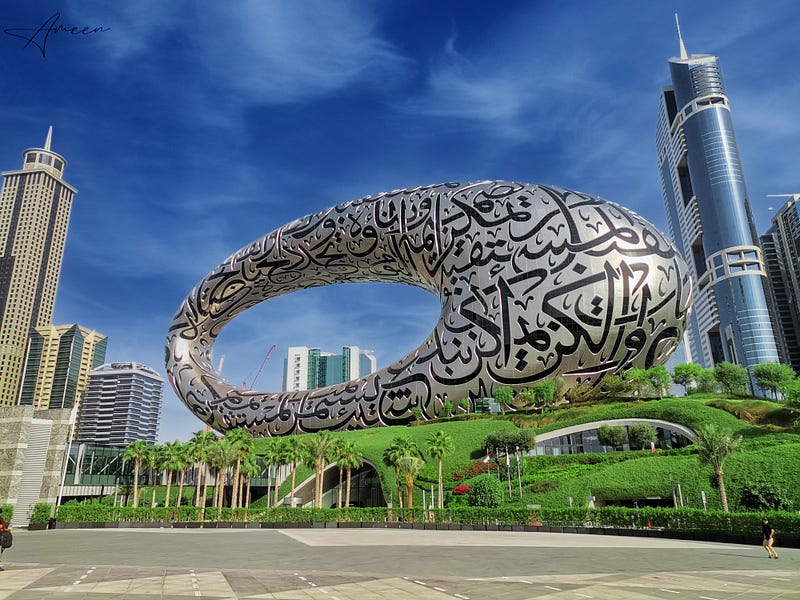
Photo by Editz central Editors on Pexels


UAE and East Asia

The Royal Office, known for its diverse business ventures in the fields of real estate, global trading, consulting, and others, provides valuable guidance and strategies to enterprises in the UAE and the Gulf Cooperation Council. Lately, the Royal Office has been looking to expand its operations into East Asia, making this collaboration with AIITONE a strategic move.


Security token and CBDC

As part of their joint efforts, the Royal Office plans to invest in promising Korean startups and facilitate the establishment of UAE banks’ Korean branches. Furthermore, the Royal Office intends to support Korean businesses in entering the Middle East market. Emphasizing their commitment to cutting-edge financial technologies, both parties will also work together on security token projects and central bank digital currencies (CBDCs), areas where Dubai is at the forefront of innovation.

To facilitate the smooth implementation of these plans, Royal Office officials will visit AIITONE’s headquarters in Busan, Korea, next month. This visit will foster greater understanding and cooperation between the two organizations.

An AIITONE representative expressed enthusiasm about the partnership, recognizing it as an opportunity to witness the Middle East’s growing interest in blockchain-based financial technology. Leveraging its expertise in Web3 technologies, such as extended reality (XR), artificial intelligence (AI), and blockchain, AIITONE strives to contribute to the development of both countries in the realms of digital economy and technology.


More to Read
View All
Policy & Regulation·

Sep 12, 2025

China funds research on stablecoin risks to financial system

China’s leading science foundation has initiated a research program to examine the effects of stablecoins, reflecting concerns that such digital currencies could pose a risk to the nation’s financial system and its fiat currency. According to the South China Morning Post, the National Natural Science Foundation of China (NSFC) is now offering grants for studies focused on stablecoins and the creation of cross-border monitoring frameworks. The foundation expressed that the unmonitored circulation of private stablecoins, particularly those pegged to the U.S. dollar, could weaken capital controls and present a potential challenge to the yuan. This initiative emerges as governments around the world, from the U.S. to regional financial centers, are actively developing rules for the digital asset sector.Photo by  Christian Lue on UnsplashStrategic research and internal debateThe NSFC will fund the projects with grants valued between 200,000 and 300,000 yuan ($28,042 to $42,063). Researchers are expected to complete their work within a year and deliver policy recommendations on how China can manage the challenges posed by global stablecoins and contribute to digital finance governance. The deadline for applications is Oct. 9. This research program is set against a backdrop of internal discussion in China regarding the possible launch of a yuan-backed stablecoin. While some economists support the idea of boosting the yuan's international profile, Bloomberg noted that former central bank governor Zhou Xiaochuan has advised caution. He recently said the high efficiency of China's current payment systems and warned that financial stability could be threatened by speculation in the stablecoin market. Analysts believe any state-sanctioned yuan stablecoin would likely be confined to offshore markets and tied to the offshore CNH. Global regulatory landscapeChina’s examination of stablecoins is part of a broader global trend of increased regulatory focus on the asset class. In Hong Kong, a new ordinance took effect on Aug. 1, creating a mandatory licensing system for stablecoin issuers under the oversight of the Hong Kong Monetary Authority. Other Asian nations are also taking action. South Korea’s government is reportedly exploring a model for a won-pegged stablecoin involving a consortium of banks and non-bank entities. Separately, Cointelegraph reported that Kyrgyzstan has introduced legislation outlining a regulatory framework for such assets. Developments are also accelerating in the U.S., where the Guiding and Establishing National Innovation for U.S. Stablecoins (GENIUS) Act was signed into law, creating a federal structure for stablecoin oversight. On a commercial level, a Minnesota-based credit union, St. Cloud Financial, intends to introduce its own stablecoin later this year, a move highlighted by Cointelegraph. This token, named Cloud Dollar (CLDUSD), is designed to integrate with the credit union's banking system to facilitate faster and cheaper transactions for its members within a regulated environment.

news
Web3 & Enterprise·

Apr 23, 2024

Woo X launches tokenized T-Bills for retail investors

Taipei-headquartered cryptocurrency exchange Woo X has announced the launch of tokenized United States Treasury Bills (T-Bills), marking a significant milestone for the crypto-sector retail investment landscape. In a press release, the company outlined that it has partnered with London-based institutional tokenization platform OpenTrade in order to bring its Earn Vaults product backed by real-world assets (RWAs) to market. The product is being heralded as the first protocol offering tokenized T-Bills accessible to retail investors.Photo by Jorge Salvador on UnsplashStable yield accessWilly Chuang, Chief Operating Officer of Woo X, expressed enthusiasm about the initiative, highlighting its potential to bridge the gap between conventional financial securities and the cryptocurrency market. He told CoinDesk in an email that “for the first time, retail users on a centralized exchange can instantly access an interest-bearing account backed by U.S. Treasury Bills.” With RWA Earn Vaults, Woo X users now have access to stable, predictable yields on their USDC holdings, backed by U.S. Treasury Bills, without encountering additional complexities. These yield-bearing products offer attractive annual percentage rates (APR) ranging from 4.5% to 4.7% for USDC holders. Subscriptions accrue real yields, fully backed by U.S. Treasury Bills, with current annual percentage rates (APRs) for seven-day and 28-day terms standing at approximately 4.5% and 4.75%, respectively. OpenTrade is a tokenization platform supported by Circle, the issuer of the world's second-largest stablecoin, USDC, lending further credibility to the partnership, with USDC boasting a market cap of $34 billion. OpenTrade had established links with Centre, the now-dissolved collaboration between Circle and Coinbase, and the Marco Polo enterprise blockchain project. Interest in RWA tokenizationRecent institutional interest in the RWA tokenization sector is exemplified by BlackRock's launch of the USD Institutional Digital Liquidity Fund, valued at over $298 million. This development underscores the increasing recognition of digital assets as viable investment instruments by traditional financial giants. Additionally, a recent report by CoinGecko highlighted the profitability of tokenized RWAs in the crypto space, positioning it as the second most lucrative narrative in the first quarter of 2024. Lim Yu Qian, an analyst at CoinGecko, noted the substantial profitability of the RWA narrative compared to other sectors, emphasizing its growing prominence.Franklin Templeton's Franklin OnChain U.S. Government Money Fund (FOBXX) has emerged as a notable treasury tokenization fund, reflecting the sector's maturation and investor confidence.  Woo X's product offerings extend beyond tokenized T-Bills, encompassing index-linked perpetuals covering crypto meme coins and layer-2 tokens in collaboration with market maker Wintermute. The exchange's native token, WOO, plays a pivotal role in governance and incentivization, offering users the opportunity to stake WOO and earn an average APR of 12.66%. The recent robust performance of WOO, experiencing a price surge of about 30% since its April 13 low, has served to boost the platform further. Tokenization of U.S. T-Bills has witnessed significant growth, with over $1.15 billion worth of assets tokenized through various products by April 2022, highlighting the growing appeal of digital asset-based offerings in the financial sector. This latest product offering benefits retail market participants, giving them increased access to diverse and lucrative investment opportunities in the burgeoning digital asset space. 

news
Policy & Regulation·

Aug 17, 2023

DeFiance Capital Secures Interim Victory in Dispute With 3AC

DeFiance Capital Secures Interim Victory in Dispute With 3ACSingapore’s DeFiance Capital, a Web3 and crypto investment firm, has notched up a small triumph in its ongoing $140 million legal clash with failed Singaporean crypto hedge fund, Three Arrows Capital (3AC).Photo by Sasun Bughdaryan on UnsplashFavorable rulingAccording to a statement provided via a Medium blog post by DeFiance Capital Founder and CEO Arthur Cheong on Tuesday, the High Court of Singapore has delivered a favorable ruling for the firm, endorsing its preference for jurisdiction in Singapore, rather than the British Virgin Islands, which had been advocated by 3AC.The tussle between 3AC and DeFiance Capital centers around the ownership of certain assets. The liquidators appointed by the British Virgin Islands Court, from Teneo, assert that these assets essentially belong to 3AC’s creditors. However, DeFiance Capital argues vehemently that these assets must be partitioned and returned to its stakeholders.Struggle over assets and jurisdictionAt the heart of the matter are assets totaling $115 million, encompassing digital currencies and non-fungible tokens (NFTs), which currently remain under the control of DeFiance Capital. Additionally, there are 69 SAFE (simple agreement for future equity)/SAFT (simple agreement for future tokens) agreements linked to 3AC. Although Teneo places the collective worth of these assets at roughly $141 million, DeFiance Capital’s estimation is more conservative, pegging it at around $120 million.Beyond asset ownership, jurisdiction has become a pivotal point of contention in the legal discourse. DeFiance Capital has steadfastly advocated for legal proceedings to take place in Singapore, where it operates, as opposed to the British Virgin Islands. The recent ruling from the High Court of Singapore lends support to this stance, challenging Teneo’s argument.DeFiance articulated its position, asserting: “Our position was that all the important witnesses and documents are in Singapore and the dispute ought to be heard by the Singapore Courts to ensure all relevant evidence would be available.”With the court’s decision aligning with DeFiance’s jurisdictional preference, the firm hopes that this development will pave the way for more substantive engagement between the parties, rather than being embroiled in procedural wrangling. The firm believes that this will allow the focus to shift towards addressing the core issues at hand.Business riftThe genesis of this legal saga dates back to 2020 when DeFiance was established as part of the 3AC group, operating autonomously under the stewardship of its founder, Arthur Cheong. The rift escalated in February 2022, when Cheong declined 3AC’s proposal to relocate to Dubai, eventually leading to the formation of two Singapore-based firms in May of that year.Furthermore, in the same month, DeFiance extended a loan of $35 million worth of USDC to 3AC, effectively becoming a creditor. Complications arose when 3AC’s founders transferred legal rights related to DeFiance Capital, a transaction that remained incomplete as 3AC filed for bankruptcy.In light of the ongoing dispute, 3AC asserted that DeFiance’s assets should be harnessed to settle its debts. However, DeFiance firmly stood its ground, upholding its ownership claims over the assets.With liquidators advocating for resolution in the British Virgin Islands — a move that DeFiance rejected due to its Singaporean management ties with 3AC — the stage was set for the legal clash that has now taken a notable turn with this recent court ruling.

news
Loading