Top

Circle CEO Sees Role for Yuan-Backed Stablecoins in Hong Kong

Web3 & Enterprise·July 12, 2023, 12:31 AM

Jeremy Allaire, the Co-Founder and CEO of Circle, the USDC stablecoin operator, expressed his acceptance of mainland China’s ban on cryptocurrencies. However, he remains optimistic about the development of Web3 technology in Hong Kong and the city’s monetary authority’s move towards regulating stablecoins.
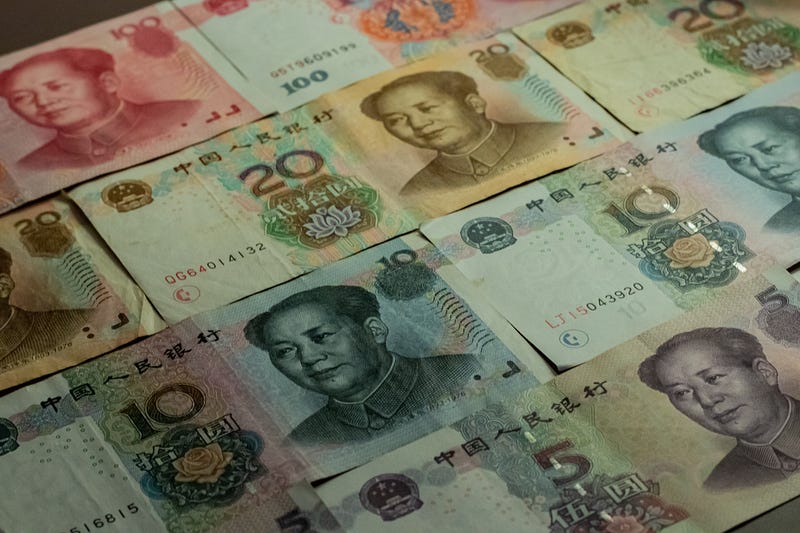
Photo by Mitchell Luo on Unsplash


Yuan internationalization

Allaire believes that Hong Kong must embrace digital assets to remain relevant in the global financial market. While he acknowledges that China is unlikely to open up its markets to cryptocurrencies, he sees potential for stablecoins to contribute to Beijing’s goal of yuan internationalization.

During an interview with the South China Morning Post (SCMP), Allaire highlighted that major financial markets worldwide are embracing digital assets and that the biggest financial institutions are adopting them. He mentioned that there is Chinese government support for stablecoins, but he clarified that it doesn’t imply opening up crypto trading on the mainland. Allaire emphasized that stablecoins could be a more immediate solution to the Chinese government’s aim of internationalizing the yuan compared to the central bank digital currency (CBDC) e-CNY.

Allaire cited the example of a stablecoin pegged to the offshore yuan (CNH) as a potential tool to facilitate the RMB’s use in global trade and commerce. He mentioned the existence of CNH Coin, a stablecoin team that also offers HKD Coin, pegged to the Hong Kong dollar.


Virtual asset hub

Hong Kong is positioning itself as a global virtual asset hub by focusing on the regulation of stablecoins. The Hong Kong Monetary Authority (HKMA) has committed to implementing stablecoin regulations by 2024, recognizing the potential impact of such assets on financial markets. Additionally, the Securities and Futures Commission (SFC) is working on complementary regulations for stablecoins following the recent implementation of licensing rules for sellers of other cryptocurrencies.

Circle’s USDC, the second-largest US dollar-backed stablecoin by market capitalization after Tether (USDT), is considered a “stored-value instrument” in the United States. Allaire expressed Circle’s encouragement regarding the HKMA’s plans and highlighted the positive motivation to expand their business in Hong Kong.

While central banks worldwide have expressed concerns about stablecoins’ impact on financial stability, the HKMA has proposed that the value of reserve assets should match the outstanding stablecoins at all times. The HKMA has also been researching the possibility of a digital Hong Kong dollar and is part of a cross-border trial for the e-CNY using a blockchain known as the mBridge.


CBDCs alongside stablecoins

Regarding the future role of stablecoins in a well-regulated environment alongside CBDCs, Allaire believes that CBDCs and private coins are complementary. He sees CBDCs as an upgrade to central banks’ systems and views the private sector’s work on innovation in distributed ledger technology as distinct and valuable.

Allaire noted that Circle conducts significant business activity in Asia, particularly in Hong Kong, which is its largest non-US market, employing around 125 individuals.

While mainland China maintains its ban on cryptocurrencies, Allaire remains optimistic about Hong Kong’s regulatory stance on stablecoins and believes they could contribute to the internationalization of the yuan. Allaire emphasized the importance of digital assets in the global financial market and expressed Circle’s support for Hong Kong’s initiatives.


More to Read
View All
Policy & Regulation·

May 24, 2023

Chinese Fentanyl Producers Taking Payment in Crypto

Chinese Fentanyl Producers Taking Payment in CryptoA report produced by blockchain analytics and crypto compliance solutions firm Elliptic has found that most Chinese suppliers of fentanyl precursors are accepting payments for the illicit material in cryptocurrency.In a blog post published on its website on Tuesday, Elliptic claimed that 90 percent of the 90 China-based firms, from which its researchers received offers of fentanyl precursors, accepted cryptocurrency as a form of payment. The majority of fentanyl which is trafficked into the United States is manufactured using imported fentanyl precursors like the material that the Elliptic researchers were offered.Seventeen of the suppliers even offered to provide fentanyl itself. Others still offered to supply synthetic opioids, equally or more potent than fentanyl, which are currently legal to both produce and supply within China.Photo by Hal Gatewood on UnsplashTracking blockchain transactionsIn tracing back transactions relative to these illicit suppliers, the Elliptic researchers’ analysis demonstrated that the digital asset wallets used by the rogue suppliers have received thousands of payments. The research team has estimated the net worth of those transactions to total $27 million.It appears that a move towards crypto payments is trending with this group of suppliers as there has been a 450% increase year-on-year when it comes to payments for fentanyl precursor using crypto.The study highlighted activity related to Dutch national Alex Peijnenburg. An alleged fentanyl supplier, Peijnenburg, made an $85,000 payment in crypto to one of the ninety fentanyl precursor suppliers identified by Elliptic researchers. In November of last year, the Dutchman was sanctioned by US authorities relative to his activities.Global trade and distributionThe report stated: “During our correspondence, the suppliers showed no concerns about how the chemical would be used, with some explaining that it was their best-selling product and could be used to produce fentanyl.”It went on to state that “others pointedly mentioned that they had sold it to customers in Mexico.” Mexico is a significant location in the global drugs trade, given the activity of drug cartels within the country. One supplier offered an insight to researchers as to the preferences of their nefarious Mexican clients, stating: “They always use USDT or Bitcoin to pay. It is no problem.”While it looks like these nefarious Chinese companies are able to trade into and out of crypto assets, that should be a difficulty for them as China banned the offering of crypto trading services going back a number of years already. Furthermore, foreign digital asset exchanges are prohibited from servicing the needs of Chinese clients where crypto is concerned.Elliptic’s research team uncovered that the majority of the illicit drugs trade suppliers have been using workarounds in order to gain access to overseas digital asset exchanges. The suppliers have used intermediaries in order to convert crypto into Chinese yuan.The report concludes that this part of the international fentanyl trade can be dealt with and “disrupted by the services that act as gateways into and out of crypto assets.” On arriving at that conclusion, Elliptic has acted by notifying the digital asset exchanges that these suppliers are using. “[We] have flagged hundreds of crypto addresses in our tools as being linked to this activity,” the report states.Crypto had infamously been associated with illicit activity on the dark web in its earliest years. It has moved well beyond that although due to its decentralized nature, it’s difficult, if not impossible, to control who utilizes decentralized digital currency.

news
Web3 & Enterprise·

Jan 24, 2025

Further Ventures invests $5M in GRVT

GRVT (Gravity), a self-custodial hybrid crypto exchange, has received $5 million in funding from Abu Dhabi-based venture capital firm Further Ventures. That’s according to a report published by The Block on Jan. 21. GRVT seeks to blend the benefits of both centralized exchanges and decentralized exchanges in a hybrid model built using ZKsync’s Validium ZK Chain. The platform offers off-chain order matching paired with on-chain settlement at a rate of 600,000 transactions per second (TPS). Settlements are secure and verifiable on the blockchain, while the user maintains custody of his/her assets, and the order book infrastructure is nevertheless centralized.Photo by Towfiqu barbhuiya on UnsplashEquity-based funding dealThis latest equity-based funding round ran from October until it was closed out in December. Further Ventures, an entity that specializes in early-stage startup funding, led the round, making this its latest investment into a crypto-sector startup.  Earlier this month, the venture capital firm led a funding round into Paris-based crypto wallet technology firm Dfns. Last year, it collaborated with Singapore-headquartered crypto trading firm QCP Capital, in facilitating its expansion in Abu Dhabi.  Other crypto-related investments include staking services provider Twinstake, crypto custodian Tungsten, blockchain infrastructure platform Fuze and crypto derivatives platform Kemet Trading.  Further Ventures counts ADQ, Abu Dhabi’s sovereign wealth fund, among its investors. In 2022, it established a $200 million fund, which was earmarked for investment into early-stage startups in the fintech, digital assets and supply chain sectors. In the past, Hong Kong-based GRVT has held pre-seed and seed funding rounds that involved GRVT token warrants. On this occasion, the funding deal was structured as equity. GRVT CEO Hong Yea explained that equity was chosen as it was felt that the GRVT token should be held in reserve for the community. Additionally, structuring the funding round around equity means that the holding company has the freedom to pivot or expand into alternative business lines in the future. $14.3 million in funding to dateBack in October 2023, the project raised $7.1 million in funding based on a $39 million valuation. That round was co-led by Matrix Partners alongside Delphi Digital, with further participation by Susquehanna Investment Group, CMS Holdings, ABCDE and Hack VC. Matter Labs, the developer of the ZKsync scaling network that GRVT runs on, was also a participant.  This latest funding round brings GRVT’s total capital raised to $14.3 million. In March of last year, the firm had raised $2.2 million from a private token sale. Expanding spot & options tradingIt’s understood that the new funding will be used to expand the platform’s crypto spot and options trading. Furthermore, the firm has plans to acquire an upgraded full Class F license from the regulator in Bermuda. Currently, the Bermudan authorities have issued the company with a modified Class M crypto business license. In an effort to unlock its offering to a broader global market, the company also has plans to pursue a Markets in Crypto-Assets (MiCA) license within the European Union and a virtual assets service provider (VATP) license from the Virtual Assets Regulatory Authority (VARA) in Dubai. 

news
Policy & Regulation·

Aug 04, 2023

Hong Kong Lawmaker Explores Digital Asset Links With Mainland

Hong Kong Lawmaker Explores Digital Asset Links With MainlandIn a move aimed at bolstering its position as a rising global Web3 hub, Hong Kong Legislative Council member Johnny Ng has expressed his aspiration to foster greater collaboration between digital asset platforms in Hong Kong and a Shanghai-based exchange.Photo by Simon Zhu on UnsplashDigital asset exchange interconnectivityAs Hong Kong continues to position itself as a key player in the emerging Web3 landscape, Ng envisions a future where licensed virtual asset exchanges in Hong Kong could be interconnected with their counterparts in Shanghai.Ng’s remarks came during an interview with Chinese media outlet The Paper. Drawing a parallel with the established Shanghai-Hong Kong Stock Connect program that seamlessly connects the stock markets of both cities, Ng raised the question of whether a similar connection could be established for licensed digital asset exchanges. Ng’s idea hinges on the potential to bridge appropriate platforms in Shanghai with those licensed in Hong Kong for virtual asset trading.Interconnected talent poolThe lawmaker’s enthusiasm for interconnectivity also extends to the talent pool. He expressed his desire for more Web3 talent exchanges between Hong Kong and the mainland, recognizing Shanghai’s status as a financial hub boasting numerous exceptional financial enterprises.Hong Kong’s approach to the Web3 landscape stands in contrast to mainland China’s stringent cryptocurrency regulations. While China banned cryptocurrency transactions in 2021, Hong Kong has embraced crypto firms, even encouraging partnerships between these firms and local banks.This year, Hong Kong authorities unveiled a series of cryptocurrency-related policy statements, aimed at fortifying its stature as a global financial center. A significant step followed in December, when the Hong Kong Legislative Council passed an amendment introducing a comprehensive licensing framework for virtual asset service providers (VASPs).In a recent development underscoring Hong Kong’s pro-crypto stance, HashKey and OSL have become the pioneering recipients of licenses for retail trading under the new regulatory regime, which commenced on June 1.Differing policy approachesPeople following developments in crypto and Web3 in China and East Asia have been speculating if the strategic positive shift in Hong Kong towards developing as a regional hub relative to the sector is indicative of a softening in the approach of mainland China towards the industry. It appears that Hong Kong’s pursuit of crypto business has been sanctioned by Beijing.Commentators have been monitoring the emergence of further encouraging signals. In May, Chinese state television featured a segment that covered cryptocurrency and in particular Bitcoin. Binance CEO Changpeng Zhao (CZ) was sufficiently encouraged by the development to suggest that it was “a big deal,” although the clip was later removed from the broadcaster’s website.Ng’s proposal aligns with the broader narrative of Hong Kong’s ambitious push into the Web3 landscape, capitalizing on its favorable regulatory environment to attract crypto-related ventures. As discussions evolve around the potential interconnectivity between Hong Kong and Shanghai’s digital asset exchanges, the global cryptocurrency community watches with interest to see if there are any emerging signs that Beijing will reciprocate positively.

news
Loading