Top

NEOPLY Receives Support from Abu Dhabi for Blockchain Expansion in UAE

Web3 & Enterprise·July 10, 2023, 8:21 AM

NEOPLY, the open blockchain platform of South Korean investment holding company Neowiz Holdings, is set to receive support from the Abu Dhabi Investment Office (ADIO) in the United Arab Emirates (UAE) through its Innovation Programme, which provides incentives to a wide range of businesses in financial services, technology, and other high-growth areas, according to a press release.
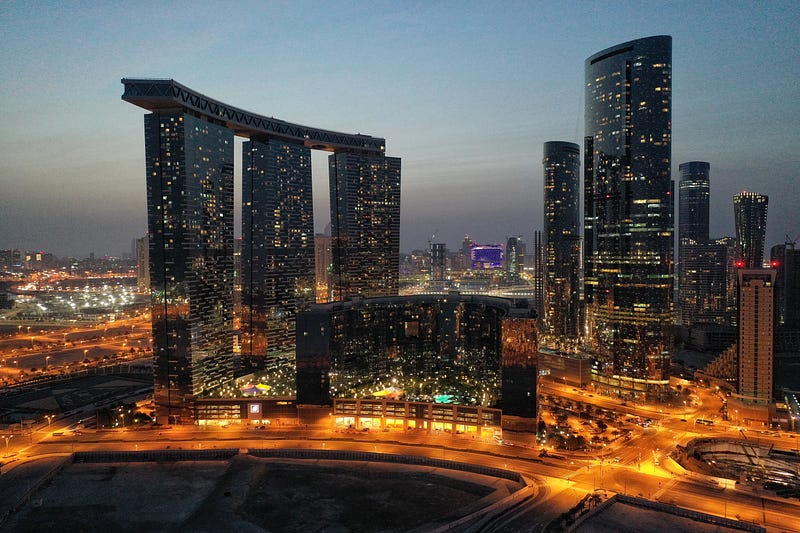
Photo by Kamil Rogalinski on Unsplash


Financial & non-financial support

With the assistance of ADIO, NEOPLY will establish its global headquarters, H-Lab, for blockchain businesses in the Abu Dhabi Global Market (ADGM). H-Lab will benefit from both financial and non-financial support, including incentives, fee exemptions, and regulatory advantages concerning cryptocurrencies and blockchains. Moreover, H-Lab intends to collaborate with local universities to develop education and scholarship programs focused on Web3 and decentralized finance (DeFi).


Operations in MENA

NEOPLY’s inclusion in the Innovation Programme of ADIO demonstrates the competitiveness of the blockchain project, providing it with the opportunity to expand its operations in the Middle East and North Africa (MENA) region. By leveraging the support, infrastructure, and talented workforce available through ADGM, the company will forge partnerships with leading global firms residing in the capital of the UAE to enhance its global presence.


Korean firms in Abu Dhabi

Abu Dhabi has been increasingly attracting Korean companies. ADIO, an affiliate of the Abu Dhabi Department of Economic Development, was established in 2019 as part of the country’s initiative to promote non-oil industries and draw in advanced technology companies. In 2021, ADIO opened an office in Seoul to support the entry of innovative Korean firms into the UAE. Thanks to these efforts, several Korean enterprises, including cloud operations services company Bespin Global, hospitality tech company H2O Hospitality, and smart farm operating group K-BTS Consortium, have established entities or expanded their operations in Abu Dhabi.


DeFi regulatory framework

NEOPLY’s H-Lab will collaborate with ADGM to facilitate its development of a regulatory framework for DeFi, aspiring to become one of the world’s first regulated DeFi providers. The NEOPIN protocol, a centralized decentralized finance (CeDeFi) platform developed by NEOPLY, will work closely with ADGM’s Financial Services Regulatory Authority (FSRA) to establish an efficient and effective regulatory framework.

Abdulla Abdul Aziz Al Shamsi, Acting Director General of ADIO, said, “Abu Dhabi’s enabling environment, coupled with the availability of world-class infrastructure and skilled talent, has positioned the UAE capital as a leading destination for investment in the Middle East. NEOPLY joins a wave of other innovative South Korean companies choosing Abu Dhabi as the catalyst for their next growth phase. They are joining a thriving innovation ecosystem and bringing new ideas and solutions to life in the UAE capital.”

NEOPLY CEO Park Jin-ho stated, “With ADIO’s support, we are establishing our global headquarter in the heart of Abu Dhabi, which fills us with great anticipation for our financial innovation in the Middle East. With the active support of ADIO, the collaboration with ADGM, and the infrastructure of Abu Dhabi, we are committed to setting new standards in the global blockchain industry.”


More to Read
View All
Policy & Regulation·

Jan 06, 2024

Chinese state publication calls for crackdown on crypto

China’s Legal Daily, a publication that falls under the supervision of the Chinese Communist Party’s (CCP) Central Commission for Political and Legal Affairs, has sounded an alarm regarding cryptocurrencies, raising concerns about their use as potential avenues for corruption. In the newspaper’s New Year’s Day edition, it quoted legal scholars, who had convened at the annual China Integrity and Legal Research Association meeting, who underscored the urgency of addressing the emerging threat posed by digital assets.Photo by Max van den Oetelaar on Unsplash‘Hidden channels’ for briberyIn particular, it focused on views expressed by Associate Professor Zhao Xuejun from Hebei University Law School. Zhao Xuejun warned against the use of virtual currency and electronic gift cards as “hidden channels” for bribery. Notably, these forms of payment, often stored in “cold storage” devices, offer a convenient means for transporting funds abroad, the academic claimed. This development aligns with recent warnings from state agencies, including the Supreme People’s Procuratorate and the State Administration of Foreign Exchange, cautioning against the use of stablecoin Tether in yuan-related foreign exchange transactions, deeming such actions illegal. Anonymity and traceability concernsProfessor Mo Hongxian from Wuhan University Law School explicitly mentioned Bitcoin, highlighting the challenges associated with virtual currencies, such as their anonymity and difficulty in traceability, which can facilitate illegal activities. Despite lacking official recognition in China, Professor Hongxian stressed the need for judicial attention to transactions involving virtual currencies. Although China maintains a cryptocurrency ban, it actively explores blockchain technology for identity verification. The country’s central bank digital currency, e-CNY, still in the pilot stage, has witnessed significant development. Despite its limited geographic distribution, the digital yuan recorded transactions totaling nearly $250 billion in China as of June 2023, with international use noted in commodities sales. Varying degrees of enforcementChina has demonstrated that it can at times take a very hard line on restricting cryptocurrency trading and related activities, while at others, it seems to tolerate such activity or turn a blind eye. Last month China’s Supreme Procuratorate provided details on the nature of the prosecution of over-the-counter (OTC) crypto trader and RenrenBit founder, Zhao Dong. Zhao was handed down a seven year sentence for carrying out illicit crypto business operations. By contrast, an investigation carried out by the Wall Street Journal last year found that business has been thriving for the world’s largest cryptocurrency exchange Binance in China, despite the ban. Other crypto-related activity has been uncovered, flouting capital controls. BitMEX founder Arthur Hayes suggested recently that all wealthy Chinese individuals have access to banking in Hong Kong, allowing them to access, trade and use cryptocurrency. As part of the CCP’s intensified anti-corruption efforts, the focus on cryptocurrency’s potential role in financial crimes underscores the evolving landscape as use of digital currency unfolds. The Legal Daily article emphasizes the need for vigilance and regulatory measures to counteract the perceived threat of corruption facilitated by cryptocurrencies and electronic payment methods.  

news
Policy & Regulation·

Jun 06, 2023

Do Kwon Out On Bail Following Appeal

Do Kwon Out On Bail Following AppealDo Kwon, the South Korean Co-Founder of Singapore-headquartered Terraform Labs, has been granted bail in Montenegro following a court appearance last week.Photo by Tingey Injury Law Firm on UnsplashAppeal dismissalThe appeal brought by state prosecutors was dismissed by a Montenegrin court according to a statement released by the courts on Friday. The Basic Court in Podgorica confirmed that the State Prosecutor’s Office’s appeal against an earlier bail agreement was rejected, allowing Kwon and Terraform Labs’ chief financial officer Han Chang-joon to await further legal proceedings under house arrest in Montenegro.The court reinstated the original bail terms set during a hearing on May 12, requiring both individuals to pay 400,000 euros ($436,000) each to secure their release from custody. Kwon and Han are now under strict bail conditions and are not permitted to leave Han’s legal residence in Montenegro.According to the court statement: “The court appreciated the fact that they are persons who are not Montenegrin citizens, which is why it accepted their statements about the value of the property they own, which were supported by concrete evidence.”The Montenegrin court found, following the first appeal, that the original decision to permit bail was not based on a sound assessment of “concrete evidence.” That allowed prosecutors to overturn that original decision, which has itself been overturned to permit bail once again.Local police will closely monitor both individuals, and any violation of the supervision measures or departure from the residence will result in the forfeiture of the bail amount. To ensure compliance and discourage flight attempts, Kwon and Han provided personal and financial information to the local authorities, including evidence of property ownership and a sales contract for an apartment, parking space, and basement owned by Han. Kwon also submitted an invoice for a vehicle and bank account statements.Alleged fake passportsKwon and Han were arrested in Montenegro in March 2023 for allegedly using false travel documents while attempting to leave the country. Their original passports had been confiscated in South Korea in October 2022.The court acknowledged that verifying the authenticity of the Belgian passports and identity cards held by the defendants would require additional time. However, it deemed the agreed-upon bail amount sufficient to ensure their presence during legal proceedings.International interestDespite being granted bail in Montenegro, Kwon remains wanted in multiple jurisdictions. South Korean authorities seek to extradite him for investigation into the collapse of the Terra ecosystem, which caused an estimated $40 billion loss in the cryptocurrency market in June 2022. Interpol has also issued a Red Notice for Kwon in connection with the charges in South Korea, and he faces several fraud charges in the United States.The recent decision in Montenegro allows Kwon and Han temporary freedom while they await further legal proceedings. However, their legal troubles extend beyond Montenegro, with ongoing investigations and charges in South Korea and the United States casting a shadow over their future.The pair are due back to appear before a Montenegrin court once again on June 16. Prosecutors have three days in which to file another appeal of the latest bail decision.

news
Markets·

Nov 15, 2024

Sygnum survey reveals greater crypto allocation appetite in Singapore

Sygnum Bank, a digital asset bank based in Switzerland and Singapore, has conducted a survey which has identified that investors in Singapore are more interested in increasing their allocation to crypto than their international peers. The bank’s 2024 Future Finance survey states that while a global average of institutional investors of 47% plan to increase their exposure to crypto next year, in the case of Singapore-based institutional investors, 57% of them expressed the view that they would increase their crypto holdings in 2025.Photo by Precondo CA on UnsplashThe report states:  "Singapore investors exhibit a higher risk appetite and motivation to invest on average than respondents from other countries.” The annual survey, which was published on Nov. 14, collated insights garnered from more than 400 institutional and professional investors, distributed across 27 countries, with average investor experience of in excess of 10 years. 121 of the survey’s participants were based in Singapore, with the survey having been conducted during Q3 2024. Long-term confidenceSingaporean respondents suggested that they were confident in the long-term potential and outlook where cryptocurrencies are concerned. While the main reason for investing in crypto was to gain exposure to digital assets in line with a global trend (56%), 41% of respondents from the city-state cited portfolio diversification as their reason for investing in the emerging asset class.  75% of investors expressed the belief that regulatory clarity has improved recently. Growing confidence among institutional investors generally is likely to be developing due to increasing certainty relative to digital asset regulation. While Donald Trump had not been elected in the United States at the time that survey participants responded, it was looking increasingly likely that he would win the election.  That’s likely to have had a bearing on investor outlook, not just within the United States but internationally, given the implications in terms of positive regulation and an overall positive approach to crypto. 39% of Singaporean respondents cited yield-generation opportunities as their motivation in investing in digital assets. The recent advent of spot crypto exchange-traded funds (ETFs) stood out as another motivation for investors.  Breaking down specific areas of interest within the crypto sector, 71% of Singaporean respondents were interested in investment in layer-1 blockchain networks. Meanwhile, 56% expressed an interest in Web3 infrastructure investment options, with 41% showing an interest in layer-2 blockchain networks. Interest in asset tokenizationIn relation to tokenization, 47% of those surveyed in Singapore indicated an interest in tokenizing mutual funds and corporate bonds over and above other financial assets and products. When first proposed, real estate was considered the most obvious asset primed for tokenization but mutual funds and corporate bonds now appear to be gaining more traction. Asset tokenization has been garnering considerable attention in mainstream finance but especially so in Singapore. Local regulator, the Monetary Authority of Singapore, (MAS) has been running Project Guardian, a collaboration between MAS and the financial services industry with an emphasis on asset tokenization. The project recently brought in the German central bank, the World Bank, HSBC and markets infrastructure firm Euroclear as participants. 

news
Loading