Top

Crypto-Friendly Xapo Bank Enters Indian Market

Web3 & Enterprise·June 23, 2023, 12:40 AM

Xapo Bank, a cryptocurrency bank based in Gibraltar, has set its sights on India and plans to offer banking and cryptocurrency services in the country.

Xapo, which claims to be the first bank in the world to integrate traditional private banking with crypto, issued a press release which was published via Bloomberg on Thursday to announce the development.

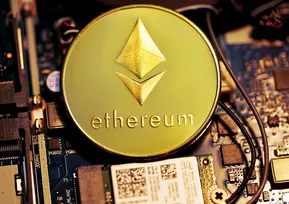
Photo by Julian Yu on Unsplash


Massive market opportunity

With a population of over 1.3 billion, India presents a massive opportunity for Xapo Bank, which is backed by prominent investors like SoftBank, DST Global, and Ribbit Capital. This move comes at a time when India has seen impressive foreign inflows of $15.5 billion in the first quarter of 2023.

The CEO of Xapo Bank, Seamus Rocca, suggested that the absence of conventional banking services in certain parts of South Asia has created a void that Xapo Bank aims to fill. By providing innovative financial products and services, the bank hopes to empower individuals and businesses with access to reliable and inclusive banking solutions.

Rocca stated that the move “represents an opportunity to provide our hybrid banking and investment solutions to its large underserved populations, bridging an important gap in the region’s financial systems and allowing its savvy savers, investors, and professionals the freedom to explore their financial potential with a single mobile application.”


Competitive interest rate offering

One of the attractive features of Xapo Bank for customers in India is its competitive interest rates on deposits. The bank offers attractive returns, with a yearly interest rate of 4.10% on US dollar deposits and 1.00% on Bitcoin deposits. Notably, the daily interest payments on Bitcoin deposits are distributed in the smallest denomination of the cryptocurrency, a satoshi.

Xapo Bank’s expansion into India aligns with the country’s projected economic growth of 6.3%, according to Fitch Ratings. Despite the worldwide economic downturn, India’s GDP demonstrated robust growth of 6.1% in the first quarter, showcasing the country’s resilience.


Government policy challenges

However, Xapo Bank will face challenges as it enters the Indian market. The world’s most populous country has implemented strict measures regarding cryptocurrencies, including a 30% tax on all cryptocurrency income and the elimination of deductibility for losses. Such regulations could potentially impact Xapo Bank’s operations and profitability in India.

Authorities like the country’s central bank, the Reserve Bank of India (RBI), have been more inclined to encourage the financial services sector to adopt blockchain technology rather than offer cryptocurrencies directly. Earlier this month, American multinational financial services company JPMorgan Chase partnered with six major Indian banks in a blockchain offering that aims to improve the interbank settlement process.

Nevertheless, Xapo Bank remains undeterred, recognizing the immense potential of India’s growing economy and the urgent need for accessible financial services. The bank’s expansion promises to create opportunities for individuals and businesses across the nation, contributing to India’s economic development and financial inclusion.

Moreover, Xapo Bank’s entry into India reflects a broader trend of fintech innovation and the convergence of traditional banking and digital currencies. As the world becomes increasingly interconnected, financial institutions like Xapo Bank are reshaping the financial services landscape by offering forward-thinking solutions that bridge gaps, ultimately empowering individuals and fostering economic growth.

More to Read
View All
Web3 & Enterprise·

Dec 15, 2023

Cronos Labs launches zkEVM chain testnet

Cronos Labs launches zkEVM chain testnetCronos Labs, the developer behind the Cronos blockchain ecosystem, is charting a new path in the blockchain space by launching a zkEVM chain.From Cosmos to EthereumThe Cronos zkEVM chain is being launched in the first instance as a test network. The layer-2 blockchain will rely upon ZK Stack, the software kit developed by Matter Labs. In this way, the project will be extending its scaling roadmap from Cosmos to Ethereum. As Matter Lab’s SVP of Business and Operations, Marco Cora put it:“When we introduced the ZK Stack, we opened up the door for anyone wanting to build on top of Ethereum to do so by deploying hyperchains. Whether you’re building a specialized Rollup or a general purpose one, hyperchains allow you to tap into Ethereum’s extensive userbase base and liquidity while preserving its robust security and decentralization.”The journey began with the creation of the first chain in the Cronos ecosystem — a Cosmos appchain developed in collaboration with Singapore-headquartered crypto platform Crypto.com and launched in 2021. Subsequently, Cronos introduced an EVM-compatible chain in 2022, built using the Cosmos SDK. Notably, these new endeavors complement, rather than replace, the earlier established chains.Photo by Kanchanara on UnsplashThe product of collaborative effortsA significant development in Cronos’ evolution is the introduction of zkEVM, a result of collaborative efforts involving Cronos Labs, Matter Labs and engineering teams from stakeholders Crypto.com and existing dApp developers. The zkEVM testnet is a breakthrough, utilizing Ethereum’s Sepolia testnet and incorporating zkSync’s open-source prover, Boojum — a STARK-based zero-knowledge proof system known for its efficiency in the layer-2 rollup space, with low hardware requirements and fees.The decision to launch a native Ethereum chain stemmed from challenges in bridging EVM chains and bridging between Cosmos and Ethereum, according to Ken Timsit, Managing Director at Cronos. Timsit emphasized the richness and robustness of the Ethereum developer ecosystem for building DeFi and NFT applications.Native account abstractionHyperchains within the ZK Stack share components, including a native bridge to the Ethereum mainnet and zkSync’s trustless bridging mechanism, ensuring assets remain secured by Ethereum. The implementation of zkSync’s native account abstraction allows transaction fee payments in various cryptocurrencies, including Cronos’ native token (CRO).Cronos’ zkEVM is anticipated to progress to the mainnet in the second quarter of 2024, marking a pivotal moment in the evolution of hyperchains.The landscape of hyperchains is expanding, with projects like GRVT and Tradable utilizing the ZK Stack. GRVT, a derivatives exchange, and Tradable, a tech firm focused on bringing private credit on-chain, exemplify the diversity and specialization within this emerging sector. Tradable aims to establish an institutional-focused hyperchain, potentially forming a decentralized chain alongside other institutional partners.Matter Labs views the zkSync hyperchain as a superior option compared to app-specific chains in Cosmos, emphasizing the scalability and security benefits. Hyperchains, a potential alternative to private blockchain frameworks like Hyperledger or Corda, offer technical scalability with the benefits of Ethereum. However, practical scalability remains a challenge due to cost considerations and the social coordination problem.

news
Web3 & Enterprise·

Dec 07, 2023

Upbit upgrades matching engine to process KRW 1 quadrillion trading volume

Upbit upgrades matching engine to process KRW 1 quadrillion trading volumeSouth Korea’s largest cryptocurrency exchange Upbit has enhanced its matching engine — which matches buy and sell orders from users on the exchange — to be able to handle a daily trading volume of KRW 1 quadrillion (approximately $757.3 billion), according to local news outlet Kyunghyang Games.Photo by Maxim Hopman on UnsplashBecause the crypto market operates nonstop without limits to time or borders, having a solid infrastructure that can seamlessly handle large amounts of data is crucial. Upbit has thus been working on its so-called “Stairway to Heaven” project for the past two years to upgrade its trading infrastructure, including its matching engine.Constant upgradesThe Stairway to Heaven is a long-term project in which Upbit’s operator Dunamu has invested a total of KRW 10 billion (approximately $7.6 million) to adjust to the rapidly advancing crypto industry and improve the performance of the entire market system. The upgradesThe main goal of the project is to upgrade Upbit’s matching engine to be cloud-native and horizontally scalable. The engine is now capable of supporting more than 40,000 transactions per second — a 25-fold increase from the previous version of the engine — allowing it to respond efficiently to surges in user traffic. In the event of a traffic spike, the system can handle more than 100,000 transactions per second with additional servers, the exchange said.“Unlike the way traditional finance approaches ledger management, our cloud-native architecture allows us to flexibly respond to surges in traffic,” Upbit said. “We will continue to make various system improvements to offer a stable investment environment.”Elevating the user experienceIn addition to upgrading its matching engine, Upbit has recently revamped its UI/UX to include price chart updates by second increments and an overview of profits and losses. The exchange plans to continue its multifaceted efforts in service quality, security and investor protection to become a domestically and globally recognized exchange.

news
Policy & Regulation·

Mar 10, 2025

Government-owned bank enables crypto trading through digital app in Dubai

Dubai-based Emirates NBD, one of the United Arab Emirates’ (UAE) top banks, has enabled a crypto trading service via its subsidiary bank, Liv Digital Bank. Liv Digital Bank has launched the crypto trading service through its Liv X mobile banking app. App users now have the ability to buy, hold and sell a range of cryptocurrencies. Users will have access to custody solutions. They can control both virtual currencies and fiat currencies from within one application.Photo by Markus Winkler on UnsplashAquanow collaborationThe offering has been brought online through a collaboration with digital assets infrastructure provider Aquanow. Taking to X, Aquanow CEO Phil Sham said that "incumbent institutions like Emirates NBD will play a pivotal role in driving the next wave of digital asset adoption.” Aquanow has acquired the necessary licensing from the Virtual Assets Regulatory Authority (VARA) in Dubai to enable the service offering on a compliant basis. Sham told Cointelegraph that the collaboration “showcases how traditional banking and digital assets can coexist, providing consumers with seamless, secure, and compliant access to the evolving digital economy.” Zodia as digital asset custodianZodia Custody, a virtual asset custodian that serves institutional clients, has been chosen to custody assets held as a result of crypto trading on the app. The custodian, a subsidiary company of British multinational banking group Standard Chartered, launched its service in Dubai back in 2023. Emirates NBD is government-owned and the UAE’s second largest bank. The service will facilitate users in trading Bitcoin (BTC), Ethereum (ETH), Solana (SOL), XRP, Cardano (ADA) and some other cryptocurrencies. The bank’s Group Head of Retail Banking and Wealth Management, Marwan Hadi, commented on the development, stating: “Offering cryptocurrency on Liv X is the next step towards the overall vision of Liv being a pioneer in innovation and excellence.” He added that “with the highest crypto adoption rate in the UAE, [Emirates NBD is] keen to launch [its] own virtual asset offering to capitalise on this trend.” This is not the first touch point with the crypto sector for the Emirates NBD subsidiary. Last year, Liv Digital partnered with tokenized real-world assets (RWA) firm Ctrl Alt. Accessing Ctrl Alt’s RWA tokenization expertise, Liv is opening investing opportunities for its customers in the area of tokenized assets. In November 2024, Emirates NBD signed up as a member of the Partior Network, the distributed ledger technology (DLT) clearing and settlement network. Partior uses tokenized instruments for the wholesale settlement of cross-border payments in conjunction with correspondent banks. In the past, the Dubai-based bank had made efforts to educate its customers with regard to the benefits of cryptocurrency and blockchain. Last year, American blockchain analysis firm Chainalysis reported that the Middle East and North Africa (MENA) accounted for 7.5% of global digital asset trading volume over the course of 12 months from July 2023 to June 2024. Chainalysis itself chose Dubai to set up its regional headquarters in May 2024.

news
Loading