Top

Korean Parliament to Hold Hearing on Virtual Assets Amid Controversies

Policy & Regulation·June 15, 2023, 9:09 AM

The National Policy Committee (NPC) of the South Korean National Assembly has reached an agreement to conduct a hearing on virtual assets next month. This decision comes following discussions between the ruling and opposition parties, as reported by local news outlet Kukinews.

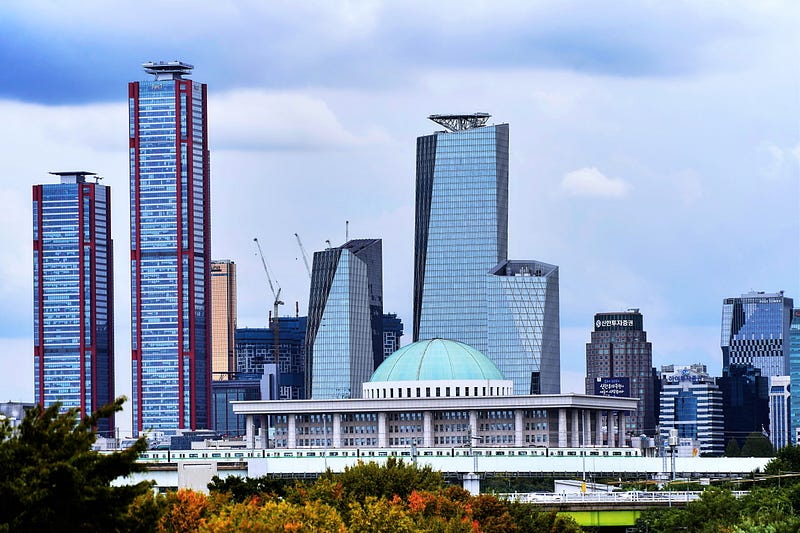
Photo by KS KYUNG on Unsplash


Hearing date

Lawmakers Yoon Han-hong and Kim Jong-min, who serve as administrative secretaries of the NPC, have agreed today to hold the virtual assets hearing on July 11. Yoon is a member of the ruling People Power Party (PPP), and Kim is a member of the opposition Democratic Party of Korea (DPK).

During a full session held this afternoon, Lawmaker Kim proposed the idea of a hearing on virtual assets, to which NPC Chair Back Hye-ryun agreed.


Growing public interest

Today’s meeting was organized to foster a better understanding of the current issues surrounding virtual assets, given the increasing public interest, particularly in light of the recent controversy involving Lawmaker Kim Nam-kook’s alleged ownership of cryptocurrency tokens and the employment of PPP leader Kim Gi-hyeon’s son in a crypto-related company.

The NPC intends to finalize the plan for the hearing on June 30, just before the plenary session on the day. The specific focus of the hearing and the participants, including witnesses, will be determined through consultations between the administrative secretaries.

More to Read
View All
Web3 & Enterprise·

Nov 15, 2023

Aptos charts success in South Korea through bridging Web2 and Web3

Aptos charts success in South Korea through bridging Web2 and Web3Aptos, a major layer 1 blockchain network developed by the experts behind Meta’s canceled stablecoin payment system Diem, is growing in South Korea. In a recent Aptos Day conference held at the Hashed Lounge in Seoul, the Aptos team shared its vision for developing its ecosystem in Korea and attracting users by actively bringing content from Web2 to Web3, instead of simply focusing on cultivating a Web3-only ecosystem.Photo by GuerrillaBuzz on UnsplashDavid Wolinsky, a software engineer at Aptos and a former developer at Facebook, presented Aptos’ key advantages and achievements since its launch last year and outlined the blockchain’s future plans for growth.High-speed Web3 powerhouseIn particular, he highlighted Aptos’ high compatibility with social media, its solid security framework built with the Move programming language and a rapid processing speed of up to 200,000 transactions per second (TPS) — with a time to finality (TTF) of less than one second. Thanks to this impressive speed, Wolinsky explained, lots of projects have onboarded the network, which is anticipated to grow into a bigger ecosystem with more decentralized applications (dApps).Aptos has also carried out over 300 million transactions since its launch in October of last year, creating seven million unique addresses. Just two months following its launch, there were already over 200 projects on the blockchain. Aptos could thus play a significant role in revolutionizing Web3, which is currently dominated by the Ethereum virtual machine (EVM).Facilitating the transition from Web2 to Web3To grow the ecosystem further, Wolinsky emphasized the importance of bringing Web2 users to Web3 in an efficient and seamless manner. Aptos aims to achieve this by facilitating the creation of Aptos-based wallets through integration with platforms like Facebook, X (formerly Twitter) and Google, allowing users to enjoy various dApps.Wolinsky also noted that Aptos uses Move — an open-source programming language developed by Facebook for writing smart contracts on the Diem blockchain — which is designed to be developer-friendly, employing similar mechanisms that developers generally use to build applications on Web2. This language can attract not only Web2 users but also Web2 developers who are transitioning to Web3 without worrying about the complexity of the process. Aptos argues that Move is more secure than EVM’s Solidity language.Positive prospects in KoreaAptos also regards Korea as a key market for growth, as Korean developers are actively contributing to the Aptos ecosystem and providing helpful feedback. The blockchain disclosed that as of Q3 this year, Korea has 13 Aptos validators — second only after the U.S., which has 14.Christie Lee, Head of Business Development and Partnerships in Korea at Aptos, argued that Korea is innovating the most at the larger corporate level while also contributing to the ecosystem. Lots of endeavors are playing out in the Korean market, she said, as regulatory restrictions in fields like gaming, entertainment, finance and more are starting to loosen.She also added that the Korean market is not only driven by innovation from large companies but also by small developers who can contribute to the ecosystem, noting that the market is a favorable environment for developers to thrive. In addition, Korean users are sensitive to trends and adept at incorporating technology, which would allow them to quickly adopt Web3 culture.

news
Markets·

Nov 21, 2024

Crypto popularity surges in Turkey as security remains top investor concern

A recent survey by Turkish crypto exchange Paribu reveals that 99% of Turkish investors are now familiar with digital assets, a significant rise from just 16% in 2020. Digital assets have emerged as the third most popular investment choice in Turkey, overtaking traditional options like real estate. Investors are now nearly twice as likely to consider digital assets over stocks or mutual funds, a trend seen across other Asian nations, where younger investors are favoring crypto over more conventional investments. In Indonesia, for example, digital asset investors reached 20 million this year, far surpassing the 12 million who trade on the country’s stock exchange. In the U.S., a recent Bank of America survey reported a similar trend, with younger investors increasingly gravitating toward digital assets.Photo by Burak Karaduman on PexelsHigh returns and future potential drive interest in digital assetsThe survey shows that Turkish investors are primarily attracted to digital assets for their high return potential, while some view them as the future of finance. Other motivations include fast transaction capabilities, as well as benefits like censorship resistance. According to Paribu’s spokesperson, Nergis Nurcan Karababa, crypto assets may experience higher adoption rates than traditional financial products, as more individuals anticipate mainstream usage of digital assets in the near future. Security a top priority for Turkish investorsSecurity remains a paramount concern for Turkish investors, particularly given the history of hacks and fraud targeting local exchanges. Paribu’s survey, which polled over 2,000 residents and 541 active traders, found that most Turkish investors demand a strong security system from their trading platforms. In recent years, Turkish exchanges have been targeted by hackers, with high-profile breaches impacting investor confidence. In June, an attack on BtcTurk, the country’s largest exchange, reportedly led to a $55 million loss from multiple hot wallets. An earlier collapse of the Thodex exchange in 2021 saw the disappearance of investor funds valued by Chainalysis at $2.6 billion, although local prosecutors cited a lower figure. Thodex’s founder was sentenced to over 11,000 years in prison, underscoring the severity of crypto-related financial crimes in Turkey. Rise in preference for local exchangesDespite security incidents, Turkish investors increasingly favor local exchanges, with 78% indicating a preference for Turkey-based platforms in 2024, up from 63% last year. This trend aligns with a global shift towards domestic exchanges as investors seek platforms regulated by local authorities, providing easier avenues for legal recourse. The collapse of international platforms like FTX has accelerated this trend, and countries such as Nigeria, India and Indonesia have issued new licenses exclusively for local exchanges, restricting foreign entities from operating within their borders. Turkey’s leading position in the MENA crypto marketTurkey ranks as the largest digital asset market in the Middle East and North Africa (MENA) region and is 11th globally in terms of adoption, according to Chainalysis. Between June 2023 and June 2024, Turkey received $137 billion in digital assets, placing it seventh worldwide for total transaction volume. This growing market highlights Turkey’s role as a key player in the global crypto landscape, as well as the increasing integration of digital assets into mainstream financial activities among Turkish investors. 
news
Policy & Regulation·

May 22, 2025

Two Russians caught in $42M USDT cross-border transfer case in South Korea

Two Russian nationals have been referred to prosecutors in South Korea for allegedly facilitating the illegal transfer of roughly 58 billion won ($42.2 million) to Russia using USDT, a U.S. dollar-pegged stablecoin. According to a report by KBS News, the Seoul branch of the Korea Customs Service (KCS) announced the charges on May 22, citing violations of the country’s Foreign Exchange Transaction Act. The suspects, a man and a woman both in their 40s, reportedly operated an unauthorized money exchange business to carry out the transactions.Photo by Polina Tankilevitch on PexelsOver 6K transactionsAuthorities suspect the pair of repeatedly using USDT to conduct cross-border transfers between South Korea and Russia. From January 2023 to July 2023, the duo allegedly completed 6,156 illegal remittance transactions, either sending funds abroad or receiving payments on behalf of others, totaling the full 58 billion won in question. Investigators revealed that the two suspects, who hold permanent residency in South Korea and have overseas Korean status, used the messaging app Telegram to solicit clients. When transferring money to Russia, they reportedly collected funds via kiosks in convenience stores that allow users to send money without a bank account. The collected cash was then used to purchase USDT to complete the remittances. According to customs officials, the suspects would either send the cryptocurrency directly to a crypto wallet specified by the customer, or forward it to accomplices in Russia. These accomplices would then convert the crypto to cash and distribute rubles to recipients through local channels. Illicit crypto use by businesses The operation also handled export payments for South Korean businesses. The suspects reportedly accepted payments from Russian importers on behalf of Korean used car dealers and cosmetics exporters. In these cases, associates in Russia would collect ruble payments from importers, convert the funds into USDT and send the cryptocurrency to contacts in Korea. The funds were then exchanged for Korean won and deposited into the accounts of the businesses. Customs officials believe that the group’s services became particularly appealing after the start of the Russia-Ukraine war in 2022. In the wake of U.S. and international sanctions against Russia, legitimate financial channels for cross-border transactions became restricted, prompting some companies and individuals to turn to illegal alternatives. The Korean export companies involved in these transactions have been fined. The Seoul Customs Office emphasized that illegal money exchange operations are often exploited for criminal activities such as drug trafficking, voice phishing and gambling. In response, the agency committed to stronger enforcement and pledged to spare no effort in combating unlawful financial operations. Scams grow inside the borderThe surge in crypto-related financial crimes in South Korea extends beyond cross-border transactions. According to a recent report by Maeil Business Newspaper, Kakao Pay—a local mobile payment platform—has detected around 70,000 cases of malicious apps linked to virtual assets over the past month. Of those, 80% were associated with Ponzi schemes, where fraudsters lure victims with promises of high returns before disappearing with the funds. A Kakao Pay spokesperson noted that new forms of security threats are emerging alongside the rapid growth of the crypto market, adding that the company is prioritizing the development of stronger security systems. 

news
Loading