Top

Two Russians caught in $42M USDT cross-border transfer case in South Korea

Policy & Regulation·May 22, 2025, 6:30 AM

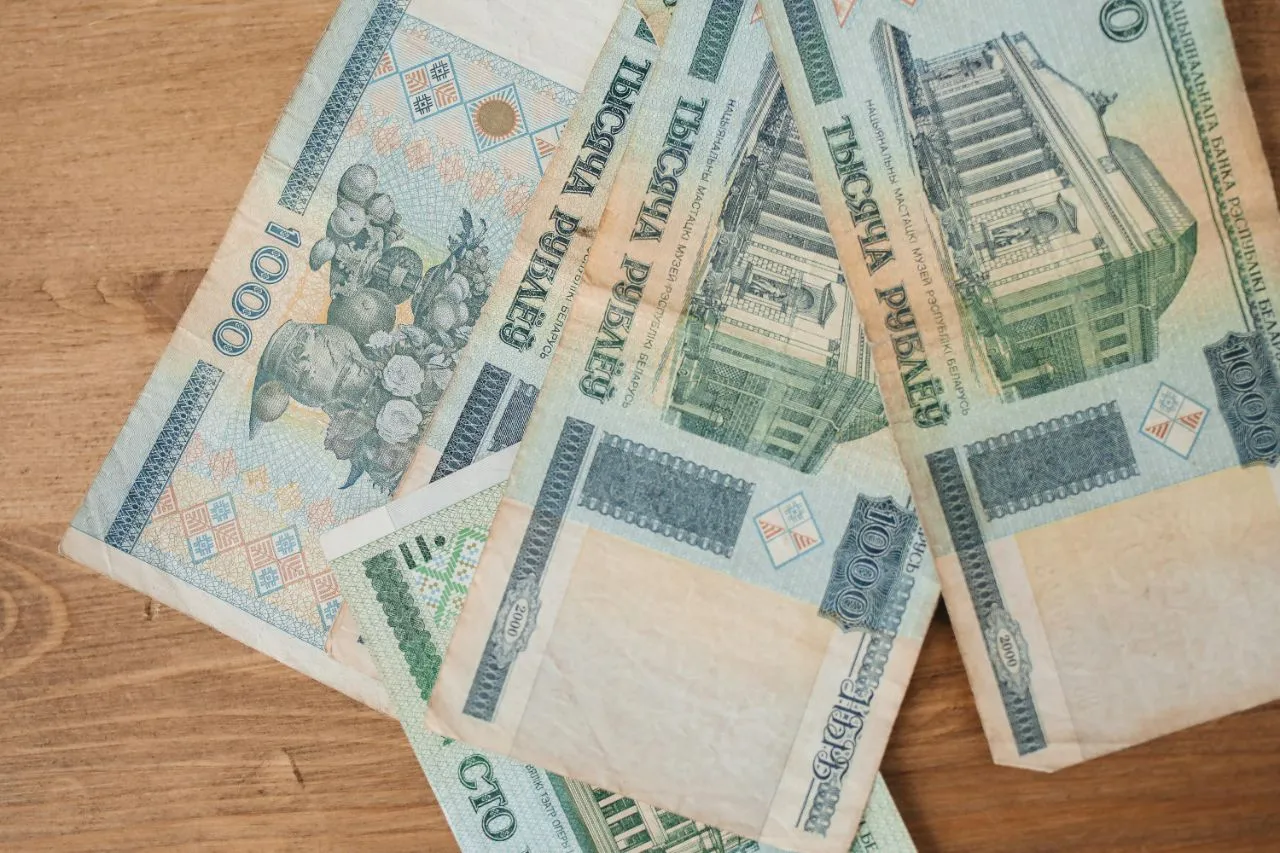
Two Russian nationals have been referred to prosecutors in South Korea for allegedly facilitating the illegal transfer of roughly 58 billion won ($42.2 million) to Russia using USDT, a U.S. dollar-pegged stablecoin. According to a report by KBS News, the Seoul branch of the Korea Customs Service (KCS) announced the charges on May 22, citing violations of the country’s Foreign Exchange Transaction Act. The suspects, a man and a woman both in their 40s, reportedly operated an unauthorized money exchange business to carry out the transactions.
https://asset.coinness.com/en/news/8c791aa85554ecb878fe696beaaa3ad0.webp
Photo by Polina Tankilevitch on Pexels

Over 6K transactions

Authorities suspect the pair of repeatedly using USDT to conduct cross-border transfers between South Korea and Russia. From January 2023 to July 2023, the duo allegedly completed 6,156 illegal remittance transactions, either sending funds abroad or receiving payments on behalf of others, totaling the full 58 billion won in question.


Investigators revealed that the two suspects, who hold permanent residency in South Korea and have overseas Korean status, used the messaging app Telegram to solicit clients. When transferring money to Russia, they reportedly collected funds via kiosks in convenience stores that allow users to send money without a bank account. The collected cash was then used to purchase USDT to complete the remittances.


According to customs officials, the suspects would either send the cryptocurrency directly to a crypto wallet specified by the customer, or forward it to accomplices in Russia. These accomplices would then convert the crypto to cash and distribute rubles to recipients through local channels.


Illicit crypto use by businesses

 The operation also handled export payments for South Korean businesses. The suspects reportedly accepted payments from Russian importers on behalf of Korean used car dealers and cosmetics exporters. In these cases, associates in Russia would collect ruble payments from importers, convert the funds into USDT and send the cryptocurrency to contacts in Korea. The funds were then exchanged for Korean won and deposited into the accounts of the businesses.


Customs officials believe that the group’s services became particularly appealing after the start of the Russia-Ukraine war in 2022. In the wake of U.S. and international sanctions against Russia, legitimate financial channels for cross-border transactions became restricted, prompting some companies and individuals to turn to illegal alternatives. The Korean export companies involved in these transactions have been fined.


The Seoul Customs Office emphasized that illegal money exchange operations are often exploited for criminal activities such as drug trafficking, voice phishing and gambling. In response, the agency committed to stronger enforcement and pledged to spare no effort in combating unlawful financial operations.


Scams grow inside the border

The surge in crypto-related financial crimes in South Korea extends beyond cross-border transactions. According to a recent report by Maeil Business Newspaper, Kakao Pay—a local mobile payment platform—has detected around 70,000 cases of malicious apps linked to virtual assets over the past month. Of those, 80% were associated with Ponzi schemes, where fraudsters lure victims with promises of high returns before disappearing with the funds. A Kakao Pay spokesperson noted that new forms of security threats are emerging alongside the rapid growth of the crypto market, adding that the company is prioritizing the development of stronger security systems.


More to Read
View All
Web3 & Enterprise·

Aug 02, 2024

Crypto.com tops USD-supported crypto exchange trading volume in July

Singapore-headquartered crypto exchange platform Crypto.com has boosted its standing amongst its peers by achieving the largest spot crypto trading volume for the month of July where USD-supported exchanges are concerned. According to data published by The Block, the exchange platform achieved $68.85 billion in spot trading volume among USD-supported exchanges in July out of an overall total of $178.84 billion. American exchange platform Coinbase was next in the rankings, with a July trading volume total of $63.97 billion.Photo by Alexander Grey on UnsplashInstitutional client boost It’s understood that the uptick in trading volume experienced by the exchange platform is as a consequence of an increase in the number of institutional clients using Crypto.com’s trading services.  Giuseppe Giuliani, the managing director of Crypto.com, told Cointelegraph that more institutional clients are using the platform due to an improved product offering, together with stronger market conditions. Giuliani stated: “This growth has been primarily driven by the acquisition of new clients on the platform, both large institutions and advanced retail traders, and is being supported by stronger market conditions in 2024.” Giuliani told The Block that growth on the platform has played out over the medium term, stating:  "We have seen incremental market share growth month on month over the last 18 months.” Driving Bitcoin unit price Institutional adoption has been a developing theme in 2024. Some analysts have pointed to its importance in the attainment of an ever higher Bitcoin unit price. Crypto market analyst Willy Woo has suggested recently that a 3% allocation by institutions could lead to a Bitcoin unit price of $700,000. In its most recent quarterly report, global investment bank Canaccord Genuity outlined that there is growing institutional adoption relative to spot Bitcoin exchange-traded funds (ETFs). The launch of spot Ethereum ETF products in the U.S. last month is also understood to have helped towards an improved monthly trading volume for Crypto.com. Giuliani stated: “In the week of July 21 during which Ether ETF was launched, we have seen double-digit growth in our exchange’s Ether spot and perpetual volume week-on-week, building on consecutive weeks of robust volume growth.” Furthermore, the exchange platform claims to have seen increased interest and market participation from TradFi firms. Growing through licensing and sponsorship Crypto.com has attempted to further its market impact worldwide, including in Hong Kong, having applied for a trading license in the Chinese autonomous territory in February, and succeeding in that endeavor more recently according to subsequent reports. It received a license from the UK’s Financial Conduct Authority (FCA) in 2022, with the FCA awarding the company a further license, an Electronic Money Institution (EMI) license, in 2023. High profile sports sponsorships is another marketing strategy the firm has pursued in recent years. The company has claimed to be reaping the rewards of these deals, which it has made in Formula 1 (F1) motor racing and the Ultimate Fighting Championship (UFC).

news
Web3 & Enterprise·

Feb 28, 2024

Profitability eludes Canaan despite further growth

Beijing-headquartered crypto mining equipment manufacturer Canaan recently revealed its financial results for the fourth quarter of 2023, demonstrating that it continues to struggle with profitability despite positive numbers relative to revenues and growth.Photo by Sasun Bughdaryan on UnsplashIncreased revenues and salesAccording to the company’s filing, during the last quarter of 2023 Canaan reported a surge of 45.7% in total computing power sold compared to the preceding quarter, reaching 5.5 million Thash/s. This ascent, which reflects a 191.9% increase from the same period in 2022, signifies not just a recovery but a robust resurgence in demand and operational ability. The company's dispatch of 19.6 million Thash/s throughout the year, marking a 29.6% leap from 2022, aligns with the rebound in bitcoin prices observed in Q4 2023, a pivotal factor shaping Canaan's operational revitalization. 47% growth on previous quarterA closer examination of the financials reveals not only surpassing total revenues but also a notable 47.3% quarter-over-quarter growth. Canaan's foray into international markets, bolstered by securing substantial orders from esteemed public company clients, underscores a buoyant sales performance and a positive outlook for the computing sector. Despite the buoyant sales and revenue figures particularly in the mining machine market, the sector has faced ongoing regulatory uncertainties and market fluctuations. Nonetheless, the company's strategic initiatives, alongside the positive market effects of the approval and listing of spot bitcoin exchange-traded funds (ETFs), have been positive. Moreover, Canaan's investments in wafer supply capabilities and strategic financial maneuvers garnered approximately US$136 million through at-the-market (ATM) programs and preferred shares. Recording a lossYet, the company’s journey in 2023 was not without its hurdles. Q4 2023 witnessed a significant increase in product revenues from the previous quarter but a decline from Q4 2022, attributed to dwindling sales prices as the halving event loomed, underscoring the volatility inherent in the cryptocurrency market. Results published last year are indicative of the company’s difficulty. In Q2 2023, revenues were strong, yet the company wasn’t turning a profit.With Q4 results, it’s now clear that the firm lost $421 million in 2023. In Q4, Canaan recorded a net loss of $139 million. That compares with a loss of $91 million in Q4, 2022. The company also expects tough market conditions in 2024. In its forward-looking outlook, it stated:”For the first quarter of 2024, and the second quarter of 2024, the Company expects total revenues to be approximately US$33 million and US$70 million, respectively, considering the challenging market conditions across the industry. This forecast reflects the Company’s current and preliminary views on the market and operational conditions, which are subject to change.” The crypto mining sector remains a very challenging market. With the upcoming Bitcoin halving event set to occur in April, it’s expected that as much as 20% of mining capacity could be forced offline, as some equipment would simply fail to mine on a profitable basis. Indicative of the challenges within the sector, crypto miner Core Scientific was forced into bankruptcy due to market difficulties in December 2022. It has only recently exited that bankruptcy process and now expects to generate revenues of $600 million in 2024. Another Bitcoin miner, Riot Platforms, has warned that profitability may be difficult to achieve in 2024 due to chip shortages.   

news
Policy & Regulation·

Nov 16, 2023

KISA to establish blockchain trust framework for public services

KISA to establish blockchain trust framework for public servicesThe Korea Internet & Security Agency (KISA) is developing a system called the Korea-Blockchain Trust Framework (K-BTF) to facilitate the development and operation of blockchain-based public services, said Lee Kang-hyo, a senior official at KISA, during the 2023 Blockchain Grand Week on Wednesday (local time).Blockchain Grand Week is an event hosted by the Ministry of Science and ICT and jointly organized by the National IT Industry Promotion Agency (NIPA), the Korea Internet and Security Agency (KISA) and the Institute of Information and Communications Technology Planning and Evaluation (IITP) to promote the value of blockchain technology in enhancing trust in the digital age.Photo by Philipp Katzenberger on UnsplashPrevious roadblocksKISA has executed over 100 blockchain pilot projects over the last five years, but only a few have been carried out due to significant costs and interoperability barriers between services. According to the agency, it costs KRW 450 million (approximately $348,000) to carry out one project. Therefore, it has shifted its focus to making development easier and supporting data interoperability between services.“Developing blockchain-based public services entails building a blockchain platform, developing services and connecting them with government legacy systems,” Lee explained. “Blockchain developer APIs are becoming standardized overseas, and we thought it was time for us to leverage such advantages as well.”Another challenge was that previous blockchain-based public or governmental services did not offer smooth user experiences (UX), often requiring the installation of separate wallets or applications with each use.Bringing cost-efficient, user-friendly public blockchain servicesTo address these issues, KISA decided to focus on three key areas for building K-BTF — cost reduction, convenient development and usability — with an overall groundwork that covers interfaces, services and security while minimizing intrusion into the private sector.Once the K-BTF is established, government agencies will be able to easily plan and operate blockchain-assisted services such as decentralized identifiers (DIDs) and non-fungible tokens (NFTs). The costs for development will be determined based on how much a given service is used instead of the original base cost of KRW 450 million.Also, public institutions tend to go through staffing changes quite often, and building services under K-BTF will enable governmental operations to run normally without any roadblocks or inconveniences caused by such changes.Lee went on to mention that although a wide array of services can be built on the framework, there will be basic requirements in terms of functionality, performance and security that must be fulfilled for a service to run on it. To verify this, the KISA established a testing and certification system that utilizes its Cloud Security Assurance Program (CSAP) certification system and the Information Security Management System (ISMS).To improve usability, the framework will require users to install only one digital wallet that stores digital forms of identification and various authentication certificates.The KISA is set to start working on the K-BTF next year. Notably, it plans to create a governance system consisting of government agencies — those that are the demand clients for the framework –, private corporations and related experts. Six core services that will employ K-BTF have already been selected after a review of 34 pilot projects proposed in 2021 and 2022 and major national blockchain projects from six overseas countries. These six services are NFTs, DIDs, data origin authentication, data history tracking, Blockchain as a Service (BaaS) and digital wallets.Lee emphasized that the goal of the K-BTF is to derive services that can be used by the public sector within regulatory and technological boundaries.

news
Loading