Top

Finblox Launching Tokenized US Treasury Bonds

Web3 & Enterprise·June 14, 2023, 12:09 AM

Hong Kong-based cryptocurrency firm Finblox has unveiled a groundbreaking solution aimed at meeting the growing demand among crypto investors for traditional assets that generate yields. By launching tokenized rights to US Treasury Bills (T-Bills), the company seeks to bridge the gap between the crypto and traditional financial worlds.

In a tweet thread posted on Tuesday, the company set out some detail on the product offering it has been working on. In collaboration with smart-contract vault OpenEden, Finblox aims to tap into the trillion-dollar market of Web3 users. Finblox is a crypto app, with the enterprise being backed by leading venture capital firms such as Dragonfly Capital, Sequoia Capital, and Saison Capital. This innovative offering provides crypto investors with access to a highly secure AAA-rated financial asset, leveraging the advantages of blockchain technology.
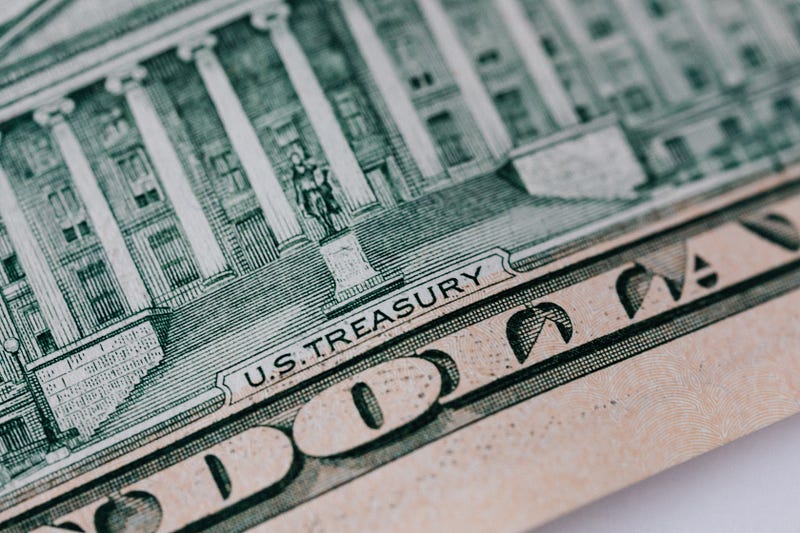
Photo by Karolina Grabowska on Pexels


Yield generation

Unlike stablecoins, which have failed to deliver substantial returns, and crypto lending, which carries notable risks as recent defaults and insolvencies in the digital asset sector have shown, tokenized US T-Bills provide a reliable investment option.

By converting the rights to these assets into digital tokens that can be traded and held within the blockchain ecosystem, Finblox enables fractional ownership. This means that users can invest small amounts and still earn proportional yields, opening up investment opportunities to a wider range of individuals.

Through the Finblox platform, users can directly benefit from the yield generated by these tokenized T-Bills. Historically, Treasury Bills have been regarded as blue-chip financial assets, offering reliable returns and serving as a benchmark for global financial markets.


OpenEden integration

To ensure transparency and security, Finblox has integrated the T-Bill vault of Singapore-based OpenEden with decentralized blockchain Chainlink. This integration provides on-chain verification, guaranteeing that Finblox’s T-Bill tokens are backed by US Treasury securities, USDC stablecoins, and US dollars on a 1:1 basis.

Finblox founder Peter Hoang emphasized the seamless and secure bridge that T-Bills offer between traditional and emerging markets in an interview with Tech in Asia. He stated: “With T-Bills, we are offering users a real-world asset while also benefiting from the custody of a regulated financial institution. It’s a seamless and secure bridge for both traditional and emerging markets, bringing safer yields to a wide range of users.”

To access Finblox’s T-Bill tokens, investors need to follow a straightforward process. Initially, they must obtain USDC from a reputable exchange, either through Finblox or other exchanges. Once the know-your-customer (KYC) verification process is completed, users can swap their USDC for T-Bills within the Finblox platform.

To enhance transparency, Finblox makes its wallets publicly available, enabling users to track deposits and withdrawals and verify the accuracy of transactions. The company also holds working capital in hot wallets to facilitate withdrawals below 2% of the entire pool, ensuring swift processing within three business days.

It’s understood that Finblox will market the product offering to users in the Philippines, Indonesia, India, and Vietnam, among other jurisdictions within Asia.


More to Read
View All
Policy & Regulation·

Nov 08, 2023

Indian police arrest eight more in $300M crypto scam

Indian police arrest eight more in $300M crypto scamIndian authorities have apprehended eight new individuals in connection with a sprawling $300 million (2500 crore Indian rupees) cryptocurrency scam that victimized approximately 100,000 people.According to a report published by local news media outlet The Times of India, the arrests have been made as part of an ongoing investigation. Of the eight individuals arrested, four have been identified as police officers.Photo by Big G Media on UnsplashLong running scamAs the investigation has unfolded, it has revealed an operation which is alleged to have been masterminded by Subhash Sharma, who remains at large. What has been termed the Himachal Pradesh crypto scam began to unravel in late September, although the Indian authorities believe that the origins of the scam stretch back to 2018.The perpetrators lured unsuspecting victims with investment schemes involving a local cryptocurrency known as Korvio Coin (KRO coins). As the scheme expanded, various other cryptocurrencies were introduced through fraudulent websites. One of these projects was abandoned after individuals had already invested, leading to significant financial losses.Targeting police officers and government officialsThe target audience for this particular scam has set it apart from that of others, given that police officers seem to have been involved while their colleagues are counted among the victims of the scam. Reports indicate that over 1,000 police personnel became entangled in the fraudulent web. While some officers were themselves victims, others made substantial gains. A few voluntarily took on the role of promoters, lending an air of credibility to the operation.Alongside police officers, 5,000 government officials also fell prey to the fraudulent investment schemes. The gravity of the situation became evident when it was revealed that around 56 complaints had been filed with police stations over the past two years.Multi-agency responseIn response to mounting concerns, multiple agencies, including the Enforcement Directorate and regional police teams, embarked on a comprehensive investigation under the guidance of a Special Investigation Team (SIT). The investigation has uncovered that over 100 individuals profited to the tune of $240,000 each, while another 200 reaped around $120,000 each from the scam.While the arrests have mounted to a total of 18 individuals, Sharma continues to evade capture. However, authorities have managed to identify and seize several properties associated with Sharma.In a separate investigation, the Enforcement Directorate is scrutinizing the roles of five women suspected of working as agents or promoters for the elusive kingpin. These developments underscore the vast extent of this crypto scam and the imperative for swift and thorough legal action.While crypto and Web3 more broadly have yet to fully unfold and reach full potential, there is no doubt that the sector has been blighted by ongoing scams, hacks and sharp practice. A recent report by Singapore-based blockchain security firm Immunefi estimated Q3 losses within the sector of $686 million.In August, a $120 million crypto ponzi scheme was uncovered in India’s Odisha state. Meanwhile, authorities in Hong Kong continue to come to terms with a fraud perpetrated by Dubai-based crypto exchange platform JPEX.As the investigation continues to unfold, the authorities are determined to bring all involved parties to justice, with a view towards sending a stern message to those who exploit unsuspecting individuals under the guise of cryptocurrency.

news
Web3 & Enterprise·

Aug 02, 2023

Binance Set For Japanese Market Re-Entry With 34 Token Listings

Binance Set For Japanese Market Re-Entry With 34 Token ListingsBinance, the world’s largest cryptocurrency exchange, is gearing up to re-enter the Japanese market with a bang on August 14. According to a report published by local crypto media outlet Coinpost, Binance Japan is set to immediately list an impressive 34 tokens.The move will put Binance ahead of its domestic rivals, as the offering will be the most extensive in terms of the selection of tokens made available to Japanese customers.Photo by David Edelstein on UnsplashBNB token offeringIn addition to that, Binance intends to make its native token, BNB, available in Japan for the first time. Exchange tokens have proven to be controversial in recent times. In November 2022, FTX’s reliance on their native token FTT caused a run on the exchange which Binance started once it started to sell off the token. Similar concerns have been expressed ever since about a similar reliance within Binance relative to its BNB token.The expansion into Japan will likely prove a tonic for Binance, given the difficulties it has experienced in other markets recently. Regulatory pushback has forced Binance out of markets such as Germany, Belgium, the Netherlands, and Cyprus over the course of the past three months.The company has been actively working to comply with Japan’s regulatory environment. In a Twitter video posted in July, Changpeng Zhao (CZ), Binance’s Founder and CEO, expressed his excitement about re-entering the Japanese market. He praised Japan’s clear and progressive approach to crypto regulations, citing the well-established framework that dates back to 2017, as well as recent developments, including the opening up of crypto listing frameworks and the passing of stablecoin regulations in June.Roadmap to market re-entryBinance’s journey back into Japan started in November 2022 when it acquired 100% ownership of Sakura Exchange BitCoin (SEBC). The acquisition paved the way for Binance to be regulated by the Japan Financial Services Agency (JFSA). As part of this move, SEBC underwent a name change, rebranding itself as Binance Japan Inc. The company then announced in May its plans to re-enter the Japanese market.The re-entry comes after the JFSA had previously issued warnings in 2021 against Binance for operating in the country without proper registration. Now, with the acquisition of SEBC and its regulatory compliance, Binance has gained a foothold in the Japanese market once again.Binance Japan aims to provide a comprehensive suite of services to its Japanese customers. New users can access spot trading, Earn products, and the NFT marketplace, while existing customers can migrate to the local subsidiary starting August 14. The token offerings include a diverse range of assets, and the addition of BNB presents exciting opportunities for traders and investors in Japan.Rival exchanges such as Coinbase and Kraken have decided to halt their operations in the country as they struggled to adjust to Japanese market conditions. The move by Binance to re-enter Japan’s market will be closely watched to see if it can succeed where others have failed.

news
Web3 & Enterprise·

Sep 23, 2025

First Toyota vehicle in Bolivia purchased with USDT as inflation bites

In a first for Bolivia, Japanese automaker Toyota saw one of its vehicles purchased with the stablecoin USDT, according to a recent X post by digital asset trust company BitGo. The transaction underscores growing cryptocurrency adoption in the Latin American country, which is grappling with soaring inflation and a shortage of U.S. dollars. The transaction was facilitated by a partnership between Toyosa (the official Toyota distributor in Bolivia), BitGo, and Tether, the issuer of the USDT stablecoin. The sale highlights the increasing use of digital assets for commercial and retail payments, as the global stablecoin market cap recently reached an all-time high of $293 billion at the time of publication. Confirming the milestone, Tether CEO Paolo Ardoino stated on the social media platform X that, in addition to Toyota, the USDT stablecoin is now also accepted by distributors of BYD and Yamaha vehicles in Bolivia.Photo by Christina Telep on UnsplashCrypto use surges amid inflation and dollar shortage The development comes as Bolivia faces 25% inflation, the highest in 34 years. With the local economy under pressure, many Bolivians are moving their money into cryptocurrencies in an effort to protect their savings, according to Bloomberg. U.S. dollars have become increasingly scarce. Unofficial exchange rates have jumped to 14 bolivianos per dollar, nearly twice the government's rate. That gap is pushing people toward stablecoins like USDT, which are easier to access and hold their value. The shift is already showing up in payment trends. Digital transactions surged more than fivefold in the first half of 2025, reaching nearly $300 million. Regional adoption and Toyota’s blockchain pushThe rise in crypto use in Bolivia is part of a broader shift across Latin America. According to a recent report from analytics firm Chainalysis, crypto adoption in the region jumped from 53% to 63% in the 12 months ending June 2025. The only region to outpace this growth was Asia-Pacific, which saw a 69% year-over-year increase. El Salvador stands as another prominent example in the region, having adopted Bitcoin (BTC) as legal tender in September 2021 and currently holding over 6,300 BTC in its treasury. Separately, Toyota Motor Corporation has been actively exploring applications for blockchain technology. In March, its subsidiary Toyota Financial Services, in collaboration with Daiwa Securities and MUFG Bank, launched its first security token bonds on Progmat, a platform founded by MUFG with backing from other big banks like Sumitomo Mitsui Banking Corporation (SMBC) and Mizuho. The initiative is aimed at strengthening the Toyota Group’s ties with individual investors and supporting the growth of the digital bond market. 

news
Loading