Top

BOCI Partners with UBS in Hong Kong on First Tokenized Notes

Policy & Regulation·June 13, 2023, 12:05 AM

In a groundbreaking move, the investment arm of the Bank of China (BOCI), has partnered with Switzerland-headquartered global financial services company UBS, to issue tokenized notes in Hong Kong.
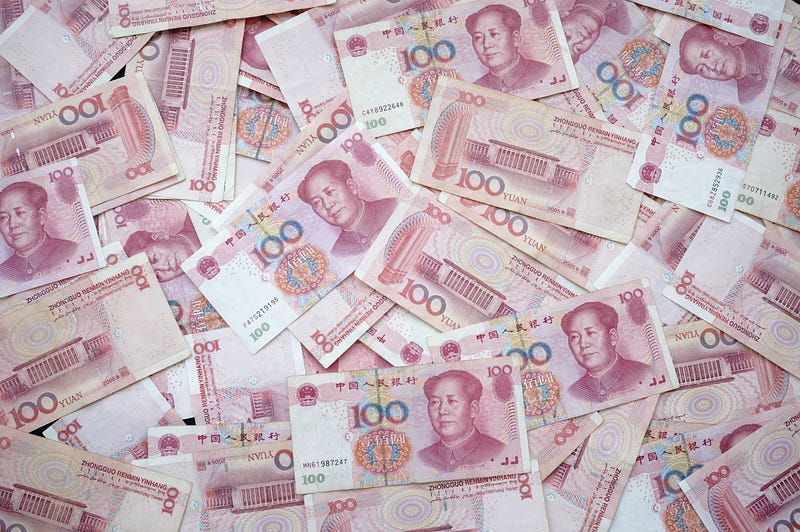
Photo by Eric Prouzet on Unsplash


Hong Kong’s first tokenized notes

This marks the first instance of a Chinese financial institution issuing a tokenized note in the region. Leveraging the power of blockchain technology, the notes were tokenized on the Ethereum blockchain. UBS announced the milestone development via a press release published to its website on Friday.

The Swiss banking giant has some expertise in this area, having first issued a tokenized fixed rate note in December 2022, recorded on a permissioned blockchain and established under English and Swiss law. On this occasion, the Hong Kong-issued tokenized notes will be compliant in terms of both Swiss and Hong Kong law.

The issuance of these tokenized notes involved a significant amount, with BOCI issuing 200 million Chinese yuan worth of notes, equivalent to approximately $28 million. The collaboration with UBS aims to simplify digital asset markets and products for customers in the Asia Pacific region, specifically by developing blockchain-based digital structured products tailored to their needs.

Ying Wang, Deputy CEO at BOCI, expressed enthusiasm for the digital transformation and innovative development of Hong Kong’s financial industry, recognizing the evolving digital economy in the region. Wang expressed the view that the development puts BOCI “at the forefront of innovation in technology finance and digital finance.”

She sees the UBS collaboration as a means of driving “the simplification of digital asset markets and products, for customers in Asia Pacific through the development of blockchain-based digital structured products, designed specifically for customers in Asia Pacific.”


Embracing digital assets

Hong Kong has been actively working towards establishing itself as a hub for cryptocurrencies. Paul Chan Mo-po, the Chinese autonomous territory’s Financial Secretary, has emphasized the region’s intention to embrace regulation in this domain. Despite recent fluctuations in the virtual asset market and the closure of certain virtual asset exchanges, Chan remains optimistic about the prospects of Web3 and believes it is the opportune moment to drive its advancement.

This month, Hong Kong lifted its ban on crypto retail trading and encouraged crypto exchanges to seek licenses within the region. The Securities and Futures Commission (SFC) has introduced exchange guidelines, leading firms such as Huobi, OKX, and BitMEX to express their intentions to apply for licenses in Hong Kong. Furthermore, in light of the recent lawsuit filed by the SEC against Coinbase, Hong Kong legislator Johnny Ng extended an invitation to the exchange to establish a hub in Hong Kong.

The collaboration between BOCI and UBS is significant as unlike UBS’ previous tokenized note project which was established on a permissioned blockchain, this Hong Kong-based project is making use of Ethereum. By issuing tokenized notes on the Ethereum blockchain, these institutions are exploring the decentralized potential of digital assets and paving the way for further innovation in the Asia Pacific region.


More to Read
View All
Policy & Regulation·

Sep 05, 2023

Singapore Elects Crypto Skeptic as President

Singapore Elects Crypto Skeptic as PresidentGarnering 70.4% of all votes cast on Saturday, Singaporeans chose to elect Tharman Shanmugaratnam as their next president, a move that may have implications for Singapore’s outlook when it comes to digital assets.While many had hoped that he would be the nation’s first non-Chinese prime minister, the crypto industry has greeted his rise to this largely ceremonial role with mixed feelings. Shanmugaratnam’s previous stances on cryptocurrency and digital assets have been predominantly critical.Photo by Justin Lim on UnsplashFormer MAS ChairmanIn the past, the president-elect has referred to cryptocurrency as “slightly crazy” and “purely speculative.” His ascent to the presidency comes after a distinguished career that includes serving as the former finance minister, deputy prime minister, and chairman of the Monetary Authority of Singapore (MAS), the country’s central bank, from 2011 to 2023.Crypto platform collapsesIt was during his tenure at MAS that two prominent crypto companies, Three Arrows Capital (3AC) and Terraform Labs, faced catastrophic collapses.The demise of Terraform Labs, along with its TerraUSD (UST) stablecoin, triggered a severe “crypto winter” in May 2022, from which the industry is still struggling to recover. This downfall wiped out a staggering $500 billion in value over just two weeks, devastating the portfolios of numerous retail investors.The ripple effect of TerraUSD’s fall also engulfed 3AC, a significant cryptocurrency hedge fund headquartered in Singapore. The contagion spread across the cryptocurrency market, leading to the downfall of other major entities like crypto lending platforms Celsius Network and Voyager Digital, alongside Singapore-based Hodlnaut.Given that these catastrophic events unfolded during Shanmugaratnam’s tenure at MAS, it’s plausible that he bore the brunt of the consequences. That might explain why in speaking on the subject in 2021, he appeared to be more accommodative, suggesting that there may be a useful role that crypto could play and highlighting that Singapore had allowed crypto businesses to develop within the city-state.In June of last year, MAS reprimanded 3AC for providing misleading information and exceeding the allowed assets under management (AUM) threshold, thereby breaching its status as a registered fund management company.In January, Shanmugaratnam said that regulating the crypto sector would give credibility to speculation and on that basis, it would be best to leave it unregulated. He went on to suggest that crypto should be subject to existing regulation as laid down for traditional finance.Early stage concernsBack in 2018, when he was Singapore’s finance minister, Shanmugaratnam questioned the wisdom of broad regulation potentially legitimizing a speculative and “slightly crazy” market. During the 2018 World Economic Forum, he emphasized the importance of anti-money laundering measures and advocated for educating consumers about the risks inherent in the unregulated crypto sector.Although he acknowledged blockchain’s potential to enhance global payment systems, Shanmugaratnam favored integrating existing traditional payment mechanisms as an alternative to blockchain innovations.Singapore’s new president brings with him a history of skepticism towards cryptocurrency and digital assets. However, with a largely ceremonial role relative to day-to-day governance, he’s not in a position to take direct action that could hold the sector back although he will have the power to initiate corruption investigations upon the advice of the Singaporean cabinet.

news
Web3 & Enterprise·

Sep 19, 2023

KOTEC and Busan Techno Park Join Hands to Boost Technological Growth of Busan Enterprises

KOTEC and Busan Techno Park Join Hands to Boost Technological Growth of Busan EnterprisesThe Korea Technology Finance Corporation (KOTEC) announced that it signed a cooperative agreement with Busan Techno Park on Monday at Busan Techno Park’s headquarters to support the growth of enterprises and offer financing for technological development. Under the agreement, KOTEC and Busan Techno Park have established a mutually beneficial system to jointly nurture and support tech companies based in Busan that are striving to commercialize data and blockchain technologies.Photo by Christopher Lee on UnsplashFostering tech innovation in BusanKOTEC is a non-profit government-affiliated institution aimed at financing innovative small and medium-sized enterprises (SMEs) for technology development. It offers services like credit guarantees, technology appraisal, equity investments, and technology transfers. Busan Techno Park is a regional industrial innovation institution for the southern port city of Busan, which operates a cooperative system among industrial, academic, and governmental agencies for the technological advancement of local companies.The two entities have committed to sharing information about companies that require financing for technological advancement — such as technological challenges that they may face — and promote joint projects related to technology investment and financing. They also aim to gather data resources for technology transfer, evaluation, and commercialization.KOTEC has marked Busan as a regulation-free special zone for companies that reside there. The demarcation of regulation-free special zones aims to foster the innovative and strategic development of a certain region. It is also operating a system under a regulatory sandbox preferential guarantee, which aims to facilitate accelerated market entry for businesses specializing in blockchain technology, maritime mobility, ammonia energy, and more.Empowering financing for technological advancementThe regulatory sandbox is a system run by the Korean government that exempts or suspends existing regulations for a designated amount of time for companies releasing new products and services and regulates them post-mortem if there is a problem. Under the sandbox policy, preferential guarantees refer to a technology guarantee fund that provides guarantees up to KRW 2 billion (approximately $1.5 million) for loans of facility funds to companies subjected to temporary approval and decreases the guarantee rate by up to 0.5%.In March, KOTEC was designated as a data appraisal agency by the Ministry of Science and ICT. Since then, the corporation has been implementing the data value plus guarantee — a product that determines the economic value of data and provides guarantees accordingly.“We will actively contribute to the government’s national tasks, including providing prioritized support for the cutting-edge future strategy industry. We will make even greater efforts to contribute to job creation and regional economic development,” said Kim Se-hyun, Head of KOTEC’s Busan-Gyeongnam Regional Office.

news
Web3 & Enterprise·

Aug 10, 2023

Parameta and Solbric Korea to Create First Solar Power Plant Security Token Platform in Korea

Parameta and Solbric Korea to Create First Solar Power Plant Security Token Platform in KoreaSouth Korean blockchain company Parameta (formerly known as Iconloop) said Tuesday it entered a business deal with Solbric Korea, a subsidiary of solar energy innovation company Next Solar Energy, to jointly establish the country’s first solar power plant security token platform that allows investors to make fractional investments in solar energy.Photo by Nuno Marques on UnsplashReceiving approval as an innovative financial serviceIn order to establish such a platform that designates solar power plants as underlying assets, they will jointly apply for a financial regulatory sandbox — a program introduced by the Korean government that offers a special and provisional regulatory exemption for financial services that have been recognized for their innovativeness.Once the platform is recognized under the sandbox as an innovative financial service, the two companies will work together on the issuance and distribution of security tokens.Expanding opportunities to invest in solar energyUltimately, Solbric aims to build a platform that brings security token technology to the solar power sector, which, until now, has presented limited investment opportunities for individual investors in Korea. It will allow them to trade securities and make small-scale, fractional investments in solar power plants.To do so, Solbric intends to leverage the knowledge and expertise of its parent company, Next Solar Energy — an experienced veteran in the solar plant industry.As its partner, Parameta will provide the necessary blockchain technology for constructing and managing the platform based on its security token offering service, Parameta S. This service uses tokens to allow fractional management of real-world assets (RWAs), making it easy to invest in and organize them. This offers more liquidity and flexibility compared to traditional investment methods.“We will focus on providing investment returns to platform users as well as the unique experience of owning various solar power plants,” said Kang Jae-won, the CEO of Solbric Korea.Increased institutional supportThis project is made possible by the recent upturn in institutional support from Korean financial authorities that allows more security token offerings. Last month, the Korean Financial Services Commission ultimately granted regulatory exemptions to several fractional investment firms that have successfully completed the business reorganization as requested by the regulator. The Financial Supervisory Service has also decided to allow fractional investment businesses to apply for investment contract securities.Taking advantage of this momentum, Solbric and Parameta plan to continually explore diverse business opportunities to establish their platform.“We are currently working with various specialized companies, including Solbric, to expand our security token businesses in various fields such as solar power plants, mobility, real estate non-performing loans, carbon emission rights, and electric vehicle batteries,” said Kim Jong-hyup, CEO of Parameta.

news
Loading