Top

Beosin Report: Crypto Rug Pulls Surpass DeFi Exploits in May

Markets·June 03, 2023, 6:32 AM

According to a recent report by blockchain security firm Beosin, losses from “rug pulls” or “exit scams” in the cryptocurrency space exceeded the amount stolen from decentralized finance (DeFi) projects during the month of May.

The report, published on June 1 by Beosin Blockchain Security, revealed that rug pulls and scams resulted in losses of over $45 million across six incidents during the month. Beosin is headquartered in Chengdu, in China’s Sichuan province. The firm uses formal verification methods to secure smart contracts.

In general there were 22 security incidents in the digital assets space over the course of the month. That overall figure accounts for losses totaling $20 million, and represents a vast improvement on the previous month.

Three of the incidents were accounted for by security issues related to hardware wallets such as the Trezor and imKey wallets. Six were rug pulls/crypto scams, two were crypto crime incidents while another implicated a critical vulnerability relative to zero-knowledge proof technology.
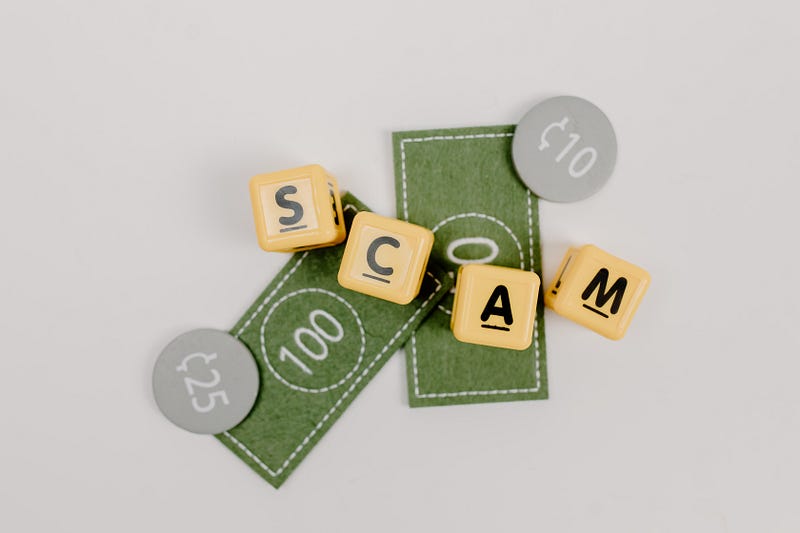
Photo by Tara Winstead on Pexels


DeFi protocol attacks

In contrast, there were 10 attacks on DeFi protocols, amounting to $19.7 million in stolen funds. This figure represents a significant decrease of nearly 80% compared to April, and the losses from these types of exploits had been declining for two consecutive months, as per Beosin’s findings.

The largest rug pull incident in May involved the alleged disappearance of $32 million associated with the crypto project Fintoch on May 24. Meanwhile, the largest attack on a DeFi platform was a $7.5 million breach targeting Jimbos protocol, according to Beosin’s report.


Shifting hacker strategy

Beosin noted a shift in the targeting strategy of hackers and scammers, who are now increasingly focusing their attacks on ordinary users rather than various project parties. To mitigate risks, the report recommended that crypto users enhance their anti-fraud awareness, conduct thorough due diligence before investing in projects, and learn how to improve the security of their digital assets.

The report also issued a warning against using shared or public charging devices for mobile phones. Beosin highlighted the potential risks associated with these devices, as they could be manipulated to inject malicious programs that compromise private keys. This caution aligns with a similar advisory issued by the United States Federal Bureau of Investigation (FBI) in April.

The FBI’s Denver office cautioned against using public USB ports, including those found at airports, due to the potential introduction of malware and monitoring software onto devices. Instead, they suggested carrying a personal charger and USB cord for use with electrical outlets.

As the cryptocurrency landscape continues to evolve, it is crucial for users to remain vigilant and proactive in safeguarding their investments. With the rise of rug pulls and the ongoing threats in the DeFi space, staying informed, exercising caution, and adopting robust security measures are essential for protecting one’s digital assets in this rapidly changing industry.


More to Read
View All
Web3 & Enterprise·

Feb 05, 2025

Metaplanet targeting 21K Bitcoin by 2026

Earlier this month Metaplanet, a Japanese Bitcoin treasury company, said that it was targeting 10,000 Bitcoin in 2025 but the company has raised the bar once again, planning on an acquisition of 21,000 Bitcoin by 2026. On Jan. 5, Metaplanet CEO Simon Gerovich set out a number of objectives for 2025. Among them was a goal for the company to acquire 10,000 Bitcoin in 2025. Gerovich explained that the firm intended to utilize “the most accretive capital market tools available” in order for Metaplanet to meet that target.Photo by André François McKenzie on Unsplash2025-2026 Bitcoin PlanAbout three weeks after the Metaplanet CEO announced that ambition, the company published a press release on Jan. 28 detailing its 2025-2026 Bitcoin Plan, which goes much further.  The plan outlines that 10,000 Bitcoin remains the target for 2025 but that the company has adopted the strategy to accumulate 21,000 Bitcoin by 2026. Gerovich stated that since Metaplanet embraced the Bitcoin Standard on April 8, 2024, the company has experienced exponential growth. Gerovich added: “The market has recognized Metaplanet as Tokyo’s preeminent Bitcoin company, and we are seizing this momentum to solidify our position as a global leader. Our vision is to lead the Bitcoin renaissance in Japan and emerge as one of the largest corporate Bitcoin holders globally. This plan is our commitment to that future.” Adopting MicroStrategy’s Bitcoin playbookMetaplanet has adopted the Bitcoin playbook first pioneered by U.S. business intelligence company turned Bitcoin development firm MicroStrategy. In short, that playbook involves financing Bitcoin purchases with debt. In this way, the company can capitalize on Bitcoin’s historical trend of positive returns over time, using convertible notes and equity to facilitate that.  The practice also creates a feedback loop in so far as MicroStrategy buys Bitcoin, resulting in the Bitcoin unit price increases. The MicroStrategy stock price goes up. Demand for MicroStrategy’s stock and debt goes up, enabling the company to buy more Bitcoin. In its press release, Metaplanet looked back on what had been achieved in terms of its Bitcoin strategy in 2024. In Q4 2024, the company achieved a Bitcoin yield of 309.82%, following on from a 41.7% Bitcoin yield in Q3.  At the close of the year, the Japanese Bitcoin treasury company held 1,761 Bitcoin, purchased at an average Bitcoin unit price of 11.85 million yen ($76,411). Shareholder growth has seen the company surpass 50,000 shareholders. Meanwhile, share trading volume has increased 430x, year-on-year. Since the firm adopted the Bitcoin Standard in April 2024, the company’s market capitalization has grown by 7,000%. Last month, the company celebrated the milestone of having reached a $1 billion market cap. Asia’s largest equity capital raise for BitcoinThe company has dubbed its new plan “The 21 Million Plan.” It will comprise the issuance of 21 million shares by means of moving strike warrants. Gerovich confirmed on X that at $750 million, the plan will involve Asia’s largest-ever public equity capital raise to buy Bitcoin.

news
Web3 & Enterprise·

Aug 25, 2023

Dunamu Distributes 4,100 NFTs for Climate Change Campaign

Dunamu Distributes 4,100 NFTs for Climate Change CampaignDunamu, the operator of the South Korean cryptocurrency exchange Upbit, announced that it has distributed 4,100 non-fungible tokens (NFTs) from the Climate-sensitive Biological Indicator Species (CBIS) list in collaboration with four agencies under the Ministry of Environment — the National Institute of Biological Resources, the Nakdonggang National Institute of Biological Resources, the Honam National Institute of Biological Resources, and the National Institute of Ecology. This comes as part of efforts to raise awareness about the importance of biodiversity and habitat protection amid the threat of climate change.Photo by Yiju Cheng on UnsplashThemed NFTs for conservationThe CBIS list outlines species whose seasonal activities, habitat area, and population size are susceptible to being impacted by climate change, thus requiring continuous observation and management by the government.Dunamu, along with the four environmental institutions, minted NFTs representing 15 different species from the list — such as the white eye bird and the camellia tree — to distribute to participants of their Resource Circulation Climate Action Campaign.The latest round of NFT distributions was carried out in collaboration with the Honam National Institute of Biological Resources from May 19 to August 11. It is the first of four to be carried out over the course of the year following their initial announcement to do so in May.Empowering climate action beyond boundariesParticipants showed a positive reaction to the utilization of emerging technologies such as NFTs and the metaverse, which enabled them to contribute to climate change efforts without the limits posed by time and space. By organizing fun missions within the metaverse and gifting NFTs to participants, Dunamu and the environmental agencies were able to highlight the severity of the climate crisis while simultaneously making the concept of resource circulation more accessible and easier to understand. Dunamu reported that during the three-month period of the first campaign, the designated campaign space within Dunamu’s metaverse platform, 2ndblock, also racked up a cumulative visitor count of 73,000 users.The second campaign has also commenced and is running from now until October 2. This time around, Dunamu is working with the Nakdonggang National Institute of Biological Resources to issue 1,000 NFTs of four species: the tree frog, barn swallow, kumgang minnow, and little egret. Noteworthy artists will also contribute to creating the NFTs, including those from the Botanical Artist Society of Korea.In order to partake in the campaign, participants must complete the stamp-collecting mission in the campaign space on 2ndblock. Lucky participants who are chosen to receive NFTs must register their issued gift code on Upbit’s NFT marketplace.“As a result of our deliberation on ways to contribute to the environment and society with our technology and resources, many people have shown interest in our online and in-person climate efforts,” said Lee Sirgoo, CEO of Dunamu. He also expressed hopes for continued participation and support for the remaining NFT distributions and campaigns to promote environmental protection and biodiversity conservation.This collaboration between the private and public sectors which combines online and in-person activities stands out as an innovative method for combatting climate change.

news
Policy & Regulation·

Jan 03, 2025

INDODAX snags full licensing in Indonesia

INDODAX, Indonesia’s largest virtual asset trading platform by trading volume, has acquired full licensing in Indonesia from the local regulator. That’s according to a report published by local media outlet VOI. The license, a Physical Crypto Asset Trader (PFAK) license, has been awarded to the company by Indonesia’s Commodity Futures Trading Supervisory Agency, better known as BAPPEBTI.  The license will place INDODAX in a complaint position within the Indonesian market, relative to local regulations. The business has been issued certificate number 10/BAPPEBTI/PFAK/12/2024 by the regulator, its approval certificate as a Physical Crypto Asset Trader.Photo by Mark König on UnsplashMandatory registration requirementIn December 2023 the authorities in Indonesia set out a mandatory requirement for crypto trading entities to register with the Commodity Future Exchange (CFX). CFX is Indonesia’s national crypto bourse, while INDODAX is a member. As of April 2024, 35 crypto exchanges had been registered with the regulator. CFX has been given the mandate to monitor crypto exchange operations, to safeguard investors by ensuring exchanges abide by local regulations. Fendy Tan, chief financial officer (CFO) at INDODAX commented on the firm’s recent licensing milestone, stating: "We are grateful to BAPPEBTI and CFX for the trust given through this full license. The long process that must be passed reflects our commitment to providing the best protection for users. The license number 10 also has a special meaning, which symbolizes perfection, and symbolizes the 10-year journey of INDODAX in leading the crypto industry in Indonesia."  Liquidity and SOP requirementsIn order to acquire this license INDODAX had to comply with BAPPEBTI Regulation Number 8 of 2021 and Number 13 of 2022. It has also had to ensure a minimum paid-up capital of 100 billion Indonesian Rupiahs ($6,158,000), and a minimum equity of IDR 50 billion ($3,079,000). Furthermore, the company has had to implement a set of standard operating procedures (SOPs), together with achieving ISO certification in accordance with global security standards, with specific emphasis on complying with regulations to safeguard customer funds according to the balances held on account of fiat currency and digital assets by INDODAX customers. INDODAX is understood to have 7.1 million customers while a transaction volume of 109 trillion Indonesian rupiahs was reached for the period January to November 2024. BAPPEBTI had extended a deadline for the crypto licensing of exchanges late last year, a move welcomed at the time by INDODAX CEO Oscar Darmawan. Darmawan said that the move would strengthen the industry by ensuring that market participants were compliant with recently introduced regulations. While this licensing milestone is a positive for INDODAX, the firm had faced challenges in 2024. In September it emerged that the platform had been compromised with the loss of around $18 million in digital assets. Meanwhile, the authorities in Indonesia had planned to switch crypto market oversight from BAPPEBTI to the Financial Services Authority (OJK) by Jan. 12. However, a recent report published by the Jakarta Globe suggests that the Indonesian government has yet to finalize this regulatory transfer.

news
Loading