Top

Huobi Aims for Hong Kong License Within 6–12 Months

Policy & Regulation·June 03, 2023, 6:25 AM

According to Justin Sun, the founder of layer one blockchain Tron and advisor to Huobi, the cryptocurrency exchange could have obtained a crypto trading license in Hong Kong by the end of the year.

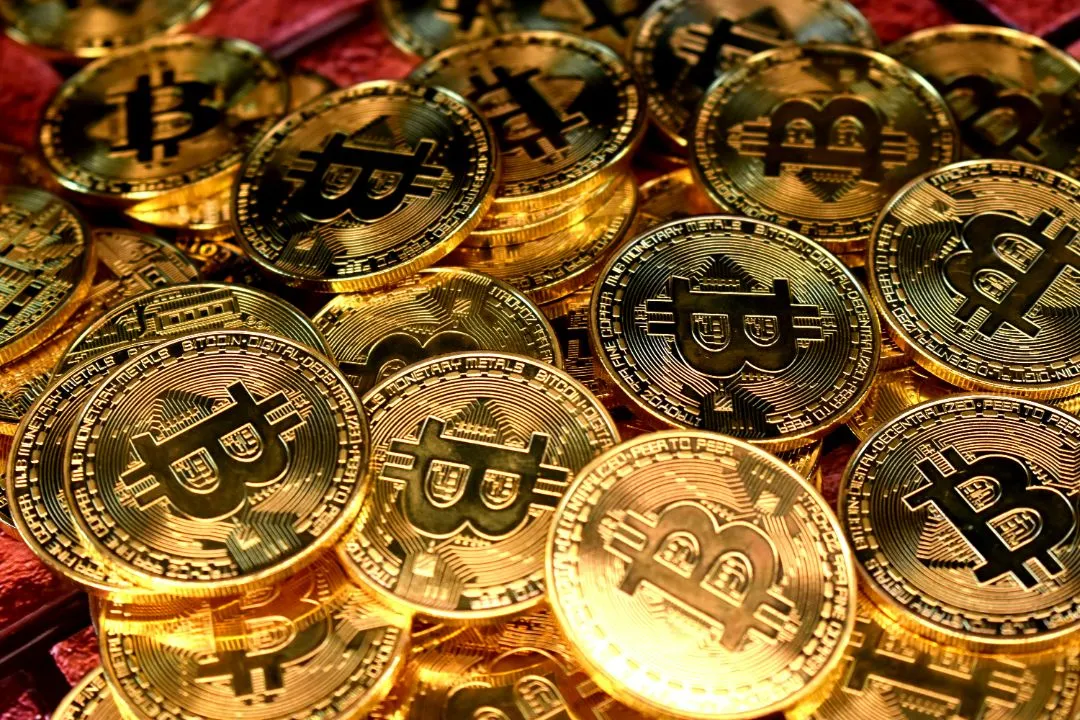
Photo by Pixabay on Pexels


Application submission

In an interview with CoinDesk TV on Friday, Sun revealed that Huobi recently submitted an application to become a virtual asset service provider (VASP) in Hong Kong. While the approval process typically takes up to 18 months, Sun expressed optimism that a decision could be reached within the next six to twelve months.

A legacy Chinese cryptocurrency exchange was driven out of the country a few years ago following the implementation of a crypto trading ban, and is now a Seychelles-headquartered company which currently has offices in Singapore, Japan, South Korea, and the United Kingdom.

It had been previously understood that at least 10 companies with Chinese founders, including OKX, Bybit, and Huobi, had either announced or were known to be planning to announce their bid for licenses in Hong Kong. Sun’s comments today add clarity to the matter.

Sun highlighted that during this grace period, which spans the next 18 months, the specific details of regulations will be developed. This includes guidelines on compliance with customer withdrawals and anti-money laundering requirements. He further explained that with the approval, Huobi Hong Kong will be able to operate, onboard customers, establish banking relationships, and serve its user base effectively.

In a strategic move, Huobi relocated its headquarters from Singapore to Hong Kong, driven by the city’s aspirations to become a leading virtual asset hub as early as this summer. The exchange’s decision to establish a presence in Hong Kong positions it favorably to leverage the emerging opportunities in the region.


Expectations of more applicants

While it’s not entirely clear who else has applied, Sun speculated that five to six other major players could follow suit. Among the potential contenders mentioned were OKX, Gate.io, Bitget, and ByBit. This suggests a potential wave of interest in Hong Kong as a regulatory-friendly jurisdiction for virtual asset trading.

When asked about Huobi’s plans to enter the Canadian market and compete with established players like Coinbase and Kraken, Sun made it clear that Huobi has no immediate intentions to operate in Canada. He emphasized the importance of prioritizing friendly jurisdictions, with a specific focus on regions like the Caribbean, Hong Kong, and Japan.

Hong Kong’s regulatory approach towards cryptocurrencies and virtual asset service providers has gained attention in recent months. The city’s commitment to establishing a robust framework for digital asset trading and ensuring compliance with international standards has drawn interest from industry players seeking regulatory clarity and stability.

As Huobi progresses through the application process and awaits a decision on its VASP license, the outcome will have significant implications not only for the exchange itself but also for the broader crypto ecosystem in Hong Kong. The successful acquisition of a license by Huobi could set a positive precedent, attracting more exchanges to establish a presence in the region and further solidifying Hong Kong’s position as a leading virtual asset hub in Asia.

The developments in Hong Kong’s regulatory landscape will be closely monitored by industry participants as they shape the future of virtual asset trading in the city.


More to Read
View All
Web3 & Enterprise·

Jul 09, 2025

Metaplanet aspires to acquisition of digital bank

The CEO of Japanese hotel operator turned Bitcoin treasury company, Metaplanet, has suggested that the firm may consider acquiring a digital bank in the future. Simon Gerovich, the firm’s CEO and a former Goldman Sachs banker, told the Financial Times that part of the second stage of its overall strategy may involve “acquiring a digital bank in Japan and providing digital banking services that are superior to the services which retail now is getting.”Photo by Kanchanara on UnsplashBitcoin gold rushGerovich explained that phase one of Metaplanet’s plan involves participating in what he considers to be “a bitcoin gold rush.” He added: “We need to accumulate as much bitcoin as we can . . . to get to a point where we’ve reached escape velocity and it just makes it very difficult for others to catch up.” Other firms are jumping on the bandwagon, as within a very short timeframe, 140 companies around the world have adopted a Bitcoin treasury strategy. Metaplanet currently weighs in as the fifth-largest corporate holder of Bitcoin globally. Right now, the company holds 15,555 BTC. Its target is a holding of 210,000 BTC, which equates to around 1% of the total Bitcoin supply. Based on current pricing, such a holding would be worth in the region of $23 billion. Acquiring cash-generating businessesOnce the company has accomplished its Bitcoin accumulation goals, it plans to move on to phase two, acquiring cash-generating businesses while leveraging its Bitcoin holdings in order to do so. Using Bitcoin as collateral, Gerovich said that Metaplanet will “get cash that we can use to buy profitable businesses.”  While inroads are being made with regard to the acceptance of Bitcoin as a corporate reserve asset, it is earlier days still for its acceptance as collateral. Last month, the Federal Housing Finance Agency (FHFA) in the United States, ordered Fannie Mae and Freddie Mac, key government-sponsored players in the American mortgage market, to explore the treatment of Bitcoin as eligible collateral for mortgages. Standard Chartered and crypto exchange OKX launched a pilot program earlier this year geared towards the use of crypto for collateral purposes. Gerovich talks in terms of Metaplanet’s phase two plan playing out at a time “when bitcoin, like securities or government bonds, can be deposited with banks and then they’ll provide very attractive financing against that asset.” The Metaplanet CEO stated that he expects the Bitcoin accumulation phase of the plan to play out over a period of between four and six years. The Tokyo-listed firm started accumulating Bitcoin in 2024. Some market participants are backing Metaplanet’s strategy with their own money. Global investment management firm Capital Group recently became Metaplanet’s second-largest investor. Bitcoin treasury criticsHowever, the emergence of Bitcoin treasury firms has also drawn quite a few detractors. Some critics point out that many of these companies have a negative operating income. Market analyst Caleb Franzen asserted that even after buying Bitcoin, they’re still junk companies. Others point out that too many firms have jumped on the Bitcoin treasury bandwagon, making the prospect no longer attractive. Fakhul Miah, managing director of GoMining Institutional, is also concerned about copycats. He told Cointelegraph that ”if these smaller firms crash, we could see a ripple effect that hurts Bitcoin’s image.”

news
Web3 & Enterprise·

Oct 11, 2023

State-Owned Newspaper to Launch NFT Platform in China

State-Owned Newspaper to Launch NFT Platform in ChinaChinese government-owned media outlet China Daily, under the guidance of the Publicity Department of the Chinese Communist Party, has allocated a substantial budget of 2.813 million yuan (equivalent to $390,000) for the development of an NFT platform.Photo by Hanson Lu on UnsplashInviting bids from home and abroadThe move will open the door to both domestic and international blockchain technology firms, inviting them to spearhead the creation of the platform. According to a public tendering announcement published last month, the chosen firm must operate on a blockchain mainnet capable of handling over 10,000 transactions per second, ensuring top-notch performance and reliability.One of the platform’s key features will be its user-friendly interface, allowing users to effortlessly upload, display, and manage their digital collections. It will support a wide range of multimedia formats and diverse collection types, making it a versatile hub for creative expression. Additionally, the platform will offer advanced functionalities like pricing, bidding, limited-time offers, and multi-currency settlement to ensure a comprehensive and satisfying user experience.Extending the reach of Chinese cultureThe core objective of the China Daily NFT Platform is to amplify the global influence of Chinese culture by seamlessly blending technology and culture in the metaverse. This ambitious strategy integrates cutting-edge technologies such as virtual reality (VR), augmented reality (AR), mixed reality, blockchain, non-fungible tokens (NFTs), big data, and cloud computing.In an effort to expand the global reach of their digital collections, China Daily intends to collaborate with both domestic and international mainstream NFT platforms. This ambitious plan includes partnerships with well-known foreign platforms such as OpenSea, Rarible, SuperRare, and Foundation. Despite the rigorous regulatory landscape and scrutiny that blockchain entities face in China, this approach aims to make Chinese digital collections more accessible to a global audience.The urgency and importance attached to this project are evident in the tight timeline set by China Daily. The chosen contractor must submit their application by October 17 and complete the development of the platform within three months, highlighting the publication’s commitment to this venture.NFT platform development despite crypto banHowever, it’s important to acknowledge that this initiative unfolds within the backdrop of stringent cryptocurrency regulations in China. Since 2021, although NFTs have not been banned, all forms of cryptocurrency transactions have been prohibited in the country, and blockchain entities operating within China face intense regulatory oversight.In May the Supreme People’s Procuratorate of China issued a warning relative to NFTs on the basis that they have crypto-like properties. However, the agency also acknowledged that NFTs do present a novel application of blockchain technology.Recent events, including the detention of former China Evergrande executives Xia Haijun and Pan Darong for alleged involvement in fraudulent activities, underscore the strict regulatory environment prevailing in China.Within the Chinese autonomous territory of Hong Kong, the South China Morning Post (SCMP) spun out Artifact Labs, an NFT company, following an initial decision in 2021 to launch an NFT standard called artifact.China Daily’s foray into the NFT space demonstrates that some facets of blockchain innovation are being leveraged within China, in this instance with a view towards cultural promotion and global engagement.

news
Policy & Regulation·

Dec 05, 2023

Terraform Labs fails to halt class action lawsuit

Terraform Labs fails to halt class action lawsuitThe High Court in Singapore has dismissed an appeal filed by Terraform Labs and its co-founders, marking a significant step forward for the plaintiffs behind a class action initiated against the company.That’s according to a report published by Singaporean publication, the Business Times, on Thursday. The legal development follows the collapse of TerraUSD (UST) tokens in May of 2022, resulting in the loss of billions of dollars in market value. The collapse, in turn, has led to several lawsuits against Terraform, its founders and affiliated entities, with those court actions playing out in courtrooms in Singapore, South Korea, Montenegro and the United States.Photo by Wesley Tingey on UnsplashFraudulent misrepresentation allegedThe class-action suit, initiated in September 2022 by Julian Moreno Beltran and Douglas Gan on behalf of 375 others, alleges fraudulent misrepresentation by Terraform, Co-Founders Do Kwon and Nikolaos Alexandros Platias and the Luna Foundation Guard (LFG). The claimants argue that these misrepresentations induced them to purchase UST, stake the tokens and retain them as their value plummeted.UST had been designed to be pegged to the U.S. dollar with a 1:1 ratio. However, flaws in the tokenomics behind that digital asset meant that it faced a loss of confidence in May 2022, trading at around $0.05 when the court’s decision was released. The claimants collectively suffered losses of nearly $57 million.Terms of use cited in attempt to dismissTerraform attempted to have the lawsuit dismissed by invoking an arbitration clause in its website’s terms of use, asserting that users had waived their rights to a jury trial or participation in a class action. However, the Assistant Registrar (AR) rejected this application, stating that the defendants failed to establish an arbitration agreement.The AR highlighted that the terms of use were inconspicuous on the website, and there was insufficient effort to draw users’ attention to those clauses. Terraform, Kwon and associated entities appealed this decision, which was heard by Justice Hri Kumar Nair on Sept. 25.Despite establishing a prima facie case for an arbitration agreement, the court ruled that Terraform’s participation in the legal proceedings, including filing a defense and counterclaim, meant it could no longer seek a stay in favor of arbitration.Multiple actionsIt’s a busy time for all stakeholders relative to the Terraform collapse. Playing out within the same timeframe is a lawsuit in the United States taken by the Securities and Exchange Commission (SEC) against Terraform and Do Kwon, where the SEC claims that crypto asset securities fraud has been carried out.The latest installments in that saga in recent weeks have seen both parties file to seek summary judgment. Last week, a court in New York approved the confidential treatment of specific documentation which had been produced by Jump Crypto, a division of proprietary trading firm Jump Trading.There are also criminal actions underway. In a South Korean court in October, Terraform Labs Co-Founder Daniel Shin denied wrongdoing in the Terra/Luna collapse. Meanwhile, a court in Montenegro has approved the extradition of Do Kwon, with a final decision to be made shortly as regards whether he should be extradited to the United States or South Korea.

news
Loading