Top

Coinbase Effects International Expansion By Extending Singapore Offering

Web3 & Enterprise·May 18, 2023, 11:59 PM

In further proof of Coinbase’s recently-adopted strategy of focusing on global expansion, the company has just extended the range of its product offering to Singaporean customers.
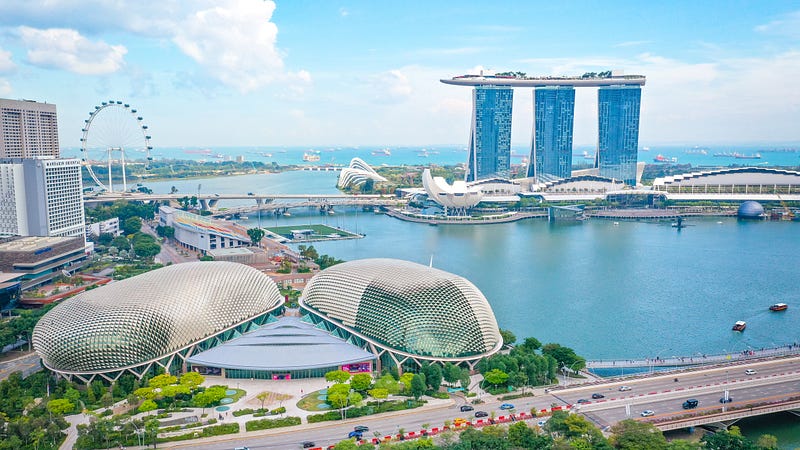
Photo by Meriç Dağlı on Unsplash


No Fees on USDC

The move was announced by way of a blog post published to the company’s website on Tuesday. The expansion entails the introduction of fee-less purchases of the USDC stablecoin for users who buy it with the Singaporean dollar (SGD). Furthermore, it is enabling Singaporean customers to earn rewards on the USDC that they hold on the platform. USDC trading pairs are being added that will allow users to trade USDC directly with over two hundred digital assets.


Taking staking overseas

Additionally, Coinbase Global is rolling out staking to the Singaporean market. Users will be empowered with the ability to stake the following digital assets: ETH, SOL, ADA, ATOM, and XTZ.

It’s interesting that Coinbase feels enabled in rolling out a digital asset staking service in this overseas market. In March of this year, the company received a Wells Notice — a formal notice informing the recipient that there are firm plans to bring enforcement actions against it — from the Securities and Exchange Commission (SEC) in the United States. The notice was sent in relation to digital assets covered under Coinbase’s staking product offering, Coinbase Earn.

In highlighting the issue, the company bemoaned the fact that the SEC had gone down the route of issuing a Wells Notice without it expressing a single specific concern about any specific digital asset offered by the platform in advance of taking the action.


Global strategy

Coinbase Founder and CEO Brian Armstrong has been outspoken in criticizing the regulatory approach to crypto in the United States. He expressed that at the time of having received the Wells Notice earlier this year, and again last week, when he and key Coinbase executives visited Abu Dhabi and Dubai in the United Arab Emirates.

On the day of SEC Chair Gary Gensler’s appearance before the House Financial Services Committee on Capitol Hill in Washington, D.C. a few weeks ago, Armstrong signaled that unless there was a more accommodating regulatory approach taken to crypto in the US, Coinbase would increasingly be looking to expand operations overseas.

A short time later, it emerged that the company had obtained a license to trade in Bermuda. At last week’s Dubai Fintech Summit, Armstrong applauded the regulatory approach taken by the UAE and indicated that the company is interested in opening a base in Abu Dhabi.


Positive survey results

Against this background, it’s not surprising to hear that Coinbase has expanded its service offering in Singapore, another aspiring global hub for crypto business. As part of reviewing and updating its business offering in the city state, Coinbase carried out a survey of prospective customers in Singapore. It found that 25% of Singaporeans consider crypto as the future of finance, on a par with findings in the US, and higher than the 17% reported in the UK.

Among its other findings, security concerns and price volatility of digital assets are still a barrier to entry for many. Of those who are already crypto-native, they tend to trade higher trade amounts, and with greater frequency, if from higher income backgrounds.
More to Read
View All
Web3 & Enterprise·

Jun 20, 2023

Conflict Identified as Crypto.com Trading on its Own Platform

Conflict Identified as Crypto.com Trading on its Own PlatformTrading practices at Crypto.com, the Singapore-based cryptocurrency exchange, have raised questions about potential conflicts of interest within the digital assets industry.Citing a number of unnamed sources, the Financial Times (FT) made the claim in a report published on Monday.Photo by Pixabay on PexelsConflict of interestIn traditional financial markets, exchanges typically match buyers with sellers at competitive transparent prices, while market making and proprietary trading are conducted by separate private companies. However, US regulators have recently cracked down on similar activities at digital asset exchanges. Binance, the world’s largest crypto exchange, faced 13 charges from the US Securities and Exchange Commission (SEC), including allegations of manipulative trading to inflate trading volume.The presence of internal traders at Crypto.com has not been widely known since the company’s launch in 2016. The FT’s sources claim that Crypto.com executives provided sworn statements to external trading houses denying the company’s involvement in trading activities.Employees were allegedly instructed to deny the existence of an internal market-making operation. In response to inquiries, Crypto.com denied that employees were asked to lie, stating that their internal market maker functioned similarly to third-party market makers, ensuring tight spreads and efficient markets on their platform.The majority of Crypto.com’s revenue reportedly comes from its app for retail traders, where the company acts as the counterparty for transactions and operates as a broker model. The company’s trading team hedges these positions on various venues, including their own exchange, to maintain risk neutrality. Crypto.com emphasized that their exchange provides a level playing field for institutional traders.According to insiders, Crypto.com’s proprietary trading desk engages in trading activities on the company’s exchange and other platforms, solely focused on generating profits rather than facilitating an exchange. The market making desk, on the other hand, aims to enhance liquidity on the platform.Not a revenue sourceCrypto.com defended its practices by stating that comparing trading volumes to competitors is common in the industry. It said that the company’s priority is to continuously improve order book liquidity and reduce spreads, benefiting all participants. The firm told Decrypt that trading is not a source of revenue: “While we do have some market making activity, for example, we have internal market makers for our CFTC-regulated product Up/Downs in the United States.”As a private company, Crypto.com publishes accounts in different countries, but revenue breakdown by business line is not disclosed.Closure of institutional tradingFollowing the SEC’s enforcement actions, earlier this month Crypto.com announced the closure of its exchange for institutional US traders due to limited demand in the current market landscape, effective from June 21.In any marketplace transparency and fairness are crucial. It’s fair to say that there has been some level of sharp practice among some actors in the marketplace while regulators have been lacking in getting up to speed with the emergent sector, and moving to protect consumers. With the major crypto platform failures of 2022 has come renewed interest in resolving these issues. That may make for some short-term difficulty, but in the longer term, it should mean greater protections for market participants so long as a common sense approach is pursued.

news
Web3 & Enterprise·

Aug 03, 2023

Welcome Savings Bank Implements Blockchain-based Bank ID for Enhanced Customer Convenience

Welcome Savings Bank Implements Blockchain-based Bank ID for Enhanced Customer ConvenienceWelcome Savings Bank, one of the mutual savings banks in South Korea, has announced a significant step towards enhancing identity security and customer convenience with the incorporation of Bank ID, a blockchain-based decentralized identity (DID) solution operated by the Korea Financial Telecommunications and Clearings Institute (KFTC), a payment services institution.Photo by Jonathan Cooper on UnsplashDID technology to prevent identity fraudThe utilization of DID technology marks a notable stride in preventing identity fraud. By storing user data on a secure distributed ledger, the system becomes highly resilient to counterfeiting or forgery attempts, ensuring a safer environment for customers’ personal information.Single sign-on functionalityWith this initiative, Welcome Savings Bank has become the first savings bank in the country to implement Bank ID, a solution predominantly adopted by prime commercial banks. This strategic move bolsters the bank’s digital competitiveness and improves customer convenience. With Bank ID, users can enjoy seamless access to their accounts across 18 Korean financial institutions without the hassle of logging in separately for each one, streamlining their banking experience.Customers of Welcome Savings Bank can utilize the bank’s mobile app to acquire a Bank ID by undergoing a verification process through a one-time password or security card. For existing Bank ID holders, adding Welcome Savings Bank to their list of banks is a straightforward procedure.The decision to embrace this innovative technology highlights the bank’s commitment to meeting the high standards set by prime commercial banks. By aligning with industry trends and bolstering their digital capabilities, savings banks like Welcome and other subprime banks can deliver improved convenience and a seamless banking journey to their valued customers.

news
Web3 & Enterprise·

Oct 23, 2023

Korea’s ABB Joins Hands with Vietnam’s DTS Group for Web3 Development

Korea’s ABB Joins Hands with Vietnam’s DTS Group for Web3 DevelopmentSouth Korean Web3 consulting firm ABB announced Monday that it has signed a comprehensive memorandum of understanding (MOU) with DTS Group, one of the fastest-growing companies in Vietnam.The agreement was signed at the 20th World Web 3.0 NFT META Marvels Bangkok 2023 conference held in the Thai capital last Friday, with ABB’s CEO, Jung Joo-pil, and DTS Group’s Chairman, Truong Gia Bao, in attendance.Photo by Shubham Dhage on UnsplashFostering Web3 innovation and diplomatic tiesThis collaboration is expected to contribute significantly to the development of Web3 in both Korea and Vietnam. They will start by discovering and investing in promising blockchain startups and expand into more diverse business areas, then further enhance their cooperation in Web3 technology development and promotional marketing in the future.About ABB and DTS GroupABB is primarily engaged in consulting, promotional marketing, and fundraising for blockchain-related projects. It is widely known as the publisher of the Korean blockchain monthly magazine Blockchain Today, through which it contributes to the growth of the Korean blockchain industry.DTS Group, on the other hand, is one of the fastest-growing firms in Vietnam and operates via four main subsidiaries, including DTS Foundation, which focuses on the incubation of blockchain startups; DTS Ventures, a venture capital firm that invests in blockchain startups; DTS Media, which engages in marketing and event organization; and Mira Blockchain Center, which focuses on the development and support of blockchain and AI technologies.

news
Loading