Top

3AC Co-Founder Disputes US Jurisdiction Citing Singaporean Citizenship

Policy & Regulation·August 02, 2023, 1:14 AM

Kyle Davies, the Co-Founder of the failed Singaporean crypto hedge fund Three Arrows Capital (3AC), has asserted that he is solely a citizen of Singapore and not of the United States.
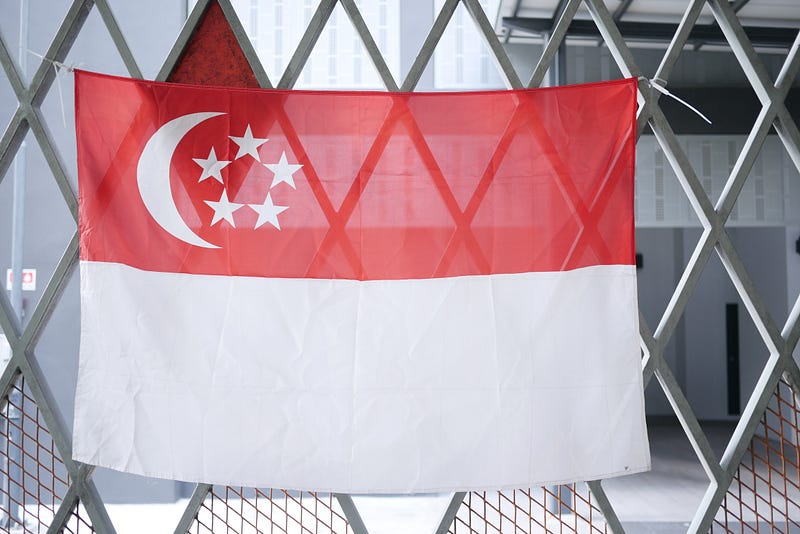
Photo by Towfiqu barbhuiya on Pexels


Evading pursuit of damages

The assertion may have relevance as it may mean that Davies can evade actions taken against him in a US court on the basis of a lack of jurisdiction. In a recent filing with the US Bankruptcy Court for the Southern District of New York (SDNY), Davies presented documents demonstrating that he had renounced his US citizenship in December 2020. He emphasized that he obtained citizenship in Singapore after being issued a passport in early 2021 and that he does not subject himself to the jurisdiction of US courts.


$3.5 billion owed

In June it emerged that liquidators appointed for 3AC were seeking to recover $1.3 billion from the fund’s co-founders, Davies and Su Zhu. The firm reportedly owes creditors a staggering $3.5 billion.

In the midst of public criticism surrounding the events leading to 3AC’s collapse, Zhu and Davies launched a platform called Open Exchange (OPNX), allowing trading claims against bankrupt crypto firms. Despite a deficit of goodwill for the duo in the crypto sector, they have been putting all their energies into the new venture.

Last month, they outlined that they would donate future earnings from OPNX to 3AC creditors. It’s difficult to reconcile that claim when with this action, Davies is trying to evade contributing to creditors via the 3AC bankruptcy process and this legal action taken by the liquidator.


Renounced citizenship

According to court documents, Davies officially renounced his US citizenship at the US Embassy in Singapore, citing his decision to reside in the country on a long-term basis. He revealed that he got married to a Singaporean national in 2017 and subsequently gained permanent residency in Singapore. Because Singapore does not permit dual nationality, Davies chose to renounce his US citizenship to establish himself fully as a Singaporean citizen.

The submission of these documents came after 3AC’s liquidators requested a subpoena to gather information on the crypto hedge fund’s collapse. Both Kyle Davies and Zhu, were subpoenaed on Twitter, as their whereabouts were unknown. However, while Zhu, being a Singaporean national, might not be subject to the subpoena while residing outside the United States, Davies’ refusal to comply with the order led to discussions about holding him in contempt of court.

In response to the subpoena controversy, Davies’ legal representatives claimed that he cannot be validly served with process as a non-party in the case, as he has not been a US citizen or resident since well before the case was initiated. They stated that the court lacks personal jurisdiction over him due to his renunciation of US citizenship. Accordingly, they requested that the Service Order and Compel Order, which were based on the assumption that Davies was a US citizen, be vacated.


More to Read
View All
Web3 & Enterprise·

Oct 28, 2024

Binance Thailand CEO identifies Thai market shift from retail to institutions

The focus of Thailand’s crypto market is moving towards institutional business rather than retail. That’s the view of Nirun Fuwattananukul, CEO of Binance Thailand. Changing regulatory landscapeFuwattananukul laid out his thoughts on the matter in an opinion piece published by the Bangkok Post on Oct. 25. The Binance executive believes that the regulatory conditions are changing in the country such that institutional involvement in digital assets will become more likely. Fuwattananukul pointed to a proposal that was put forward by the Thai Securities and Exchange Commission (SEC) earlier this month. The proposal, published on Oct. 9, seeks to permit mutual and private equity funds in Thailand to invest in various crypto products, including the spot Bitcoin exchange-traded funds (ETFs) that were launched in the United States earlier this year. Back in June, the Thai SEC green-lighted the launch of homegrown spot Bitcoin ETFs. In August, the regulator launched the Digital Asset Regulatory Sandbox, inviting interested parties to test crypto-related services within a controlled environment. Fuwattananukul described the SEC’s new rules opening institutional access to digital asset products as a “vital step in the maturation of Thailand’s cryptocurrency landscape.” The Binance Thailand CEO added that “by allowing more institutional funds to participate, the SEC is enabling a diverse range of investment strategies and helping digital assets gain broader acceptance in the mainstream.”Photo by Vadim Artyukhin on UnsplashPotential regional crypto hubIt’s based on this rationale that the Binance executive perceives a shift in focus within the crypto market in Thailand, with the likelihood of more money flowing into the space from institutional sources than from retail.  The entry of institutional money could lead to a “more mature ecosystem,” while further legitimizing Bitcoin and the crypto space more broadly. Extending that line of thought, Fuwattananukul suggests that this change of focus to institutional involvement could lead to positioning Thailand as a regional digital asset hub.RWA tokenizationThe Binance Thailand executive also identified the tokenization of real-world assets (RWAs) as an area that’s trending right now. He cites it as an example of the convergence of TradFi and digital assets markets. Fuwattananukul stated: “Tokenisation brings 24/7 trading, increased liquidity, and cross-border accessibility, which could reshape traditional financial markets and make investment opportunities more inclusive.” Back in January, Thailand’s SEC introduced new rules that lifted restrictions on retail investors accessing two classes of tokenized RWAs. The change affected real estate-backed tokens or tokens linked to real estate revenues. Prior to the rule change, retail investors couldn’t invest more than $8,415 in such tokenized assets. In collaboration with Gulf Innova, a subsidiary of Gulf Energy Development, Binance launched Binance Thailand as a joint venture in January. The SEC had awarded the business a trading license in 2023.

news
Markets·

Sep 30, 2025

Vietnam $3.8B gambling case in a world of rising crypto crime

Vietnamese authorities have dismantled a criminal ring that used cryptocurrency to launder illicit gambling profits, AFP reported, citing local media. The group converted local currency into digital assets such as USDT and Ethereum, routing funds to users for online betting. Operating multi-layered investment websites, the network grew to as many as 20,000 users and managed 25 million accounts, despite Vietnam’s ban on cryptocurrency. In total, the transactions involved were valued at roughly $3.8 billion. Police allege that millions of dollars were funneled into real estate, luxury cars, and cross-border cash transfers. While the money laundering probe continues, the gambling case has already produced convictions. Four Vietnamese siblings who ran the network, along with 39 other defendants, received sentences in Ho Chi Minh City ranging from a three-year suspended term to 13 years in prison. An Indian national identified as the alleged mastermind remains at large.Photo by Amanda Jones on UnsplashThai police foil crypto-themed fraudElsewhere in the region, police in neighboring Thailand busted a South Korean crime syndicate based in Pattaya that allegedly stole more than 20 billion won ($14.2 million) through fraud schemes that invoked cryptocurrency as a lure, along with other scams, the Chosun Ilbo reported. The scam ring reportedly obtained customer data from a lottery tip site and collected money from victims either by posing as agents offering membership refunds or by claiming to provide compensation for leaked personal information, which they disguised as opportunities to buy digital assets. In addition to these schemes, the syndicate ran romance scams and posed as authorities. Thai police arrested 20 members in a June resort raid. Nine more suspects, including ringleaders, remain in custody awaiting extradition. Seoul police said that, in total, 25 members have been caught, 21 of whom are now detained. Authorities believe the network may be linked to other groups in Thailand and are widening the investigation. Europe uncovers $120M crypto fraudCrypto crimes aren’t limited to Asia. In Europe, police arrested five suspects in a Eurojust-led operation that uncovered an online investment scam worth at least €100 million ($116.8 million). Operating since 2018 across 23 countries, the scheme lured victims with platforms promising high returns, then funneled deposits through Lithuanian accounts before disappearing. In a report by the Organized Crime and Corruption Reporting Project, Elliptic Chief Scientist Tom Robinson said such schemes often have little to do with cryptocurrency itself, instead exploiting its technical obscurity and the allure of quick gains. Beyond scams, outright theft from crypto platforms is also climbing. A Chainalysis study found that by the end of June 2025, more than $2.17 billion had been stolen from exchanges and related platforms—already surpassing the total for all of 2024. The firm projects losses could reach $4 billion by year-end. The single largest incident was the February hack of the Bybit exchange, in which thieves took $1.5 billion, roughly 69% of all funds stolen in the first half of this year. Crypto crime turns increasingly violentThe Chainalysis report also flagged a rise in physical attacks, in which criminals use violence or coercion to force individuals to hand over their crypto holdings. The firm warned that 2025 may log nearly twice as many cases as the worst year on record, noting that the attacks often rise and fall with expectations for Bitcoin’s price. In response to these threats, Chainalysis stressed the need for a multilayered approach to crypto security. It advised service providers to strengthen internal controls through regular audits and employee screening, while upgrading wallet infrastructure and other technical defenses. For individuals, the firm said, keeping holdings discreet has become as critical as technical safeguards, especially amid the rise in physical attacks. 

news
Policy & Regulation·

Jan 20, 2025

Thailand’s SEC considers Bitcoin ETF approval

Thailand’s Securities and Exchange Commission (SEC), the Southeast Asian nation’s securities regulator, is believed to be considering moving towards approving spot Bitcoin exchange-traded fund (ETF) products.  In an interview with Bloomberg, the Thai SEC’s Secretary-General, Pornanong Budsaratragoon, said that the agency is weighing up whether to allow individual investors and institutions to access spot Bitcoin ETFs. Budsaratragoon stated: “We have to adapt and ensure that our investors have more options in crypto assets with proper protection.”Photo by Photo By: Kaboompics.com on PexelsMoving along with global crypto adoptionJanuary 10 marked the first anniversary of the approval of spot Bitcoin ETFs in the United States. Given that the U.S. is home to the world’s largest capital markets, that decision has had an impact internationally. That reality is borne out by one of Budsaratragoon’s comments. She stated: “Like it or not, we have to move along with more adoption of cryptocurrencies worldwide.” While the SEC Secretary-General’s comment suggests that she feels a compulsion to move forward in line with developments elsewhere, that wasn’t the agency’s position in January 2024 following spot Bitcoin ETF approval in the U.S.  Shortly afterwards, the regulator, alongside its regional counterpart in Singapore, outlined that it had no plans to approve the product in Thailand, stating: "The SEC has been following these developments closely but we do not have a policy to allow spot Bitcoin ETFs to be established in Thailand for the time being.” Initial access to overseas productsIn March of last year, the agency had warmed to the Bitcoin ETF product offering to a greater extent, by approving access to such products listed overseas to high-net-worth individuals and institutions. Off the back of that approval, One Asset Management (ONEAM) launched a fund of funds in June 2024, enabling Thai investors to gain exposure to Bitcoin ETFs which had been publicly listed overseas. Back in October, Nirun Fuwattananukul, CEO of Binance Thailand, stated in an opinion piece published by the Bangkok Post that he felt that the Thai crypto market was moving from retail towards a focus on the institutions. He stated:“By allowing more institutional funds to participate, the SEC is enabling a diverse range of investment strategies and helping digital assets gain broader acceptance in the mainstream.” Fuwattananukul suggested that the local regulator had made some changes on Oct. 9, paving the way for institutional-grade mutual and private funds to invest in crypto products. The approval of locally listed Bitcoin ETF products would broaden investor access to digital assets in Thailand, particularly in relation to institutional investors, which is in line with the thinking of the Binance executive. Earlier this month, Thailand’s Deputy Prime Minister, Pichai Chunhavajira, announced that a pilot program was being launched to help foreign tourists pay for goods and services using crypto within the Thai resort city of Phuket.  Meanwhile, former Thai Prime Minister Thaksin Shinawatra expressed a bullish view on crypto in a speech he made in Bangkok last week. Shinawatra called on the country’s institutions to be more open to cryptocurrency, while citing regulatory developments in the U.S. relative to the emerging asset class.

news
Loading