Top

Henan Province Establishes Metaverse Fund

Policy & Regulation·May 08, 2023, 12:23 AM

An administrative body within China’s Henan Province has established a 150 million yuan ($21.7 million) private equity investment fund which will be centered on financing metaverse-related projects.

In a social media post on Thursday, the Assets Supervision and Administration Commission of Henan, a state-owned body, said that the fund had been created last month. The objective of the fund is to promote the development of the virtual reality and metaverse sectors. Specifically, the agency wants to bring about the development of “internationally competitive digital industrial clusters.”

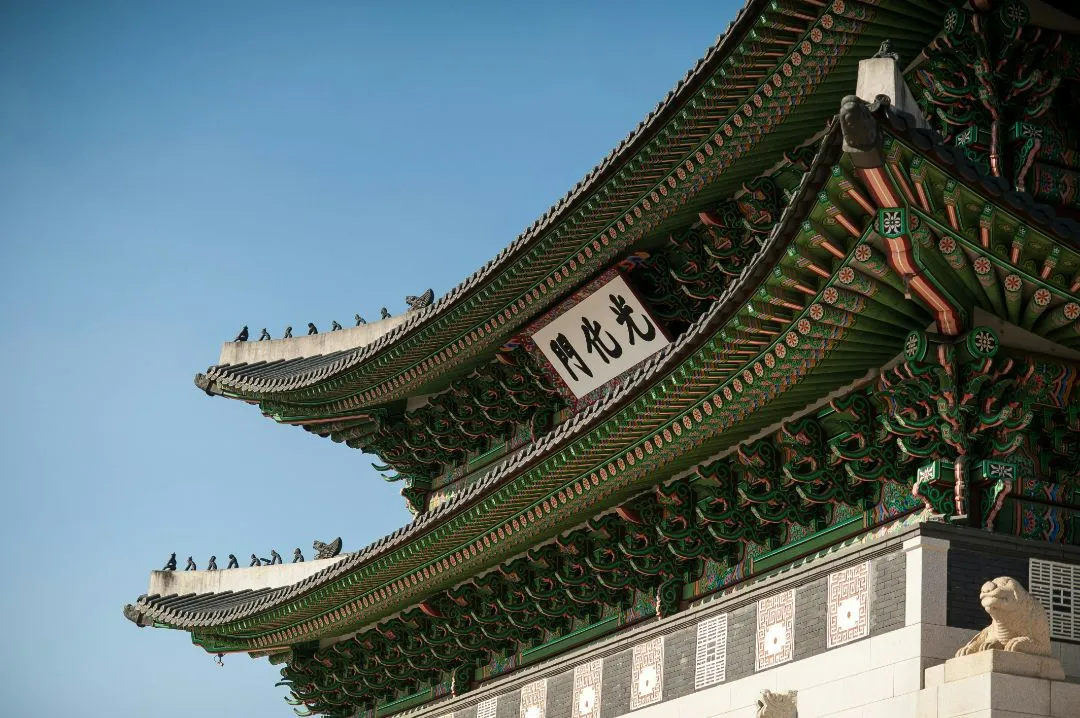
Photo by Jéan Béller on Unsplash


A metaverse strategy

Last year, Henan province administrators released a plan, setting out the objective of achieving a local metaverse industry reaching a level of 30 billion yuan by 2025. The plan was titled “Henan’s metaverse industry development plan for the years 2022 to 2025.” Its authors set out the objective of creating an industrial metaverse, an energy metaverse, an education metaverse and a virtual human metaverse.

Henan is one of a number of regions vying to capture the upside in terms of the promise of the development of innovation relative to the metaverse. Earlier in 2022 local government in Shanghai set out to establish an industry fund of 10 billion yuan (approximately $1.4 billion) in assets, focused purely upon metaverse-centric development and innovation.

Earlier this year, a delegate attending one of the city’s most influential yearly political meetings called for efforts to be made to provide for adequate regulation to enable further metaverse development and effective supervision of the space.

The Beijing-based and state-backed China Computer Industry Association (CCIA) also took an interest last year, forming a metaverse committee to draft industry standards. It too planned to establish a 1 billion yuan fund, while aspiring to help other regional authorities establish a blueprint to progress the industry.

Not to be outdone, Hubei province’s Wuhan and Anhui administrative areas made a pledge to boost metaverse development over the course of the next five years. Within the Wuhan administrative area, city officials are said to be aiming to integrate the metaverse, cloud computing and blockchain into the conventional, real economy.


Opposing views

It’s curious to note that when it comes to decentralized blockchain and cryptocurrency, China has been vehemently opposed to their development within its borders. In September 2021, the country banned cryptocurrency transactions. Prior to that, it had implemented a ban on cryptocurrency mining activity, forcing the large miners that had long since established there to move overseas.

It’s difficult to see how it can be positive relative to the metaverse when a metaverse depends on the use of blockchain technology. To confuse matters further, over the course of the past six months, it seems to have given a mandate to the autonomous territory of Hong Kong to open its doors in facilitating the crypto and blockchain sector in total contrast to the stance taken within mainland China.

Recently compiled industry and market research suggests that the metaverse industry in China is expected to grow by 39.5% in 2023, with the space having experienced significant growth in the country over the course of Q3 and Q4, 2022.

More to Read
View All
Markets·

Aug 13, 2024

OSL Executive: Crypto ETFs have challenge to overcome in Hong Kong

At the Foresight 2024 Hong Kong Summit on Aug. 11, Gary Tiu, director and head of regulatory affairs for OSL, a crypto market custodian, exchange and prime brokerage, outlined in a panel discussion that the crypto exchange-traded fund (ETF) market in the Chinese autonomous territory is challenged insofar as it lacks market incentives.Photo by Cecelia Chang on UnsplashThe intermediary problemTiu’s company hosted the event, alongside Foresight News and crypto publication The Block, who reported on Tiu’s comments. The OSL executive said that when it comes to funds and structured products in Hong Kong, there’s a “very rich layer of intermediaries— brokers, banks, private banks, retail banks, etc.” involved. Tiu explained that they make a lot of money from the distribution of such products, resulting in unlisted products being marketed far more effectively by comparison with listed products. It’s against that backdrop of misaligned incentives that Tiu identifies challenges for crypto ETFs on the public markets in Hong Kong. He stated: “So I think the incentive system in Hong Kong is one of the reasons why ETFs do have a bit of a hard time growing as a financial instrument.” In the case of ETFs, the OSL executive explained that equity brokers take just a few basis points in commission, only about 1-2% of what they make on the sale of structured products. Bias against Bitcoin and EtherTiu is also of the belief that cryptocurrencies like Bitcoin and Ether have a reputational problem among Hong Kong’s investment community, stating: “I think there is still a bit of a bias in the eyes of the regulators and also in the eyes of the financial institutions, that somehow bitcoin ETF is just this unique class of risk that you need to be extra cautious about.” Chen Zhao, who heads up the digital assets section of Hong Kong-based independent financial advisory firm Fosun Wealth, chimed in with his own concerns. According to Zhao, the crypto ETF products currently marketed in Hong Kong are lacking in terms of the depth of dealers and brokers offering the products. Zhao explained that there are three main types of market participant active on the Hong Kong markets, namely western institutions, Hong Kong-based institutions and their counterparts from mainland China.  Zhao stated: “Chinese brokers and dealers, they’re not allowed or they choose not to deal with the product, and for the western financial institutions, they don’t have the necessity of dealing the products because they acquire more fees and incentives, and have easier access to the U.S. ETFs.” While progress is far more modest by comparison with the U.S. market, the Hong Kong crypto ETF market continues to develop, with spot Bitcoin and Ethereum ETFs setting a record trading volume last week. In the same week, Mox Bank, a subsidiary of British banking multinational Standard Chartered, launched trading services relative to spot Bitcoin and Ethereum ETF products in Hong Kong. Last month, OSL CEO Patrick Pan, anticipated that an Ethereum ETF product that incorporated staking would launch in Hong Kong within six months. Many commentators have suggested that institutional interest in Ethereum ETFs will begin in earnest once a yield-producing staking product hits the market.

news
Web3 & Enterprise·

Oct 06, 2023

CoinDCX Expands Okto Wallet’s Global Reach with Transak Integration

CoinDCX Expands Okto Wallet’s Global Reach with Transak IntegrationIndian cryptocurrency exchange CoinDCX has moved to broaden the accessibility of its self-custody wallet, Okto. The exchange recently announced the addition of Transak, a major on-ramp platform that enables a fiat-to-crypto payment gateway integration, to enhance the wallet’s global capabilities.Photo by Kanchanara on UnsplashBuilding on OktoThat’s according to a report published by Cointelegraph on Thursday. Okto was introduced by CoinDCX in August 2022, and the firm swiftly moved to expand its services. The integration with Transak represents a pivotal step in this direction.This strategic integration immediately expands the reach of the Okto wallet from supporting 60 countries to an impressive 155 jurisdictions. Neeraj Khandelwal, Co-Founder of both CoinDCX and Okto, emphasized the significance of this move, stating that it allows users in numerous countries to engage with cryptocurrencies directly through Okto.While Transak supports approximately 160 tokens, Okto goes above and beyond by allowing users to store more than 1,000 tokens across multiple blockchain networks, including Polygon, Fantom, Avalanche, and others. According to an Okto spokesperson, the wallet can accommodate up to 3,000 tokens, providing ample flexibility for cryptocurrency enthusiasts.Seamless fiat-to-crypto conversionKhandelwal also spoke to the value add that a more seamless asset conversion process will bring. He stated:“The integration of Transak now allows users to seamlessly convert fiat to crypto right within the app. Prior to this integration, users had to transfer funds from another decentralized wallet, such as MetaMask.”Transak’s integration brings a key feature to Okto — the ability for users to purchase cryptocurrencies like Bitcoin (BTC) directly within the wallet. Notably, this functionality accepts a wide range of fiat currencies, including the US dollar, euro, Hong Kong dollar, and others. Prior to the Transak integration, users were required to transfer digital assets from external wallets like MetaMask. With this development, Okto streamlines the process, enabling users to seamlessly convert fiat into crypto within the app itself.Months-long integration processIt’s worth noting that although the announcement of Transak’s support on Okto was made on Thursday, the integration process began several months earlier. As early as August, some Indian users reported encountering Transak while Okto was in the testing phase. The integration process itself commenced in April, with the official roll-out to all customers occurring in mid-September.Transak, a global Web3 payment and onboarding infrastructure provider, plays a crucial role in bridging the gap between traditional finance and the digital asset ecosystem. It is a well-established on-ramp solution in the cryptocurrency industry, with platforms like MetaMask, Coinbase, and PancakeSwap among its clientele.In recent days, Okto has also announced a partnership with ReHold, a multi-chain protocol which has been developed to enable users to maximize their crypto earnings. In the coming weeks, Okto and ReHold will work towards integrating Okto’s wallet with ReHold.The Okto-Transak integration is in line with Transak’s mission to facilitate crypto adoption by providing easy access to digital assets. Earlier this week, Transak also announced its integration with The Open Network’s (TON) wallet, known as Tonkeeper. This collaboration opens up Toncoin (TON) purchases directly with fiat currencies to users in more than 150 countries, marking a significant milestone in expanding the TON ecosystem.

news
Policy & Regulation·

1 day ago

Korean regulator targets concentrated control at crypto exchanges in phase 2 bill

South Korea’s financial regulator is preparing a second major cryptocurrency bill that would expand investor protections, strengthen stablecoin safeguards, and potentially impose governance changes at the country’s largest exchanges, as domestic token projects warn that regulatory uncertainty is curbing growth. The Financial Services Commission (FSC) is drafting the Digital Asset Basic Act, a so-called “phase two” bill that follows an earlier virtual asset user protection regime which took effect in July 2024. According to Yonhap News, the bill is expected to address stablecoin risks by requiring issuers to hold reserve assets in instruments such as bank deposits and government bonds, and to deposit or place in trust at least 100% of outstanding issuance with banks or other designated custodians. It would also extend existing financial-sector rules to crypto firms in areas including disclosures, terms and conditions, and advertising. In addition, the proposal could impose no-fault liability on virtual asset service providers for losses stemming from hacks or system failures, in line with standards under Korea’s Electronic Financial Transactions Act, which governs traditional financial institutions and payment services.Photo by Timothy Ries on UnsplashGovernance dominance at exchangesA separate report by KBS said the draft bill includes measures to overhaul governance at South Korea’s four major crypto exchanges—Upbit, Bithumb, Coinone, and Korbit—which together serve about 11 million users. The FSC has raised concerns about concentrated control by founders and major shareholders, and is considering a governance framework similar to that applied to alternative trading systems (ATS) under Korea’s Capital Markets Act. That could include limits designed to prevent any single shareholder from holding too much control, capping controlling stakes at around 15% to 20%. Under Korea’s current Capital Markets Act, an ATS is generally barred from holding more than 15% of voting shares, including those held by related parties, with limited exceptions allowing stakes of up to 30%. If similar limits were applied to crypto exchanges, the changes could affect Dunamu, the operator of Upbit. Dunamu Chairman Song Chi-hyung holds a stake in the mid-20% range and, under the proposal as described, could face pressure to sell roughly 10% of his holdings. The proposal could have implications for the deal, as Dunamu is pursuing a merger with Naver Financial through a comprehensive stock swap. While the bill’s broad outlines are taking shape, regulators are still working to narrow differences over stablecoin rules, and the final proposal is expected to be submitted to the National Assembly next year. Key unresolved issues include eligibility requirements for stablecoin issuers, whether to establish an interagency consultative body during the licensing process, initial capital thresholds, and whether a single entity should be allowed to both issue and distribute stablecoins. The core dispute centers on who should be allowed to issue stablecoins. The Bank of Korea is said to favor limiting issuance to consortia in which banks hold at least a 51% stake, while the FSC is believed to oppose writing a mandatory bank ownership threshold into law, arguing that such a requirement could limit broader participation by technology firms. ‘Kimchi coin’ listings stall amid cautionEven as policymakers push ahead, regulatory uncertainty is curbing growth among South Korean blockchain projects. News1 reported that Upbit listed only one token from a domestic project in 2025, out of 54 tokens added for trading since the start of the year—the native token of Story, a peer-to-peer intellectual property network powered by blockchain and co-founded by Korean entrepreneur Lee Seung-yoon. Upbit also removed 10 tokens during the period, seven of which were so-called “kimchi coins,” a colloquial term for tokens originating in South Korea or developed by Korean teams. Industry participants attribute the removals to increasingly risk-averse behavior by exchanges amid regulatory uncertainty, which can complicate promotional efforts and trust-building while constraining early-stage liquidity. TradFi players seek crypto integrationsWhile local token projects face headwinds, interest from traditional financial institutions appears to be picking up. Chosun Biz reported that Mirae Asset Financial Group is considering an acquisition of Korbit, with its non-financial affiliate Mirae Asset Consulting seen as a potential buyer of shares from major shareholders NXC and SK Planet. Industry analysts estimate the deal could be worth up to 140 billion won ($97 million). The group’s founder, Park Hyeon-joo, has said he is developing a strategy to bridge traditional and digital assets, arguing that it is time to prepare for the next wave of financial innovation. In payments, EBN Industrial News reported that BC Card has signed a memorandum of understanding (MOU) with U.S.-based crypto exchange Coinbase to test USDC payments in South Korea. The pilot would integrate BC Card’s QR payment system with wallets on Coinbase’s Base blockchain to assess whether USDC can function as a viable payment method at local merchants. 

news
Loading