Top

CoinDCX Expands Okto Wallet’s Global Reach with Transak Integration

Web3 & Enterprise·October 06, 2023, 11:46 PM

Indian cryptocurrency exchange CoinDCX has moved to broaden the accessibility of its self-custody wallet, Okto. The exchange recently announced the addition of Transak, a major on-ramp platform that enables a fiat-to-crypto payment gateway integration, to enhance the wallet’s global capabilities.
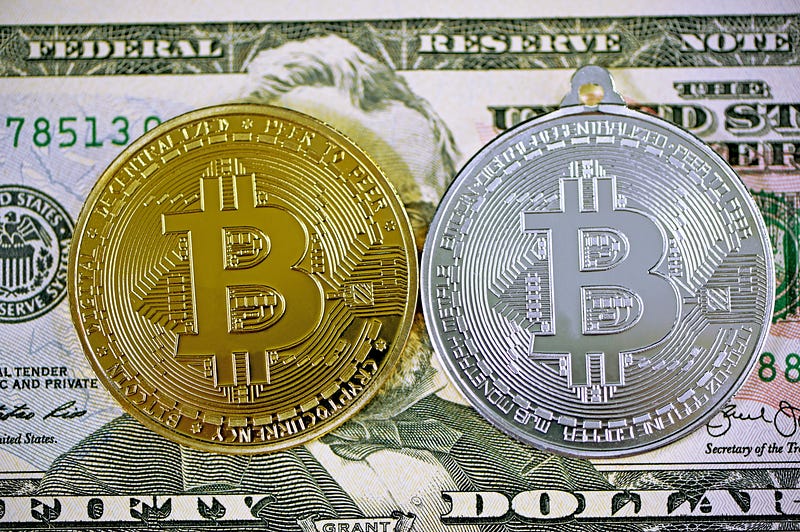
Photo by Kanchanara on Unsplash


Building on Okto

That’s according to a report published by Cointelegraph on Thursday. Okto was introduced by CoinDCX in August 2022, and the firm swiftly moved to expand its services. The integration with Transak represents a pivotal step in this direction.

This strategic integration immediately expands the reach of the Okto wallet from supporting 60 countries to an impressive 155 jurisdictions. Neeraj Khandelwal, Co-Founder of both CoinDCX and Okto, emphasized the significance of this move, stating that it allows users in numerous countries to engage with cryptocurrencies directly through Okto.

While Transak supports approximately 160 tokens, Okto goes above and beyond by allowing users to store more than 1,000 tokens across multiple blockchain networks, including Polygon, Fantom, Avalanche, and others. According to an Okto spokesperson, the wallet can accommodate up to 3,000 tokens, providing ample flexibility for cryptocurrency enthusiasts.


Seamless fiat-to-crypto conversion

Khandelwal also spoke to the value add that a more seamless asset conversion process will bring. He stated:

“The integration of Transak now allows users to seamlessly convert fiat to crypto right within the app. Prior to this integration, users had to transfer funds from another decentralized wallet, such as MetaMask.”

Transak’s integration brings a key feature to Okto — the ability for users to purchase cryptocurrencies like Bitcoin (BTC) directly within the wallet. Notably, this functionality accepts a wide range of fiat currencies, including the US dollar, euro, Hong Kong dollar, and others. Prior to the Transak integration, users were required to transfer digital assets from external wallets like MetaMask. With this development, Okto streamlines the process, enabling users to seamlessly convert fiat into crypto within the app itself.


Months-long integration process

It’s worth noting that although the announcement of Transak’s support on Okto was made on Thursday, the integration process began several months earlier. As early as August, some Indian users reported encountering Transak while Okto was in the testing phase. The integration process itself commenced in April, with the official roll-out to all customers occurring in mid-September.

Transak, a global Web3 payment and onboarding infrastructure provider, plays a crucial role in bridging the gap between traditional finance and the digital asset ecosystem. It is a well-established on-ramp solution in the cryptocurrency industry, with platforms like MetaMask, Coinbase, and PancakeSwap among its clientele.

In recent days, Okto has also announced a partnership with ReHold, a multi-chain protocol which has been developed to enable users to maximize their crypto earnings. In the coming weeks, Okto and ReHold will work towards integrating Okto’s wallet with ReHold.

The Okto-Transak integration is in line with Transak’s mission to facilitate crypto adoption by providing easy access to digital assets. Earlier this week, Transak also announced its integration with The Open Network’s (TON) wallet, known as Tonkeeper. This collaboration opens up Toncoin (TON) purchases directly with fiat currencies to users in more than 150 countries, marking a significant milestone in expanding the TON ecosystem.


More to Read
View All
Policy & Regulation·

Aug 24, 2023

Celebrating a Decade of Crypto in South Korea: Experts Convene to Chart the Future

Celebrating a Decade of Crypto in South Korea: Experts Convene to Chart the FutureThe MK Virtual Asset Conference, an event held in Seoul yesterday to celebrate the 10th anniversary of South Korea’s cryptocurrency industry, convened experts, politicians, and stakeholders to discuss the future of blockchain and digital assets.The conference was hosted by Maeil Business Newspaper and its blockchain subsidiary Mblock, and sponsored by cryptocurrency exchange Korbit, the Korean Securities Association, and the Korea Derivatives Association. It served as a valuable opportunity to evaluate the current state of the crypto market and explore solutions for pressing challenges.Photo by Ciaran O’Brien on UnsplashInevitable rise of blockchainOne of the distinguished speakers at the event highlighted the inevitable rise of blockchain technology. Kim Yong-beom, CEO of Hashed Open Research, the research arm of Seoul-based crypto venture capital firm Hashed, said, “Blockchain is the antithesis of the modern financial and capital system. While traditional finance possesses its own merits, it also carries substantial transaction fees and is confined within national boundaries. It is only natural that such a counterforce has emerged to address these issues.”He continued, “Given that traditional finance properly responds to blockchain technology’s rise and overcomes its limits, blockchain may lose its competitive edge. However, if traditional finance fails to do so, blockchain will not be easily dismissed.”CEO Kim also highlighted the third section named “Blueprint for the Future Monetary System” of the Bank of International Settlements’ 2023 Annual Economic Report, which was published in June. The report states, “The BIS Innovation Hub, in partnership with central banks around the world, stands at the forefront of experimentation with CBDCs and tokenization.” According to Kim, the traditionally conservative financial institution, which had previously been skeptical about blockchain-based distributed ledger technology, has now shifted its position to be more accepting of blockchain.Importance of institutional investorsDuring the conference, an academic underscored the importance of allowing institutional investors to enter the virtual asset space. Kang Hyoung-goo, an assistant professor in the Department of Finance at Hanyang University Business School, pointed out that the crypto market, when primarily driven by retail investors, tends to favor volatile assets over stable ones. Due to this inclination, more individual investors are attracted to exchanges where speculative trading is a frequent occurrence. This dynamic creates a vicious cycle, he explained.Defining digital assetsOn a different note, Lee Han-jin, a lawyer at Kim and Chang, one of the largest law firms in the country, emphasized the crucial need to establish a legal definition of digital assets. In Lee’s view, digital assets exist in the form of data on the blockchain, setting them apart from traditional assets. He argued that without a legal definition outlining the nature of these assets, they could potentially devolve into entities that mislead the public, lacking both legal reliability and trustworthiness.Political voicesPoliticians also took the stage to share their thoughts. Back Hye-ryun, a Democratic Party of Korea member, expressed in her congratulatory speech her commitment to protecting virtual asset users through legislation. Kim Jong-min, another lawmaker from the same party, underscored the unstoppable nature of the blockchain trend. Yun Chang-hyun, a lawmaker of the ruling People Power Party, mentioned that while Bitcoin couldn’t establish itself as a key currency in an anarchic manner, stablecoins and central bank digital currencies (CBDCs) are now positioned to fill that role.Regulatory considerationsMeanwhile, Kim So-young, Vice Chairman of the Financial Services Commission, stressed the ongoing uncertainty surrounding the societal impact of cryptocurrencies and how governments should oversee them. He emphasized that the Korean government aims to establish a balanced framework to facilitate the responsible development of digital assets. Furthermore, he highlighted the necessity of collaborating with major economies due to the global nature of virtual assets.

news
Web3 & Enterprise·

Sep 11, 2023

Rotonda Signs Deal with The Sandbox for Blockchain Ecosystem Expansion

Rotonda Signs Deal with The Sandbox for Blockchain Ecosystem ExpansionRotonda, a subsidiary of Korean crypto exchange Bithumb and the operator of the Web3 digital wallet Burrito Wallet, announced that it has signed a memorandum of understanding (MOU) with metaverse platform The Sandbox to expand its blockchain ecosystem.Photo by Shubham Dhage on UnsplashA space for creativity and monetizationThe Sandbox is a global metaverse platform that allows users to easily create and participate in games, avatars, and items. It also provides free three-dimensional content creation tools called VoxEdit and Game Maker, and users can monetize their content. It has partnered with over 400 major companies, including Netmarble, LINE Studio, Ubisoft, and Zynga, securing some five million subscribers worldwide. “We expect that users will be able to enjoy a new Web3 experience within the metaverse, where they can create their own content,” said Max Minchul Shin, CEO of Burrito Wallet.Elevating the metaverse experienceThrough the new partnership, Burrito Wallet will support wallet integration within The Sandbox’s platform by unifying the on-chain experience across services. Burrito Wallet users will thus have more convenient access to various content within The Sandbox, including LAND — the platform’s virtual real estate space for interacting and showcasing creativity — as well as personalized avatars and assets, and an NFT marketplace. Additionally, the company plans to enhance wallet utility by supporting the multi-chain functionality of SAND, The Sandbox’s utility token.“Our partnership with Burrito Wallet will make it easier and more convenient for users to enjoy The Sandbox,” said Cindy Lee, CEO of The Sandbox Korea.“We will continue to collaborate with companies from various fields to advance the Web3 market and establish ourselves as a distinguished wallet service in the global market,” Shin added.Rotonda’s global initiativesRotonda is actively collaborating with global projects to promote the mass adoption of Web3 and blockchain technology. Last month, it launched the iOS version of Burrito Wallet in a move to expand availability for Web3 users on all operating systems. The company also recently co-hosted Next Block 2023 with its parent company Bithumb to promote business collaboration and build an ecosystem for accelerating Web3 projects.

news
Policy & Regulation·

Nov 27, 2025

Japanese financial watchdog pushes new reserve rules for crypto exchanges 

Japan plans to require cryptocurrency exchanges to maintain reserves to cover potential losses from hacking incidents, according to a Nov. 24 Nikkei report cited by local outlet New Economy. The measure is designed to ensure that service providers can compensate users in the event of a breach. Authorities are expected to set the reserve level after reviewing past hacking cases and examining how much traditional securities firms set aside. While crypto exchanges are currently required to store customer assets in cold wallets, they are not obligated to maintain any dedicated pool of funds for compensating losses, and the proposed framework is intended to close that gap.Photo by Jen Titus on UnsplashReserve rules mirroring brokerage standardsThe Financial System Council, which operates under the Financial Services Agency (FSA), will finalize a report on the proposal and draft a bill for submission to next year’s regular Diet session. The legislation would amend the Financial Instruments and Exchange Act (FIEA). The FSA is turning to the FIEA because the reserve framework is modeled on existing rules for securities companies, which must maintain designated reserves to compensate clients for losses stemming from errors or other improper activities. These measures follow earlier reports that similar requirements are being considered for third-party custody providers that hold crypto assets on behalf of exchanges. These external custodians have not been directly overseen, but the FSA now plans to require them to report their activities in advance. The push to reinforce customer protections comes as Japan’s crypto market continues to expand. In a sign of that growth, mobile payment platform PayPay last week enabled transfers between PayPay Money balances and Binance Japan. The new feature allows deposits from 1,000 yen, with limits of 1 million yen per 24 hours and 2 million yen per 30 days. Until now, funding or withdrawing from Binance Japan’s spot trading services was limited to yen bank transfers or transactions through external exchanges and wallets. Accumulation grows amid market pullbackJapanese companies have also continued to accumulate Bitcoin. According to Decrypt, Metaplanet, a former hotel operator that now positions itself as a Bitcoin treasury firm, said on Nov. 25 that it plans to use its Bitcoin holdings as collateral for a $130 million loan to purchase additional Bitcoin. The Tokyo Stock Exchange-listed firm currently holds 30,823 BTC and aims to expand its position to 210,000 BTC by 2027. Another publicly traded company, nail-salon operator Convano, has taken a similar approach, recently adding 97.67 BTC to bring its total to 762.67 BTC, according to BitcoinTreasuries.NET. This accumulation has continued despite Bitcoin’s recent decline. The cryptocurrency has fallen nearly 20% over the past month and is now trading just below $92,000. Citing analysis from 10x Research CEO Markus Thielen and Nansen research analyst Nicolai Søndergaard, Yonhap Infomax pointed to several factors behind the pullback. Thielen highlighted $3.5 billion in outflows from spot Bitcoin ETFs this month and roughly $800 million in stablecoins leaving the market. Søndergaard noted that long-term holders have been selling, adding that such activity has historically appeared early in Bitcoin’s four-year market cycle. Bitcoin’s most recent halving occurred on April 20, 2024, roughly 19 months ago. Market watches upcoming policy movesFrom a broader macro perspective, Reuters reported that the Bank of Japan (BOJ) could raise interest rates as early as next month amid pressure from a weakening yen. The timing remains uncertain, with the decision seen as hinging in part on the U.S. Federal Reserve, which sets policy one week before the BOJ. According to CME Group’s FedWatch Tool, markets currently assign an 84.9% chance of a 25-basis-point Fed rate cut in December. A Fed hold or a more hawkish tone could lift the dollar, further weaken the yen, and increase pressure on the BOJ to act sooner. A Fed cut, by contrast, could ease that pressure but raise questions about the U.S. outlook and the trajectory of future BOJ hikes. Monetary decisions in the coming weeks are expected to influence crypto markets, as lower interest rates generally support demand for risk assets such as Bitcoin. With both the Fed and the BOJ poised to set policy in December, market participants are watching for how shifts in liquidity and currency moves could shape the next phase of digital asset prices. 

news
Loading