Top

HK Regulators Facilitate Dialogue between Banks and Crypto Enterprises

Policy & Regulation·April 28, 2023, 5:40 AM

In a recent column, Arthur Yuen, Deputy CEO at the Hong Kong Monetary Authority (HKMA), stated that the HKMA and the Securities and Futures Commission (SFC) will jointly convene a meeting on Friday to share opinions on providing banking services to virtual asset service providers (VASPs).

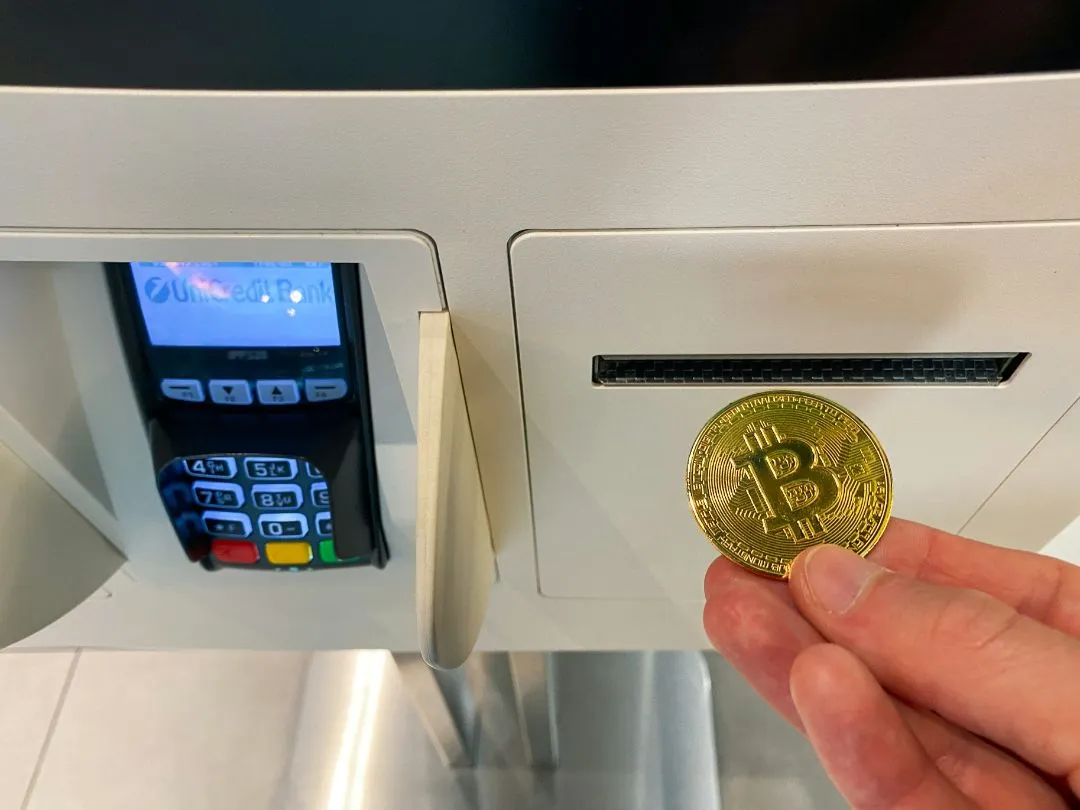
paying with a card through payment terminal


Proportionate CDD measures

Yuen said that banks should “differentiate the risk levels of customers and apply proportionate CDD [customer due diligence] measures,” and “refrain from adopting a ‘one-size-fits-all’ approach to reject account opening applications.” To address misconceptions about CDD, the HKMA issued a circular on Thursday, offering further clarification and sharing notable cases and best practices.

The HKMA called on banks to enhance employee training on account opening procedures and create task forces to help companies seize new business opportunities. The HKMA plans to actively take part in developing and introducing international standards, and provide guidance and support for banks to adopt appropriate anti-money laundering measures.


SFC’s guidelines in May

Meanwhile, SFC CEO Julia Leung said in a discussion with Bloomberg that the SFC will issue virtual asset guidelines in May.


Reactions on Twitter

In his tweet, Justin Sun, the founder of blockchain DAO ecosystem Tron, hinted at the potential development of a Tron-based stablecoin in Hong Kong. The Hong Kong Innovation Encryption Fund (HKIEF), an investor in blockchain projects, also took to Twitter to predict the details of a regulatory framework for cryptocurrencies in the city.

According to HKIEF, USDT and USDC will be classified as security tokens, while BTC and ETH won’t be deemed securities. Exchanges trading non-security tokens will need both a VASP license and a trust license. Hong Kong-based virtual asset exchanges will be required to obtain a full license by May 31, 2024.

More to Read
View All
Web3 & Enterprise·

Oct 13, 2023

Wemade Expands Web3 Ecosystem Through New Collaborations

Wemade Expands Web3 Ecosystem Through New CollaborationsSouth Korean blockchain gaming publisher Wemade has been making strides to expand its ecosystem. Most recently, the company announced that it made a series of new investments and signed a business deal with a social finance organization.Photo by Shubham Dhage on UnsplashInvesting in the future of blockchain gamesWEMIX PTE., a Singapore-based Wemade subsidiary, said Wednesday that it has invested in five Chinese game developers through a $30 million fund aimed at fostering promising blockchain gaming companies. Mirana Ventures, the Web3-focused investment unit of the crypto exchange Bybit, is also participating in the fund as an investor. The latest investment was worth $6.4 million.Each investee is working on a new game, ranging from massively multiplayer online role-playing games (MMORPG) to card strategy and sports games. All of these games will be onboarded to WEMIX PLAY, WEMIX’s blockchain gaming platform.WEMIX reaffirmed its dedication to working with Chinese projects and providing the new investees with its knowledge about blockchain technology and the burgeoning Web3 market.Giving back to the communityMeanwhile, the South Korean blockchain gaming publisher Wemade also signed a memorandum of understanding (MOU) with Social Solidarity Bank, a Korean social finance organization, to build a blockchain-based sponsorship ecosystem. Social Solidarity Bank offers microfinance and alternative finance services mainly in the form of loans and funds to economically vulnerable groups with the help of sponsors. It will be onboarding Wepublic, a transparent social platform based on WEMIX that allows users to create and operate their own decentralized autonomous organizations (DAOs).Under the agreement, Wepublic’s proof of balance protocol will be integrated into Social Solidarity Bank’s social finance system to mint mirror tokens that are linked one-to-one with individual accounts. The mirror tokens will serve to help donors understand how their contributions are translated into social outcomes. Sponsors can check the status and usage of donations at any time through records of token deposits and withdrawals.This service is set to launch next year and will be grow into a Web3 sponsorship business where sponsors will also be given the right to participate in governance voting.

news
Web3 & Enterprise·

Oct 18, 2023

Scroll’s zkEVM Launches on Ethereum Mainnet

Scroll’s zkEVM Launches on Ethereum MainnetScroll, the Seychelles-headquartered project behind the Ethereum layer-2 network of the same name, has officially made its debut on the Ethereum mainnet.Photo by Zoltan Tasi on UnsplashAttempting to solve for scalabilityThe project team announced the development via a press release which was published on Tuesday. The network launch signifies the latest in a series of attempts by various layer-2 projects, including Polygon and StarkWare, to address the persistent challenges of high transaction fees and network congestion that have hindered Ethereum’s usability in recent times. Speaking to layer-2 development, co-founder Sandy Peng stated:“We see a future where the vast majority of value transfer takes place on Layer 2s on Ethereum. What will drive that adoption is improved user and developer experience.”After testing and refinement on its testnet, Scroll believes that it is in a good position to play an active role within the Ethereum ecosystem by providing a general-purpose, zero-knowledge Ethereum virtual machine (zkEVM) roll-up.The project has 900,000 wallet addresses in active use on its testnet, having executed seven million transactions since August. The testnet has seen over 55 million transactions during its year-long operation.At its core, Scroll’s mission is to combine Ethereum’s network security with reduced fees and lower latency, making it an attractive proposition for existing Ethereum projects. According to Peng, Ethereum developers can seamlessly deploy their projects on Scroll and harness the groundbreaking zkEVM technology.Incorporating bytecodePeng emphasized the significance of zkEVM’s ability to batch proofs efficiently, resulting in faster transaction speeds and cost reductions, thanks to its bytecode-level compatibility.Bytecode, in the realm of computer programming, simplifies intricate machine cryptography, making code more accessible for computer hardware. Scroll allows deployed smart contracts to store the bytecode of their transactions, which is then sent to a centralized zkEVM node. This node verifies the transaction’s accuracy without revealing its content. Once verified, the transaction’s status is updated on the Ethereum network, eliminating the need for re-execution. Peng pointed out:“Thanks to this feature, Ethereum devs can leverage all the same tools they are familiar with, ensuring that everything operates seamlessly right from the start.”Scroll’s mainnet code was subject to audits conducted by four major auditing firms, namely Zellic, Trail of Bits, OpenZeppelin, and KALOS, in an effort to ensure robust security and reliability.Efforts towards greater decentralizationWhile Scroll’s current implementation offers compelling features, the team is actively researching ways to further enhance the network’s decentralization. Currently, if the sequencer goes offline, the protocol halts, creating a potential vulnerability. To address this, the Scroll team is working on a protocol upgrade that will enable “forced batches.” This update will allow permissionless publication of batches through the base layer, even in the event of a sequencer halt.Peng elaborated on the team’s vision, stating: “Mid-term, the goal is to minimize the probability of a sequencer halt through decentralization.” This approach aims to bolster the network’s resilience and ensure a smoother user experience.While headquartered in the Seychelles, the project has its origins in China through its Chinese founders, Ye Zhang and Haichen Shen, alongside Peng, with many of its 60-strong project team based in mainland China and Hong Kong.

news
Web3 & Enterprise·

Aug 22, 2025

Circle President visits Seoul for stablecoin talks with exchanges and central bank

Circle President Heath Tarbert, who oversees the issuer of the USDC stablecoin, arrived in Seoul on Aug. 21 for a series of meetings with South Korean cryptocurrency and blockchain industry leaders, as well as the governor of the country’s central bank. Citing industry sources, local outlet Newsis reported Tarbert visited three major exchanges, Upbit, Bithumb and Coinone, shortly after landing, spending roughly an hour at each. Discussions centered on recent developments in Korea’s digital asset ecosystem.Photo by Daniel Bernard on UnsplashGathering insight from exchangesThe trip underscores Circle’s growing interest in South Korea, one of the world’s largest crypto markets by trading volume despite its heavy tilt toward retail investors. Circle is reportedly seeking on-the-ground insight from local trading platforms. An executive from a research firm said the market offers an attractive foothold for global players looking to deepen networks. Previous reports indicated Circle has also begun informally recruiting in South Korea to support initiatives tailored to the local market, and the company is also weighing a direct investment in a domestic crypto firm. Homing in on stablecoinsStablecoins are expected to dominate the agenda with exchanges. USDC is the world’s second-largest stablecoin by market share, behind Tether’s USDT, and all three exchanges already support USDC trading. Upbit and Bithumb have meanwhile indicated their plans to develop Korean won–pegged tokens, recently filing trademark applications for their projects. Given Circle’s position in the sector, one exchange official said local platforms may look to the U.S.-based company as a benchmark, adding that practical knowledge-sharing could be the most meaningful outcome of Tarbert’s visit. Tarbert also attended a dinner with Simon Seojoon Kim, CEO of crypto venture firm Hashed, whose teams span Seoul, Singapore, Bengaluru, Silicon Valley and Abu Dhabi. Circle and Hashed have been in frequent contact, and the gathering offered another forum to exchange views on recent market developments. Talks with the central bank governorOn the policy front, Tarbert met with Bank of Korea (BOK) Governor Rhee Chang-yong at Circle’s request before the dinner. Rhee has signaled openness to the introduction of won-backed stablecoins, while emphasizing prudential safeguards and noting differences with some lawmakers on potential issuers. The BOK head has previously warned that allowing non-bank entities to issue won-backed stablecoins could pose risks, such as circumventing capital rules. The South Korean central bank is working with other agencies to develop a framework that ensures the stability and utility of stablecoins while preventing their use to bypass foreign exchange controls. The meeting between Tarbert and Governor Rhee likely covered regulatory parameters for cross-border remittances using stablecoins and avenues for public-private collaboration to foster a compliant won-stablecoin market. On the following day, Tarbert is slated to meet executives from four major financial groups: Shinhan Financial Group, Hana Financial Group, KB Financial Group and Woori Bank. Kakao Group, the company behind the KakaoTalk messaging app, is also on the itinerary. Representatives from its mobile payment platform, KakaoPay, are expected to take part in the discussions. The talks come as Kakao recently formed a task force to navigate Korea’s evolving stablecoin rules. Separately, Circle listed on the New York Stock Exchange (NYSE) earlier this year under the ticker “CRCL.” The initial public offering (IPO) priced at $31 a share and opened at $69, raising nearly $1.1 billion. As of Aug. 21, the stock closed at $131.80. 

news
Loading