Top

Abu Dhabi Puts Forward Legal Framework for Decentralized Tech

Policy & Regulation·April 24, 2023, 2:30 AM

Authorities in Abu Dhabi, the capital of the United Arab Emirates (UAE) as well as an individual emirate within it, have published a proposed legislative framework for distributed ledger technology.
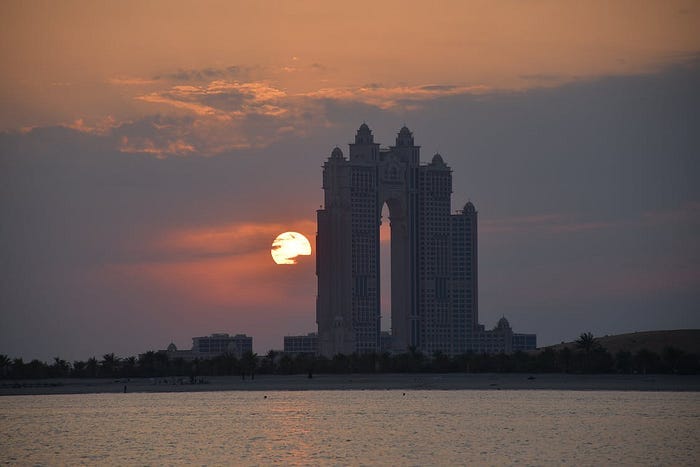
Abu Dhabi, Abu Dhabi, United Arab Emirates
©Pexels/redouan khoulassi

The consultation paper, titled “Proposal for a legislative framework for distributed technology foundations” was published earlier this month by the Abu Dhabi Global Market’s (ADGM) Registration Authority.


Promoting investor protection

The document covers a broad spectrum of aspects relative to digital assets and crypto entities, including corporate governance, insolvency and restructuring considerations, and data protection. The ADGM’s objective with the proposed policy is to advance investor protection, improve market integrity and efficiency, and build towards a comprehensive regulatory framework.


Specific proposals

More specifically, the policy would implicate an enhancement in the protection of whistle-blowers who report misconduct relative to ADGM-regulated companies. Under the proposal, new rules would be introduced to ensure that digital asset platforms operate in a fair and transparent manner. A requirement would be placed on regulated companies to disclose detailed information in relation to beneficial ownership and control structures. Furthermore, the policy seeks to bring about an improved dispute resolution process between the stakeholders involved in ADGM-regulated transactions.


Building upon an existing framework

The Abu Dhabi regulator’s current legal framework is built upon English common law. It has its own financial services regulator, the Financial Services Regulatory Authority (FSRA) which operates independently and is responsible for supervising and licensing financial institutions and market participants. The FSRA takes a principles-based approach, regulating those market actors attempting to maintain financial stability and integrity, promote market competition and innovation and ensure customer protection.

ADGM has sought to act on an international basis by signing agreements with regulatory bodies in the UK, Hong Kong and Singapore, in an effort to enable information sharing and cross-border cooperation.


Regulatory activity

At a national level, earlier this year the UAE enacted a digital assets regulatory framework. Earlier this week, the UAE also revealed a federal licensing system for crypto companies. In February, work began on a $2 billion initiative to nurture blockchain and Web3 startups via Hub71, the emirate’s tech ecosystem. The initiative provides startups with access to a broad range of support services as well as potential collaborations with government and investment partners.

According to the document, “this Consultation Paper is of interest to any persons operating or planning DLT projects, persons engaging in digital asset-related activities and their legal advisors, as well as DLT participants, associations, and stakeholders.”

With that, the ADGM is inviting comments and feedback from members of the public on the proposed changes contained within the consultation paper. To aid public comment, the policy document includes a number of questions that it invites stakeholders to consider as they work towards submitting their feedback.

Those interested have until May 12 to take the opportunity to submit their comments and views relative to the Abu Dhabi regulator’s proposed framework.

More to Read
View All
Web3 & Enterprise·

Aug 12, 2025

World Mobile & Protelindo team up to launch drone-based network

UK-headquartered decentralized mobile network project World Mobile has teamed up with PT Professional Telekomunikasi Indonesia, better known as Protelindo, to launch a blockchain-based 5G mobile network. Founded in 2003, Protelindo is an Indonesian digital infrastructure firm that specializes in fiber optic networks and telecommunications towers. It owns and operates a large network of these towers in Indonesia, leasing them out to various mobile service operators.  The two firms acquired Combined Space Technologies (CST) earlier this year as a joint venture. CST had been originally founded in Cambridge in the UK, backed by Deutsche Telekom to the tune of $70 million. Successful demos of its proprietary technology had been completed in conjunction with British Telecom (BT) and Deutsche Telekom before World Mobile and Protelindo decided to purchase the company.Photo by Alessio Soggetti on UnsplashWorld Mobile StratosphericIn a press release published on Aug. 8, World Mobile outlined that through CST, the two companies have launched World Mobile Stratospheric.  World Mobile asserts that the establishment of this stratospheric connectivity platform is “unprecedented.” The project implicates the use of fixed-wing drone aircraft, which it proposes to use to host 500,000 simultaneous 5G handset connections while flying at altitudes of up to 20,000 meters. World Mobile Group Chief Business Officer (CBO), Charles Barnett, told Cointelegraph that each drone can provide wireless network coverage over an area of 15,000 square kilometers. Each aircraft will host 450 individually steerable beams in order to deliver the service within a defined geographical area. Low latencyBarnett outlined that the technology can achieve just six milliseconds of total latency with the service having the capability of providing 5G service up to 18 times cheaper per gigabyte by comparison with other similar technologies. It’s thought that the service will compete with space/satellite-based telecoms systems such as Elon Musk’s Starlink. While Starlink has brought internet to corners of the globe that were otherwise underserved, it has been criticized in terms of its interference with astronomy, increased space debris and the potential for atmospheric pollution. Additionally, the low-earth orbit (LEO) satellite-based service has much higher overheads. In comparison with World Mobile Stratopheric’s six millisecond latency, Starlink is much higher at 47 milliseconds. The system delivers directly to the consumer’s device, whereas Starlink is delivered to a satellite dish with significant cost implications for the user. Stratomast, the hydrogen-powered drone aircraft, can stay up for between six and nine days and produces zero emissions. While Starlink and World Mobile Stratospheric may compete, Barnett believes that Starlink is the better choice when delivering service to remote areas that lack any cellular connectivity at all, whereas Stratospheric is the best option in areas with a higher density of mobile users. Micky Watkins, CEO of World Mobile, said that the partnership proves how blockchain can unlock new models for global connectivity. He added:“It aligns infrastructure deployment with community participation and makes decentralized telecom not just possible, but scalable.” Watkins believes that by combining advanced aerospace technology with token-driven economics, the project is building a network that connects more people, faster, in an economically efficient and environmentally sound manner. 

news
Policy & Regulation·

Jun 06, 2025

Hong Kong gearing up to give crypto derivatives the go-ahead

Hong Kong regulator, the Securities and Futures Commission (SFC), which oversees Hong Kong’s securities and futures markets, is understood to be planning to give the go-ahead for crypto derivative products to be offered to professional investors within the Chinese autonomous territory. Chinese English-language newspaper China Daily reported on June 4 that the proposed move forms part of Hong Kong’s efforts to expand its digital assets-related product offering in order to further bolster its position as a leading regional hub for the sector. Christopher Hui, Hong Kong’s Secretary for Financial Services and the Treasury, told the publication that the SFC will open up crypto derivatives trading to professional investors in the city “in an orderly, transparent and secure manner.”Photo by Florian Wehde on UnsplashBoosting liquidity to spot marketsChina Daily claimed that the SFC outlined that the crypto derivatives product will enable efficient risk transfers, while boosting the liquidity of the underlying spot markets. TokenInsight data suggests that the global crypto derivatives market has reached $21 trillion in trading volume over the course of Q1 2025. By comparison, derivatives trading dwarfs spot trading, given that spot trading weighed in at just $4.6 trillion over the same period. Liquidity in the underlying spot markets can be enhanced by a broadening of crypto derivatives product offerings in instances where digital assets are traded for immediate payment and delivery. Their availability will also appeal to professional traders and investors who need access to derivatives as part of their overall strategies in order to hedge positions and add leverage when required. Industry interestReaction to news of the Hong Kong SFC’s plans has largely been positive. Back in February, Jean-David Péquignot, chief commercial officer (CCO) with the world’s largest crypto derivatives exchange Deribit, told the South China Morning Post that opening up availability of crypto derivatives products was the one item missing from Hong Kong’s push towards development as a hub for the digital assets sector. At the time, he stated:“Hong Kong is this central financial hub in the world and a big one in Asia. If regulators can solve the derivatives piece, it is a place where we love to be.” On that basis, Péquignot suggested that Deribit, headquartered in Dubai, would be interested in establishing itself in Hong Kong, suggesting that “Asia is a big market for derivatives.” He added:“We want to be in Asia. We just need to find the right place and time to engage with regulators and get a regulatory framework to work with.” The company’s acquisition by Coinbase was announced last month for $2.9 billion. Regulatory approach questionedWhile many see the move towards the approval of crypto derivatives in Hong Kong as bullish, not everyone perceives the regulator’s approach in this instance to be positive. Pseudonymous crypto trader “Pickle Cat” outlined on X that “opening crypto derivatives only to 'professional investors' isn’t progress.”  The trader points out that good regulation would concentrate on controlling issuance and not circulation. Suggesting that the SFC has missed the point in its approach, the trader claims that the regulator would serve the crypto derivatives market best by verifying what backs such products while not restricting how such tokens move. 

news
Policy & Regulation·

Oct 16, 2025

U.S. seizes $14B in Bitcoin from crypto scheme linked to Cambodia conglomerate

The U.S. Department of Justice has filed a civil complaint to seize roughly 127,271 Bitcoin linked to an alleged fraud scheme tied to Prince Group, a multinational conglomerate based in Cambodia. That’s according to a press release from the U.S. Attorney’s Office for the Eastern District of New York. The digital assets are currently valued at approximately $14.18 billion and are now in the custody of the U.S. government. Prince Group chairman Chen Zhi, now indicted by U.S. authorities, has been named as the mastermind behind the operation. FBI Assistant Director in Charge Christopher Raia said Chen oversaw an international crypto investment scam connected to a labor trafficking network that defrauded thousands of victims worldwide.Photo by Kanchanara on UnsplashOperations across 30 nationsSince 2015, Chen Zhi has headed the Prince Group, which operates in more than 30 countries. Under his direction, the group allegedly established scam compounds across Cambodia that promoted fraudulent crypto investment scams. The operations targeted victims through social media and messaging platforms with false promises of high returns. According to the allegations, funds were stolen and laundered rather than invested, and perpetrators often built trust over time before carrying out the fraud. Authorities in Vietnam have uncovered a comparable case that did not involve the seizure of cryptocurrency. According to Tech in Asia, Hanoi police confiscated assets worth $34 million from Nguyen Hoa Binh, chairman of the tech company NextTech. The seized property includes 597 gold bars, deeds to 18 properties, and two vehicles. Investigators allege that Binh and nine associates raised funds for the AntEx cryptocurrency project by selling 33.2 billion tokens to 30,000 investors in 2021, collecting around $4.5 million. The defendants are said to have taken part in fraudulent appropriation of assets and accounting violations. Tepid business climate in VietnamThese incidents come as Vietnam’s government works to define its stance on digital assets. According to a Cointelegraph report published earlier this month, the Vietnamese Ministry of Finance said that since the announcement of the country’s five-year digital asset trading pilot plan, no companies have applied to participate. Sharing this update, the vice minister of finance expressed hope that this pilot would launch before 2026. The report points to strict requirements as a likely reason for hesitation. Licensed crypto asset service providers must hold at least 10 trillion dong, about $379 million, in capital. They are also required to back all digital assets with real and tangible assets only, and the framework explicitly prohibits using fiat currencies or securities as backing. These rules leave few options that would attract retail or institutional investors. Gemini eyes Southeast Asia as adoption growsMeanwhile, global firms continue to look to Southeast Asia as activity increases. Dow Jones Newswires reported that Gemini, the American crypto platform founded by the Winklevoss brothers, plans to expand its footprint across the region. In an interview, Saad Ahmed, Gemini’s head of Asia Pacific (APAC), said the company was strengthening its regional operations. A Chainalysis study provides context, showing that the APAC region recorded the fastest growth in on-chain activity compared to other markets in the 12 months ended June. The region saw total crypto transactions rise to $2.36 trillion from $1.4 trillion a year earlier. Although Ahmed did not share investment figures, he said Gemini’s Singapore headquarters has grown to about 65 employees, up from 15 in the final quarter of 2023. He added that the expansion reflects the company’s view of Singapore as a key base for its operations in Asia and globally. Recent criminal discoveries and tightening regulations reveal how Southeast Asia’s crypto scene remains nascent. Governments are stepping up enforcement and shaping new frameworks even as global firms expand across the region, motivated by growing adoption. How policymakers and market players respond to these early tests will define the next phase of digital asset growth in Asia. 

news
Loading