Top

Samsung Plans to Expand Its Business Through NFTs

Web3 & Enterprise·April 07, 2023, 9:39 AM

Samsung Research, the research arm of Samsung Electronics, set up a new task force earlier this year to launch new projects to combat slowing demand for home appliances.

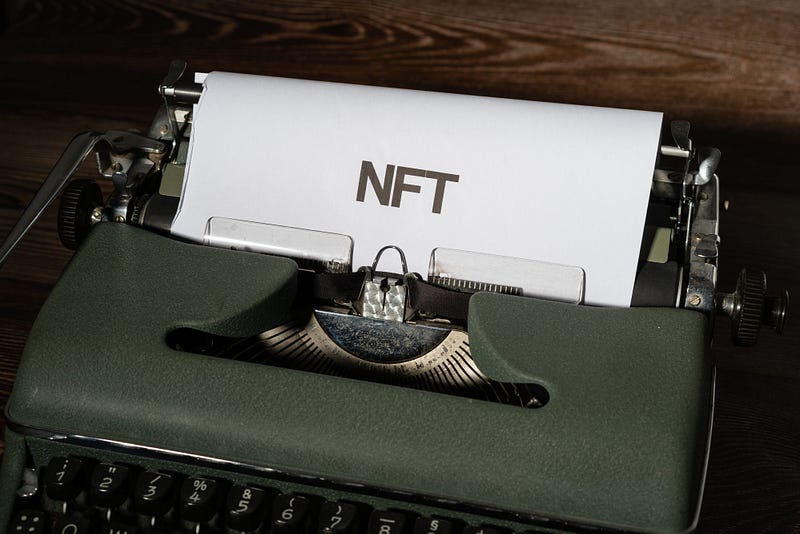
Photo by Markus Winkler on Pexels


Samsung’s endeavors in NFTs

One of its projects will involve non-fungible tokens (NFTs), in which Samsung has been showing its continued interest. Last February, Samsung Electronics displayed NFT artworks on their high-end televisions, and more recently, the high-tech company signed a memorandum of understanding with Hana Financial Group to develop NFT-related products.


TVs to offer NFT art trading functionality

It is predicted that in the first half of this year, Samsung will release a premium television with an application that allows TV viewers to trade NFT artworks. It is analyzed that the leading hardware manufacturer now attempts to expand its business models through NFTs and other content services while maintaining its dominance in the TV market.

More to Read
View All
Web3 & Enterprise·

Sep 16, 2023

Bybit Denies Plans to Leave UK Market

Bybit Denies Plans to Leave UK MarketReporting related to Dubai-based crypto exchange Bybit had suggested in recent days that the firm was leaving the UK market. However, the company has since responded to state that it has strongly reaffirmed its commitment to the UK market and its dedication to collaborate with regulators to find mutually agreeable solutions.Photo by Marcin Nowak on UnsplashCompany clarificationThat speculation had arisen in the first place on the basis of difficulties the business may experience as a consequence of the upcoming implementation of new strict marketing rules for crypto firms in the UK. Taking to social media on Thursday, the company stated:”At Bybit, we consider the UK to be a highly important market for the advancement of crypto and blockchain technologies. Our commitment to this market is unwavering, and we intend to maintain our presence in the UK for the long term. Meanwhile, we are dedicated to working collaboratively with regulators upon the new law to ensure the responsible and secure development of the industry.”The reports published earlier in the week had fueled speculation that Bybit might exit the UK market, along with other jurisdictions characterized by rigorous crypto regulations. The concerns primarily centered around the UK’s recently introduced financial promotion rules, designed to bolster customer protection and enhance understanding of crypto investments.Ben Zhou, Co-Founder and CEO of Bybit, commented on the situation, underscoring the exchange’s unwavering commitment to regulatory compliance. Zhou confirmed that ongoing discussions with UK regulators aimed to find mutually beneficial solutions, aligning the interests of all stakeholders involved. He emphasized Bybit’s commitment to keeping its community well-informed about the progress of these discussions.Regulatory changesThe recent move by Bybit is in direct response to regulatory changes introduced by the UK’s Financial Conduct Authority (FCA) in June. These changes were implemented to improve transparency and enhance customer protection within the crypto sector, with a particular focus on ensuring that UK customers have a clear understanding of the risks associated with crypto investments. The FCA also outlined various pathways for asset promotion, including those involving FCA-authorized personnel or crypto companies registered with the FCA.Exchanges have been very much under the cosh in 2023 when it comes to regulatory pressures. Bybit, accompanied by MEXC Global, Bitforex, and Bitget, were all issued with a warning by the Japanese regulator, the Financial Services Agency (FSA), in April on the basis that the exchanges were running unregistered crypto asset exchange business operations within Japan. In May Binance left the Canadian market.In the months that followed, the leading global crypto exchange was forced out of markets in Germany, Belgium, The Netherlands, and Cyprus due to regulatory pushback. In May Seychelles-based Huobi was ordered to cease its business offering in Malaysia by the local regulator.Moving forwardDespite these setbacks, Bybit has been making efforts to move the business forward. In May it obtained approval from the authorities in Kazakhstan to offer its services within the country. Some weeks prior, it announced that it had chosen Dubai as the global exchange’s headquarters.The firm also introduced TradeGPT recently, an AI-powered educational tool designed to enrich traders’ engagement with the crypto market.

news
Web3 & Enterprise·

Aug 14, 2023

RaonSecure to Develop Digital Identity Strategy for the Indonesian Government

RaonSecure to Develop Digital Identity Strategy for the Indonesian GovernmentRaonSecure, a South Korea-based decentralized identity (DID) service provider utilizing blockchain technology, has secured a contract with the Korea-Indonesia e-Government Cooperation Center. The contract involves providing consultation services aimed at devising a strategy for the implementation of a digital identity system in Indonesia. The selection of RaonSecure as the contract winner was orchestrated by Korea’s National Information Society Agency (NIA), and this strategic venture is being executed through the bilateral center.Photo by Ben Sweet on UnsplashBilateral center fostering tech exchangeEstablished in Jakarta in 2016, the bilateral center aims to facilitate the exchange of technological expertise between the Korean government and its Indonesian counterpart. This organization also serves to accelerate the entry of Korean enterprises into the Southeast Asian market.Indonesia’s national service portalAs the Indonesian government looks forward to establishing a national service portal, the need for a robust national digital identity system has been growing. This system is envisaged to support functionalities such as user authentication, e-signatures, and privacy protection.Blockchain-based DID implementationIn light of these needs, RaonSecure has emerged as a suitable company for the project, showcasing its technological prowess and stability. The Korean tech firm’s expertise has been evident in the successful deployment of its blockchain-powered DID platform, OmniOne, across diverse organizational settings. Noteworthy deployments include providing OmniOne for the issuance of identification cards to government employees, licensed drivers, and military veterans. Furthermore, RaonSecure has recently partnered with the Korea Federation of Savings Banks (KFSB) to develop a solution that verifies bank customers’ identities using mobile ID cards.The Indonesian venture is encouraging development for RaonSecure as it will serve as a gateway to not only fostering its presence within Southeast Asia but also propelling its reach far beyond, and the company’s blockchain DID technology will play a key role in spearheading this expansion into new horizons.

news
Policy & Regulation·

Apr 28, 2025

Russian exchange raided against backdrop of cash-to-crypto ban proposal

Mosca, a cash-to-crypto exchange headquartered at the Moscow International Business Center, was subject to a raid carried out by the Russian authorities on April 23. The raid occurred in the immediate aftermath of a call from a member of the commission of the Public Chamber (OP) of the Russian Federation to ban crypto exchanges from facilitating the purchase of cryptocurrencies using cash.Photo by Egor Filin on UnsplashInvestigating fraudWhile attending the Blockchain Life 2025 event in Moscow, Mosca’s Head of Development, Dmitry Titarenko, confirmed to Cointelegraph that the rationale provided for the raid was that it was in connection with fraud perpetrated by one of its platform users. Titarenko added: “Law enforcement agencies have carried out a standard procedure of checking our customer data.” The raid occurred during the company’s attendance at the Blockchain Life conference. Mosca was a key conference participant, having established two stands at the event and winning an award for the best crypto exchange service. Reporting on the raid, local media outlet Baza said that it had been carried out in relation to fraud perpetrated against the former head of the Samara Region Development Corporation, Olga Serova. It explained that Serova had been conned into handing over 350 million rubles ($4.24 million) and $800,000 to the scammers.  Seven arrestsShe withdrew these funds from her bank at the end of last year, despite bank officials having tried to persuade her against the withdrawal for this purpose. The news outlet added that to date, seven people have been arrested in connection with the alleged fraud. The Mosca exchange service may be proving to be attractive to scammers as the platform allows users to buy up to 100,000 USDT per day using cash. Titarenko couldn’t confirm that the raid was carried out in connection with the Serova fraud case. He said that “maybe it was [in relation to] another client.”The exchange executive also confirmed that the company had been in the process of putting in place more resources to carry out anti-money laundering (AML) and know-your-customer (KYC) checks, together with a blacklisting system related to suspicious platform users. Cash-to-crypto ban proposalThe raid occurred within 24 hours of Yevgeny Masharov, a member of the commission of the Public Chamber (OP) of the Russian Federation, putting forward a proposal to ban crypto exchanges from receiving cash, making services like Mosca’s cash-to-crypto exchange illegal. According to state-owned Russian news agency TASS, Masharov said that such a move would “cause a large-scale blow to scammers, because it’s no secret that telephone scammers use crypto exchangers to withdraw cash.”Sergey Mendeleev, a well-known figure within crypto circles in Russia, told attendees at the Blockchain Life conference that such a cash-to-crypto ban would be an unwelcome development for the sector. If such a ban were to materialize, Mendeleev suggested that it would be an indication that the Russian authorities were turning away from the greater development of cryptocurrency in Russia. Last week, it emerged that Russia’s Ministry of Finance, in collaboration with the country’s central bank, plans to launch a crypto exchange for qualified investors. The central bank also confirmed plans to launch a digital ruble payment network in 2026.

news
Loading