Top

Buysell Standards and AGST collaborate to expand security token projects in Southeast Asia

Web3 & Enterprise·December 22, 2023, 4:02 AM

Buysell Standards, a South Korean company operating fractional investment platform Piece, is accelerating its expansion into the Southeast Asian market through a recent business collaboration.

A report from Korean news outlet Financial News indicates that the company has signed a memorandum of understanding (MOU) with AGST, a subsidiary of blockchain-focused investor Fundiant Holdings. This collaboration aims to launch security token projects within the Association of Southeast Asian Nations (ASEAN) region.

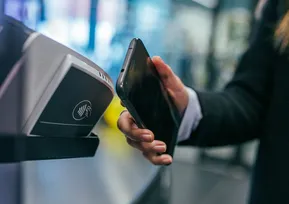
Photo by Kelvin Zyteng on Unsplash


Singapore in Q1 2024

As an asset manager in Singapore and Japan, AGST is set to play a pivotal role in the issuance and distribution of security tokens in these markets. Their strategy includes launching security token products in Singapore in the first quarter of next year. These products will be backed by assets from Buysell Standards.

The partnership between Buysell Standards and AGST is set to be multifaceted, encompassing several key areas of collaboration. Together, they will focus on developing new investment products and building the necessary infrastructure to support them. They will also focus on marketing and promotional efforts in the ASEAN region.


Anticipating regulatory exemption

Buysell Standards is among the seven companies that received approval from the South Korean Financial Services Commission to issue security tokens. The company is anticipating a regulatory exemption from the government, which would allow them to introduce fractional investment products linked to ship finance.

Buysell Standards expects that its partnership with AGST will facilitate quicker access to funding from international sources for high-quality investment products in South Korea. Meanwhile, AGST seeks to introduce a range of Korean assets to the global security token market.

Emphasizing the quick adoption of fintech by ASEAN investors and their fondness for South Korea, Shin Beom-jun, CEO of Buysell Standard, stated that the company is committed to actively promoting Korean security token products on the global investment stage.

Kim Chang-soo, Chairman of Fundiant Holdings, expressed his ambition to strengthen the Korean security token market. He observed that the market is currently in an early stage of development, leading to the undervaluation of underlying assets. He believes that introducing Korean security tokens to international markets will reciprocally aid in the expansion and maturation of the domestic market.

More to Read
View All
Web3 & Enterprise·

Jun 02, 2023

Wemade Introduces New DeFi Services on WEMIX3.0 Mainnet

Wemade Introduces New DeFi Services on WEMIX3.0 MainnetKorean blockchain game maker Wemade announced today that it will deploy decentralized finance (DeFi) services Kurrency and Konverter on the WEMIX3.0 Mainnet.Photo by Shubham Dhage on UnsplashTwo DeFi servicesKurrency utilizes a collateralized debt position (CDP) model, providing users with the capability to lock up a certain amount of virtual assets in order to mint, deposit, and swap the WEMIX Crypto Dollar (WCD). WCD, a cryptocurrency designed to minimize price fluctuations, complements the WEMIX Dollar, which is fully backed by the stablecoin USDC.Konverter is a new decentralized exchange (DEX) that combines the strengths of established DEXs. On June 9, Konverter will demonstrate functions that contribute to the efficiency of Kurrency. These functions involve seamless swaps between WCD and a variety of stablecoins. The full-fledged version of Konverter, set to launch in the second half of this year, will offer a broader array of swap services along with a “governance function” that doesn’t require forced lock-ups.Mainnet firstThe initial launch of Kurrency and Konverter will take place on the WEMIX3.0 Mainnet. Their goal is to magnify the ecosystem’s scope by boosting the utility of assets within the network and harnessing the synergies derived from decentralized apps (dApps).Multichain expansionLater, the two services on the WEMIX3.0 Mainnet will become more refined and reliable, paving the way for a multichain expansion. A successful implementation will improve interconnectivity between various blockchains, ultimately bolstering the value of the WEMIX ecosystem.Engaging usersStarting today, Kurrency is initiating various quests to encourage user participation. Users gaining experience from these quests will become eligible to join community events, promoting a more vibrant and engaged user base.

news
Policy & Regulation·

Jan 11, 2024

BitGo secures in-principle MPI license approval in Singapore

BitGo, an American regulated digital asset custody firm, has achieved in-principle approval from the Monetary Authority of Singapore (MAS) for a Major Payment Institution (MPI) license, marking a significant milestone in its global expansion efforts.Photo by Sergio Sala on UnsplashExtending global footprintIn a recent social media post, BitGo expressed its enthusiasm for the approval, positioning itself closer to providing specialized trading services for non-retail investors. The company sees this as an opportunity to extend its global footprint and offer regulated, secure and trusted solutions in the Asia-Pacific (APAC) region. Lim Ho Beng, BitGo's Asia-Pacific managing director, emphasized Singapore's regulatory clarity regarding digital assets and its status as a leading innovation hub and gateway to the Asia-Pacific as key factors driving BitGo's expansion into the Republic. In a statement provided to The Block, the company outlined that in operating as a crypto brokerage in Singapore, that would position BitGo “as a leading provider of digital asset services for institutional finance throughout APAC.” Expanding service offeringWith the full license on the horizon, BitGo Singapore Pte. Ltd. is aiming to broaden its services in the city-state, facilitating institutional clients in purchasing and selling cryptocurrencies directly from its cold storage custody solution. BitGo CEO Mike Belshe acknowledged the significance of the MAS in-principle approval, particularly following the recent acquisition of the company's German license. Belshe emphasized the company's commitment to providing clients with regulated, secure and trusted solutions as it expands its global presence. Additional licensing successBefore this achievement in Singapore, BitGo had already made notable strides in the global digital asset custody arena. The company secured a crypto custody license from Germany’s Federal Financial Supervisory Authority (BaFin), a crucial step in its European expansion strategy. BitGo Deutschland GmbH, established in 2020, initially operated under a transitional regime in Germany before obtaining the full license, aligning with the company's dedication to operating in regulatory-compliant markets. Dejan Maljevic, BitGo’s Managing European Director, commended BaFin's role as a global trendsetter in crypto regulation, providing a secure regulatory framework that facilitates progress in digital currencies. In addition to its presence in Germany, BitGo obtained approval from the New York Department of Financial Services (NYDFS) for the New York Trust Charter. This authorization allows BitGo to extend its custody services to a broader range of institutional clients in New York, further solidifying its position as a trusted player in the digital asset custody space. BitGo was one of the first crypto custodians to emerge in catering to institutional clients. It will compete with firms like Zodia Custody, a digital asset custodian backed by Japan’s SBI Holdings and British bank Standard Chartered, which launched its services in Singapore last September. In August, BitGo raised $100 million in Series C funding, based on a company valuation of $1.75 billion. The crypto custodian continues to navigate regulatory landscapes globally, emphasizing its commitment to offering secure and compliant solutions to institutional clients across various jurisdictions.

news
Markets·

Jun 16, 2023

Korean Survey: High Hopes for New Tech, Less for Blockchain and Metaverse

Korean Survey: High Hopes for New Tech, Less for Blockchain and MetaverseA survey report on the perceptions and acceptance of evolving technology among the South Korean public was released yesterday by the Korea Communications Commission (KCC) in collaboration with the Korea Information Society Development Institute (KISDI). The survey, conducted from October 5, 2022, to January 13, 2023, involved 5,378 smartphone users who accessed the Internet at least once a day.Photo by Алекс Арцибашев on UnsplashTech toolsThe report titled “The 2022 User Panel Survey on Intelligent Information Society” revealed that Korean individuals generally hold high expectations for technological tools. Among the respondents, 89.3% expressed their belief that robots would enhance our lives, making it the most anticipated technology. This was closely followed by autonomous driving (87.8%) and kiosks (87.6%). On the other hand, blockchain and AR/VR were slightly less popular, with 73.4% and 72.4% of respondents showing interest, respectively. AR/VR stands for augmented reality and virtual reality.Information servicesThere was also significant anticipation for advanced information services among the respondents. Algorithm-based content recommendations garnered approval from 86.9% of participants, while artificial intelligence-based healthcare received support from 86.5%. However, metaverse-related services received a more moderate level of enthusiasm, with approximately 66% of respondents expressing interest.Metaverse usageThe survey also delved into the usage of metaverse platforms among respondents, revealing that only 12.7% had prior experience with such platforms. This finding suggests that the level of metaverse usage remains relatively low. Among the metaverse-experienced respondents, the most popular platform was ZEPETO, which accounted for 39.4% of usage. On average, users spent 1 hour and 4 minutes on the platform daily. ZEPETO is a Korean communication service that allows users to create and interact as 3D avatars in a virtual world. The cyberspace platform is operated by NAVER Z, an affiliate of the nation’s search engine giant NAVER Corp.Regarding the activities conducted on metaverse platforms, 77.9% of users stated that they primarily utilized them for gaming purposes. This was followed by “communicating with friends” (67.8%) and “communicating with strangers” (66.6%).When discussing the advantages of the metaverse, respondents highlighted its ability to transcend physical and temporal limitations, with 65.7% and 62.6% mentioning “less constraint by time” and “less constraint by space,” respectively. Additionally, 60.1% of respondents mentioned the metaverse’s capacity for self-expression as a benefit. However, respondents also expressed concerns about the metaverse, including risks such as sex offenses (65.7%), personal data infringement (62.6%), hacking (60.1%), and addiction (57.8%).

news
Loading