Top

Crypto emerges as topic in Indonesian election campaign

Policy & Regulation·December 20, 2023, 12:25 AM

As Indonesia gears up for its upcoming presidential election, the country’s crypto market has become a focal point for political discourse. Gibran Rakabuming Raka, a vice presidential candidate and the eldest son of President Joko Widodo, recently unveiled his plans to foster expertise in blockchain and crypto within the Southeast Asian nation.

Chosen as the running mate for presidential candidate Prabowo Subianto, the 36-year-old politician aims to elevate tech education in Indonesia, opening avenues for the younger generation, particularly in the realm of digital assets. According to a report by Indonesian online news portal detikNews, while speaking at a political gathering on Dec. 10, Gibran asserted:

“We are preparing blockchain experts, we are preparing cyber security experts, we are preparing crypto experts.”
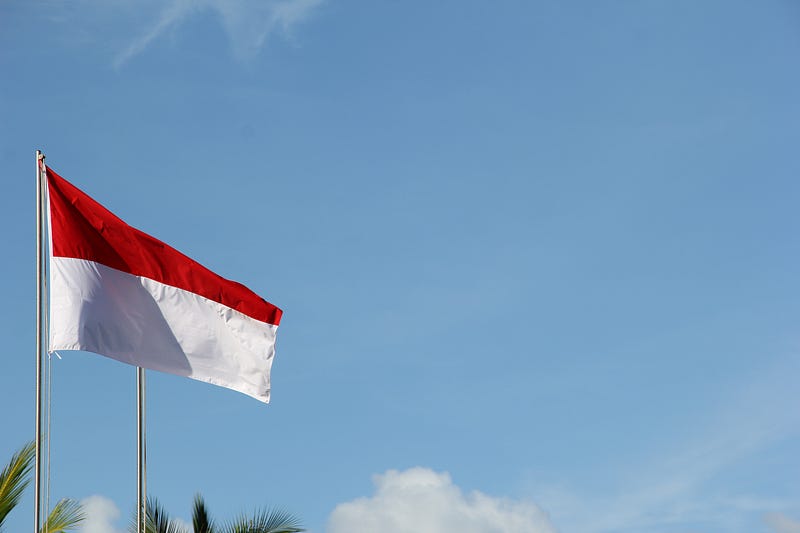
Photo by Nick Agus Arya on Unsplash


Crypto potential

Indonesia has emerged as being ahead of the curve in terms of crypto adoption, ranking seventh on Chainalysis’ 2023 global crypto adoption index. With an estimated 18 million crypto investors, the country boasts a robust industry association that also functions as a self-regulatory body.

Local news media reported in October that the Southeast Asian country has seen a 10.1% year-on-year increase in the number of crypto investors. At the time, Tirta Karma Senjaya, Head of the Commodity Futures Trading Regulatory Agency, said, "Growth in the number of crypto investors in Indonesia continues to increase, but investors are still looking for the right time to buy crypto.”

Private sector entities have also identified the raw potential. In the same month, Web3 consulting firm Tiger Research, in partnership with South Korean crypto data platform Xangle, produced a report which identified significant potential for the development of Indonesia’s Web3 market. There are over 30 crypto exchanges operating in the country, acting as the primary channel through which growth in crypto is propelled in Indonesia.


Capitalizing on crypto interest

The government, under President Widodo, has actively sought to capitalize on this crypto enthusiasm, going as far as establishing a local “stock market” dedicated to crypto assets.

Gibran’s proactive stance on crypto education aligns with his broader vision of positioning Indonesia at the forefront of the global digital revolution. The country’s rapidly growing tech landscape and crypto adoption make it an opportune space for fostering expertise in these cutting-edge technologies.

As the presidential election approaches, Gibran’s commitment to cultivating a pool of crypto experts underscores the potential influence of the crypto industry in shaping Indonesia’s economic future.


An international topic

Crypto is increasingly becoming an important topic in elections globally. In the United States, many of the presidential candidates, particularly within the Republican Party, have publicly expressed their interest in crypto and blockchain. Yesterday, Ripple CEO Brad Garlinghouse took to the X social media platform on the subject, stating:

”Team @Ripple is putting a stake in the ground, leading the charge with other industry leaders to support pro-innovation and pro-crypto candidates in the 2024 US election cycle. The US cannot afford to continue taking a back seat on the global stage.“

With Indonesia’s election frontrunners, Prabowo and Gibran, expressing interest in the sector, it remains to be seen how this focus on crypto will resonate in the upcoming political debate on Feb. 4.


More to Read
View All
Policy & Regulation·

Oct 05, 2023

KDIC Seizes Crypto from Debtors Linked to Losses at Financial Firms

KDIC Seizes Crypto from Debtors Linked to Losses at Financial FirmsDuring the first half of this year, the Korea Deposit Insurance Corporation (KDIC) tracked the cryptocurrency holdings of 1,075 individuals and debtors responsible for causing losses at financial entities, including savings banks, according to documents obtained by local news outlet Herald Economy, from the office of lawmaker Kim Han-kyu, a member of the National Assembly’s National Policy Committee. From this scrutiny, KDIC identified 29 wrongful cases and proceeded to confiscate cryptocurrencies in 16 of those instances.KDIC is a semi-state body that has been instrumental in tracing and recovering assets from culpable employees at troubled financial firms and debtors in arrears. Meanwhile, methods for hiding wealth have become more sophisticated, typically unfolding behind the curtain.Photo by Georg Bommeli on UnsplashFirst crypto seizureOut of these individuals, 900 had taken out loans of at least KRW 3 billion ($2.2 million) from beleaguered financial institutions, while the remaining 175 were employees of these institutions, held responsible for their failures. This occasion represents the KDIC’s first seizure of virtual assets.Until recently, the KDIC struggled to reclaim hidden assets funneled into cryptocurrency exchanges, given their limited authority to seek documentation. KDIC’s purview mainly extended to requesting information from public institutions, banks, insurance companies, and securities firms. However, KDIC has now found a way to seize crypto assets by investigating the bank accounts linked to these exchanges. In Korea, crypto exchanges facilitating Korean won trades are legally mandated to secure real-name accounts from banks.Call for expanding KDIC’s authorityGiven the evidence of using cryptocurrencies to conceal wealth, many suggest that amendments to the Depositor Protection Act are necessary, enabling KDIC to directly request relevant data from exchanges and recover more hidden assets effectively.Furthermore in August KDIC secured a court order allowing them to liquidate these assets. Following this successful confiscation, the debtors’ cryptocurrencies have been frozen in their wallets, rendering them unresponsive to any market shifts. Discussions are now underway regarding the method of liquidating the debtors’ cryptocurrencies at market value on exchanges. This includes deliberations on whether KDIC will assume ownership of the cryptocurrencies and directly proceed with their sale.In a chat with Herald Economy, Lawmaker Kim emphasized the need for KDIC to have the authority to access information from virtual asset service providers. This would enable them to more effectively retrieve assets from responsible debtors. Kim further stated that such steps would enhance both the efficiency of debt collection and overall market fairness.

news
Web3 & Enterprise·

Sep 22, 2023

Korea’s Content Industry: Thriving Amidst Global Tech Advancements and Ambitious Plans

Korea’s Content Industry: Thriving Amidst Global Tech Advancements and Ambitious Plans“The global competition driven by the Internet and network platforms, artificial intelligence (AI), the metaverse, blockchain technology, and other unprecedented advancements in content technology is ushering in a new era,” Director Jo Hyun-rae of the Korea Creative Content Agency (KOCCA) said in his speech during the 10th annual South Korea Cultural Contents Forum at the Josun Palace Hotel in Seoul on Wednesday, where authorities from various agencies gathered to discuss the prospects, challenges, and hopes for the nation’s content industry.Photo by Ethan Brooke on UnsplashImportance of creative foundations and collaborative effortsJo emphasized his belief that the industry should be built on a foundation of creative talent, rich infrastructure, and financial resources, saying that the agency is actively pushing projects to provide production and financial support in the face of limited resources.“I believe that the creativity and spirit of ambition in our content industry, along with the support and efforts of our people, government, and media, including the Financial News, are shaping the status of K-content today,” he said.Growth and government initiativesAccording to the Ministry of Culture, Sports, and Tourism (MCST), the Korean content industry has seen remarkable growth over the past decade. Last year, the size of the industry exceeded KRW 148 trillion (approximately $111 billion), a growth of about 70% compared to ten years ago.Last year’s content-related exports also amounted to $13.3 billion, far surpassing the $10 billion scale of secondary battery exports and $8.1 billion in home appliance exports. “The Ministry recognizes the economic importance and potential of the content industry and is actively promoting comprehensive support measures to utilize it as an instrument of our national strategy, just like the semiconductor industry,” said Park Sung-won, Vice Minister of the MCST. He also mentioned plans to boost governmental support to encourage active investment in the industry and stimulate the creation of globally competitive works.“Even amid an overall economic downturn, the growth of K-content exports continues, which plays a significant role in our economy,” said Byun Dong-shik, President of local news outlet Financial News. “In light of this forum, I hope that the Korean cultural content industry, and our nation’s economy as a whole, can take another quantum leap forward.”

news
Policy & Regulation·

Jan 10, 2024

Singapore regulator adds imToken crypto wallet to Investor Alert List

Singapore's Monetary Authority (MAS) has recently added the non-custodial crypto wallet, imToken, to its Investor Alert List, prompting a response from the Singapore-based company.Photo by Zhu Hongzhi on UnsplashIdentifying unregulated entitiesAccording to the official MAS website, imToken found its place on the alert list on Dec. 5. This regulatory move demonstrates that MAS is monitoring the evolving crypto landscape with a view towards safeguarding investors from potential risks. The list serves as a repository of unregulated entities that might be mistakenly perceived as licensed or regulated by MAS. The regulatory body had also flagged BKEX digital asset exchange in December. BKEX had suspended withdrawals earlier in the year, having gotten caught up in an investigation surrounding money laundering activity on the platform. More recently, the company has ceased operations. Company responseIn response to being added to MAS's alert list, imToken took to the X social media platform (formerly Twitter) to address user concerns on Tuesday. The non-custodial wallet clarified that it had not applied for a financial business license in Singapore, the primary reason for its listing. Notwithstanding that, ImToken reassured its users that their assets remain unaffected due to the platform's decentralized nature. The company outlined that it is actively engaging with MAS to clarify its business model and aims to have imToken removed from the Investor Alert List. This development highlights the ongoing dialogue between crypto platforms and regulatory bodies, emphasizing the need for clear communication and compliance within the evolving crypto regulatory landscape. As MAS continues to take decisive actions, the industry remains under scrutiny, necessitating collaboration between regulators and crypto entities for a well-balanced and secure financial ecosystem. Unintended consequencesMAS has taken a proactive approach to regulation in the crypto space. That has been evidenced in previous actions such as blacklisting Binance in 2021, leading to Binance relocating its operations to Dubai. That blacklisting turned out to provide a classic example of the law of unintended consequences. With Binance having removed itself from the local market following the blacklisting, many Singaporeans chose to use FTX instead. FTX subsequently failed in November 2022, leaving a disproportionate number of Singaporean customers out of pocket. The inclusion of imToken on the alert list is particularly noteworthy amid the growing popularity of non-custodial wallets. Statista data from 2022 indicates that 81 million users have adopted non-custodial wallets, providing them with greater control over private keys and crypto assets. However, this surge in usage has also brought about increased regulatory attention due to associated risks. Founded in 2016, imToken was initially launched in Hangzhou, China, prior to relocating its headquarters to Singapore. At various stages, the firm has been funded by companies such as IDG Capital, Qiming Venture Partners and HashKey. HashKey has also collaborated with the company by extending trading services to imToken wallet users, including direct bank transfers. In 2021 imToken partnered with U.S. blockchain infrastructure provider Infinity Stones in order to enable an in-wallet ETH2.0 staking service.

news
Loading