Top

Lambda256 and CryptoLab partner to pioneer privacy-enhanced blockchain technology

Web3 & Enterprise·December 15, 2023, 9:45 AM

Lambda256, the Blockchain-as-a-Service (Baas) arm of South Korea’s largest crypto exchange Upbit, has signed a business agreement with private AI technology developer CryptoLab to develop and commercialize technology that can enhance the privacy of data on blockchain networks, according to local news outlet Kyunghyang Games on Friday (KST).

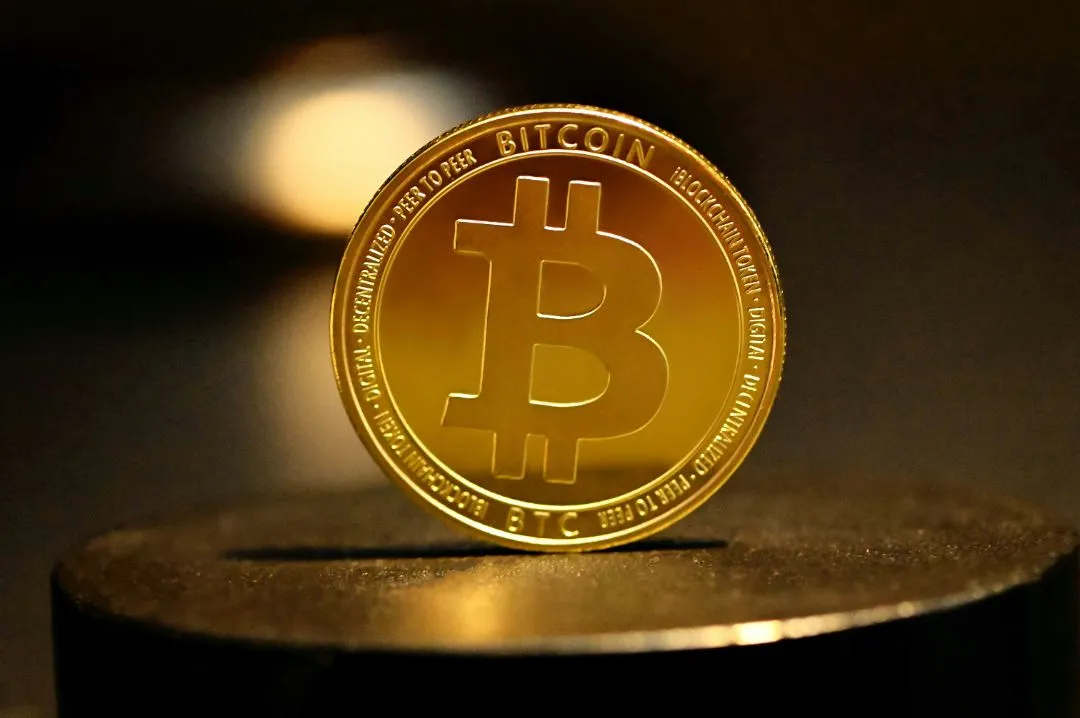
Photo by GuerrillaBuzz on Unsplash


Advanced privacy measures

The two firms will work together to develop various blockchain-based service platforms, such as a token securities offering (STO) platform, that will be equipped with strengthened privacy protection technology for data stored on blockchains.


Innovation unleashed

Lambda256 has been leveraging its Web3 developer platform Luniverse to work with a plethora of businesses, including those in the security token industry, to help them build, deploy and manage blockchain networks. Some of its solutions include DID, a blockchain-based identity management system; Trace, a blockchain verification and tracking system; and Point, a blockchain-based loyalty rewards solution.

CryptoLab, on the other hand, has developed in-house homomorphic encryption technology that can encrypt data while allowing that data to still be operated on. The firm’s CEO, Chun Jeong-hee, who is also a professor at Seoul National University’s Department of Mathematical Science, was selected as a Fellow of the International Academy of Cryptography (IACR) this year in recognition of his contributions to the development of the field of cryptography.

“By combining Lambda256’s blockchain platform with our homomorphic encryption technology, we look forward to exchanging our technology and capabilities,” said Shin Jun-bum, CTO of Cryptolab. Jason Lee, CISO of Lambda256, also reaffirmed the companies’ joint goal of solving data privacy issues that occur in the blockchain space. He added that they would take this opportunity to bring blockchain to fields like finance and healthcare that are sensitive to data privacy.

More to Read
View All
Policy & Regulation·

May 31, 2023

Hong Kong SFC CEO Prioritizes Investor Protection in Crypto Regulations

Hong Kong SFC CEO Prioritizes Investor Protection in Crypto RegulationsAccording to a report by Chinanews, Julia Leung, Chief Executive Officer of the Hong Kong Securities and Futures Commission (SFC), participated in a seminar organized by the Hong Kong Academy of Finance (AoF). During the event, she emphasized the importance of investor protection in the formulation of guidelines for operators of virtual asset trading platforms.Photo by Kanchanara on UnsplashDevelopment of crypto in Hong KongAt the seminar yesterday, Leung discussed the development of virtual assets in the special administrative region of China. She recalled the pushback the SFC received in 2018 when it first proposed regulations for virtual asset trading platforms. Critics argued that the licensing system, demanding applicants to comply with stringent internal control and investor protection standards, might compel fintech companies to relocate their operations to other jurisdictions, such as Singapore.Market recognition of crypto regulationsDespite initial criticism, the market came to appreciate the importance of these regulatory standards, especially after witnessing the bankruptcy of several overseas cryptocurrency organizations.The guidelines for operators of virtual asset trading platforms in Hong Kong are set to take effect in June. Leung mentioned that these guidelines match market expectations and place emphasis on protecting investors. They encompass regulations for virtual asset custody, the segregation of client assets, and the avoidance of conflicts of interest. She also expressed satisfaction with the SFC’s role as a leading regulator in the virtual asset space.Crypto exchange ratingMeanwhile, Chinese blockchain news media Jinse Finance reported today the official establishment of the Hong Kong Virtual Asset Consortium (HKVAC), a private entity that rates virtual assets.It has also launched a virtual asset index and will introduce a virtual asset exchange rating system. The HKVAC Large Market Cap Cryptocurrency Index comprises the 30 leading cryptocurrencies by market capitalization. The index will be reviewed quarterly on the last day of each quarter (March, June, September, and December). The Virtual Asset Exchange Rating System will assess the credibility of trading platforms and enhance transparency and accountability in the virtual asset trading market.HKVAC was established by a team of industry experts and professional rating agencies. It brings together key stakeholders in the virtual asset industry, such as big data firms, exchanges, and institutional investors, along with the city’s licensed rating agencies. HKVAC aims to cultivate a secure environment for crypto investments and enhance the public’s understanding of virtual assets.

news
Web3 & Enterprise·

Jul 18, 2023

P2E Game Covenant Child Developer Partners with Pala for Global NFT Collaboration

P2E Game Covenant Child Developer Partners with Pala for Global NFT CollaborationCityLabs, a South Korean smart city integration platform company, made an announcement today regarding its subsidiary, Metablock, which has entered into a memorandum of understanding (MOU) with Pala, the nation’s largest non-fungible token (NFT) trading platform.Photo by Andrey Metelev on UnsplashGlobal expansionAccording to a report by Newsis, the collaboration between the two companies aims to explore various cooperative efforts in the global development and expansion of NFT projects related to games. To accomplish this, they will utilize the intellectual properties (IPs) of Covenant Child, a global play-to-earn (P2E) game developed by MetaBlock.NFT marketplaceThe initial step of this partnership involves the establishment of an NFT trading platform. MetaBlock recently concluded the final closed beta test for Covenant Child on a global scale. In the upcoming months, the company plans to launch a dedicated NFT marketplace for Covenant Child sometime during the open beta test period. Additionally, MetaBlock will conduct pre-sales of NFTs and list the governance token on cryptocurrency exchanges.Cho Young-joong, CEO of CityLabs, expressed enthusiasm for the partnership, noting that it will provide users with a more convenient and reliable NFT trading environment. Cho further emphasized the company’s commitment to creating an infrastructure that allows users to readily enjoy content developed on MetaBlock.

news
Markets·

Nov 24, 2025

UAE institutions deepen Bitcoin positions prior to market pullback

Major investment entities linked to the Abu Dhabi government increased their exposure to Bitcoin in the third quarter, according to newly released data. These moves came ahead of a broader decline in the digital asset market amid shifting macroeconomic conditions in the U.S.Photo by Kanchanara on UnsplashInstitutional accumulationThe Abu Dhabi Investment Council (ADIC), a subsidiary of Mubadala Investment Company, more than tripled its holdings in BlackRock’s iShares Bitcoin Trust ETF (IBIT) during the third quarter, increasing its position from 2.4 million to nearly 8 million shares, Bloomberg reported. An ADIC spokesperson told Bloomberg that the organization views Bitcoin as “a store of value similar to gold,” and described the allocation as “part of a long-term diversification strategy.” Other UAE-based conglomerates are also maintaining sizable Bitcoin positions. The Royal Group, which is linked to the Abu Dhabi royal family, holds around 6,450 BTC, according to a Crypto Briefing report citing Arkham data. The assets were accumulated through the group’s majority-owned subsidiary, Citadel Mining. Regulatory and infrastructure developmentsThe UAE’s efforts to position digital assets as a driver of economic growth are also reflected in its regulatory framework. A recent Global Digital Assets Report by the Global Finance & Technology Network (GFTN) identified the UAE as one of seven jurisdictions worldwide whose crypto-exchange rules meet all three key standards for AML/CFT compliance: know-your-customer (KYC) and ID verification, suspicious transaction reporting, and implementation of the Financial Action Task Force (FATF) Travel Rule. The report characterized the UAE’s approach as “federated oversight with zone-specific AML regimes.” Responsibilities are divided among the Securities and Commodities Authority (SCA) at the federal level, the Virtual Assets Regulatory Authority (VARA) in Dubai, and the Financial Services Regulatory Authority (FSRA) of the Abu Dhabi Global Market (ADGM). In decentralized finance (DeFi), VARA has issued specific rulebooks covering activities such as lending and borrowing. ADGM has introduced DLT Foundations Regulations to provide legal structures for decentralized autonomous organizations (DAOs), while DeFi operations within the jurisdiction still require authorization from the FSRA. In addition to regulatory developments, the UAE is also advancing the practical deployment of digital asset technologies. In the payments sector, Abu Dhabi Airport has signed a memorandum of understanding (MOU) with Al Hail Holding to pilot stablecoin payment options and digital wallets for travelers, according to Cryptopolitan. Bitcoin declining below $87KThe buildup in institutional exposure has occurred against a backdrop of declining market prices. Bitcoin (BTC) reached a peak of $126,080.00 on Oct. 6 before dropping to roughly $87,000 as of Nov. 21, its lowest level since April 21. Technical indicators show that Bitcoin has fallen below both its 50-day and 200-day moving averages. IBIT has followed a similar trajectory. After closing the third quarter at $65 per share, the ETF rose to $71 on Oct. 6 before falling to $48.96 by Nov. 20. Two days before that, the fund recorded a net outflow of $513.47 million, the largest in its history, according to data from Trader T. Reuters reported that the recent weakness in Bitcoin and other risk assets is tied to the U.S. Federal Reserve’s cautious stance on rate cuts amid persistent inflation pressures. That concern was reinforced on Nov. 20 when the U.S. Bureau of Labor Statistics released September nonfarm payrolls data that had been delayed by the federal government shutdown, showing a figure of 119,000 against the market forecast of 53,000. The stronger-than-expected labor reading has reduced expectations for a rate cut next month, adding pressure to both equities and Bitcoin. 

news
Loading