Top

Hong Kong SFC CEO Prioritizes Investor Protection in Crypto Regulations

Policy & Regulation·May 31, 2023, 4:03 AM

According to a report by Chinanews, Julia Leung, Chief Executive Officer of the Hong Kong Securities and Futures Commission (SFC), participated in a seminar organized by the Hong Kong Academy of Finance (AoF). During the event, she emphasized the importance of investor protection in the formulation of guidelines for operators of virtual asset trading platforms.
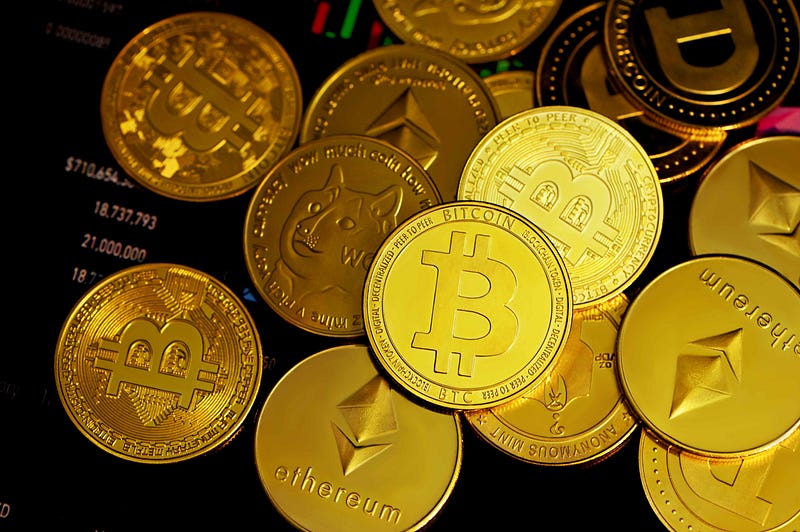
Photo by Kanchanara on Unsplash


Development of crypto in Hong Kong

At the seminar yesterday, Leung discussed the development of virtual assets in the special administrative region of China. She recalled the pushback the SFC received in 2018 when it first proposed regulations for virtual asset trading platforms. Critics argued that the licensing system, demanding applicants to comply with stringent internal control and investor protection standards, might compel fintech companies to relocate their operations to other jurisdictions, such as Singapore.


Market recognition of crypto regulations

Despite initial criticism, the market came to appreciate the importance of these regulatory standards, especially after witnessing the bankruptcy of several overseas cryptocurrency organizations.

The guidelines for operators of virtual asset trading platforms in Hong Kong are set to take effect in June. Leung mentioned that these guidelines match market expectations and place emphasis on protecting investors. They encompass regulations for virtual asset custody, the segregation of client assets, and the avoidance of conflicts of interest. She also expressed satisfaction with the SFC’s role as a leading regulator in the virtual asset space.


Crypto exchange rating

Meanwhile, Chinese blockchain news media Jinse Finance reported today the official establishment of the Hong Kong Virtual Asset Consortium (HKVAC), a private entity that rates virtual assets.

It has also launched a virtual asset index and will introduce a virtual asset exchange rating system. The HKVAC Large Market Cap Cryptocurrency Index comprises the 30 leading cryptocurrencies by market capitalization. The index will be reviewed quarterly on the last day of each quarter (March, June, September, and December). The Virtual Asset Exchange Rating System will assess the credibility of trading platforms and enhance transparency and accountability in the virtual asset trading market.

HKVAC was established by a team of industry experts and professional rating agencies. It brings together key stakeholders in the virtual asset industry, such as big data firms, exchanges, and institutional investors, along with the city’s licensed rating agencies. HKVAC aims to cultivate a secure environment for crypto investments and enhance the public’s understanding of virtual assets.

More to Read
View All
Web3 & Enterprise·

Aug 12, 2023

Hong Kong Gives HKVAX Green Light for Virtual Asset Trading

Hong Kong Gives HKVAX Green Light for Virtual Asset TradingHong Kong’s financial landscape continues to develop, with the latest installment coming from a Securities and Futures Commission (SFC) decision to grant in-principle approval to Hong Kong Virtual Asset Exchange (HKVAX) to operate a virtual asset trading platform within the bounds of the region’s securities laws.The development, announced via a press release published to HKVAX’s website on Friday, follows the recent introduction of crypto retail trading by exchanges HashKey and OSL in Hong Kong.Photo by Dids on PexelsLicensed to extend service offeringIn a notable move, the SFC has green-lit HKVAX’s entry into the virtual asset trading arena. The approval-in-principle, announced on Friday, empowers HKVAX to conduct regulated activities of both Type 1 and Type 7. A Type 1 license permits the operation of a digital asset trading platform specializing in securities. Meanwhile, the Type 7 classification endows the company with the official capacity to deliver automated trading services to both retail users and institutional investors.Upon obtaining the final green light, the platform envisions providing an array of services, including over-the-counter (OTC) brokerage enabling seamless fiat-to-digital asset trading, an institutional-grade exchange platform, and a secure custody solution fortified by insurance coverage.HKVAX is poised to introduce an up-and-coming product category, security token offerings (STOs), seeking to harness the burgeoning investment prospects of the Web3 ecosystem. STOs involve offering security tokens which represent traditional legal ownership of real-world assets.Upcoming collaborative fundingAnthony Ng, the Co-Founder and CEO of HKVAX, affirmed the exchange’s growth trajectory and outlined plans for expansion of its product suite in Hong Kong. Ng also emphasized forging collaborations with strategic investors to fuel the exchange’s upcoming funding rounds.HKVAX’s announcement is emblematic of Hong Kong’s embrace of crypto retail trading. Recent entrants HashKey and OSL have set the precedent by becoming the first exchanges to secure licenses for offering crypto trading services in the region as of August 3.It’s been a long process for HKVAX to arrive at this point. The firm first contacted the SFC in 2018 in relation to licensing. It started the application process in 2019. It’s also proving to be an incredibly costly exercise. It’s believed that crypto-related operating licenses are costing firms up to $20 million.The backdrop to these developments is Hong Kong regulators’ proactive stance on crypto regulation, catalyzed by the FTX exchange collapse in 2022. CEO Julia Leung Fung-yee of the SFC, in a speech on June 24, highlighted the integral role of crypto trading in the virtual asset ecosystem, underscoring the importance of safeguarding investors through the new licensing framework for virtual asset service providers.In a financial landscape undergoing transformation, Hong Kong’s regulatory moves are poised to shape the future trajectory of virtual asset trading and its integration within the broader securities landscape. As HKVAX gains its foothold and the crypto industry matures, the coming months are expected to see further refinements in this nascent yet rapidly evolving market.

news
Policy & Regulation·

Nov 12, 2024

Deutsche Bundesbank joins Singapore’s Project Guardian

The Deutsche Bundesbank, Germany’s central bank, has joined Project Guardian, a collaboration established in 2022 between the Monetary Authority of Singapore (MAS) and the financial sector, with an emphasis on the use of asset tokenization to improve liquidity and efficiency within financial markets.Photo by Rachel Davis on UnsplashAssessing DLT technologyIn a press release published on Nov. 8, Bundesbank Executive Board member Burkhard Balz suggested that the central bank is aligned with MAS in that both central banks are interested in determining “how innovative technologies and concepts, such as distributed ledger technology (DLT) or blockchain, can be put to meaningful use in the financial sector.” In joining Project Guardian, the Bundesbank will take part in the Asset & Wealth Management workstream, testing an interoperable blockchain platform for tokenized and digital funds. While the German central bank has just announced details of its participation in Project Guardian, in a speech given at the Layer One Summit, an event which formed part of the Singapore Fintech Festival last week, MAS Deputy Director Leong Sing Chiong welcomed the Bundesbank, alongside the World Bank, to Project Guardian.  The MAS executive clarified that the Deutsche Bundesbank and the World Bank would join the project’s Policymaker Group. He outlined that the role of that group is to “help provide inputs on governance arrangements, guidance on how GL1 [Global Layer One] infrastructures can be developed in line with global standards, and advice on appropriate regulatory guardrails for tokenised asset transactions.” GL1 refers to an initiative that has been established to create the foundational digital infrastructure to facilitate tokenized assets. Cross-border collaborationThrough its involvement in Project Guardian, the German central bank hopes to strengthen cross-border collaboration, while at the same time, progressing matters related to the “standardisation and interoperability of digital assets.” In working towards the goal of standardization, MAS has published two comprehensive reports covering fixed income tokenization and fund tokenization. MAS believes that the use of too many individual private DLT networks is resulting in fragmentation, with a detrimental effect with regard to liquidity. Consequently, the Singaporean central bank is establishing the Guardian Wholesale Network to improve liquidity and achieve asset tokenization at scale. The network will consist of Citi, Schroders, Standard Chartered, UOB and HSBC. Additionally, it was recently announced that SBI Digital Markets, a Singapore-based affiliate company of Japan’s SBI Digital Asset Holdings (SBI DAH), intends to contribute towards greater liquidity through its involvement in a fixed income asset tokenization pilot. Meanwhile, Citi and Fidelity have developed a proof of concept for a digital foreign exchange (FX) swap, enabled within an on-chain money market fund (MMF).  Tokenization inflection pointLeong went on to claim that while nobody has succeeded yet in implementing tokenization at scale, an inflection point has been reached with regard to the use of tokenization. He added that many use cases are promising relative to tokenization but that there is a need for supporting infrastructure “to enable good use cases to scale beyond individual networks.” In the press release, Leong said that the Bundesbank’s expertise “will be invaluable as we work together to enhance liquidity and efficiency of financial markets through asset tokenisation.”

news
Policy & Regulation·

Aug 02, 2023

Bankruptcy Judge Permits Terraform Labs to Subpoena FTX

Bankruptcy Judge Permits Terraform Labs to Subpoena FTXIn a significant development in the bankruptcy case of defunct crypto exchange FTX, a judge has granted Singapore-based Terraform Labs the authority to subpoena information related to its ongoing case brought by the United States Securities and Exchange Commission (SEC).Photo by Bermix Studio on UnsplashHack allegationsTerraform Labs, the blockchain company that developed the Terra blockchain and failed US dollar stablecoin UST, claims that the failures of its algorithmic stablecoin and governance token were the result of an attack from short-sellers, possibly involving Alameda Research (FTX’s sister company).The order, issued by Judge John Dorsey on Monday, allows Terraform Labs to serve subpoenas to FTX Trading and FTX US, aimed at collecting evidence to support its defense against the SEC’s allegations of fraud. According to court filings, lawyers representing the FTX Debtor have not formally objected to the court order.Terraform Labs’ request for subpoena power stems from its belief that short-sellers connected to FTX entities played a role in the failure of the algorithmic stablecoin and governance token, leading to the collapse of the crypto firm. The ability to obtain information from FTX through the subpoenas could be crucial in bolstering Terraform Labs’ defense against the SEC’s fraud charges.UST collapse falloutThe collapse of the UST stablecoin in 2022 contributed to a major market crash, resulting in a significant drop in the prices of many tokens. As a result, the company filed for bankruptcy in November 2022. The Co-Founder of Terra, Do Kwon, is currently serving a four-month sentence in a Montenegrin prison for using false travel documents. He may also face extradition to the United States or South Korea on fraud charges related to Terraform Labs.Motion to dismiss deniedIn a separate high-stakes ruling, US District Judge Jed Rakoff denied Terraform Labs’ motion to dismiss the securities fraud lawsuit filed by the SEC. The judge’s decision allows the SEC’s case against Terraform Labs and Do Kwon to proceed, rejecting defense arguments that the agency lacked jurisdiction and that Terraform’s TerraUSD stablecoin did not qualify as an unregistered security.Judge Rakoff’s ruling is a significant victory for the SEC as it intensifies its enforcement actions against crypto companies involved in allegedly unlawful token sales. He found the collapse of TerraUSD, which lost its dollar peg and incurred a $40 billion loss last year, plausible as a reason to consider the token as a security that should have been registered.Moreover, Rakoff dismissed Terraform’s claim that the SEC lacked the authority to regulate stablecoins without explicit Congressional authorization, asserting that the crypto industry was significant enough to warrant application of the “Major Questions Doctrine.” This doctrine limits agency overreach into major political issues but does not apply to the crypto asset markets.The judge also rebuffed Terraform Labs’ attempts to draw parallels between the Ripple case and its own. In the Ripple case, a different judge ruled that Ripple’s XRP token sales to retail investors did not violate securities laws due to the manner of purchase on secondary markets. Rakoff firmly stated that such distinctions did not apply under the legal Howey test governing whether crypto assets qualify as securities.

news
Loading