Top

Late Korean artist Lee Jung-seob’s ‘Bull’ NFT on auction at OpenSea

Web3 & Enterprise·December 01, 2023, 3:29 AM

NFT marketplace OpenSea is hosting an ongoing auction for a digital representation of the painting “Bull” by the late Korean artist Lee Jung-seob, Yonhap News TV reported on Tuesday. Celebrated for his distinctive lines in his paintings, Lee passed away in 1956. This auction is set to conclude on Dec. 12, with the starting bid placed at 300 WETH (Wrapped Ethereum), which is approximately equivalent to $626,000.
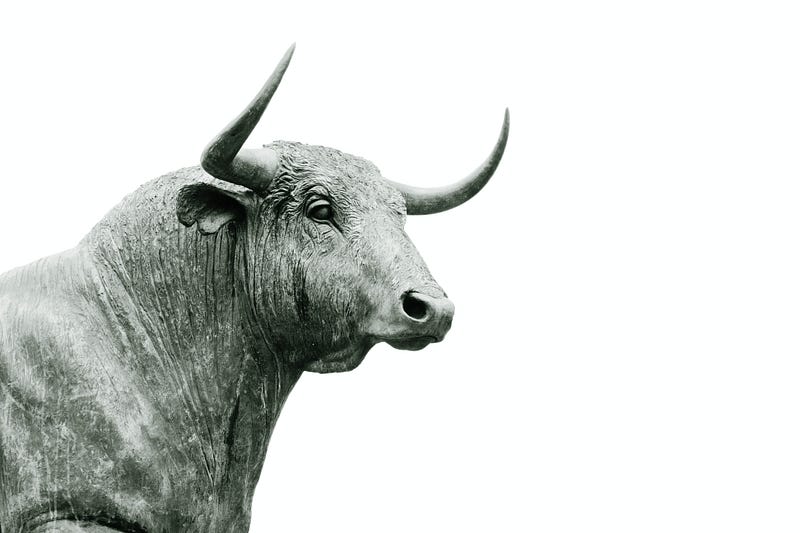
Photo by Hans Eiskonen on Unsplash


White bull as NFT

Lee’s “Bull,” featured in the OpenSea auction, is distinguished by its depiction of a white bull set against a dark green background. This particular piece is one of Lee’s unpublished works and is currently being offered for sale by a private art collector. Regarding the authenticity of the painting, the description on the OpenSea page states, “This work received a handwritten evaluation from Professor Jung Jum-sik, a founding member of the Lee Jung-seob Art Award, on November 9, 2000.”

The current owner of the original artwork has expressed their intention for auctioning it as a desire to share a valuable piece of art. The painting originally belonged to poet Ku Sang and has since changed hands multiple times, experiencing some damage along the way. While the copyright for an artist’s work typically remains with their inheritors for 70 years posthumously, in the case of Lee Jung-seob, this period has already lapsed.


Authenticity and NFT investments

Meanwhile, art appraisal experts are advising caution, emphasizing the need to first confirm the authenticity of the original painting. This caution stems from the fact that the painting has not undergone evaluation by an official appraisal organization.

During his interview with Yonhap, Jung Jun-mo, CEO of Korea Art Authentication Appraisal Inc., offered a word of caution regarding investment in NFTs tied to artworks with questionable authenticity. He emphasized that NFTs representing works that lack genuine authentication also hold no value in terms of authenticity. Jung advised potential investors to thoroughly verify the legitimacy of such artworks before proceeding with any investment in their NFT representations.

Last year, many paintings of modern Korean artists were converted into NFTs, but they sparked controversy over issues of authenticity. Experts in art investment have since been advising thorough research prior to making any investments in these digital assets. They warn that losses incurred from transactions involving these NFTs fall squarely on the investors.

More to Read
View All
Web3 & Enterprise·

Nov 29, 2023

Rotonda revamps Burrito Wallet with cross-chain swapping, added mainnet and more

Rotonda revamps Burrito Wallet with cross-chain swapping, added mainnet and moreRotonda, a subsidiary of South Korean crypto exchange Bithumb, has recently revamped its Web3 wallet Burrito Wallet to make the app more convenient for users, according to Korean news agency Etoday on Wednesday (local time). The newest version features an improved mainnet support system, user interface (UI) and user experience (UX), with a stronger focus on enhancing user convenience and creating a framework for optimal investment.Photo by Shubham’s Web3 on Unsplash“Through this service renewal, we hope that many users will be able to experience a more convenient and unique web3 environment. We will continue to improve our services to establish Burrito Wallet as a user-friendly crypto wallet platform,” the company said.Expanded options for token tradingMost notably, Burrito Wallet now offers cross-chain swapping, which allows users to trade token currencies that have been issued on different mainnets. This is a step up from regular crypto swapping, which only allows the swapping of tokens issued on the same mainnet. Cross-chain swapping between the Ethereum, BNB Smart Chain, Matic, Avalanche and Arbitrum mainnets is now supported by the deSwap Liquidity Network (DLN), a decentralized cross-chain exchange built by deBridge Finance. DLN facilitates secure and unlimited liquidity transfers across chains with zero slippage.Rotonda added that it would continue to expand its lineup of swap platforms through collaborations with major industry names like Kana Labs, WOOFi and Unizen.Better user experienceThe company also added new features to help users make optimal investments. This includes a new notification bot dubbed “Burrito Chef,” which sends notifications for announcements, updates and events within the app. Users can quickly and conveniently check the insights they need to inform their personal investments and get the most out of the app’s services.On the UI front, a “Home” tab has been added, which provides users with a concise overview at of the most commonly used features like wallet, swap and chat, along with the most popular content. Token rankings by category — such as most swapped tokens and most rising tokens — that were previously available on the “Swap” tab have been moved to the “Home” tab and placed in the foreground of the screen. Rotonda also explained that it aims to provide a more customizable experience by adding more detailed chart features.The wallet also now supports the Sui mainnet, bringing the total number of supported mainnets to 12.This development comes shortly after Rotonda recently launched Burrito Wallet in the Latin American region in a move to expand its global user base.

news
Web3 & Enterprise·

Aug 04, 2023

Nomura’s Laser Ventures Invests in Singapore’s Solv Protocol

Nomura’s Laser Ventures Invests in Singapore’s Solv ProtocolSolv Protocol, a Singapore-based DeFi startup, has revealed a significant stride forward with a $6 million funding round, drawing support from Laser Digital, the digital asset subsidiary of Japanese global financial services conglomerate Nomura.The project team provided details on the funding round via a blog post published to its website earlier this week. Accompanying Laser Digital in the funding round, Singapore’s UOB Venture Management also participated, alongside investors such as Matrix Partners, Bing Ventures, Mirana Ventures, Apollo Capital, Bytetrade Labs, and others.Photo by Towfiqu barbhuiya on Unsplash$14 million cumulative fundingThis injection raises its cumulative funding to an impressive $14 million. The innovative Solv Protocol has been developed to facilitate on-chain fund management within the realm of public blockchains.Delving into the intricacies of the Solv asset management protocol, Olivier Dang, COO of Nomura Securities’ wholesale digital office, expanded on its transformative potential, stating: “Solv has built a trustless institutional DeFi platform integrating brokers, underwriters, market makers, and custodians to create the first fund infrastructure on the blockchain to bridge DeFi, CeFi, and TradFi liquidity.”$100 million in trading volumeSolv Protocol is a DeFi infrastructure project that enables users to create and trade financial NFTs. The protocol concerns itself largely with ERC-3525, an Ethereum standard for semi-fungible tokens, the characteristics of which lend themselves well for financial use cases.At the heart of Solv’s business model lies a unique mechanism. Any fund utilizing its solution inherently allocates a portion of its assets under management. Inaugurated in the second quarter of this year, Solv has already facilitated over $100 million in trading volume.Semi-fungible token innovationThe origins of Solv are rooted in the pursuit of an optimal Ethereum token standard for effective fund management. Dissatisfied with existing standards, the founders, primarily Chinese technologists, forged an innovative path. Traditional ERC-20 fungible tokens weren’t deemed suitable due to the need for a new smart contract token for every customization. Similarly, non-fungible tokens (NFTs) posed limitations, being intrinsically designed as individual units not readily divisible, which is essential for issuing shares in a fund. The security token standard, ERC-1400, didn’t quite align either.Thus, Solv birthed the semi-fungible token through the development of ERC-3525, a groundbreaking solution to its unique challenge.While larger asset managers like Franklin Templeton and Ondo Finance have adhered to fungible tokens, a growing trend is emerging in the traditional asset management sector — a movement toward blockchain integration. UK-based Abrdn recently introduced a fund on the Hedera DLT network, while industry giant Schroders is exploring blockchain tokenization under Singapore’s Project Guardian initiative.It’s been an eventful week for Nomura’s Laser Digital. Alongside news of this investment, the company also announced its recent acquisition of a license from Dubai’s Virtual Asset Regulatory Authority (VARA). This regulatory green light bolsters its presence in the global digital asset sector.Nomura’s Laser Digital is amplifying its presence within the blockchain and digital asset domain, marking its sixth such investment within this year alone. Meanwhile, projects like Solv Protocol are pushing the boundaries of innovation through the development of semi-fungible tokens, extending the use cases of blockchain technology as it does so.

news
Policy & Regulation·

Sep 13, 2023

Civic Group Files Embezzlement Complaint Against Former Kakao Chairman Over KLAY Tokens

Civic Group Files Embezzlement Complaint Against Former Kakao Chairman Over KLAY TokensA South Korean civic group, known as Economic Democracy 21, filed on Wednesday a prosecution complaint against Kim Beom-soo, the former chairman of the internet giant Kakao, and several executives from Kakao’s affiliated companies. The allegations at hand pertain to embezzlement, specifically revolving around the virtual asset known as KLAY.Photo by Tingey Injury Law Firm on UnsplashKlaytn’s native tokenKLAY represents the native token of the Klaytn blockchain, which was developed by GroundX, a blockchain subsidiary of Kakao.Legal breach claimsThe complaint, formally submitted to the joint crypto-crime investigation division of the Seoul Southern District Prosecutors’ Office, asserts that Kakao executives have breached the Act on the Aggravated Punishment of Specific Economic Crimes and the Capital Markets Act.Clandestine pre-salesWithin the detailed complaint, Economic Democracy 21 alleges that following the issuance of KLAY, Kakao’s executives conducted private pre-sales of KLAY tokens before their official listing. These pre-sales activities reportedly raised between KRW 150 billion and 300 billion ($113 million and $226 million). The accusation is that these funds were not channeled into business endeavors, but rather diverted for personal use.The complaint also contends that Kim and other executives withdrew KLAY tokens from the company under the guise of investments, compensation, and service fees related to “overseas investment business” since 2022. The civic group further asserted that these corporate leaders employed a program to manipulate transaction records, presumably with the intent of preventing third parties from discovering the nature of these transactions.

news
Loading