Top

Circle President visits Seoul for stablecoin talks with exchanges and central bank

Web3 & Enterprise·August 22, 2025, 5:42 AM

Circle President Heath Tarbert, who oversees the issuer of the USDC stablecoin, arrived in Seoul on Aug. 21 for a series of meetings with South Korean cryptocurrency and blockchain industry leaders, as well as the governor of the country’s central bank.


Citing industry sources, local outlet Newsis reported Tarbert visited three major exchanges, Upbit, Bithumb and Coinone, shortly after landing, spending roughly an hour at each. Discussions centered on recent developments in Korea’s digital asset ecosystem.

https://asset.coinness.com/en/news/436df2c57c747c30aaac8f263f67098e.webp
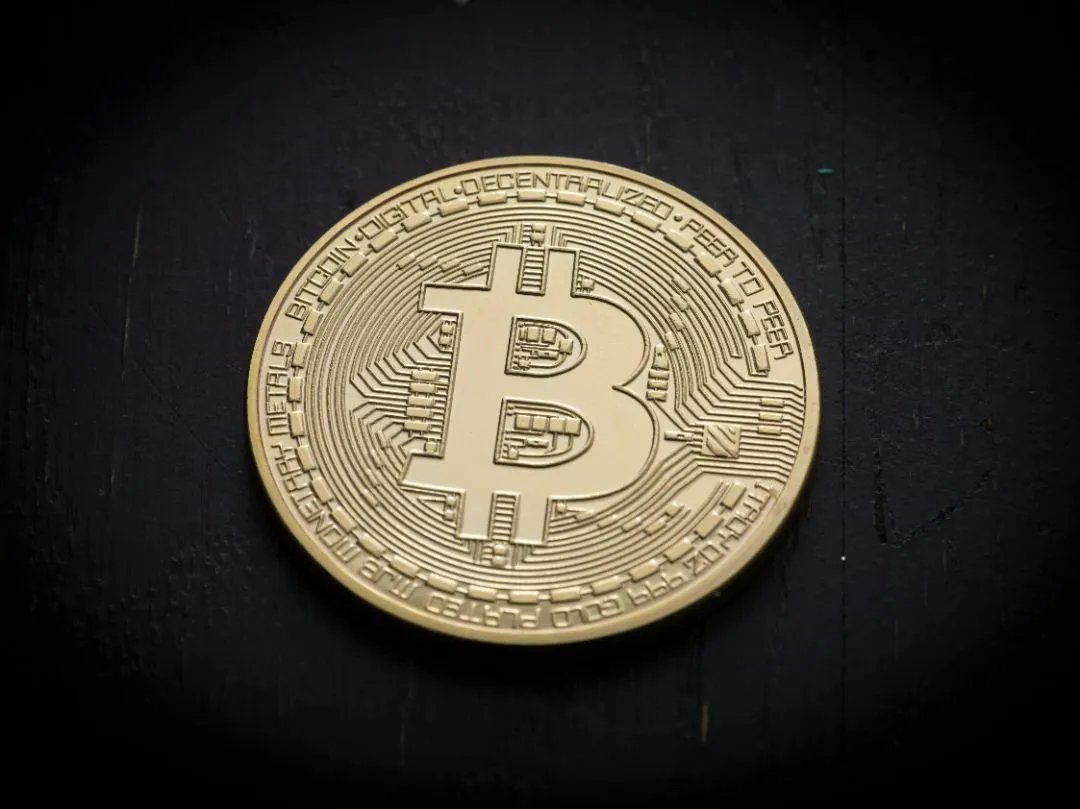
Photo by Daniel Bernard on Unsplash

Gathering insight from exchanges

The trip underscores Circle’s growing interest in South Korea, one of the world’s largest crypto markets by trading volume despite its heavy tilt toward retail investors. Circle is reportedly seeking on-the-ground insight from local trading platforms. An executive from a research firm said the market offers an attractive foothold for global players looking to deepen networks.


Previous reports indicated Circle has also begun informally recruiting in South Korea to support initiatives tailored to the local market, and the company is also weighing a direct investment in a domestic crypto firm.


Homing in on stablecoins

Stablecoins are expected to dominate the agenda with exchanges. USDC is the world’s second-largest stablecoin by market share, behind Tether’s USDT, and all three exchanges already support USDC trading. Upbit and Bithumb have meanwhile indicated their plans to develop Korean won–pegged tokens, recently filing trademark applications for their projects. Given Circle’s position in the sector, one exchange official said local platforms may look to the U.S.-based company as a benchmark, adding that practical knowledge-sharing could be the most meaningful outcome of Tarbert’s visit.


Tarbert also attended a dinner with Simon Seojoon Kim, CEO of crypto venture firm Hashed, whose teams span Seoul, Singapore, Bengaluru, Silicon Valley and Abu Dhabi. Circle and Hashed have been in frequent contact, and the gathering offered another forum to exchange views on recent market developments.


Talks with the central bank governor

On the policy front, Tarbert met with Bank of Korea (BOK) Governor Rhee Chang-yong at Circle’s request before the dinner. Rhee has signaled openness to the introduction of won-backed stablecoins, while emphasizing prudential safeguards and noting differences with some lawmakers on potential issuers.


The BOK head has previously warned that allowing non-bank entities to issue won-backed stablecoins could pose risks, such as circumventing capital rules. The South Korean central bank is working with other agencies to develop a framework that ensures the stability and utility of stablecoins while preventing their use to bypass foreign exchange controls.


The meeting between Tarbert and Governor Rhee likely covered regulatory parameters for cross-border remittances using stablecoins and avenues for public-private collaboration to foster a compliant won-stablecoin market.


On the following day, Tarbert is slated to meet executives from four major financial groups: Shinhan Financial Group, Hana Financial Group, KB Financial Group and Woori Bank.


Kakao Group, the company behind the KakaoTalk messaging app, is also on the itinerary. Representatives from its mobile payment platform, KakaoPay, are expected to take part in the discussions. The talks come as Kakao recently formed a task force to navigate Korea’s evolving stablecoin rules.


Separately, Circle listed on the New York Stock Exchange (NYSE) earlier this year under the ticker “CRCL.” The initial public offering (IPO) priced at $31 a share and opened at $69, raising nearly $1.1 billion. As of Aug. 21, the stock closed at $131.80.

 

More to Read
View All
Web3 & Enterprise·

Jan 12, 2024

Nomura and Brevan Howard back Polygon-powered Libre Protocol

Laser Digital, the crypto arm of Nomura, Japan’s largest investment bank and brokerage group, in collaboration with WebN Group, has unveiled Libre, an institutional Web3 protocol powered by Polygon technology. WebN Group is an incubation hub for fintech and Web3 innovators. It’s backed by Laser Digital and Alan Howard, the co-founder of alternative investment management platform, Brevan Howard.Photo by Shubham's Web3 on UnsplashFocusing on asset tokenizationLibre leverages asset tokenization and smart contracts, aiming for regulatory-compliant issuance and management of alternative investments. According to a statement, the protocol is built using the Polygon Chain Development Kit (CDK), facilitating the development of purpose-built, zero knowledge-powered Layer 2 blockchains on Ethereum. Dr. Avtar Sehra, the founder of Libre, has been actively involved in real-world asset (RWA) tokenization since 2014. His previous experience includes founding the UK FCA-licensed tokenization platform Nivaura. The protocol's applications extend beyond primary issuance services, with additional use cases such as collateralized lending and automated rebalancing of private investment portfolios. In a press release which was published on Wednesday, Sehra commented on the project:”While our MVP objective is to increase AUM by launching the primary issuance service and driving distributor integrations, we are also working closely with our partners and clients on our 2024 product roadmap, which includes collateralized lending and automated portfolio rebalancing — building the future of wealth APIs.” Libre's anticipated launch is in Q1 2024, with investment management firms Brevan Howard and Hamilton Lane poised to become the first issuers on the platform. The industry has shown growing interest in leveraging blockchain technology to revolutionize the distribution and accessibility of alternative asset funds. Making blockchains ‘mainstay financial rails’Polygon’s Indian co-founder Sandeep Nailwal outlined on a social media post on Wednesday the relevance of a dedicated network relative to real-world assets. He wrote:”RWAs have the potential to make blockchains mainstay financial rails at a global scale. I have always believed that RWAs would need their own regulated, compliant environment. Public shared chains like Ethereum mainnet, or L2 mainnets are intrinsically permissionless and not the perfect for many types of RWAs.” With that outlook in mind, Nailwal believes that Libre showcases the potential of blockchain technology to unlock new opportunities for investors globally. Natalie Smith, Head of Strategy at Brevan Howard, said, “the tokenization of funds allows us to offer investors a new way to access our strategies, providing them with optionality, and further develops our platform to serve client needs.” Competing projectsLibre is not the sole project exploring the tokenization of funds. In November, JPMorgan's Onyx collaborated with asset and wealth managers WisdomTree and Apollo, along with various blockchain technology providers, on a blockchain interoperability proof-of-concept for investment portfolio management. SC Ventures, the Singapore-based investment and innovation arm of Standard Chartered, also entered the tokenization space by launching Libeara, its tokenization platform. The SGD Delta Fund, a tokenized Singapore-dollar government bond fund, recently received an AA rating from Moody's after becoming the first fund to use Libeara. The first tokenization platforms have tended to be run on private blockchains. It will be interesting to watch the development of Libre as it’s the first time a financial institution-focused layer 2 network is being built, with final settlement on the Ethereum blockchain. 

news
Web3 & Enterprise·

Jul 18, 2023

BingX Enhances Automated Trading via AstraBit Partnership

BingX Enhances Automated Trading via AstraBit PartnershipBingX, a Singapore-based crypto platform that offers spot, derivatives, and grid trading services, has announced a strategic partnership with AstraBit, an automated algorithmic trading and portfolio management tool, to enhance the efficiency and success of automated crypto trading for its users.Photo by Wance Paleri on UnsplashRevolutionizing user experienceThe collaboration, announced via a blog post published by BingX on Monday, aims to revolutionize the crypto trading experience by combining BingX’s robust platform with AstraBit’s cutting-edge technology.AstraBit empowers BingX users with total control over risk and exposure in their trades through automated trading strategies powered by artificial intelligence and machine learning. Users can leverage AstraBit’s technology to customize and hyper-personalize their trading strategies, maximizing their trading potential in the dynamic crypto market. AstraBit-powered bots follow preset instructions, but users have the flexibility to adjust parameters such as stop loss and take profit at any time, even in the middle of a trade.Security measuresTo ensure the highest level of security, AstraBit operates 24/7, utilizing two-factor authentication (2FA) and implementing advanced security measures such as machine learning intrusion detection systems and anti-ransomware software. Importantly, AstraBit cannot withdraw funds from users’ wallets, providing an additional layer of protection.Elvisco Carrington, PR and Communications Director at BingX, expressed excitement about the partnership, stating: “The integration with AstraBit helps revolutionize the crypto trading experience. By combining BingX’s robust platform with AstraBit’s cutting-edge technology, we are empowering our users to maximize their trading potential and achieve greater success in the dynamic crypto market. This partnership aligns perfectly with our commitment to delivering excellence and driving the industry forward.”MT5 integrationIn addition to the collaboration with AstraBit, BingX made headlines earlier this year by announcing its direct integration with MetaTrader 5 (MT5), making it one of the first crypto platforms to connect with the world’s most popular trading platform. MT5 offers advanced features, including a wide range of technical indicators, depth of market (DOM) functionality, and support for trading on multiple exchanges. It is known for its versatility, supporting various asset classes, including stocks and futures.The integration with MT5 allows BingX users to activate their BingX MT5 accounts and trade futures directly from MT5’s user-friendly interface. This seamless connection optimizes the trading process, leveraging cutting-edge innovations from the world of traditional finance. Users can expect a safe and stable trading experience on cryptocurrencies like BTC and ETH, accompanied by advanced analysis tools for quantitative trading and customized functions.By tapping into the MT5 platform, BingX not only enhances the trading experience for its existing user base but also opens the door for forex traders on MT5 to easily enter the world of cryptocurrencies. This integration provides a smooth transition for forex traders, allowing them to explore the crypto market with ease.The partnership with AstraBit and the integration with MT5 demonstrate BingX's efforts in driving the business forward. Those efforts are further evidenced by a decision taken by the firm earlier this month to expand outside of its Southeast Asia base market into the Middle East and North Africa (MENA).

news
Markets·

May 09, 2025

Binance survey reveals evolving security habits of Asian platform users

Global crypto exchange Binance has carried out a survey which reveals that the security habits of Asian platform users are evolving positively.Photo by Vadim Artyukhin on UnsplashUsers responding to more sophisticated scamsIn a blog post published by the crypto exchange platform on May 6, Binance revealed that it had carried out a survey of nearly 30,000 platform users across Asia. The company’s takeaway following analysis of the survey data is that “scams are evolving — and so are crypto users.” The firm suggested that users are “stepping up their security game,” with exchanges facing growing demand from their users for real-time protection and smarter security tools. Increasing use of 2FAThe exchange platform found that 80.5% of survey respondents now use Binance two-factor authentication (2FA). While the use of 2FA is definitely a move in the right direction, it doesn’t guarantee the safety of a user’s digital assets.  In an article published by Forbes last month Forbes Contributor Davey Winder warned that infostealer malware can compromise 2FA codes in as little as 10 seconds. In June of last year, an OKX user lost $2 million in crypto to a hacker who utilized AI despite the victim having used Google’s 2FA. Double-checking transfersThe survey found that 73.3% of users double-check transfers before sending digital assets. Due to the nature of decentralized cryptocurrency, crypto transactions are not easily reversed and are usually irreversible. That puts a greater responsibility on crypto users to ensure that they are sending funds to the appropriate wallet address. Double-checking transfer addresses is not only necessary due to human error. Malware is also used by hackers to spoof such addresses, tricking the sender into sending the digital assets to their address rather than the one that was originally intended. It emerged in May 2024 that a Bitcoin trader had lost more than $70 million in Bitcoin in an “address poisoning” scam. Binance itself had warned users last September that “clipper malware,” which intercepts clipboard data on a user’s phone or desktop, replacing copied wallet addresses with alternative addresses under the hacker’s control, is increasingly being employed in hacking attempts. While the survey has revealed a positive evolution in the security habits of Asian platform users, there’s still room for further improvement. Just 17.6% of survey respondents utilize address whitelisting, a measure that restricts account user access to a safe list of pre-defined trusted addresses. Only 21.5% of survey respondents use anti-phishing codes as a security mechanism. The objective of phishing is to steal data, install malware on a user’s device or otherwise gain account access. An anti-phishing code aids the user in verifying the authenticity of emails and texts from a specific service. Security remains a major issue within crypto. Last month, hackers employed social engineering tactics to steal $330 million in Bitcoin from an elderly American victim. Exchange platforms themselves continue to struggle to safeguard user funds. Earlier this year, Binance competitor, Dubai-headquartered Bybit, suffered a $1.5 billion hack believed to have been perpetrated by North Korea’s Lazarus Group. Lazarus is also thought to have been behind a $235 million crypto theft at Indian crypto exchange WazirX in July 2024.

news
Loading