Top

Maelstrom CIO predicts temporary bitcoin plunge

Markets·January 06, 2024, 1:49 AM

As the cryptocurrency market anticipates the approval of a spot bitcoin exchange-traded fund (ETF) in the United States and the subsequent boost to bitcoin’s unit price, Arthur Hayes, Chief Investment Officer (CIO) of family office Maelstrom, has issued a warning of potential market turbulence.


Hayes, better known as the founder of crypto derivatives platform BitMEX, has moved on to Hong Kong-based Maelstrom, a family office that invests in early stage infrastructure ventures that implicate a move towards the decentralization of everything.

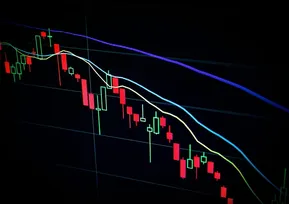
Photo by Kanchanara on Unsplash

Macroeconomic risk factors

In a detailed blog post on Friday, Hayes outlines a number of macroeconomic variables that could lead to a bitcoin unit price downturn.


Hayes begins by highlighting the depletion of the Federal Reserve’s reverse repo program (RRP), which has served as a significant driver for risky assets over the past year. This program allows qualified banks and investment firms to park cash and earn interest on it. The RRP balance has rapidly declined from a record high of $2.5 trillion at the end of 2022 to $700 billion. Hayes projects it to reach its historical average of $200 billion by March. As this liquidity source dwindles, he anticipates negative impacts on bonds and stocks, as well as cryptocurrencies.


Fed BTFP expiration

The second factor contributing to the potential market turmoil is the expiration of the Bank Term Funding Program (BTFP) on March 12. This crucial Fed facility is designed to provide longer-term loans to commercial banks. The mechanism aids banking sector stability.


Hayes is concerned that the BTFP might not be extended. Such an eventuality could lead to bankruptcy for banks holding massive unrealized losses on their bond holdings. It could lead to a “liquidity rug pull” event reminiscent of the banking crisis in March of the previous year.


The crypto OG predicts that such an eventuality would force a response. “The combination of a lack of liquidity gushing from the RRP and the lack of printed money to cover the bond losses on banks’ balance sheets will decimate the financial markets globally,” he wrote.


Hayes asserts that the combination of reduced liquidity from the RRP and the lack of printed money to cover bond losses could have a global impact on financial markets. In response to this scenario, he predicts that the Fed will cut interest rates during its March 20 meeting and reinstate the BTFP funding line.


‘Healthy’ correction

In terms of bitcoin’s price, Hayes foresees a “healthy” correction of 20% to 30% from early March prices if the outlined scenario unfolds. However, he suggests the decline could be as much as 40% if BTC rallies to $60,000-$70,000 in the coming weeks. Despite this temporary plunge, Hayes remains optimistic about bitcoin’s resilience, emphasizing its status as a neutral reserve hard currency that is not a liability of the banking system and is traded globally.


In a recent podcast appearance, Hayes expressed the view that the business model of U.S. dollar stablecoin issuer Tether will be challenged once multinational banks receive the go-ahead to offer fiat-backed stablecoins.


Overall, Arthur Hayes has urged investors to be cautious and to prepare for potential market volatility in March, emphasizing the importance of understanding the interconnected factors influencing both traditional finance and the cryptocurrency market.

 

More to Read
View All
Policy & Regulation·

May 25, 2023

Korean Assembly Mandates Crypto Disclosure Amidst Lawmaker’s Scandal

Korean Assembly Mandates Crypto Disclosure Amidst Lawmaker’s ScandalThe Korean National Assembly’s plenary session passed amendments to a couple of acts today that mandate lawmakers and senior government officials to report their cryptocurrency assets, according to news agency News1.Photo by Tingey Injury Law Firm on UnsplashAmendments to two actsIn an afternoon session, the National Assembly passed two amendments: one to the National Assembly Act and another to the Public Service Ethics Act.The amendment to the National Assembly Act, which had been approved by the Special Committee on Political Reform on Monday, specifically addresses the issue of cryptocurrencies and their potential conflict of interest for lawmakers. Likewise, the amendment to the Public Service Ethics Act, which had been approved by the Public Administration and Security Committee on Monday, imposes a requirement on lawmakers and high-level civil servants to disclose their cryptocurrency holdings.Mandatory crypto disclosureConsequently, starting from the 22nd National Assembly, lawmakers will be obligated to disclose their cryptocurrency assets. Additionally, the current 21st National Assembly will be required to disclose the cryptocurrencies they held and traded between the beginning of their term and May 31 of this year, with the disclosure deadline set for the end of June.A lawmaker’s crypto scandalThese legislative actions were prompted by allegations surrounding lawmaker Kim Nam-kuk, who was purportedly in possession of 800,000 WEMIX tokens from January to February of last year, potentially valued at up to 6 billion KRW (around $4.5 million). Concerns were raised regarding possible insider trading and conflicts of interest due to Kim’s ownership of these tokens.

news
Policy & Regulation·

Dec 05, 2023

Terraform Labs fails to halt class action lawsuit

Terraform Labs fails to halt class action lawsuitThe High Court in Singapore has dismissed an appeal filed by Terraform Labs and its co-founders, marking a significant step forward for the plaintiffs behind a class action initiated against the company.That’s according to a report published by Singaporean publication, the Business Times, on Thursday. The legal development follows the collapse of TerraUSD (UST) tokens in May of 2022, resulting in the loss of billions of dollars in market value. The collapse, in turn, has led to several lawsuits against Terraform, its founders and affiliated entities, with those court actions playing out in courtrooms in Singapore, South Korea, Montenegro and the United States.Photo by Wesley Tingey on UnsplashFraudulent misrepresentation allegedThe class-action suit, initiated in September 2022 by Julian Moreno Beltran and Douglas Gan on behalf of 375 others, alleges fraudulent misrepresentation by Terraform, Co-Founders Do Kwon and Nikolaos Alexandros Platias and the Luna Foundation Guard (LFG). The claimants argue that these misrepresentations induced them to purchase UST, stake the tokens and retain them as their value plummeted.UST had been designed to be pegged to the U.S. dollar with a 1:1 ratio. However, flaws in the tokenomics behind that digital asset meant that it faced a loss of confidence in May 2022, trading at around $0.05 when the court’s decision was released. The claimants collectively suffered losses of nearly $57 million.Terms of use cited in attempt to dismissTerraform attempted to have the lawsuit dismissed by invoking an arbitration clause in its website’s terms of use, asserting that users had waived their rights to a jury trial or participation in a class action. However, the Assistant Registrar (AR) rejected this application, stating that the defendants failed to establish an arbitration agreement.The AR highlighted that the terms of use were inconspicuous on the website, and there was insufficient effort to draw users’ attention to those clauses. Terraform, Kwon and associated entities appealed this decision, which was heard by Justice Hri Kumar Nair on Sept. 25.Despite establishing a prima facie case for an arbitration agreement, the court ruled that Terraform’s participation in the legal proceedings, including filing a defense and counterclaim, meant it could no longer seek a stay in favor of arbitration.Multiple actionsIt’s a busy time for all stakeholders relative to the Terraform collapse. Playing out within the same timeframe is a lawsuit in the United States taken by the Securities and Exchange Commission (SEC) against Terraform and Do Kwon, where the SEC claims that crypto asset securities fraud has been carried out.The latest installments in that saga in recent weeks have seen both parties file to seek summary judgment. Last week, a court in New York approved the confidential treatment of specific documentation which had been produced by Jump Crypto, a division of proprietary trading firm Jump Trading.There are also criminal actions underway. In a South Korean court in October, Terraform Labs Co-Founder Daniel Shin denied wrongdoing in the Terra/Luna collapse. Meanwhile, a court in Montenegro has approved the extradition of Do Kwon, with a final decision to be made shortly as regards whether he should be extradited to the United States or South Korea.

news
Markets·

Jul 10, 2023

Research Finds Over 90% of Korean Cryptos Prone to Pump-and-Dump Schemes

Research Finds Over 90% of Korean Cryptos Prone to Pump-and-Dump SchemesThe Korea Institute of Finance (KIF) has released a report revealing that 91.3% of South Korean-issued cryptocurrencies, known as “kimchi coins,” are prone to pump-and-dump (P&D) schemes. These schemes involve intentionally spreading false information on social media platforms to manipulate token prices. This is done with the intention of selling the tokens at artificially inflated prices.Photo by Maxim Hopman on UnsplashP&D prevalenceThese manipulative practices were frequently observed during the rapid growth of the cryptocurrency market from 2020 to 2022. Previous research papers indicate that P&D schemes commonly occur on multiple crypto exchanges and typically unfold within a time frame of 10 minutes. It has been observed that cryptocurrencies with lower liquidity and smaller market capitalization are particularly vulnerable to becoming prime targets for these schemes.Korean market and global marketThe Korean cryptocurrency market stands out with its significant number of cryptocurrencies listed on a single exchange, including kimchi coins. This distinction becomes evident when comparing it to the global market. In the Korean market, the top 10 global cryptocurrencies, ranked by their market capitalization, account for 59% of the total market share. Meanwhile, in the global market, they represent 84.9%. This contrast indicates that the Korean market has a larger proportion of alternative coins, also known as altcoins, which are more susceptible to pump-and-dump schemes and other manipulative activities.According to a survey conducted by the Financial Services Commission in the second half of 2022, there were a total of 625 listed coins (excluding duplicate listings), with 389 (62.24%) of them being listed on a single exchange. Among these single-exchange listed cryptos, 223 were kimchi coins, which is equivalent to 57%.OHLCV data analysisIn this KIF paper, research analyst Baik Yeon-ju delved into abnormal price patterns within the Korean cryptocurrency market. She analyzed the hourly Open-High-Low-Close-Volume (OHLCV) data of kimchi coins in October 2021. The study revealed that out of a total of 16,560 hourly price and volume observations, approximately 4.7% exhibited characteristics consistent with P&D schemes. Baik noted that 91.3% (21 of the 23) observed kimchi coins witnessed such movements.Legislative effortsMeanwhile, it is encouraging that the South Korean National Assembly passed the Virtual Asset User Protection Bill during its plenary session on June 30. This legislation, set to go effective in July next year, aims to provide protection for customers’ assets in the virtual asset space. The act not only establishes regulations to combat unfair trading practices but also enforces penalties for non-compliance.Call for further measuresHowever, Baik suggested that policies should be further strengthened to enhance investor protection within the crypto market. In order to achieve this, she proposed the implementation of a monitoring system for virtual asset service operators (VASPs) and the allocation of inspection and investigation personnel, as well as technical resources. It is also necessary to address potential conflicts that may arise with the Act on Real Name Financial Transactions and Confidentiality, particularly if the data required from VASPs falls under the classification of financial transaction information and personal information.Furthermore, considering the lack of transparency surrounding many altcoins regarding their projects and exchange listings, Baik suggests that the upcoming second virtual asset bill should tackle this issue by regulating the issuance and disclosure of these cryptocurrencies. Additionally, she highlighted the importance of conducting research based on empirical data to detect abnormal transactions. This approach enables the recognition of existing issues and the acquisition of concrete evidence, which serves as a credible basis for policymakers to enact relevant legislation.

news
Loading