Top

EDX Markets plans Asian expansion enabled by additional funding

Web3 & Enterprise·January 26, 2024, 6:19 AM

EDX Markets, a crypto-trading platform backed by Citadel Securities and Fidelity Digital Assets, is planning to establish a new crypto exchange in Singapore.


EDX Clearing

The plan was revealed in a recent Bloomberg article. In tandem with the report, a press release published on Tuesday also provided further detail on its recently-launched digital asset clearinghouse, EDX Clearing. Unlike traditional exchanges, EDX operates its own clearinghouse, following a non-custodial model in collaboration with Anchorage Digital. This approach allows institutional investors to execute trades without the need for pre-funding in fiat currency or crypto, contributing to capital efficiency and risk management.


Since its launch in October, EDX Clearing has cleared more than $3.1 billion of transactions. The recent approval of bitcoin exchange-traded funds has further intensified trading activity, with substantial volumes traded following their launch.


EDX Markets offers a unique platform for institutional investors to directly trade major cryptocurrencies like bitcoin, ether and litecoin. EDX addresses institutional players' needs with a non-custodial model, emphasizing risk management and infrastructure that aligns with traditional market practices.
https://asset.coinness.com/en/news/557aaeb48ecca84b73db895e4b938981.webp
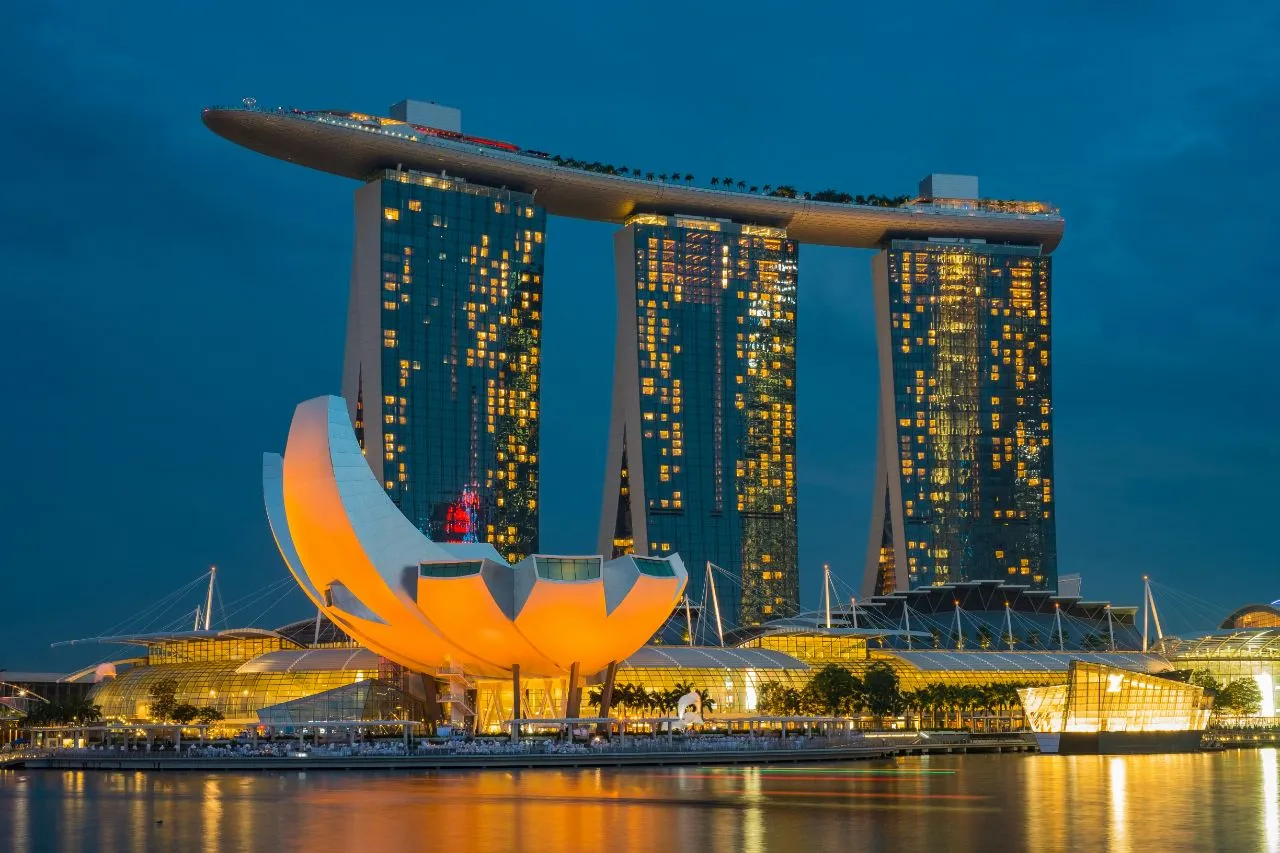
Photo by Julien de Salaberry on Unsplash

Fresh funding infusion

The company is also introducing spot and perpetual futures trading, following a successful additional funding round led by new investor Pantera Capital and existing supporter Sequoia Capital.


The recent funding infusion, the exact size of which was not disclosed, empowers EDX Markets to enhance its technology and expand its global footprint. The firm’s CEO, Jamil Nazarali, highlighted Singapore's strategic significance, citing its favorable environment for trading a diverse range of tokens and perpetual futures, along with its pool of financial talent.


The platform has gained support from traditional finance heavyweights such as Charles Schwab and Miami International Holdings, alongside original backers Citadel Securities, Virtu Financial and Fidelity Investments' digital-asset arm. The recent funding round saw investors buying in at double the initial share prices from 2022.


According to Paul Veradittakit, Managing Partner at Pantera Capital, EDX mirrors traditional market expectations, incorporating speed and capital efficiency while adapting to the unique features of the crypto landscape. Taking to the X social media platform, Veradittakit wrote:

”We believe that EDX markets reduces counterparty risk for institutions through its non-custodial clearing model.”


EDX Markets has witnessed noticeable trading volumes, with over $1.4 billion in notional volume traded in December alone. The company, headquartered in Hoboken, New Jersey, plans to build out its technology independently and transition away from its initial partnership with MEMX (Members Exchange).


Singapore expansion

The expansion into Singapore involves seeking approval from the Monetary Authority of Singapore (MAS) to operate an exchange offering both spot and perpetual futures trading.


In December, EDX's clients traded more than $1.4 billion in notional volume. Following the approval of spot bitcoin exchange-traded funds (ETFs), EDX customers executed trades totaling more than $100 million in a single 24-hour period this month.


While many in the sector welcome the involvement of TradFi in the crypto space, some have concerns with regard to how things play out over the longer term. Community member Joe Kerr took to social media on the subject, stating:

”My concern is that they’ll use the ETFs to buy from public exchanges, custody with Coinbase but when shares sell, the Bitcoin is bought through EDX and locked behind an ‘institutions only’ firewall.”


More to Read
View All
Web3 & Enterprise·

Dec 01, 2023

Hong Kong securities group proposes ICOs as growth opportunity

Hong Kong securities group proposes ICOs as growth opportunityKey stakeholders in Hong Kong’s financial world are contemplating a transformative shift in the Chinese autonomous territory’s digital asset strategy that concerns furthering initial coin offerings (ICOs).Photo by Qinyi Lian on UnsplashRoom for improvementIn a recent letter signed by Chen Zhihua, President of the Hong Kong Securities and Futures Professionals Association (HKSFPA) and published to the HKSFPA website on Wednesday, the introduction of an ICO mechanism as a potential catalyst for the city’s economic revival has been proposed.The letter, which provided the HKSFPA’s “opinions on the 2024–2025 budget,” included the ICO suggestion as recommendation №10 on a list of various proposals. The suggestion comes amid ongoing efforts to navigate the economic challenges posed by the pandemic. Zhihua acknowledges the developmental approach taken by Hong Kong Chief Executive John Lee where financial sector strategy is concerned, but emphasizes the industry group’s belief in the room for improvement that exists to stimulate Hong Kong’s financial sector further.Formalizing ICOsFormalizing ICOs in Hong Kong could establish a supportive environment for crypto startups and investors seeking regulated and secure opportunities. The proposal aligns with a broader call for government engagement in economic recovery and policy-making, emphasizing a collaborative approach toward the crypto sector. This inclusive stance signals a forward-thinking perspective that could lead to more supportive policies and frameworks, fostering a conducive environment for crypto innovation and growth.Reflecting on the history of ICOs, the letter acknowledges the fundraising method’s evolution since the attention garnered by the Mastercoin ICO in 2013 and Ethereum’s significant milestone in 2014. The ICO boom of 2017 saw projects like EOS and Tezos raising substantial funds, accompanied by both enthusiasm for fundraising ease and concerns about investor protection due to minimal regulation.Fraud concernsWhile the ICO boom faced regulatory scrutiny and witnessed instances of fraud and scams, a progressive approach by financial regions such as Hong Kong could reshape the global perception of ICOs. The letter suggests that, under favorable terms, ICOs could play a pivotal role in revitalizing the digital asset landscape.Zhihua underscores the importance of addressing potential challenges by urgently reviewing and enhancing anti-money laundering (AML) and counter-terrorist financing legislation. This cautious approach aims to ensure that ICOs in Hong Kong adhere to established frameworks, avoiding the pitfalls associated with unregulated fundraising.While that’s the HKSFPA’s position, the initial flurry of ICOs a number of years ago involved many projects proposed by scammers and fraudsters. At the time, the Hong Kong Securities and Futures Commission (SFC) recognized the development as “downright fraud” and put pressure on exchanges to delist many tokens.One other related element that the letter proposes is in integrating environmental, social and governance (ESG) and Islamic finance elements into investment immigration policies. This forward-thinking approach reflects a growing awareness of ethical and sustainable investment practices that could potentially position Hong Kong to set new standards for responsible investment.

news
Policy & Regulation·

Jun 22, 2025

Iran curtails crypto exchange hours following $90M hack

While the crypto markets have not been immune to geopolitical developments, the sector in Iran experienced a more direct effect last week with a politically motivated $90 million exchange hack, prompting the authorities to introduce an exchange curfew. Blockchain analytics firm Chainalysis outlined on X on June 18 that Nobitex, Iran’s largest cryptocurrency exchange, had been hacked, with crypto assets to the value of $90 million having been drained from exchange-controlled wallets.Photo by Engin Akyurt on PexelsWeaponizing blockchain technologyThe hack had the hallmark of a politically-motivated attack given that rather than the digital assets being stolen, they were sent to vanity addresses, customized blockchain addresses involving user-defined sequences of characters. The vanity addresses contained “politically charged messages” and in sending the funds to them, the funds were effectively burned as they’re now permanently inaccessible.  The firm stated:”This incident highlights how crypto exploits aren’t always financially motivated. Bad actors can weaponize blockchain technology for geopolitical messaging, turning hacks into ideological statements rather than profit-driven crimes.” Pro-Israel hacker group Gonjeshke Darande, also known as “Predatory Sparrow,” appears to have carried out the hack, given that on June 18, it outlined on X that it would release Nobitex’s source code together with other internal information related to the firm’s internal network, while confirming that it had conducted cyberattacks against the company. The group made the following assertion:”The Nobitex exchange is at the heart of the [Iranian] regime’s efforts to finance terror worldwide, as well as being the regime’s favorite sanctions violation tool.” Rafe Pilling, director of threat intelligence at Sophos, a British cybersecurity company, told The Guardian that Predatory Sparrow “bears all the hallmarks of a false persona used by a government-sponsored threat group to conduct disruptive operations against targets” linked to the Iranian government. While Nobitex is estimated to have seven million users, an Open Source Intelligence (OSINT)-based investigation carried out in 2024 linked relatives of Ali Khamenei, Iran’s supreme leader, and other Iranian establishment figures to the crypto exchange. Minimizing systemic riskThe cyber attack has prompted a response from the Iranian government. In a blog post, Chainalysis outlined that the Central Bank of Iran has instructed all domestic crypto exchange platforms to curtail their service hours to between 10 a.m. and 8 p.m. The company speculated that this measure could be motivated by a desire to impose a higher level of oversight and control over the local crypto sector. However, it also suggested that it may be part of an attempt by the Iranian authorities to manage and minimize systemic risk. In recent years, Iran has been subject to extensive international sanctions applied by various entities including the United States, the European Union and the United Nations. Those sanctions have had a significant impact upon the country’s economy, triggering high inflation and currency devaluation.  With that, crypto has been increasingly viewed by the authorities as a means to circumvent sanctions. Last December, the Iranian authorities appeared to be working towards regulating crypto, embracing the asset class in acknowledgement of its growing importance to the Iranian economy. In February, Chainalysis reported that sanctioned entities worldwide had received $15.8 billion in crypto transactions in 2024.

news
Web3 & Enterprise·

Jan 22, 2024

FSN and Fingo join hands to pursue tokenized securities business

South Korean digital marketing firm FSN has entered into a strategic alliance with Fingo Company, the operator of the music copyright platform Fingo, to jointly work on a tokenized securities project based on the recently raised funds, according to local news site Newsis on Monday (KST).Photo by Chris Liverani on UnsplashUnlocking synergiesThrough this partnership, FSN and Fingo aim to collaborate on a token securities project. As both companies have experience in leveraging IP, they are expected to apply their expertise to the new business. In particular, FSN operates several IP-based Web3 projects such as Sunmiya Club and Bellygom NFT through its subsidiary Finger Labs, through which the firm has been demonstrating its competitive edge. Fingo also owns a variety of content-based IPs and is cooperating with major domestic securities companies. The two firms’ business capabilities are thus expected to create great synergy in the market. Fingo’s service allows anyone to share revenue made from music, a concept referred to as music revenue sharing, which was once limited to creators or singers only. Last year, it took a step into the tokenized securities sphere by signing a business deal with Mirae Asset Securities, the country’s largest asset manager, to establish a token securities service and launch innovative financial investment products. FSN has been gearing up to take on this collaborative project, namely a recent success in raising a total of KRW 10 billion (approximately $7.5 million) in funding. The company explained that with this considerable funding paired with its knowledge of Web3 and blockchain technology and experience in collaborative partnerships, it will be equipped to settle into the tokenized securities market seamlessly. Charting new horizons"As we have secured large-scale funding under stable conditions, we expect to successfully pursue new businesses, including that in tokenized securities," FSN CEO Lee Sang-seok said. "We will steadily expand new businesses by establishing partnerships with companies with competitiveness in various areas, starting with Fingo Company, which has a competitive edge in tokenized securities and music IP," he said.

news
Loading