Top

Terraform Labs claims bankruptcy protection will help SEC lawsuit appeal

Policy & Regulation·February 01, 2024, 2:38 AM

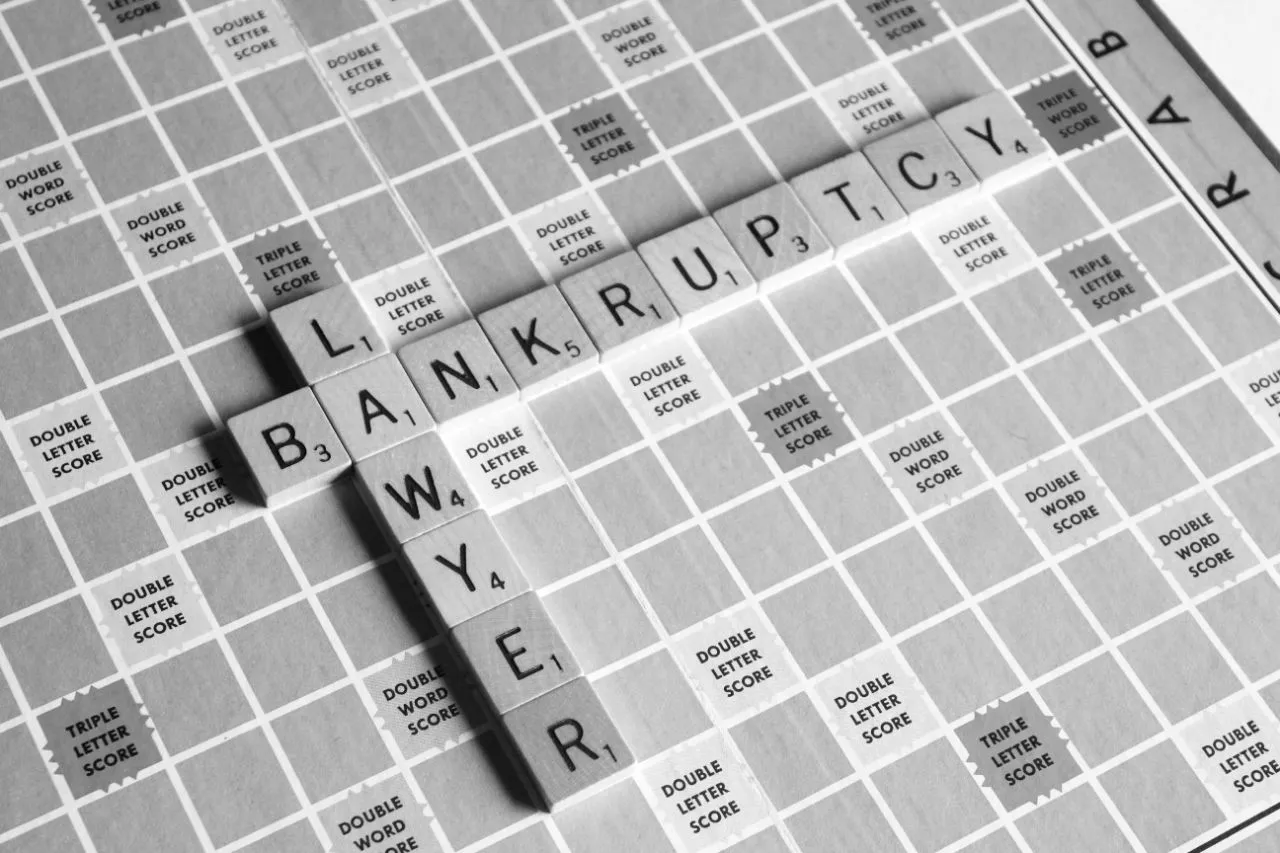
Singapore’s Terraform Labs, the company founded by incarcerated crypto entrepreneur Do Kwon, has filed for Chapter 11 bankruptcy protection as a mechanism to shield itself from potential severe penalties in the U.S. Securities and Exchange Commission's (SEC) securities fraud lawsuit.
https://asset.coinness.com/en/news/73e4b56764b30a6054091fae2112247c.webp
Photo by Melinda Gimpel on Unsplash

Pursuing an appeal

The bankruptcy filing, submitted on Tuesday in the U.S. Bankruptcy Court for the District of Delaware, aims to allow Terraform Labs to pursue an appeal against the SEC's allegations. In the filing, Terraform Labs CEO Chris Amani emphasized the critical nature of the bankruptcy protection for the company's ongoing operations, preservation of value for creditors, including the Terra community, and the pursuit of an appeal against the SEC enforcement action.


Amani expressed concerns that, without Chapter 11 protection, the company could face liquidation after the trial, forfeiting its right to appeal and leading to disastrous consequences for its business. Having acted as Terraform’s chief operating officer earlier in 2023, last July Amani was appointed as the firm’s CEO.


Protection afforded by Chapter 11

The estimated assets and liabilities of Terraform Labs fall between $100 million and $500 million, as disclosed in the firm’s bankruptcy filing earlier this month. Amani highlighted the potential financial strain resulting from a substantial money judgment, indicating that the company might not be able to satisfy such a judgment or post the necessary supersedeas bond for an appeal, a bond that must be provided by a petitioner who attempts to have a judgment set aside, without the protection afforded by Chapter 11.


The SEC charged Terraform Labs and former CEO Do Kwon with securities fraud in February 2023, accusing them of orchestrating a "multi-billion dollar crypto asset securities fraud." The Commission claimed the company raised billions from investors through unregistered transactions, offering an interconnected suite of crypto asset securities. Terraform Labs disputes the SEC's summary judgment decision, asserting that the cryptocurrency tokens in question are not securities under the Acts and that the SEC's jurisdiction is not applicable.


The potential consequences of liquidation extend beyond the company itself, impacting hundreds of thousands of Luna cryptocurrency holders, the same individuals the SEC purportedly seeks to protect. Luna operates on the Terra blockchain maintained by Terraform Labs.


Terraform Labs, known for the algorithmic stablecoin TerraUSD and its sister cryptocurrency Luna, filed for bankruptcy protection in the wake of the infamous collapse of both in May 2022.


The SEC's case stems from that $40 billion collapse of TerraUSD and a previous version of Luna, accusing Terraform Labs and Kwon of misleading investors about the stability of TerraUSD.


Kwon was arrested in March of last year in Montenegro for using false documents. He is currently detained in Montenegro, following his attempt to travel to Dubai with a fake Costa Rican passport. The Terraform founder is currently awaiting extradition to either the United States or South Korea. Both Do Kwon and Terraform Labs deny committing fraud, with the SEC trial scheduled to commence in New York in late March.



More to Read
View All
Web3 & Enterprise·

Oct 12, 2023

OK Group Retires ‘Okcoin’ Brand

OK Group Retires ‘Okcoin’ BrandIn a move to streamline its crypto ventures, cryptocurrency exchange operator OK Group is rebranding its platforms under the single name “OKX.”The announcement was made by Hong Fang, President of OK Group’s Seychelles-registered exchange OKX, via a thread on X (formerly Twitter) on Monday.Photo by Kelly Sikkema on Unsplash‘Okcoin’ to ‘OKX’ global rebrandFounded in 2013, Okcoin will be undergoing a name change to “OKX,” aligning with OK Group’s overarching branding strategy. Hong Fang expressed her personal connection to Okcoin, stating:“I’ve been part of Okcoin for five years. Over the years, we have put a lot of love and passion into our brand and product.”She emphasized that this rebranding effort, beginning in Singapore, will extend to Europe and the United States in the coming months, ensuring consistency across key operational jurisdictions. Despite the name change, OKX maintains that customers can expect the same high-quality services within the same regulatory framework under the new brand. Providing the rationale for the change, Hong Fang went on to state:”We also believe it’s time for a change. Rebranding to OKX in our key operational jurisdictions will be great for our customers and business. I’m very excited about what to come next.”Previous rebranding activityFang also revealed that OK Group has already sunsetted the “Okcoin” brand and product in several regions, including Latin America, the Middle East and North Africa, South Asia, Hong Kong, and others. This transition aims to create a unified and recognizable identity for the group’s crypto ventures.The United States holds particular significance for OK Group’s global strategy, and the company remains committed to that market. Fang acknowledged the unique challenges encountered in the US but expressed the company’s dedication to empowering individuals and protecting freedom through technology within the US market. She stated: “It is home base for a lot of us on our team. It is special to us.”OKEx rebrandThis rebranding news comes approximately one year after OK Group initiated a similar transition with its subsidiary, formerly known as OKEx. In December 2022, OKEx transformed into “OKX,” expanding its scope beyond being a centralized crypto exchange. The move aimed to embrace DeFi, non-fungible tokens (NFTs), and Web3. OKEx, founded by OK Group CEO Star Xu in 2017, had played a significant part in terms of innovation in the cryptocurrency space during that time.OK Group’s decision to rebrand its crypto ventures under the unified name “OKX” signifies a strategic shift toward creating a more cohesive and streamlined brand presence in the global crypto market. The transition stands out as yet another iteration in the development of global crypto platforms within an ever-changing crypto ecosystem. As Hong Fang put it, “Okcoin was started almost 10 years ago.” . . . “We have been unequivocally investing in our Okcoin team and infrastructure ever since.”

news
Policy & Regulation·

Jan 16, 2024

Positive signals in Vietnam suggesting XRP payments adoption

Recent statements by figures well placed in the crypto space and within the Vietnamese government point to increased potential for greater adoption of XRP, the payments solution token first developed by Ripple Labs.Photo by Silver Ringvee on Unsplash‘XRP will be big in Vietnam’Yasin Mobarak is a prominent figure within the XRP community. He’s also the founder and managing member of Dizer Capital, a venture capital and private equity firm that specializes in blockchain, internet of things (IoT) and clean energy projects. On Saturday, Mobarak tweeted out: "$XRP will be big in Vietnam." While Mobarak didn’t comment further, he did include a link to an X social media post published by XRP community member Kenny Nguyen, relaying the news that Vietnamese Finance Minister Ho Duc Phoc had announced that the government is currently working with the Vietnamese Central Bank with a view towards studying and possibly implementing the use of XRP for cross border payments. Central Bank's consideration of XRPVietnam's Central Bank is actively exploring the integration of XRP for cross-border payments, both domestically and internationally. This move aligns with the region's swift adoption of XRP, driven by its promise of faster, cost-effective and secure cross-border payment services. Ripple's recent collaboration with TPB Bank, a major player in Vietnam's banking sector, is set to fortify the entire XRP ecosystem. In September 2023, SBI Remit, a financial service provider and subsidiary company of Japanese financial services conglomerate SBI Group, initiated an XRP-based remittance service covering Southeast Asian countries like the Philippines, Vietnam and Indonesia. SBI has a long-standing partnership in place with Ripple aimed at launching international payment services. As part of that announcement, SBI confirmed the participation of Malaysia-based cross-border payments hub Tranglo in the project. Crypto adoption and growthDespite legal constraints, Vietnam emerged as a leader in crypto adoption in Asia in 2023 by claiming the third position in Chainalysis’ 2023 Global Crypto Adoption rankings. The region, still adapting to the global rise of cryptocurrencies, is undergoing a transformation. While centralized exchanges dominate in various countries, regional preferences vary. In the Philippines, a noteworthy 20% of the population engages with crypto sites for gaming and gambling. In contrast, Vietnam and Pakistan distinguish themselves with citizens favoring peer-to-peer exchanges. This approach allows direct trading between individuals, bypassing large corporations. A report produced by Kyros Ventures and Coin68 in conjunction with Hong Kong’s Animoca Brands last year found that 76% of Vietnamese crypto holders determine their investment choices based upon recommendations from friends and people within their peer group. The collaboration between regulatory bodies, financial institutions, government and crypto projects illustrates the growing integration of digital assets into traditional financial systems. This latest example pertaining to Vietnam and XRP certainly offers the potential of a much greater level of adoption in the region. While activity within Vietnam may be a key consideration for XRP investors and stakeholders in 2024, the potential for a Ripple initial public offering (IPO) is also something they’re likely to be watching out for. Over the course of the past six months, a Ripple IPO has been the subject of speculation. That speculative interest has likely increased following Circle, the issuer of U.S. dollar stablecoin USDC, filing for an IPO last week.  

news
Policy & Regulation·

Feb 13, 2024

Philippines to move forward with CBDC without blockchain

The Philippines' central bank has confirmed it has no plans to issue a retail version of a central bank digital currency (CBDC) but that it has definite plans to introduce a wholesale-level CBDC, albeit without using blockchain as the underlying technology. Avoiding retail-level bank run riskThe bank expressed concerns that a retail CBDC could potentially trigger bank runs, given the velocity at which digital currency can be transacted. However, in an interview with local media outlet, the Inquirer, the central bank governor Eli Remolona clarified that within the next two years, the country has definite plans to roll out a wholesale CBDC. CBDCs come in retail and wholesale forms, with the former accessible to the general public and the latter exclusively for institutional use. While the Philippines central bank initiated an exploratory study previously relative to CBDC use, concerns have been raised by the Bank for International Settlements (BIS) about the readiness of institutions to handle the risks associated with CBDCs.Photo by Krisia on PexelsDismissing blockchainDespite this move, the bank does not intend to utilize blockchain or digital ledger technology, which are fundamental to many virtual assets. Remolona stated: "Other central banks have tried blockchain, but it didn’t go well." Instead, the CBDC will operate on a payment and settlement system owned by the central bank, with a focus on wholesale transactions mediated by banks. This marks a shift in the central bank's approach to underlying technology where a CBDC is concerned. The Bangko Sentral ng Pilipinas (BSP) initially embarked on an exploratory study regarding CBDCs in 2022, known as Project CBDCPh. Upon completion of that study, it followed up with a pilot project called Project Agila, concentrating on a wholesale CBDC. Project Agila leaned on the use of the Hyperledger Fabric blockchain, considering it for use on the first wholesale CBDC.  Hyperledger Fabric is an open-source blockchain framework hosted by the Linux Foundation. Companies like IBM, SAP and Intel have all contributed to the development of the enterprise-grade permissioned blockchain network. However, it appears that the BSP is shying away from using any type of blockchain-based solution in establishing its CBDC. Regional steps towards CBDC useThe central bank of the Philippines is among several in the Asia-Pacific (APAC) region that are working towards the introduction of a CBDC. Earlier this month an official from the Reserve Bank of India (RBI) outlined that the central bank will move forward with CBDC development while working towards addressing privacy concerns that citizens may have with a digital rupee. Towards the end of last month, the Japanese government, in collaboration with the Bank of Japan, appeared to be gearing up for the rollout of a CBDC. In a recent meeting between both parties, several legislative matters were identified as key to ensuring a smooth path to the unobstructed launch of a digital currency. There has also been a lot of activity relative to attempts to utilize CBDCs for cross-border trade over the course of the past year. In the United Arab Emirates (UAE), the country announced the first-ever use of its CBDC or digital dirham in a trade deal with China using mBridge, a multi-CBDC platform that supports peer-to-peer, cross-border payments in real time.

news
Loading